This Is 45: A Year of Video Essays at Fandor Keyframe

This Is 45: A Year of Video Essays at Fandor Keyframe

It seems I’ve settled into a niche. Somehow I managed to make more video essays this past year than in the five previous years combined that I’ve been doing this work. By the end of 2012, I will have produced 45 video essays for Keyframe, over three times as many as I produced for this site last year. Additionally, I produced 20 video essays forIndiewire Press Play, three forSight & Sound magazine, one for the Cinema Guild DVD of Hong Sang-soo’s The Day He Arrives, and one for the Frames Cinema Journal’s inaugural issue on film studies in the digital age. That’s seventy video essays this year, or roughly the length of a Bela Tarr film.

In the wake of all this production, I’d like to take an end-of year moment for reflection and assessment. I've singled out five videos that I consider my most representative work for Keyframe this year, examples that most vividly illustrate the kinds of issues and problems I worked through in making video essays during this period.

I’m grateful to have had the opportunity to be as focused on this little subgenre of film criticism, to better understand its properties, explore its possibilities, and develop some principles for my own practice. This process benefitted greatly from many conversations and collaborations with a host of people who are also engaged with the video essay form, including: Jonathan Marlow and Susan Gerhard at Fandor; Matt Zoller Seitz, Ken Cancelosi and Max Winter at Indiewire Press Play; Nick Bradshaw at Sight & Sound; Catherine Grant at Film Studies for Free and curator of the indispensable video essay channel Audiovisualcy; Ryan Krivoshey at Cinema Guild; fellow video essayists Matthias Stork and Steven Boone; Michał Oleszczyk, who invited me to present video essays at the OFF Plus Camera in Krakow;Roger Ebert; Jonathan Rosenbaum; Nicole Brenez; Ignatiy Vishnevetsky; and Michael Baute and Volker Pantenburg, two of the most passionate advocates of essayistic cinema and who especially have opened my eyes to its history of treasures.

Special mention goes to Nelson Carvajal, a young filmmaker with tremendous enthusiasm for video essays and who produced a couple for Keyframe (Re-Opening Greenaway’s Windows and Damon Packard: Modern Underground Horror Awaits) while I was busy getting married, the other big production of my year.

Five Personal Favorites:

Looking vs. Touching

In some ways this work embodies what I think is the most soundly fundamental approach to the video essay: hard observation of factual detail that gradually and naturally builds towards greater insights on the film in question and on cinema as a whole. Over the course of the year I’ve become less interested in video essays based on a pre-written script, at the same time that this mode is seeming to become the default. These types of videos play like a paper being read aloud while video clips roll like background filler (I call this the “video wallpaper” or “decorating with video” technique). Film criticism has been a slave to text long enough; isn’t the point of the video essay to re-engage it directly with the cinematic medium? If so, then words need to spring from images, not the other way around.

With this video, I started off with no idea what I wanted to say about these two films, Lady Chatterley and In the City of Sylvia, just a vague notion that they both shared the theme of love, the motif of looking and a highly sensual audiovisual texture (one that prompted me to use a non-voiceover narration so as to preserve those sounds). They’re also the kinds of films that give the viewer time and space to reflect on how one is reacting to them, which produces the experiential account detailed in this video. Perhaps then, this is the video essay at its most organic.

Matt Porterfield and the Art of the Question

Another instance of concrete observation leading to insights, now with an auteurist bent. I’ve read comments about how today’s criticism is too auteur-centric, and the most popular video essays are no exception. But auteurism is still valuable if there’s something illuminating to be learned from it, whether for viewers or even for the filmmaker. From what I understand, Matt Porterfield didn’t know his first two films Hamilton and Putty Hill were full of so many questions until he saw this video essay (at least that’s what I recall him saying on Twitter). In turn, engaging with his films helped me find a really effective hook for kicking off a video – start with a question. (Or five.)  And using supercut techniques to line up the questions like dominoes is always fun.

Hijacking Haneke

As mentioned above, I’ve become wary of too much dependence on elements like script and narration; at the same time, I am increasingly drawn to the notion of being able to have images speak for themselves. But this has proven to be much more challenging than the standard voiceover-and-clips method, which is why I’ve done it only rarely. This video offers five different approaches to this problem, while also trying to wrest spectatorial control of the image from the most controlling and manipulative director of our time.

Mapping the Long Take: Bela Tarr and Miklós Jancsó

Seeking alternative methods of exploring images inevitably leads to the creation of new images. Looking for a way to graphically depict and explore the cinematography of two Hungarian masters led to me creating some basic maps in Power Point and moving a camera icon over them using keyframe animation in Final Cut. I refined these techniques later for the video essay exploring cinematography in Paul Thomas Anderson’ s films.

100 Masters of Animated Short Films

On the surface, compilation videos like this one, as well as Abraham Lincoln in Movies in TV and 50 Essential Chinese Movies seem like a pretty cut-and-dried order of simply gathering and arranging clips. But for each of these videos, this process resulted in some of the most time-consuming projects of the year:  finding each clip, honing it to the few seconds that worked best in the montage, creating a rhythm. Still, there is great pleasure in watching as the sequence builds and reveals itself. While creating these videos don’t require as much critical thinking as writing a script from scratch, there is a critical line that emerges through montage, as the images engage with each other in dialogue (historical in the Abe Lincoln and Chinese videos; aesthetic in all three).

Originally published in Fandor. See a full categorized index of all Fandor Keyframe video essays produced in 2012.

ON THE Q.T., CHAPTER 3: JACKIE BROWN: Quentin and Pam’s Big Score

ON THE Q.T., CHAPTER 3: JACKIE BROWN: Quentin and Pam’s Big Score

[A script of the video essay follows:]

Quentin and Pam’s Big Score, Part 1

Things don’t look good for Beaumont Livingston. His self-proclaimed benefactor, Ordell Robbie, has just posted $10,000 to bail bondsman Max Cherry in exchange for Beaumont’s release. Armed with a pump shotgun and way too much information about Ordell’s gun-running business, Beaumont faces not only the inside of a trunk, but a potential 10 year rap unless he cooperates with the Feds. Ordell bails him out because he believes “Beaumont’s going to do anything Beaumont can to keep from doing them ten years, including telling the Federal gov’ment any, and every motherfucking thing about my Black ass.” Beaumont already has, and ATF agent Ray Nicolet is laying in wait for yet another of Ordell’s “employees,” a flight attendant with $50,000, an unbeknownst 42 grams of blow and no intention of declaring either at customs.

Mr. Livingston, I presume, expects Ordell to deliver on his promise of a late night chowdown at Roscoe’s Chicken and Waffles. That Los Angeles institution is tasty enough to make a brother spoon with a spare tire in a vintage American automobile. But in his haste and hunger, Beaumont Livingston forgot two things: One, all that greasy, fried shit’ll kill you. And two, if you’re a character in a Quentin Tarantino movie, and Samuel L. Jackson shows up looking like the Crypt Keeper and offering you a ride,

Don’t get in the car.

The Beaumont sequence is pure Tarantino—comic dialogue, loopy situations, sudden violence. But this scene is lifted from Elmore Leonard’s 1992 novel Rum Punch. And as much as Jackie Brown feels like a Tarantino film, the plot is faithfully Leonard’s. Tarantino wisely pulls entire sequences verbatim from Leonard’s pen, adding his own dialogue as stand-in for the novel’s expert descriptions of action and detail.   Leonard is a master of character creation, gritty conversation, and delightfully convoluted situation. A perfect match for Tarantino’s first, and thus far only, according-to-Hoyle adaptation, and the director is respectful to his source.

But like all great directors, Tarantino is a compulsive who must pay tribute to his obsessions. Obsessions like:

That last thing got him in some pretty hot water with Spike Lee.

With a love of Blaxploitation etched in his DNA, Tarantino had to notice that Rum Punch has elements of the genre. There’s a tough main character dame who’s strong enough to fend for herself, a hood criminal with a bevy of women and minions to do his business, and one final, big score designed to extricate the criminal from the ghetto for good. Blaxploitation movies rarely had all three of those things at once—a perfect opportunity for Tarantino’s brand of genre homage and transcendence.

The only minor issue was that Leonard’s heroine, Jackie Burke, was White. Tarantino needed Foxy Brown. The solution was obvious.

This, for the uninitiated, is Pam Grier. It takes Rum Punch 39 pages to introduce Jackie to us. Jackie Brown takes maybe   39 seconds.

Quentin Tarantino was 10 years old when Pam Grier starred in Foxy Brown, a film whose most unsavory plot aspect (and its resulting vengeance) he lifted for Kill Bill: Volume One.

Here, he lifts Foxy’s last name, her movie’s title font and her portrayer. Grier was the queen of Blaxploitation, wielding a shotgun, razors in her ‘fro and a take no prisoners attitude that was simultaneously terrifying and sensual. Jack Hill, who directed her in Foxy Brown, Coffy and two other films, said that Pam Grier had “that something special that only she has. She has ‘it’.” Hill could get a witness from any fan, for we knew: Not only did Pam Grier have “it,” she could whip your ass with “it” as well.

It’s obvious Tarantino wants to show the Grier toughness he loves, but he has deeper intentions. He wants to bring out her softer side as well. In her 70’s output, her vulnerability is physical. She is always abused yet always avenged. Outside of movies like Bucktown or Greased Lightning, she was rarely afforded a typical love story. We’ll talk about Tarantino fixes that next time. For now, flight attendant and money carrier Jackie Brown has to think quick and plan that big score fast. Ordell has bailed her out for the same reason he sprung Beaumont. Michael Keaton’s Ray Nicolet is breathing down her neck to squeal on Ordell, and Ordell has other intentions for her neck. Robert Forster’s Max Cherry, Jackie’s soon-to-be love interest, plays an unwitting part in the scene that got fans of Pam out of their seats in the theater. Herewith, the tough side of Pam Grier.

DAMN!

Quentin and Pam’s Big Score, Part 2

Welcome to the seduction of Max Cherry, writer of 15,000 bonds, survivor of 57 years on the Earth, newcomer to 70’s soul music. Male. Obviously not blind. Bearing witness to Jackie Brown, looking refreshingly like a normal human being and pressing a different kind of gun to his bone. She renders him helpless with the clarion call of her partners in crime,

“The Delfonics.”

Quentin Tarantino relishes putting a gun in Pam Grier’s hands, throwing us back to the good old days of Nurse Coffy, Sheba Shayne and Friday Foster. Her genre reputation precedes her, and one can almost hear QT cackle as he merges Brian DePalma’s split-screen, Jack Hill’s dialogue and an overzealous sound man’s rendition of that “CLICK” that accompanies that gun aimed at Ordell Robbie’s favorite toy. But this commandeering of DePalma and Hill serves the drama—Elmore Leonard crafted the Ordell-Jackie pas de deux in his novel, Rum Punch, to get us here. It’s Max’s gun Jackie’s stolen, and its retrieval leads not only to Max’s seduction but also to some of the most poignant dialogue Tarantino has scripted. Notice how delicately the camera moves in on Grier’s profile. It’s almost as if we’re eavesdropping on Pam and Robert, not Jackie and Max.

Jackie needs an ally like Max because The Big Score, that Blaxploitation staple designed to get one out of the hustle, involves Jackie smuggling half a million dollars of Ordell’s money from Cabo San Lucas.  She’ll do it under the nose of ATF agent Ray Nicolet, tricking him with a visible $50,000 that distracts Ray from a hidden $500,000. Max decides to help because he too wants to get out of his hustle. That, and because the Delfonics–pretty fucking persuasive.

Whom you trust is essential in any heist, and Ordell trusts his right hand man Louis. He and Louis were in the hoosegow together, and Ordell believes in honor amongst thieves, a common mistake amongst thieves. Additionally, Ordell has his bevy of women primed to do his bidding and, true to Blaxploitation form, ready to assist on The Big Score.

There’s aging Motown wannabe Simone, whose impressions of Diana Ross and Mary Wells hint that, though this pussy may be old, it’s real and it’s spectacular.

There’s Sheronda, country as a chicken coop, naïve as hell, and recipient of Ordell’s most hilarious putdown.

Then there’s Melanie, his “little Surfer Girl” whose excessive drug use disguises a truly cunning and vindictive mind. Of the dope use, Ordell tells her “that shit will rob you of your ambitions.” Melanie’s ambition is to rob Ordell of his money. So maybe the dope use is a good thing.

Ordell thinks this is his game, but “The Money Exchange,” the codename for The Big Score, is designed to favor Jackie Brown. He let her create it, he’s entrusting her to screw over the Feds, and he’s unaware of how deep her alliance with Max Cherry runs. It’s going to work, though, because Ordell thinks his scary disposition will keep his bitches in line and they will not—repeat will NOT—betray him.

The logistics of The Money Exchange are faithfully recreated from Dutch’s novel. But its execution is pure Tarantino. Cutting loose and succumbing to his love of time manipulation, QT presents the money swap from three characters’ perspectives: Jackie’s, Max’s, and the comic duo of DeNiro and Fonda’s Louis and Melanie. Each depiction focuses on its protagonist’s traits. Jackie is in control in hers, with a great little dialogue about an even greater little pantsuit. Louis and Melanie are antagonistic in theirs, culminating in a very violent Abbott and Costello routine involving a lost car. And Max’s version is cool, suspenseful and exciting, because he’s the one left holding the bag.  

When Ordell and Max drive to the final showdown with Jackie, the film uses The Delfonics’ 1971 classic, “Didn’t I Blow Your Mind,” as an almost subliminal reassurance that our heroes will succeed.  Jackson uses silence to great ominous effect here, a visual terror undercut by the lovely musical accompaniment from the car stereo. This is Jackie and Max’s song, and Jackie Brown is a romance, or as close to a romance as its director has ever been.

Rum Punch leaves its final scene ambiguous. Jackie Brown puts a bittersweet, old-fashioned finality to the proceedings, with the duo finally doing what we’ve been waiting all film for them to do.

As the final scene mirrors the first, we Blaxploitation fans revel in seeing our heroine once again prevail. We’ve been amused by Tarantino’s shorthand. And we’ve confirmed what we’ve known all along: A woman can only be tough 23 hours out of the day. That last hour, even the toughest chick needs to power down and meditate on her emotions.

Damn.

A globetrotting computer programmer by trade and movie lover by hobby, Odie Henderson has contributed to Slant Magazine's The House Next Door since 2006. Additionally, his work has appeared at Movies Without Pity (2008) and numerous other sites. He currently runs the blog Tales of Odienary Madness.

Jason Bellamy ruminates on cinema at The Cooler and is a regular contributor to Slant Magazine's The House Next Door, coauthoring The Conversations series with Ed Howard. Follow him on Twitter.

VIDEO: The Essential Chinese Movies

VIDEO: The Essential Chinese Movies

What are the essential movies that anyone curious about Chinese cinema needs to see? The following video of 50 essential Chinese language films – and expanded list of 100 essential films also included – is my attempt at an answer.

Such a project necessarily comes with caveats. Having participated earlier this year in a roundtable post-mortem on the greatest films poll conducted by Sight & Sound, I’ve discussed the problems inherent in making such lists and canons, problems that are even more apparent when attempting to recognize Chinese cinema in its full breadth and depth. I’ve actively followed Chinese cinema for many years, but I don’t consider myself fully qualified to make a definitive list on my own. The problem is partly one of access – there are so many films that I’ve read about but as yet have found no way to see.

Eleven years ago I first came across a major attempt at forming a Chinese film canon, a list of 100 films compiled by several Chinese film experts for Asia Weekly magazine, and made available in English by Chinese film expert Shelly Kraicer. At the time I lived in no less a cinephile hub than New York City, but even the legendary Kim’s video store only carried the more popular and recent titles from the 1980s and 1990s. So I took that list on an extended safari through various branches of New York’s Public Library and Chinatowns (both the one in Lower Manhattan and in Flushing, Queens). All in all I found 21 of the 100 on the list, which attests to the degree of success that someone earnestly trying to learn all about Chinese films could achieve back then.

Fast forward to today, as I search through that same list on Chinese websites like Tudou and Youku, and even YouTube, and find over 80 of the 100 titles, though in most cases not uploaded legally—credit goes to Fandor in making their films available through a legitimate distribution channel. So people not just in New York but all over the world now have greater access to a greater number of Chinese films. We may not even be aware of just how many classic films are now available to us, which makes lists valuable as guides to discovery.

Since the publication of that Asia Weekly list, two more prominent lists of the 100 Greatest Chinese Films have been published : one by the Hong Kong Film Awards in 2005the other by the Taiwan Golden Horse Film Festival last year. I have aggregated the three lists to produce a combined result, one that takes into account the number of times each film is mentioned, as well as its rankings (the HKFA and GHFF lists ranked their selections whereas Asia Weekly lists the films chronologically).

I’ve also opted to present the new list in chronological order, so as to de-emphasize a noticeable prejudice towards more recent films, as they tend to rank more highly than the older films in both the HKFA and GHFF lists. On the other hand, in order to bring the list up to date, I’ve also incorporated results from the dGenerate Films international poll of the greatest Chinese language films of the 2000s, plus my own personal selection of Jiang Wen’s Let the Bullets Fly, which I consider the most important Chinese film so far of this current decade.

This method of list-making is certainly far from perfect, as it relies on lists that are themselves bound by whatever limitations of viewing scope and orientation prevail among their constituents. (For example, the Hong Kong Film Awards list is glutted with Hong Kong titles, while the Taiwan Golden Horse list favors Taiwan films.) So this is by no means the last word, but more of a starting point for how to approach and further explore the world of Chinese cinema. And we can only hope to encounter more films from beyond this list that will both challenge and expand our understanding of what Chinese films are, have been and may become.

Originally published on Fandor. Read the full article and list of 100 essential Chinese films on Fandor Keyframe.

VIDEO ESSAY: The Power of Padding in First Films by John Carpenter and Monte Hellman

VIDEO ESSAY: The Power of Padding in First Films by John Carpenter and Monte Hellman

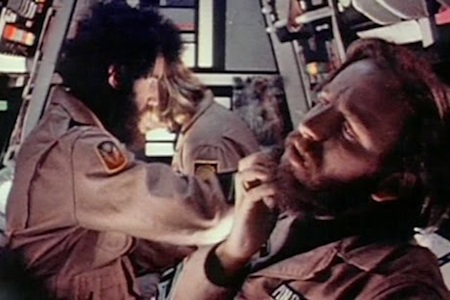
Dark Star is the feature-directing debut of John Carpenter, who recently seems to have one of his older films remade every other year: Halloween (1978 and 2007), Assault on Precinct 13 (1976 and 2005), The Thing (1982 and 2011). Dark Star hasn’t been remade yet, but in a way it already was. It was originally a 45-minute student short when the film was picked up for theatrical release, but the distributor wanted the film expanded to feature length, so Carpenter and classmate Dan O’Bannon, who wrote and starred in the film, shot another 38 minutes. If you look at this timeline, you can see the original footage from the short in the bottom, and the added footage on the top, which makes up most of the middle section. Does it amount to mere padding, or does it actually flesh out Dark Star into a fully realized film?  

The main additional sequence involves the astronaut Pinback, played by O’Bannon, chasing an alien that’s obviously a painted beach ball with claws stuck to it. The sequence encapsulates a lot of Dark Star’s oddball charm as a sci-fi parody with a frathouse sense of humor. It’s worth noting that O’Bannon would rework the stowaway space creature premise when he wrote the script for the first Alien movie, changing the tone from comedy to horror. The entire premise of Dark Star plays like a comic dry run for Alien: an apathetic space crew performing routine missions, suddenly faced with a life and death crisis. In another added scene, we see one of the spacemen playing the five-finger filet game that would be featured in James Cameron’s Aliens. Here it’s part of a long sequence that captures something that’s almost always overlooked in sci-fi adventure movies: the sheer boredom of spending years traveling across galaxies. In this case, the extra footage is essential to giving Dark Star its scrappy, lived-in feeling, setting it apart from just about every other sci-fi film.

Maybe padding a movie can work because it frees the filmmaker to explore the space around a story, and discover where their true interests and talents lie. There’s another great example in another first feature: Beast from Haunted Cave, a 1959 B production that’s an odd mashup of heist movie with monster movie. Coincidentally, it too has a connection to the Alien franchise, as the monster cocoons its victims along the walls of its dark lair. Even with its blending of sci-fi and crime movie, the film tracks pretty comfortably within the conventions of fifties B movies, thanks in part to its hard-boiled dialogue. But when the film was sold to television, they had to shoot additional scenes to fit broadcast length.

That led to a long and completely extraneous exchange between one of the gangsters and a girl who disappears entirely from the film after this scene. Needing to fill up time, director Monte Hellman just lets them flirt and improvise for as long as they can sustain it. The result is unlike anything else in the film, as if the 1960s counterculture crash-landed into a fifties drive-in flick. There’s an unmistakable freshness and openness in their body language and rapport, as if the screen is just a wide-open field of possibilities, freed of genre requirements. And when you look ahead to Hellman’s more famous films like The Shooting and Two Lane Blacktop you can see that this is where his vision began. All it took was a little extra room to play with.

Kevin B. Lee is Editor in Chief of IndieWire’s PressPlay Video Blog, Video Essayist for Fandor’s Keyframe, and a contributor to Roger Ebert.com. Follow him on Twitter.

VIDEO: An Evening with Lawrence Jordan, Pioneer of Experimental Animation

VIDEO: An Evening with Lawrence Jordan, Pioneer of Experimental Animation

Originally published at Fandor.

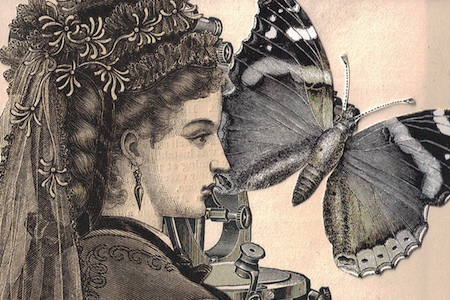
At an energetic 78, Lawrence Jordan may be riding the peak of his career. A major underground film figure since the ’60s (he co-founded the indispensable filmmakers co-op Canyon Cinema), Jordan has amassed a stunning body of work over the decades, with his pioneering collage animations holding firm as his signature creations. While films like Duo Concertantes, Our Lady of the Sphere and Orb made him a solid fixture on the experimental scene, his recent works like Enid’s Idyll, Beyond Enchantment and Solar Sight (his first to use color photographs) show him as joyfully engaged as ever in vision quests. As Michael Atkinson wrote on Keyframe earlier this year, “Nobody’s films come packing so many spontaneous ecstatic moments, in a recognizably and rapturously gorgeous context as Jordan’s.”

In November Jordan travelled to Chicago to present his work at the Gene Siskel Film Center and the Logan Center for the Arts at the University of Chicago. This video essay is a lively record of the latter event, where Jordan not only answered questions about his work but demonstrated it in real time, using an animator's table to show how he manipulates his beloved cut-outs of vintage engravings to create dream-like, free-associational sequences of motion and sound. He talks about how his working process with cut-outs and music, acknowledges the influence of artist Max Ernst on his work, and explains why there are so many butterflies populating his image-scapes.

Kevin B. Lee is Editor in Chief of IndieWire’s PressPlay Video Blog, Video Essayist for Fandor’s Keyframe, and a contributor to Roger Ebert.com. Follow him on Twitter.

VIDEO ESSAY: Out of Bounds – Making Football Movies Outside the NFL

VIDEO ESSAY: Out of Bounds – Making Football Movies Outside the NFL

What would the NFL be today without NFL Films? Now in its 50th year, NFL Films took a professional pastime and ascended it into the realm of legendary drama. Developed by such promethean talents as producers Ed and Steve Sabol and narrator John Facenda, NFL Films imbued the gridiron game with the powers of cinematic storytelling, divine narration, intimate field footage, and production values of the highest order. NFL Films has been called "the greatest PR machine in professional sports history, one that could make even a tedious stalemate seem as momentous as the battle of the Alamo." (Matt Zoller Seitz, Salon)

But if you stripped away the glamour and polish of these productions, what would a football movie look like, and what interest would it hold?

One might find an answer in the acclaimed documentary Harvard Beats Yale 29-29. The film revisits one of the most thrilling college games ever played, back when Yale was a nationally ranked team, facing off against underdog and archrival Harvard. It's a modest production that lacks the dramatic music, voice of god narration or high quality game footage you'd expect of a sports movie. Instead, it simply interviews the game’s players. One of them happens to be Tommy Lee Jones, who played guard on the Harvard team. But the Oscar winning actor is upstaged by his teammates and foes, who vividly recall every moment and how it would shape their character for a lifetime. What emerges is how one game of football changed its players from within, throwing them into a moment much larger than themselves and making them into men.

But another film, Blood Equity, shows the unmaking of men through the long-term effects of professional football. The film exposes the preponderance of mental and physical illnesses plaguing retired NFL players, as well as the resistance of the NFL Players Union to compensate these injuries. The film is produced by NFL veteran Roman Phifer but without the support of the league, which meant that he couldn’t use any footage of NFL games. With those glamorous scenes left on the sidelines, what we see instead are ex-superstars reduced to shells of their former selves: Hall of Fame players descending into dementia, unable to recall their past exploits or even recognize their own families. It’s a side of the game that the NFL doesn’t want you to see, though they spotlight and even glorify its causes every Sunday. A film like Blood Equity forces us to confront head on the seductive aura of professional football and what human value we truly hold for the men who play it.

Originally published on Fandor Keyframe.

Kevin B. Lee is Editor in Chief of IndieWire’s PressPlay Video Blog, Video Essayist for Fandor’s Keyframe, and a contributor to Roger Ebert.com. Follow him on Twitter.

VIDEO ESSAY: BEAVER’S LODGE: THE BAD AND THE BEAUTIFUL (1952)

VIDEO ESSAY: BEAVER’S LODGE: THE BAD AND THE BEAUTIFUL (1952)

This is the sixth installment of BEAVER'S LODGE, a series of video essays narrated by actor Jim Beaver which will offer critical takes on some of Beaver's favorite films. Jim Beaver is an actor, playwright, and film historian. Best known as Ellsworth on HBO’s Emmy-award winning series DEADWOOD and as Bobby Singer on SUPERNATURAL, he has also starred in such series as HARPER'S ISLAND, JOHN FROM CINCINNATI, and THUNDER ALLEY and appeared in nearly forty motion pictures. You can follow Jim on Twitter.

Reckoned by many to be one of the best films about Hollywood, The Bad and the Beautiful is pungent and occasionally acidic, and at the time of its release a clear sign that things were changing in the movie capital. Even one or two years previously it would have been unimaginable for a major studio to release a film quite as disparaging of the people at the top of the heap in movie making.

Of course, sixty years have passed since this film, and much, much more biting and bitter films have been made about the way movies are created. But within the context of its time, and for the quality of its writing and much of its acting, The Bad and the Beautiful is a notable film. I don't find it as compelling as some do, but it's a very entertaining film. In many details it does not match how films are made (at least today), but in essence, in spirit, much of what is at play in this film is still a ripe part of Hollywood today.

Kirk Douglas is Jonathan Shields, a charismatic but unscrupulous producer who has burned every bridge he ever crossed. He asks three former colleagues/friends to put aside their spite for him and help him launch a new film. As the three consider the proposition, we are presented the stories of their individual pasts with Douglas's character. Barry Sullivan is a writer-director whose dream project was taken away from him by his friend Shields. Lana Turner is the alcoholic daughter of a famed actor (read Diana Barrymore and John Barrymore), who is romanced by Shields only in order to get from her what he wants to advance his career. Dick Powell is a novelist whom Shields drags to Hollywood and tragedy. Douglas and Powell, in particular, are good, giving broad and quiet performances, respectively, that are quite true to the types they embody. Gloria Grahame, an actress I like a lot, won an Oscar as Powell's southern-belle wife, though this is scarcely her best performance and her "southern" accent is almost more bull than belle.

Director Vincent Minnelli and Oscar-winning screenwriter Charles Schnee do a very good job with this drama, and the score and photography are rich. The Bad and the Beautiful has lost some of its steel over the years, but it's a very good movie that suggests that there are a lot of people in Hollywood who are either bad or beautiful, or both. That's an over-simple generalization, but it makes for an effective movie.
 

VIDEO ESSAY: The Miike Mutations

VIDEO ESSAY: The Miike Mutations

With Takashi Miike's new film Lesson of the Evil blasting through the Roma International Film Festival, here's a video essay look at some of his past work, focusing on his consistent pattern of using existing material from a stunning variety of sources (manga, video games, theater) as a springboard for his innovative filmmaking. Lesson of Evil is just the latest instance of his "adapt or die" approach, being based on a bestselling novel. 

TRANSCRIPT

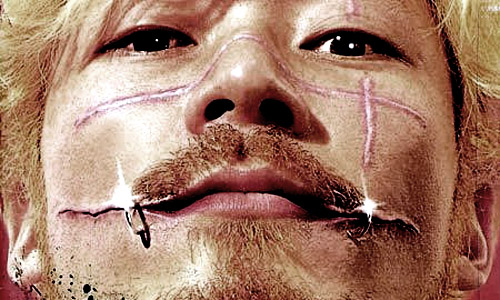
As revelatory as it is revolting, Ichi the Killer is hailed by some as one of the most original action films of our time, depicting moments of mayhem that other movies couldn’t imagine in their worst nightmares. But to call this film original misrepresents a key point—it is actually an adaptation of a Japanese manga by Hideo Yamamoto, one filled from cover to cover with creative acts of violence that are fairly commonplace in Japanese graphic art, but almost inconceivable as live action. That is until Takashi Miike rose to the challenge to bring these crazed visions to the screen, putting his own creativity to the test in pushing cinema to the limits of what it can show and what the audience can endure.

Adapting works from other media is a recurring springboard for Miike’s creative leaps, mutating them into his own unique works. Yakuza: Like a Dragon reworks a highly popular video game, transposing the game’s iconic characters to the screen, and choreographing its battles in game-like fashion. At the same time the movie works against the game’s linear storyline, adding digressions and subplots to weave a multi-player network of chance encounters and outcomes.  Miike may take inspiration from the video game, but he’s after more than just a faithful translation to screen.

He takes the same approach in directing his first major stage production, Demon Pond. Working on an oversized stage that dwarfs his actors, suggesting a vast space of possibilities, Miike takes this 92-year-old play as a template to mix different elements: traditional Noh and Kabuki theater with improvisation and Western dramatic techniques. He also breaks from his violent habits: unlike his more popular yakuza gangster flicks, there’s just a single act of bloodshed, whose impact registers as profoundly as any violence inflicted in his films. Written by Izumi Kyoka, a 20th-century master of the grotesque and the fantastic, the play is a magical world where sea creatures can talk and conspire against humans and a petulant goddess is a slave to the mortals. Adapting this play may be Miike’s way of linking to Kyoka’s legacy of limitless imagination.

But Miike doesn’t always need existing source material to be creative, though it helps to have a strong script. One of Miike’s best screenwriters, Sakichi Sato, adapted Ichi the Killer and wrote Gozu, one of Miike’s most surreal and hilarious works—the following are spoilers but they only make up half of this menagerie of weirdness. It features a hapless gangster who kills his own boss only to meet him later reincarnated as a woman. He also gets kissed by a cow-headed man, is seduced by a kindly innkeeper who makes her own milk, and runs into Sato himself as a cross-dressing waiter (Sato was also the waiter named Charlie Brown in Kill Bill). It’s a mindbending psychosexual odyssey with the biggest revelation emerging from a pair of designer red panties—the birthplace of Miike’s ultimate mutation, his filmmaking once again renewing itself.

Originally published on Fandor.

Kevin B. Lee is Editor in Chief of IndieWire’s PressPlay Video Blog, Founding Editor and Video Essayist for Fandor’s Keyframe, and a contributor to Roger Ebert.com. Follow him on Twitter.

VIDEO: Will Abraham Lincoln Pull a “Spielberg Face?”

VIDEO: Will Abraham Lincoln Pull a “Spielberg Face?”

With Steven Spielberg's highly anticipated Lincoln opening this weekend, it's a fitting occasion to revisit this viral video essay by Press Play's editor Kevin B. Lee. Let's start placing odds: how many Spielberg Faces will Daniel Day-Lewis pull as Honest Abe?

VIDEO ESSAY: Abraham Lincoln in Movies and TV (1915-2012)

VIDEO ESSAY: Abraham Lincoln in Movies and TV (1915-2012)

Steven Spielberg’s Lincoln is a high-profile study of one of America’s greatest presidents leading his country through the perilous Civil War. Too bad it doesn’t show him hunting vampires. Spielberg’s movie may be the more historically accurate evocation of the legendary Lincoln, to say the least, but if there’s one thing that Abraham Lincoln: Vampire Huntershows us, it’s that Lincoln, as icon, transcends historical fact. The Lincoln legend informs our ideals and sparks our imaginations. Lincoln is so familiar to us now; why not have fun with him? The problem with Abraham Lincoln: Vampire Hunter is that ultimately it can’t emancipate Lincoln from the mantle of seriousness that burdens his mythic persona, and the movie ends up taking itself too seriously.

Still, playing fast and loose with Honest Abe is at an all-time high. Beyond the vampire hunting, Lincoln’s been engaged in light sabers duels with George W. Bush in the animated TV skit-com Robot Chicken; he’s gone axe-wieldingly evil in Matt Groening’s Futurama and set George Washington’s wooden teeth ablaze in MTV’s Celebrity Deathmatch.  Lest we think this jocular treatment of this particular president is a recent development, track back to the dawn of the talkies, when Abraham Lincoln is caught babysitting Shirley Temple’s Confederate brat in 1935’s The Littlest Rebel.

What is it about Lincoln that stirs our fantasies? Some answers might be teased out of the enigmatic The Death of Abraham Lincoln (in Three Parts), a 12-minute short by experimental artist Ben Russell that’s filled with American iconography: guns, railroads, the frontier. But there’s nothing idealistic about it—it’s gritty and a little psychotic. A woman obsessively trains to be an assassin. A clown watches toy cowboys and Indians battling on his television. Russell himself impersonates Lincoln like a boy rehearsing for a class play. Indeed, these are images that populate the mind of an American schoolchild caught between history lessons and Saturday cartoons; here they are set loose upon an anarchic wasteland, colliding in a violent free-for-all.

But to find the touchstone for the orthodox rendition of movie Lincoln, look no further than D.W. Griffith’s Abraham Lincoln. Griffith was the first to depict Lincoln in a feature film—the first feature film, The Birth of a Nation—and jumped at making the first-ever talkie about his idol. Both films feature meticulously faithful re-enactments of the president’s assassination at Ford’s Theater, and the sound feature bears the external trappings of authenticity.

Walter Huston’s rock solid baritone, however, veers from historical accounts of Lincoln’s tinny tenor (something thatDaniel Day-Lewis tries to rectify in the Spielberg film); but he set the tone for many a stentorian Lincoln to follow, from Raymond Massey to Hal Holbrook to Gregory Peck.

On the other hand, Huston and Griffith tread fairly uncharted territory with early scenes of a young, randy Abe cavorting with first love Anne Rutledge, only to have her untimely death drive him to suicidal depression. This calamity forges Abraham’s resolve to become a greater Lincoln, and is but one of a series of Christ-like trials on the path of seemingly divine self-possession. It’s a maturation pattern of divine destiny that plays out in just about every Lincoln biopic, even the one where he saves the Union from the scourge of Dixie blood-suckers.

Originally published on Fandor.

UPDATE: This aired after the video was published, but we'd be remiss if we didn't add this to the pantheon of Lincoln portrayals:

Kevin B. Lee is Editor in Chief of IndieWire’s PressPlay Video Blog, Founding Editor and Video Essayist for Fandor’s Keyframe, and a contributor to Roger Ebert.com. Follow him on Twitter.