Watch: A Video Essay Ode to Martin Scorsese’s BRINGING OUT THE DEAD

Watch: A Video Essay Ode to Martin Scorsese’s BRINGING OUT THE DEAD

For the last year or so, Scout Tafoya has been posting a fantastic series of video essays called "The Unloved" at RogerEbert.com. The series takes as its subject films which were underappreciated  at the time of their release and which deserve, in Tafoya’s view, another look; other films in the series have been Alien 3, The Village, and John Carter. With each piece, Tafoya shows a great deal of passion for the work that goes into making these films, as well as for the passion of the directors themselves. Tafoya’s most recent installment was on Martin Scorsese’s Bringing Out the Dead, a film describing the crazed and vaguely hallucinatory careenings of a New York ambulance driver played by Nicolas Cage, thrust up against life and death at their most intense. Tafoya gets at the heart of a couple of irreplaceable elements in this film. One is the presence of New York, shown as only Scorsese could film it: dark, dangerous, wild, uncensored, gleeful, mournful, desperate, cacophonous, deathly silent. The other is Cage’s terrific performance, possibly one of his best in Tafoya’s estimation. The video essay does a beautiful job of making a point at its outset and following it through, managing to interrogate that point at various junctures along the way without going off course–and also managing to speculate meaningfully on why the film was not as critically revered as some of Scorsese’s other films have been. When presented in this light, its neglect becomes hard to understand.

Watch: A Video Essay on the Truly Iconic Figures in Sergio Leone’s ONCE UPON A TIME IN THE WEST

Watch: A Video Essay on the Truly Iconic Figures in Sergio Leone’s ONCE UPON A TIME IN THE WEST

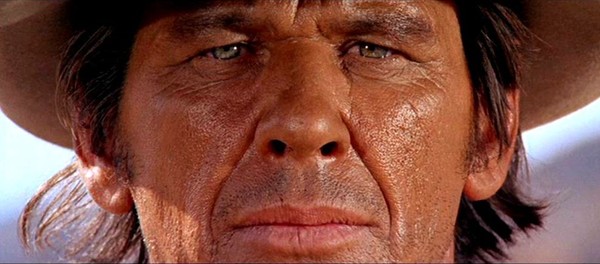
Sergio Leone, as indicated in such films as Once Upon a Time in the West, The Good, the Bad, and the Ugly, and A Fistful of Dollars, and as shown in this beautiful video essay by Michael Mirasol, recently posted at Movie Mezzanine, understood a couple of basic things about the human gaze. One was that if you look into another’s face for a long time, really, hold the gaze, really stare deeply, the effect is unsettling. You begin to see things in the face: possibilities, flaws, other faces, perhaps. The gravity of an expression grows, the longer you look at it. A well-placed squint becomes a predictor of future danger. Similarly, a human figure, positioned against a landscape, may in one sense seem dwarfed by it, as the figures in Once Upon a Time in the West seem here, but in another sense become all you notice in the frame. The story you’re watching ultimately comes to hinge on these solitary figures and their relationship to the landscape–which begins to be equated with ther relationship to the universe itself. It’s been said that the grandstanding expressions the American Founding Fathers wear in early portraits come directly from the proud way in which the subjects often carried themselves, which would today seem exaggerated; similarly, the slow strut of a Charles Bronson, a Henry Fonda, a Clint Eastwood, or a Jason Robards in one of Leone’s westerns suggests, when one considers the context Mirasol offers here, a readiness for battle with consuming forces (history, industry, the railroads) which will eventually win out, but which the humans will not give up without a struggle–and in so being, the figures Leone portrays become equivalent with the heroes of Ovid, Homer, and Virgil, timeless icons surrounded by swirling dust.

Watch: Nicolas Winding Refn’s Film Violence Is Horrible and Beautiful: A Video Essay

Watch: Nicolas Winding Refn’s Film Violence Is Horrible and Beautiful: A Video Essay

This video essay, in showing us the most violent snippets in Nicolas Winding Refn’s filmography, including films such as Bronson, Drive, and Only God Forgives, raises an important question. A couple of questions, really. The scenes Dávid Velenczei has assembled include a shot of good ol’ Albert Brooks stabbing a hapless old friend more than repeatedly; a man being strangled by two thugs, a rope, and the force of gravity; a lot of bloodied faces; many bloodied mouths; and the fairly blank face of Ryan Gosling as a visual thread. The scenes here are very difficult to watch, but they’re also beautiful: precise, elaborately composed, lush. So, the first question raised is this: is it okay to eroticize violence in this fashion? For that is, indeed, what is happening. The carnage here is one step away from the Red Shoe Diaries in its affect and presentation, but that in itself is nothing new. The choreographed gunplay of Brian De Palma’s Scarface; the pastoral annihilation of Francis Ford Coppola’s Apocalypse Now or The Godfather; the orchestrated trouncing of Martin Scorsese’s Goodfellas, or Casino, or… or… And the viewer responds with a cringe but also a beckoning, like a particularly twisted flower leaning toward light: more, more. Because, as P.T. Barnum might have said, people love this stuff! And the directors in question (a tiny faction of a vast number) know this, and manipulate their viewers from a comfortable and profitable distance, begging the question: is the director morally culpable? Is this the proper use of film? Of course, the questions don’t stop there, or decrease in importance: the biggest of these is whether or not it’s okay to ask if such films are "okay," whether it is appropriate to apply moral judgments to aesthetic evaluations. If Peter Greenaway wants us to watch a man stuffed with food and then cooked for dinner (as he did in The Cook, The Thief, His Wife, and Her Lover), do you let the visceral response (roughly translated as "wow, gross") or the analytical response ("beautiful glint on that body-glaze") take hold, or do you acknowldge that the two are linked and have a somewhat symbiotic relationship, each drawing from the other? And beyond that, what’s a "proper" use of film?

Watch: A Video Essay on Ridley Scott’s Lyrical Vision of Modernity in BLADE RUNNER

Watch: A Video Essay on Ridley Scott’s Lyrical Vision of Modernity in BLADE RUNNER

Evan Puschak, or "The Nerdwriter" on YouTube, recently posted a probing and highly articulate video essay on Ridley Scott’s "Blade Runner." In it, he manages to address, quite fluidly, many of the most significant themes and accomplishments of a film that, for many people, is an aesthetic ground zero, a point of measurement for all other science fiction films to follow. I’m tremulous on science fiction films, and not entirely confident in Scott’s films (the greatness of Alien, Thelma and Louise, and Prometheus aside), but Blade Runner‘s many virtues aren’t lost on me, and it’s a thrill to watch them elucidated here: the stormy, overcast, dark-lit mood, which has practically been unequalled since the film’s release; Harrison Ford’s impressive performance, which Puschak highlights by focusing on a little-noticed exchange Deckard has with a liquor store clerk, and making us watch the pathos in his expression; and the intensity of the clash between old and new, as in one scene where a replicant leads Deckard down a dark alleyway, just missing a group of bicyclists. Bicyclists? Here? In 2019 Los Angeles? There are no shortage of homages to this well-covered film, but this piece is certainly one which brings home Scott’s skill at its best.

Watch: Imagine a Film In Which Earth (Seen From the ISS) Is the Main Character

Watch: Imagine a Film In Which Earth (Seen From the ISS) Is the Main Character

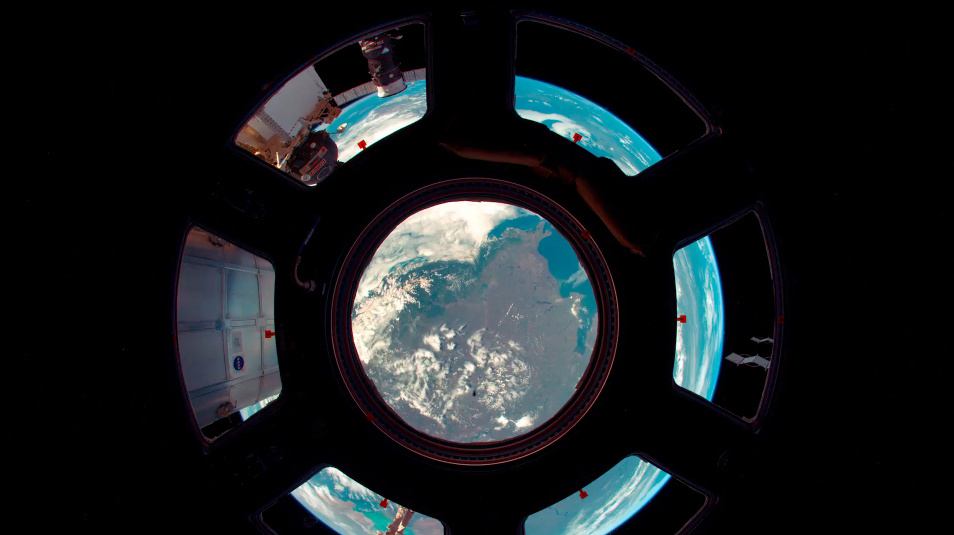
While photos of Earth from space almost always catch us by surprise, this video essay by Guillaume Juin is a different animal. Using footage taken by NASA scientists, which is, by definition, in the public domain, Juin made a small film–which could properly be called a video essay, by the standards applied to most of the pieces posted here–showing a voyage around Earth by the International Space Station, which travels at 28 kilometers per hour. Or rather, several voyages, merged into one exhilarating journey, cast in blazing, sharp colors, with explosions of light in the darkness that represent entire cities on our planet. In his acknowledgments, Juin thanks the members of five different ISS expeditions for footage shot over the course of three years, all available at the Earth Science and Remote Sensing Unit of the NASA Johnson Space Center. Really, though, the credit should go to Juin. Imagine as we might what traveling in outer space might be like, in films like Gravity, Insterstellar, and their myriad ancestors, there is very little substitute for reality, as this film shows; the exhilaration it offers is authentic, and the wonderment it causes (if you’re receptive enough) is quite real.

Watch: A Video Essay on the Afterlife, from Albert Brooks to Woody Allen

Watch: A Video Essay on the Afterlife, from Albert Brooks to Woody Allen

This remarkable piece, which takes us through visions of the afterlife ranging from Albert Brooks’ Defending Your Life to Woody Allen’s vision of Hell in Deconstructing Harry, threaded along with clever music (Jessica Lurie’s cover of David Byrne’s "Heaven" for the former half, "Disco Inferno" for the latter half), managing to instersperse cameos from South Park‘s version of the Devil, Seth Rogen, and Harry Potter along the way, raises a question: how do we arrive at these visions? Heaven, in the Christian sense, is thought of as a reward for good behavior–and in many of the scenes "brutzelpretzel" has arranged here, it’s a tranquil place, even beautiful (as in What Dreams May Come, with its poignant Robin Williams performance). But what about the person sent there? What if tranquility isn’t their idea of a reward, nor physical beauty? For a person who had been active all his or her life, would an eternity of inactivity and comfort be a reward? Similarly, is a burning, chaotic pit necessarily the best punishment for a person who has done evil deeds for a lifetime? In both extremes, many of the characters seem baffled; the most apparent emotion on the face of Woody Allen’s Harry as he descends into the inferno ("Floor 7: The Media") is disgruntlement–and on that of Richard Dreyfuss’s pilot in Always, confusion. Watching these afterlife sequences makes one think, mainly, that our cinematic visions of Heaven and Hell tell more a story of displacement than of right and wrong–and that when Keanu Reeve’s Ted says "No way" upon learning he is dead, and Alex Winter’s Bill replies, "Yes way," this is perhaps as profound a statement as a character might realistically make on the experience: that of stunned acceptance.  

Watch: A Video Essay about Aliens in Movies: Scary, Wondrous, Awful, Magnificent

Watch: A Video Essay about Aliens in Movies: Scary, Wondrous, Awful, Magnificent

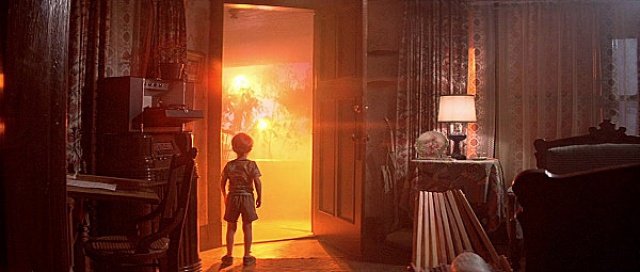
As I watched this briskly edited video essay by Waterclock about aliens in movies from Alien to Close Encounters of the Third Kind to E.T. to Super Eight, I found myself, oddly enough, drawn back to a memory from my childhood that had very little to do with outer space, but every bit to do with unfamiliar visitors. I grew up in an area of Dallas called the Park Cities, so named for the ample greenery, lush landscaping, and manicured lawns to be seen everywhere. It was an affluent neighborhood, and an implicitly guarded one; as I grew older and smarter, I grew increasingly frustrated and disgusted with the fact that anyone who wasn’t white or, for that matter, wasn’t driving a fairly expensive car was under suspicion in the area. In any event, when I was young, a group of gypsies moved into my neighborhood. No one knew where they came from. No one knew much about them, period, except that they were supposed to be "dangerous." The primary evidence of their dangerousness was their blunt behavior in grocery stores; an anecdote about "one of those gypsies" throwing a loaf of bread across the Safeway Market down the street from me because he "didn’t like the price" made the rounds repeatedly. I read a lot at that time, and my main curiosity about the gypsies was whether they had a covered wagon with them, and whether they played gyspy music on elaborately painted violins. This didn’t seem to be the case. The only palpable detail I gleaned about them, having never seen one of them, was that they wore jogging suits, the idea being that they’d stolen them, for how would traveling gypsies obtain jogging suits otherwise? According to popular wisdom, "they just took things." They were "greedy." I was told, in school, to watch out for them, to stay out of alleys, because they apparently loved alleys–and if I saw anyone in a jogging suit who looked, well, "different," to be on my guard. Apparently, the gypsies "traveled in groups": another criterion. The Park Cities had a local newspaper that conveyed to local residents the news of their biosphere, and the gypsies were definitely a hot item–the small organ probably expended more ink on the gypsies than it did on any other subject in its history. Though the gypsy furor died down, as well one might suspect, and without a ringing certainty as to whether the gypsies were, in fact, members of the Roma people, it taught me a valuable lesson about the American character. Americans are full of fear: fear of invasion, fear of theft, fear of difference, fear of instability, fear of death, of sickness, and, most sadly, of showing vulnerability. Americans flock to watch films about aliens, and, in particular alien invasions, because these films touch a crucial American nerve: what if our safety were threatened by forces we didn’t understand? Or, put another way, what if these forces simply showed up one day, and we had no idea what to do other than eliminate them? Or, put more accurately, what do we do about those who are different from us? Sadly, acceptance is not a part of the American sensibility, despite what certain parts of the Constitution might have us believe. Correspondingly, the alien narratives presented to Americans are always ones of destruction, of terror, of invasion, of a foreign menace moving in that must be stopped. This video piece brings home the excitement inherent in this narrative, the quickening of the blood that takes place when we believe we have something to defend, and it does so with great skill. In so doing, though, it points up the scary side of our country’s fascination with these creatures, and it makes viewers like me wonder what that fascination might mean–and, beyond that, if we might ever grow past the fears that make these films so successful.

Watch: A Video Essay About Witches in Film

Watch: A Video Essay About Witches in Film

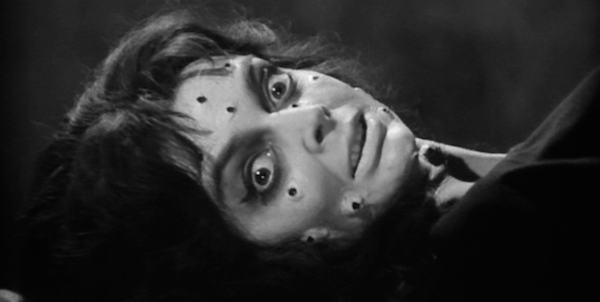
The venerable Film Comment has started publishing video essays! Their first entry is a brilliant piece on witches in film by Pam Grossman. Grossman’s research was extensive, and fascinating. We see clips from many countries, times, and aesthetics here; the 16-minute video should answer anyone’s questions about the roles of witches in film, who played them, what movies they appeared in, and how they’ve changed over time. Grossman offers us the obvious roles that everyone knows, of course, from Angelina Jolie’s stepmother in Maleficent to the Wicked Witch of the West in The Wizard of Oz–but she also digs significantly deeper into film history to roll out clips from Mario Bava’s Black Sunday, George Miller’s The Witches of Eastwick and George Romero’s Season of the Witch. The crucial message here is that the state of being a witch–should we call it witchery?–is empowering to the witch, and potentially either threatening or helpful to those within the reach of her wand. On this tour of cinematic witch history, Grossman takes us from a Scandinavian silent film all the way up to the present day, being careful to show the ambivalence of the witch figure throughout, even highlighting such films as The Craft, in which witchcraft is both an agent of needed revenge (as an outlet for teen angst) and problematic for its young users. This expertly edited and thoughtfully executed piece would be an informative watch for anyone interested in the history of witchcraft or the changing face of the occult in film.

Watch: A Video Essay About Jacques Tati, A Glass Door, and The Importance of Appearances

Watch: A Video Essay About Jacques Tati, A Glass Door, and The Importance of Appearances

It would be very easy to watch the event which forms the center of this beautiful video essay from David Cairns for Criterion, on Jacques Tati’s Playtime, and think it was merely a gag, nothing more, nothing less. Monsieur Hulot breaks a glass door at a fancy restaurant because he is trying to enter too politely; everyone pretends it’s still there; madcap and hilarious hijinx ensue. But, in fact, there’s more to it than that. As Cairns sagely points out, the gag has its own architecture, as the door’s parts become markers for a scene within a larger film. Beyond that, though, the gag is a telling one, about human nature and the desire to pretend, beyond hope, that everything is fine. The doorman continues to hold the door handle "open" for restaurant customers, even though there is no door; when the shards of the door replace ice in a champagne bucket, the drinkers think they are at fault when their champagne is warm. The short scene anatomized here points out something immortal about so much of physical comedy, and reminds us of an oft-forgotten fact: whatever it is we think the mind is, or may be, it is ultimately a product of the brain, and the body. What happens in the body, such as smashing into a door, ultimately happens within the mind as well.

WATCH: This New Video Essay Shows the Turning Point in Movies From SNOWPIERCER Back to Looney Tunes

WATCH: This New Video Essay Shows the Turning Point in Movies From SNOWPIERCER Back to Looney Tunes

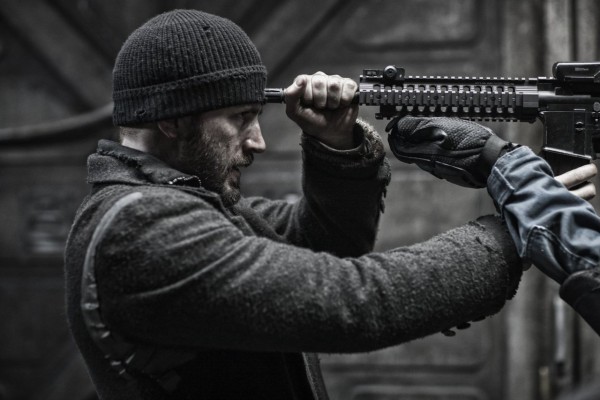
Tony Zhou’s newest video essay reminds us that a Warner Brothers cartoon, Snowpiercer, The Walking Dead, The Matrix, Eyes Wide Shut, Batman Begins, The Untouchables, and many other films have one thing in common: a point where, to quote the films (as the video does, repeatedly), "There’s no turning back." This would commonly be referred to in literature classes as the turning point, the spot in a narrative where the protagonist, the hero whose exploits you’ve been following throughout the story and the figure for whom you root for the most, must make a choice. The choice the character makes will send the narrative in one of several directions. Sometimes, Zhou suggests, the choice a story presents is not that complex; sometimes it’s the equivalent of turning left or right. Zhou uses Snowpiercer as an example of such a choice–a perfect example, indeed, since the characters in this film, imprisoned as they are on a train hurtling around the globe, can only go in one of two directions. In Snowpiercer, the left-right choice represents a dichotomy between two radically different castes or social strata, the ruling class vs. the downtrodden, impoverished class. In Eyes Wide Shut, to take a radically different example, the choice the masked figures offer Tom Cruise’s hapless interloper could affect the life or death of another human, as well as his own sense of himself as a moral being. In The Untouchables, the choice Jim Malone offers Elliot Ness is a choice between bending to the will of bullies or standing up for what he believes is decency. One question a piece like Zhou’s raises is: how common is it that a film offers us such a choice, any more? Is it possible that as cinematic history progresses, it is rarer and rarer that films hinge on gigantic moral questions which are no less gigantic for being represented by a simple choice between "right" or "left"? This ingenious piece does quite a bit of prodding in a very small space: kudos to the much-ballyhooed Tony Zhou for yet another job well done.