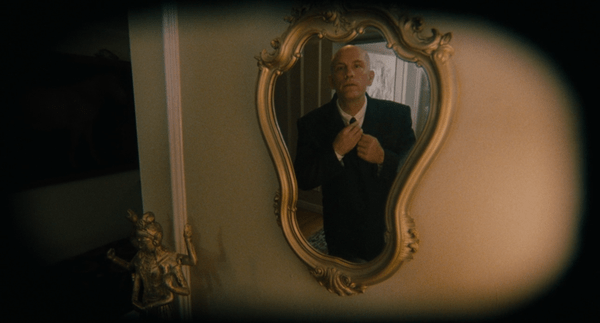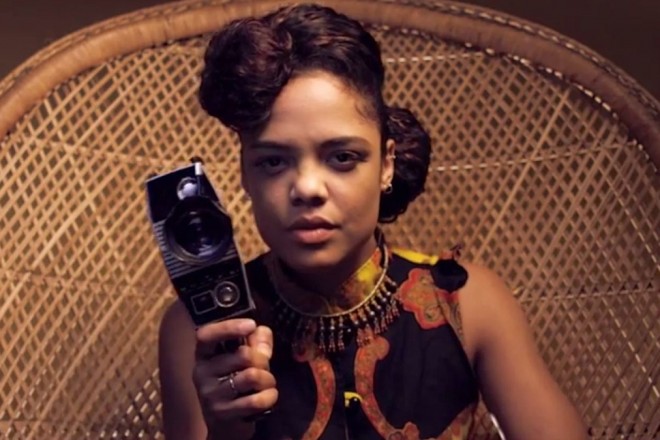
Watch: 2014: Year of the Iconoclast: A Video Essay

Watch: 2014: Year of the Iconoclast: A Video Essay

If
nothing else, 2014 will be the year in which we were reminded that a
film from Hollywood is more powerful a medium than any politician in
Washington–even before Sony’s The Interview threatened the shaky
international protocol between the US and North Korea. The fallout of
2013’s wild decadence of the upper class as a parody of the American
Dream landed into the more thoughtful, darker universe that commands the
recipients of those same trickle-down economics. Foxcatcher’s
slow-motion Greek tragedy and Snowpiercer’s literal-minded metaphor of
class division as a train engine could never have appropriately occupied
the same year that gifted us Leonardo Di Caprio blowing money, women,
cocaine and just about everything else in The Wolf of Wall Street and The Great Gatsby (though in all fairness, Nightcrawler‘s Lou Bloom wouldn’t
have been out of place shooting Gatsby’s dead body floating in the
pool). Last year’s actions of society brought upon the consequences of
the individual this year, and the results were fascinating, not to
mention impeccably scheduled: Obvious Child‘s low-key depiction of
abortion as a woman’s choice that doesn’t define her life directly stood
against the very recent Burwell vs. Hobby Lobby Supreme Court case
which put corporations’ religious rights above female birth control. Selma‘s reminder of a more shameful chapter of our American history will
no doubt be tinted by the very raw distrust of police brutality,
proving that the more things change, the more they stay the same. Nightcrawler reminded us, with cynicism, of the vicious cycle of
manipulation between the wants of the consumer and the supply of the
media–or is it the other way around?
The
debate can be endless as to whether films hold a mirror to our society
or if society merely copies from media; I like to be reminded of Roger
Ebert
‘s quote that movies are proof our our humanity,  for better or
worse. From the vantage point of a later future, it will be easier to
look back upon this year and see if the collective voices from our films
turned any tides or if one rogue wave didn’t make a cultural tsunami.
In the meantime, it’s clear that the microphone is finally coming down
to the people, whether it’s the African-American Millennials navigating
racism and identity in Obama’s America of Dear White People or the
radical notion that women have recreational sex in the main players of Wild, Obvious Child, and most famously Nymphomaniac. And in its own way,
that’s Goddamn revolutionary.

Serena Bramble is a film editor whose
montage skills are an end result of accumulated years of movie-watching
and loving. Serena is a graduate from the Teledramatic Arts and
Technology department at Cal State Monterey Bay. In addition to editing,
she also writes on her blog Brief Encounters of the Cinematic Kind.
Watch: Faces in the Work of UNDER THE SKIN Director Jonathan Glazer: A Video Essay

Watch: Faces in the Work of UNDER THE SKIN Director Jonathan Glazer: A Video Essay

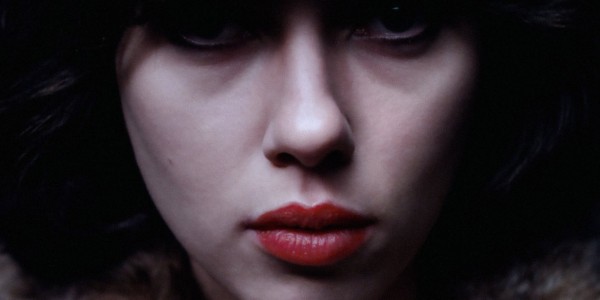
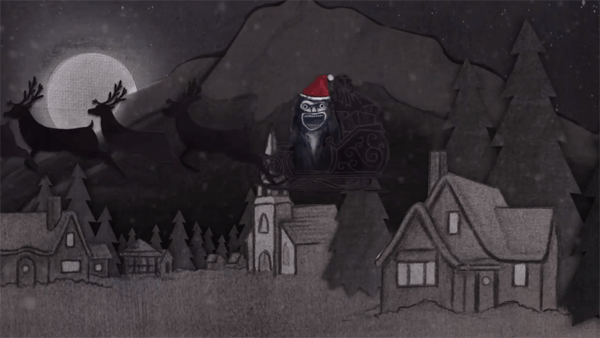
In looking at Shaun Higgins‘ video homage to Jonathan Glazer, director of Under the Skin, Birth, and Sexy Beast, what is most striking is the presence of the human face. Or rather, the human face made vaguely unhuman. If you repeat a word long enough, as we know from childhood, it will eventually lose its meaning. And if you stare at a human face long enough, its components will eventually stop adding up to the thing we call "face" and will eventually seem much more like a random collection of bones, arranged into an image which is familar to us but which we can’t quite place. Consider, for instance, the face of Scarlett Johansson, the star of the most recent of the three films addressed here. In her other dramatic work, we expect that look from her face, a highly sexualized and yet open stare, somewhat as if, before her gaze rose to meet the camera, her eyes have made a scooping motion, as if she were either taking something in or simply taking her time to look upwards. Here, she’s numb, raw, dead-eyed, in some senses not animalian, but quite literally alien, as if the vantage point from which she views her male victims and the world around her is so far removed as to be incomprehensible to us. Nicole Kidman’s mother in Birth, far from the animated, mischievous taunting woman she played in Moulin Rouge, Eyes Wide Shut, or even Flirting, is so frightened and disoriented by the experiences depicted in the film that to say she is "beside herself" is not far from accurate. And what’s most visible in the amalgamation of gangsters’ faces from Sexy Beast shown here are different degrees of toughness under strain, most memorably displayed in Ben Kingsley’s craggy mug. These films are obviously quite complex, balancing hosts of elements, too many to adequately summarize, but characters’ faces, as this video piece accurately points out, make focal points for the films, entryways into their beautifully orchestrated madness.   

Watch: What’s at the Heart of the Sadness of Christmas Movies? A Video Essay

Watch: What’s at the Heart of the Sadness of Christmas Movies? A Video Essay

This touching and wise new video essay made for Criterion by Michael Koresky and Casey Moore highlights an idea which you’ll see plenty on the news but highlighted very little on the streets: that the holidays are not, necessarily, happy times for all. In fact, the pressure  to be happy, to be cheery, to celebrate, to gather with others, to bloviate on "the milk of human kindness" may make some of us want to crawl into bed and stay there for several days, getting up only to open the blinds, look out at a populace buying unnecessary mittens to the (weird) tune of "Santa Baby," and then go back to bed, pondering what stores might be open, what take-out options will be available on this holiday when so many businesses are closed and when human commerce, indeed, seems to close up like a shell for 48 hours or more. Too bleak? Okay, sure. In any event, these two film scholars extraordinaires have gathered a collection of movies that celebrate the dourness of the holiday in melancholy writ large. The three they choose to focus on, out of a list that includes Fanny and Alexander, A Charlie Brown Christmas, Gremlins, Metropolitan, and Eyes Wide Shut, are remarkable documents of yuletide emotional froth: Claude Jutra’s Mon oncle Antoine, a tale of coming of age admist financial desperation set in Quebec; Eric Rohmer’s My Night at Maud’s, a story of sexual and moral temptation set on a snowy Paris Christmas night; and Arnaud Desplechin’s A Christmas Tale, which concerns that famed institution of the holiday season, the family gathering–with many twists. Throughout the essay, we see one gorgeous, haunting scene after another: snow-filled, empty streets; huge apartment buildings checkered with glowing signs of absence or presence in their half-off, half-on windows; ice-covered countrysides with one or two figures running across them. The accumulation of these images serves to remind us of an intelligent point which Koresky and Moore make in the film, which is that the holiday season is as much about absence as it is about presence, and it’s important to give both parts their due.

Watch: My Life as a Swedish Pop Star: The ABBA Videos of Lasse Hallström: A Video Essay

Watch: My Life as a Swedish Pop Star: The ABBA Videos of Lasse Hallström: A Video Essay

[The script of the video essay follows.]

Agnetha, Benny, Bjorn, Anna-Frid: their initials spell ABBA,
a nonsense word, childish, almost preverbal, as much a brand name as a
band.  Their distinctive image,
indivisible from their sound and their success, was in large part crafted by Lasse
Hallstrom, a director better known for his quirky comedies, like My Life as a Dog, What’s Eating Gilbert
Grape, Chocolat
, and The Hundred Foot
Journey
. Hallstrom was getting his start as a television director in
Stockholm when he was approached by ABBA’s manager, Stig Anderson, in 1974. Anderson
wanted Hallstrom to produce a series of promotional spots for the group.  He would go on to direct over thirty ABBA
videos. These videos created an indelible pop image and documented the
super-group’s meteoric rise and tragic fall. 

Before MTV, music videos were a novelty.  Elvis’ fifties musicals and Richard Lester’s
films for the Beatles in the 1960s established many of the conventions of the
genre. Swoony close ups, rhythmic jump cuts, and intimate, casual footage of
the band goofing off captured the experience of listening to the music, and
indulged the audience’s fantasy of hanging out with the group. Singers like Nancy
Sinatra and Lee Hazlewood filmed television specials that ran like mini-movies,
juxtaposing performance with narrative film-making, setting the singers against
exotic landscapes, creating fantasy visions of the songs’ lyrics.

Then along came ABBA. 
After struggling for years as solo artists, the members of the group
began looking beyond the shores of their native Sweden for popular
success.  They first gained it with their
victorious performance of Waterloo at the Eurovision song contest in 1974.  Already the band’s signature elements are in
evidence: Anna-Frid’s imposing perm, Agnetha’s flowing mane, glowing Swedish
complexions, and costumes that look like they were made by two teenage girls
left for an afternoon in the attic of their stage-actress grandmother.  By the time they approached Hallstrom,  their charming smiles and unaffected pleasure
in performance were so irresistible they almost disguised the rudimentary
choreography. Also, the singers’ sex appeal nearly made up for their goofy
looking male cohorts. ABBA may have been the first video stars in pop history.

Hallstrom’s earliest videos for the group were all seemingly
shot in a day in the same studio, with costume changes between songs. The
videos laid down a basic visual vocabulary that perfectly complemented the
music’s elegant simplicity.  Camera zooms
in, mascara, lipstick, dazzling smiles fill the screen; pan right, taking in
the whole band, swaying with the music’s rhythms; quick cuts in time with the simple
four/four beat.  The men, fixed in place,
rooted to their instruments, lend a visual anchor for the minimal movements of
the women, by contrast making them seem dynamic, vibrant.  And through it all, what costumes: flashes
of David Bowie, Marc Bolan, Gary Glitter, but always with a quaintly home-made,
theatrical quality that made ABBA approachable, and silly, but in a good way.

One of Hallstrom’s visual signatures came from an unlikely
source.  In Persona, fellow Swede Ingmar Bergman juxtaposed the faces of
actresses Liv Ullmann and Bibi Andersson in dreamlike sequences suggesting the
gradual merging together of their identities and the mental and emotional
confusion that follows.  Hallstrom
employed this motif in a humbler context to create a visual counterpart to the uncannily
sympathetic voices of the band’s two singers.

Eventually Hallstrom took the band out of the studio,
setting them against landscapes that complemented the band’s Nordic image;
frozen tundra, sunset at sea, eagle over mountains.  As their songs began to take on more esoteric
topics, Hallstrom created mini-films that dramatized their peculiar lyric
narratives.  It’s easy to forget how
preposterous it is for two Swedish women to be reminiscing about some long-ago
revolutionary battle with the song set against a roaring fire, Bjorn strumming
away on his acoustic guitar…at least until the camera pans back to reveal an
obviously fake starry sky above.  The
video for their most successful single, “Dancing Queen,” avoids disco glitz for
a decidedly more downmarket club experience; the dancers all seem to be
underage, underscoring the song’s wistful nostalgia, as the singers look across
the generation gap at a girl having the time of her life. 

As the band continued to climb international pop charts,
Hallstrom responded to their global fan base with videos that allow us to hang
out with ABBA, strolling down the streets of Stockholm, even sharing
breakfast.  These intimate moments made the
band resemble the most successful double date in pop history. 

But this happy intimacy wasn’t to last.  In January of 1979, Agnetha and Bjorn
announced their plans to divorce. 
Anna-frid and Benny followed in 1981. 
Although they’ve repeatedly claimed that “The Winner Takes it All” was
not autobiographical, the video begins with a montage of the band in happier
times, before cutting to Agnetha, her curls hanging limply, mascara smudged,
face pale from crying: this is one of more nakedly honest images of despair
ever shown in a music video.  Hallstrom’s
lighting is natural, intimate, the editing restrained, with only the occasional
freeze frame to suggest the happier moments are snapshots of a time now
lost. 

“One of Us” is even more abject, portraying Agnetha
unpacking alone in a new apartment.  The
lighting is stark, the contrast harsh; this is ABBA’s first film shot on actual
videotape, and the colors seem drained of all their former vibrancy.  For one brief moment there is a splash of
yellow across the screen, recalling happier days, brighter costumes. 

Played from beginning to end, Hallstrom’s videos for ABBA
can be watched like one of his wistful comedies, youthful eccentricity and
goofy innocence giving way to bitter experience. Beyond telling us more about
one of the great pop bands than any of the numerous documentaries and tell-all
biographies that followed the band’s last performance, these small films created
a visual vocabulary for the video era that followed.

Nelson Carvajal is an independent digital filmmaker, writer and
content creator based out of Chicago, Illinois. His digital short films
usually contain appropriated content and have screened at such venues as
the London Underground Film Festival. Carvajal runs a blog called FREE CINEMA NOW which
boasts the tagline: "Liberating Independent Film And Video From A
Prehistoric Value System." You can follow Nelson on Twitter here.

Jed Mayer is an Associate Professor of English at the State University of New York, New Paltz.

Watch: A Beautiful Film Based On Criterion DVD Covers

Watch: A Beautiful Film Based On Criterion DVD Covers

This dizzying short film made by ::kogonada for Criterion’s web site is a moving gallery of cover images from the company’s ever-expanding collection of DVDs and Blu-rays, created to advertise the book Criterion Designs, which presents more than 30 years of art from the company’s products. As one image after another clicks by, covers along with clips from films by Wes Anderson, Akira Kurosawa, Harold Ashby, Alfred Hitchcock, Roman Polanski, Francois Truffaut, Fritz Lang, and anyone else you might name, a thought might arise: what’s in a cover? We’re told not to pay attention to it, to remain focused on what’s inside the packaging rather than outside it, but how can we do this? It’s not that we’re superficial beings, when all is said and done; it’s clear that the film inside the DVD box must be a more moving experience than the still image on the cover. And yet the cover represents something. It’s our last reminder, before we watch samurai go sword to sword, before we watch young Harold mock-kill himself before falling in love with batty Maude, before we dance around in circles with Jules and Jim and everyone we know, that what you are watching is a manufactured thing. It took years for someone to make, a tremendous amount of discipline, the coordination of hundreds of skilled laborers, all for the creation of something which flies across our retinae quite easily, something which was designed to be received by us without a thought for the toil that goes into it. What’s interesting about these Criterion covers is how much personality there is in them, and how handcrafted they seem, how much and how meaningfully the seams show, as if they were designed to appeal to the part of us that understands that a filmmaker is an artist, as much prey to quiet, personal moments of inner torment as anyone, just with an ancient medium for sharing them, whose challenges constantly vie for primacy over its rewards. 

Watch: A Video Essay on Pilgrims in Film: Tarkovsky, Powell and Pressberger, Marker, Ford, Denis

Watch: A Video Essay on Pilgrims in Film: Tarkovsky, Powell and Pressberger, Marker, Ford, Denis

For moviegoers flocking to see Jean-Marc Vallée’s film adaptation of Cheryl Strayed’s Wild, this beautiful Film Comment video essay on pilgrimages, written by Max Nelson and deftly edited by Violet Lucca, comes at a good time. It’s helpful to take a look back at cinematic pilgrimages from the past, as shown here in the films of Andrei Tarkovsky, Michael Powell and Emeric Pressberger, Chris Marker (incidentally considered by many to be the father of the video essay), John Ford, and Claire Denis. Doing so raises the question: What is a pilgrimage, after all? If the journey is, as it is in these films, secular, rather than a religious trek, then what’s the significance of the destination? Often that destination has profound meaning for the traveler which may not exist for anyone else. In Tarkovsky’s Stalker, the pilgrims seek a solution in magic; in Powell and Pressberger’s A Canterbury Tale, the soldiers march towards a military victory, however that might be defined; Marker, in delving into the Tarkovsky film at hand to distort it through his own experimental methods in Sans Soleil, could be said to be progressing towards the culmination of a vision, inch by inch; the widows traveling to France during the years following World War I in John Ford’s Pilgrimage are journeying towards acknowledgment of grief; the protagonist of Claire Denis’ The Intruder has removed himself to Tahiti to cope with guilt and self-disappointment over poor life choices. None of these destinations are tangible, tied though they may be to physical locales. The destinations seem to be points within, rather than without. The image we see most often in the samples collected here is a long look, off into the distance. What is that look at, precisely? Out to sea, up into the sky, into the eaves of an ancient cathedral: regardless of the actual endpoint of the gaze, this essay suggests that what the figures in these films are all looking at is the enormity of their journey, and what they are all feeling is the sense that the journey is larger than their capability to grasp it.

Watch: The POV Shot in Film, Part Two (Jacob Swinney’s Take)

Watch: The POV Shot in Film, Part Two (Jacob Swinney’s Take)

In Part 1 of this 2-parter, Leigh Singer’s video made us intensely aware of the way POV shots can bring you inside cinematography, making you feel a film’s visual workings more intensely than you might otherwise feel them. But what about the use of this shot as a more practical narrative tool? Jacob Swinney takes this possibility and runs with it in his take on the POV shot. In the scenes assembled here, the shot is an agent of development, moving the story and the viewer forward in a way that pops us, if only momentarily, out of that story. That departure is an illusion, though, because frequently we’re tugged right back in. When we look, for instance, out of the car trunk at Vincent and Jules in Pulp Fiction, this is an agressive narrative move; Tarantino wants the viewer to experience the story somewhat cubistically, from all directions at once. When, during the famous shower scene in Psycho, we watch Janet Leigh being stabbed repeatedly from the killer’s point of view, our sudden displacement is important–because it’s important that we humor the idea that someone besides Norman Bates is doing the killing in the film, if only momentarily. (For, in that scene, we get the victim’s POV as well.) And in a film like Her, POV shots are crucial–they give life to Scarlett Johansson’s digital muse, and give viewers a significantly probing look at Joaquin Phoenix’s grasp for companionship. It doesn’t hurt that Swinney runs the soft-rock hit "These Eyes" over these images from over 100 movies. What, after all, is the POV shot but a way of reminding us that there’s more than one way to see, tell, or experience a story–and that being reflective on these things is part of the filmmaker’s responsibility?

Watch: This Is How You Make a Low-Budget Horror Film–Err, Comedy: A Video Essay on Sam Raimi’s EVIL DEAD 2

Watch: This Is How You Make a Low-Budget Horror Film–Err, Comedy: A Video Essay on EVIL DEAD 2

To say I laughed until I cried while watching Kevin B. Lee’s video essay on the low-budget Sam Raimi horror film Evil Dead 2 would be a misstatement, since I don’t recall any actual tears rolling down my face. But: there are a lot of laughs here. In this installment of his Shooting Down Pictures project, in which Lee (the former Editor of this very blog!) chronicled his viewing of the 1000 greatest films of all time, Lee uses the director’s admittedly over-acted, mawkishly fake, chaotic quasi-masterpiece of after-dinner-theater style horror as a basis for discussion of the value of such films. And in so doing, Lee instructs us on the way this kind of film is actually made. As one fairly artificially constructed special effect is piled on top of another, the scenes we see here acquire a level of absurdity which could be said to be next to artfulness. We laugh, but we’re also genuinely unsettled at certain moments. The drive, the singular energy behind what we’re watching, the focus of the director’s animus, is what causes the disturbance. The giggles come when the car goes off the road a bit–which happens quite often in this film, and others of its type. Lee provides helpful nuggets of information onscreen along the way, such as "fake hand filled with gelatin," as a knife plunges into flesh, or "440 gallons of fake blood used for this scene," as a powerful gusher of blood erupts, wholly spontaneously. And, viewed in this light, with the seams of the film exposed, somewhat, the question is raised: what was Raimi doing here? Is it what it seems like he was doing, or something more complex? And beyond that: at what point could we say that what would seem on the surface to be the opposite of artfulness is actually pushing, perhaps in spite of itself, towards something which is poetic and profound in its own right?

Watch: The POV Shot in Film, Part One (Leigh Singer’s Take)

Watch: The POV Shot in Film, Part One (Leigh Singer’s Take)

How do we quantify what happens when a film assumes the first person point of view, and instead of watching events unfold on camera, viewers become, in a sense, part of those events? Leigh Singer takes us through the varieties of experience possible with such POV shots in his latest video essay (which covers 74 films!). The first experience is a sense of dizziness, which can either be darkly funny, as it was in Being John Malkovich, or darkly jarring. The technique often occurs in films in which empathy is important: films as different as The Blair Witch Project or Reservoir Dogs depend upon our ability to identify with the person carrying the story to us, whether that story is presented as nonfiction or fiction. It may communicate power, in different forms: contrast the famous (in different ways) uses of first person POV in Robocop and Bram Stoker’s Dracula, both signalling the advent of disorder and mayhem, one disorder somewhat deserved, one disorder decidedly undeserved. It may be used to let us in on a voyeur’s discovery, as it does for the hero of Blue Velvet, as he spies on the horrors of the abusive relationship between a nightclub singer and a perverted small time criminal. And, then again, it may be done simply for what should be called, for lack of a better label, the "what if" factor: what if we could sit on the back of a bullet as it flew towards its destination, and then, having reached the destination, what if we went a little farther? In a sense, the use of the first person POV shot is the point at which film mingles with the other arts, whose purpose is, after all, to show us the beautiful wildness inside the human imagination: sublimated, glorified, alive.–Max Winter

Leigh Singer is a freelance film journalist, filmmaker and screenwriter.
Leigh studied Film and Literature at Warwick University, where he
directed and adapted the world stage premiere of Steven Soderbergh’s
‘sex, lies and videotape’. He has written or made video essays on fllm for The Guardian, The Independent, BBCi,
Dazed & Confused, Total Film, RogerEbert.com
and others, has appeared on TV and radio as a film critic and is a
programmer with the London Film Festival. You can reach him on Twitter
@Leigh_Singer.