Watch: Quentin Tarantino’s Shots from Above Put Him in the Center of the Frame

Watch: Quentin Tarantino’s Shots from Above Put Him in the Center of the Frame

Generally, shots from above serve to belittle the action taking place on screen; they remind us that, regardless of how involved we may be in the events unfolding there, we are all merely ants skittering across the surface of Earth, and the plot of the film is, really, just that. But in Quentin Tarantino’s case, the impact is slightly different. Emphasis is indeed taken off the action on-screen, but it is placed back on… the director. When we see an overhead shot in a Tarantino film, we are reminded that the film we are watching is personally crafted and bears the weight of significant personal investment–it’s somewhat of an auteur’s calling card. In Pablo Fernández Eyre’s latest piece, he takes us through shots in films ranging from Pulp Fiction to Jackie Brown to Kill Bill Vol. 2, to show us the director’s removed control at work.  

Watch: In Francis Ford Coppola’s ‘The Conversation,’ The Opening Sequence Foretells Our Future

Watch: In Francis Ford Coppola’s ‘The Conversation,’ The Opening Sequence Foretells Our Future

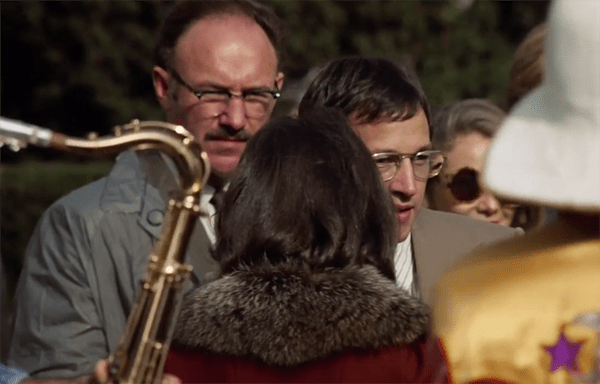
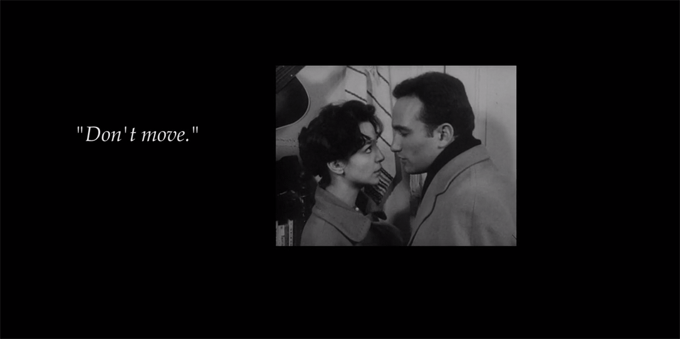
Do you think you have privacy? You don’t. Do you think no one saw? They did. You think that email is secure? It’s not. You think no one’s listening? They are. You think we’re "safe"? We probably aren’t. The intimate portrait of a surveillance professional painted in Francis Ford Coppola’s ‘The Conversation’ was, to put it mildly, ahead of its time in its suggestion of a culture in which privacy is violated all the time and in which, strangely enough, through social media and other similar outlets, we give up our privacy with alarming ease. The newest installment of "The Discarded Image" from Julian Palmer at 1848 Media examines the powerful opening sequence of Coppola’s film, linking it to its strongest influence, Michelangelo Antonioni’s ‘Blow-Up," as well as a number of contemporary films. 

Watch: Damien Chazelle’s ‘Whiplash’ and Darren Aronofsky’s ‘Black Swan’ Are the Same Film

Watch: Damien Chazelle’s ‘Whiplash’ and Darren Aronofsky’s ‘Black Swan’ Are the Same Film

It cannot be denied that Damien Chazelle’s ‘Whiplash‘ and Darren Aronofsky’s ‘Black Swan‘ are disarmingly similar. There’s the young naif at the heart of each film, Miles Teller’s Andrew Neimann vs. Natalie Portman’s Nina Sayers. There’s the overbearing instructor looming over each story: J.K. Simmons’ Terence Fletcher vs. Vincent Cassel’s Thomas Leroy. And there’s also the drive towards an artistic goal that ultimately leads a protagonist into the depths of his or her own creative self. And, as Fernando Andrés points out in this excellent video essay, which lays out considerable connections between the two films, both works focus on a particular body part that embodies the struggle at the story’s heart. In ‘Whiplash," it’s the hands; in "Black Swan,’ it’s the feet. Revisiting these two films in this form is edifying in and of itself, but the comparison so elegantly explored here also reminds us of something else behind all artistic endeavors: tenaciousness. Not quitting. Never thinking that one has done, to quote J.K Simmons’ sadistic but half-right teacher, a "good job." Suffering comes out of this kind of determination, and plenty of it. But that thing which we call, broadly, "art" comes out of it, too.

Watch: David Lynch’s Films Are All Chapters in One Story

Watch: David Lynch’s Films Are All Chapters in One Story

Try to imagine a universe in which one might have complaints about the films of David Lynch. I can’t, personally, but maybe you can. In this hypothetical, impossible-to-imagine universe, the closest thing I might possibly be able to conceive as a vague complaint–not a complaint, really, but a concern–is that sometimes his films lack–and this isn’t to say this is required, just that certain people require it, who knows why–narrative continuity. There might be all kinds of reasons for this characteristic–that is, if we’re actually saying it’s a quality of his films–and, if I had to produce a statement of "defense," I might offer the idea that the films are all meant to both talk to each other and to work together as a large assemblage, a story, if you wish. Joel Bocko asserts this idea, both directly and indirectly, in this brilliant video essay. He begins by noting points of correspondence between the creepy interiors of ‘Eraserhead‘ and those of ‘Twin Peaks: Fire Walk with Me,’ and then he goes to broaden his vision a little, making the work of Lynch resemble, more than anything else, a hall of mirrors. The difference between Lynch’s oeuvre and a side-show distraction, though, is that each mirror, each reflection, moves you forward; each repetition of a motif develops it, expands its girth. At this point in time, when we watch a new Lynch film, from ‘Blue Velvet’ to ‘Wild at Heart’ to ‘Inland Empire,’ we are truly watching it to see what happens next: not within the body of the film, but within the body of his work. How will the symbols change? What new side of the human face will he show us? Who will disappear next and the re-appear, magically transformed? Who will die? Who will triumph?

Watch: How Aspect Ratio Limns a Film Director’s Vision

Watch: How Aspect Ratio Limns a Film Director’s Vision

You only know as much about a film as a director tells you. You only see as much, furthermore, as the director allows you to see. And, in considering the story within a film, you may think you are looking outwards when you allow the film to inspire expostulations and intellectual ramblings–and yet you are, in fact looking inwards, deeper into the images unrolling above you. One way we are reminded of this is through aspect ratio, which is, for the layperson, simply the proportional relation between the width of the frame and the height of the frame. De Filmkrant‘s video essay addresses the use of and experimentation with this element in recent films. Xavier Dolan’s frame tightens slowly on a woman’s face, going slowly out of focus; in another Dolan scene, a character actually pries the screen wide open. In Gust Van den Berghe’s ‘Lucifer,’ a circular frame is used throughout, giving the whole film, and subsequently its story, the quality of a vignette, from a film of an older era. Joost Broeren and Sander Spies, the video essay’s editors, attribute some of this experimentation with aspect ratio to the growth of digital filmmaking, but not all, in this survey of directors ranging from Wes Anderson to Ang Lee, and beyond. 

Watch: ‘It Follows’ Is a Slash in the Fabric of the American Dream

Watch: ‘It Follows’ Is a Slash in the Fabric of the American Dream

[The following is an essay by Jed Mayer, written independently of the above video essay by PonderDog Productions.]

You never forget that first experience: sitting in a dark theater, or watching late-night television, the screen becomes an entrance into another world, one that is new, yet strangely familiar, as if the rain-lashed castle or the cabin in the woods existed next door to your own nightmares.  After such an experience, other films may come and go, but the ones that really matter are those that let you into the abandoned buildings and haunted alleyways of that other world.  Watch enough of them, and the other world begins to take on a life of its own, one that works according to its own sinister logic, and where settings and scenery are trapped in a dream time doomed to repeat itself, obsessively.

This other world of horror’s past is both the setting and the subject of David Robert Mitchell’s ‘It Follows,’ a film that has garnered accolades from critics and horror aficionados for its dense interweave of references to classics of the genre. Unlike Wes Craven’s ‘Scream’ franchise, however, which featured characters who meticulously (and often tiresomely) parsed the rules of the genre in which they find themselves trapped, ‘It Follows’ avoids the train-spotting approach of ticking off film references like a game of “Six Degrees of Kevin Bacon.” Mitchell’s film doesn’t just reference the spaces and traces of classic horror films: it occupies them, raising troubling questions about the persistence of the past in the cultural imaginary.

Even the filmgoer with only a passing interest in horror will note the strong presence of John Carpenter, particularly his breakthrough ‘Halloween,’ arguably the first major slasher film. The throbbing synthesizer-driven score by Richard Vreeland is a direct homage to Carpenter, who crafted his own soundtracks on analog equipment. The textures of old synthesizers have taken on a patina of age that marks them as products of the 1970s, before they were replaced by the sleeker and easier to use digital models of the 1980s that let anyone start a synthpop band. Vreeland’s score, like Carpenter’s, is dense, heavy, lumbering, like the monstrous pursuers it accompanies.

The landscape of ‘It Follows’ looks like it exists just around the corner from the sleepy suburb where Michael Meyers returned to stalk his teenage prey—lush, tree-lined streets where something sinister lurks in green shadows. And as in ‘Halloween,’ these streets are strangely empty, and even when we encounter residents other than our main characters, they seem detached, as if looking in from the outside.  This is played to sinister effect in the opening scene of ‘It Follows,’ where a teenage girl, dressed in t-shirt, short-shorts, and, inexplicably, a pair of high heels, runs out of her home in obvious distress. As she runs down the leaf-strewn street, looking backward in terror, a neighbor unloading groceries from her SUV asks, “Hey, are you okay?” When the girl replies unconvincingly that she’s fine, the woman returns blithely to her groceries. Then the girl’s own father asks her what’s wrong, but doesn’t do anything to help her. Like Carpenter’s HalloweenIt Follows takes place in a world where we can’t be helped by outsiders, and that includes pretty much everyone besides our small clique of friends.

Adults are notably absent from ‘It Follows,’ a trait it shares not only with the slasher films of the 1970s and 1980s, but also with the long tradition of children’s literature, in which young people are tested by trials and tribulations without parental support or interference.  The slasher film can be read as one more variation of a coming-of-age narrative whose roots go back to oral forms such as fairy tales.  Like ‘Nightmare on Elm Street’ and its sequels, the teens of ‘It Follows’ hang out and scheme, as they seek avenues of escape from the nightmare in which they find themselves trapped. Even high school, a place where one would expect groups of peers and a bustling sense of community, is curiously vacant, empty, as the teacher droningly recites “The Love Song of J. Alfred Prufrock” to a sparsely-attended classroom.

One of the qualities of ‘It Follows’ that makes it so refreshing is its avoidance of cheap horror devices like jump scares, brooding ominously where most horror films would slap us in the face. Mitchell employs long cuts and deep focus shots that allow us to dwell on particular scenarios, waiting for something sinister to emerge from otherwise placid settings. Early in the film, the protagonist, Jay, floats dreamily in a stand-up swimming pool. As the camera pans in closer, we see that the water is littered with leaves and bugs. Jay picks up an ant, studies it curiously, drops it back. She notices something watching her behind the fence. When she discovers it to be group of adolescent peeping toms, she laughs it off.

Such moments recall dark retro-fantasies like David Lynch’s ‘Blue Velvet’ and Sophia Coppola’s Virgin Suicides, where nostalgia for the past (the 1950s evoked by Lynch’s soundtrack and costume design, and the 1970s evoked by Coppola’s suburban idyll) becomes morbid, grotesque, as we discover what’s rotting beneath the surface of our cultural memories. Returning to Lumberton, the sleepy logging town where he grew up, Jeffrey Beaumont (Kyle MacLachlan) wanders the empty fields and finds a severed ear, crawling with ants, lying in the grass, a grotesque object that acts like a passport into the town’s dark secrets. The affluent suburban world of Grosse Point, Michigan is shattered with the dramatic suicide of Cecilia Lisbon, who leaps from her window and impales herself on an iron fence.  In both films dreams of the past become nightmares.

It Follows takes place in a world that is difficult, if not impossible, to place in time.  The teens communicate by corded wall phones, but recite ponderous lines from Dostoevsky on an e-reader.  They get around in a beat-up 1980s station wagon, but pass other cars that are more recent.  They watch monster films from the 1950s on tube-era televisions, and go to Audrey Hepburn and Cary Grant movies at the local cinema, while wearing clothes that look like they came off the rack at Old Navy or the Gap.  The world of ‘It Follows’ is like the world of horror cinema itself, haunted by its past, struggling to move on. 

Much has been made of the film as a metaphor for sexual guilt, the curse suffered by the heroine following an unfortunate hook-up manifesting itself like a zombie version of an STD.  She is pursued by revenants that only she can see, and the particular forms taken by these ghosts of the past are telling.  A half-naked woman, beaten and soiled, confronts Jay first; an old lady, seemingly strayed from her rest home, stalks the halls of Jay’s high school; later, another beaten and stripped woman confronts Jay in her home, urinating on the carpet.  These seem less like the avatars of sexual guilt than of urban decay, a point underscored by the film’s location, an unnamed suburb on the outskirts of Detroit.  We only learn this relatively late in the film, when the teens go out in search of the boy who passed his curse on to Jay, and one character mentions to another that she had always been warned by her mother not to cross the line into 8 Mile.  The seemingly placid environment of the suburbia where they live is now seen to be haunted by the urban decay existing just beyond the horizon. By setting his film in a world dominated by the tropes of horror movies from the Reagan era, Mitchell obliquely places us back in a time when trickle-down economics and deregulation eroded the middle class and grew a wider gap between rich and poor. Like those earlier horror films and the aimless, leisured lives of their white protagonists, It Follows is as haunted by the horrors it portrays as by those it turns its back on.  

Jed Mayer is an Associate Professor of English at the State University of New York, New Paltz.

Watch: 100 Great Moments of Film Editing and 5 Crucial Visual Punctuation Marks

Watch: 100 Great Moments of Film Editing and 5 Crucial Visual Punctuation Marks

Watching a film is reading a book, and reading a book is watching a film. There’s really no difference. In one case you sit quietly in the dark as the light flows over you; in the other case you sit quietly in a lighted room as the text washes over you. The difference between the two is an academic distinction. In both cases, you take in what you see, either on a screen or on the page; you take an experience away from it; you make it yours as you assign structure and significance to its parts. Why else do you think so, so many films are based on books? This video essay by Max Tohline is an important one, which takes up this overlap with considerable energy and intelligence. Twenty minutes in length, it takes its inspiration from a Kathryn Schulz piece on the 5 best punctuation marks in literature, such as a famous ellipsis in T.S. Eliot’s ‘The Love Song of J. Alfred Prufrock’ or an oddly placed colon in Charles Dickens’ ‘A Christmas Carol.’ What Tohline manages to do is apply Schulz’s observations to film analysis, with wholly convincing results. A comma placed between two items which implies a relationship between the two (as in Nabokov’s famous "(picnic, lightning)" in ‘Lolita’ becomes the equivalent of a jump cut which makes equivalencies where there would seem to be none on the surface, as in the leap from the bone flung in the air in Stanley Kubrick’s ‘2001: A Space Odyssey’ to a vast white craft floating smoothly through outer space, centuries later. The ellipsis from ‘Prufrock’ becomes the equivalent of a moment in which Woody Allen’s malcontent in ‘Hannah and Her Sisters’ seeks respite from despair by seeing, in an example of omitting a part of a story for comic effect… a Marx Brothers film. And so it goes. Tohline shows us clips from 100 films in which editing made all the difference; the list, posted at Tohline’s blog, includes everyone from the Coen Brothers to David Lynch to George Melies to Martin Scorsese to Dziga Vertov to Francois Truffaut–and could serve as a great primer for students of film editing, in and of itself.

Watch: 7 Reasons Why David Lynch’s ‘Twin Peaks: Fire Walk With Me’ Is an Underrated Masterpiece

Watch: 7 Reasons Why David Lynch’s ‘Twin Peaks: Fire Walk With Me’ Is an Underrated Masterpiece

Coming as it did on the heels of the more-than-a-cult-show ‘Twin Peaks,’ David Lynch’s film annex to the series, ‘Twin Peaks: Fire Walk With Me’ had an uphill climb with its viewers and reviewers. Such is the way with extensions like this: Tolkien’s Silmarillion never had much of a chance beside the Lord of the Rings series, just as the X-Files films have not seen much critical acclaim. (Ever read the "other" Oz books by L. Frank Baum? Didn’t think so.) It’s hard to say what causes this syndrome of reception, if you want to call it that: perhaps the simplest way of saying it is that once viewers decide they’ve had enough, they back away? Or, in the case of Lynch’s film, a creative world that teemed and had true magnetism in one medium didn’t have the same draw for its viewers in another, for reasons that weren’t the film’s fault? Whatever the case, Joel Bocko is a defender of ‘Twin Peaks: Fire Walk With Me,’ and defend it he does, with 7 well-supported points and an appropriately dreamy tour of Lynch’s much-maligned film, which takes imaginative leaps that shouldn’t be overlooked. Take a look yourself: you might want to enter into the Twin-Peaks dreamscape once more after you watch this piece.

Watch: David Bowie, ‘The Man Who Fell to Earth,’ and an Immortal Soundtrack

Watch: David Bowie, ‘The Man Who Fell to Earth,’ and an Immortal Soundtrack

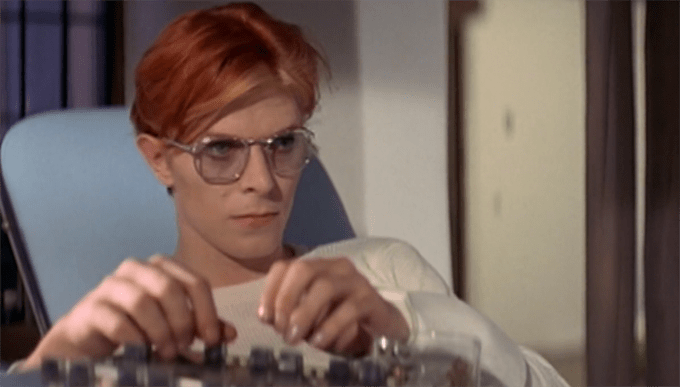
When they made this video essay for Film Comment on Nicolas Roeg’s ‘The Man Who Fell to Earth,’ Sean Doyle and Violet Lucca must have been reading my mind. From time to time, I (re-)listen to David Bowie, always with the same objective: trying to determine if his songs, with their esoteric lyrics and winding melodies, are actually good, or just products of a period, and moreover of an impenetrable affect. Most often my conclusion lies with the former. This video did little to sway me one way or the other on that question, but what it did do was educate me on the history of a remarkable film, most notably the history of its soundtrack. Bowie wrote a soundtrack for the film, but director Nicolas Roeg went with John Phillips, previously of The Mamas and the Papas, for the job. While Bowie’s soundtrack would probably have had an appropriately whacked-out tone for the film’s central character, alien Thomas Jerome Newton, Doyle and Lucca show that Phillips’ soundtrack has its own rewarding complexities.  

Watch: John Cassavetes’ Cinematography Is the Key to His Work

Watch: John Cassavetes’ Cinematography Is the Key to His Work

Interestingly, when watching Cassavetes’ work, the first thing I notice is the cinematography, as his films always represent an example of the idea that artfulness lies not so much in the story being told, but in the way it is told. In films like ‘Love Streams,’ ‘A Woman Under the Influence,’ or ‘Shadows,’ Cassavetes presents images of individuals in the midst of life being lived–and in so doing, may show actions onscreen that are not, in and of themselves, captivating. This is where the camera comes in, and our experience becomes more about how we see something than what we are seeing. Kevin B. Lee, in his latest video essay for Fandor, takes a close look at one of Cassavetes’ more close-up films, ‘Shadows,’ to show us, explicitly and with energized clarity, how Cassavetes’ angles, approaches, and recessions show us a mind at work showing other minds at work, in the process of growing, changing, and perpetually departing.