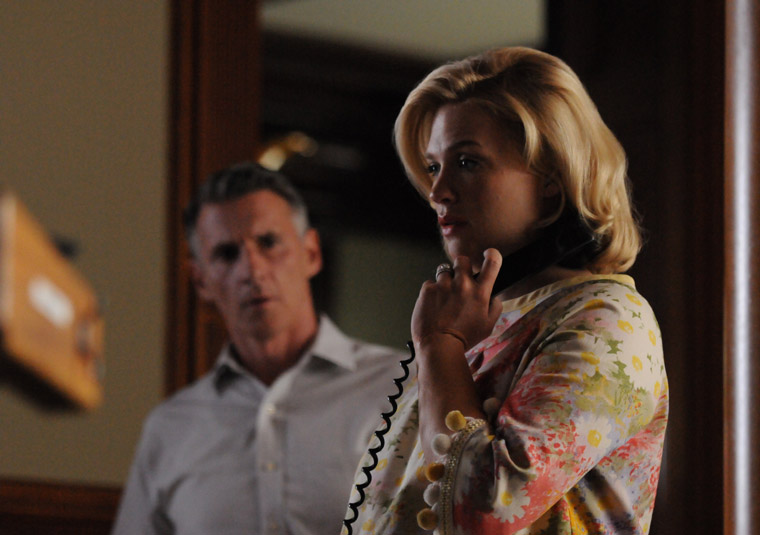
MAD MEN RECAP 2: TEA LEAVES

MAD MEN RECAP TWO: Tea Leaves

Watch a clip from Mad Men Season Five, Episode Two: "Tea Leaves."

"When is everything going to get back to normal?"

null

In recent interviews, Matt Weiner has been sharing this quote, uttered by Roger at the end of Tea Leaves, as a kind of capsule of the entire season. There is no normal to get back to, and as Don said in episode 105, 5G, "I have a life, and it only goes in one direction. Forward." At the moment (late June and early July 1966), forward is a very strange direction indeed, for Don, for Betty, for Roger, for SCDP, and for the United States as a whole.

When forward gets strange, backward looks pretty good. Betty reached out to Don because she knew what she would get: "Say what you always say," she begs, and Don knows exactly what she means. There was a time she hated when he said that; "You don't know that," she answered, but now she reaches out to Don, not because she's in love with him, or threatening his marriage or her own, but because he is familiar, and she knows what he'll say, and she can use that to calm herself. Betty's parents are both dead, the only past that Betty can touch is Don, and it works, she calms down enough to breathe.

The title Tea Leaves suggests the future, and a fortune teller arrives a little before the halfway point to remind us that attempts to predict the future are a fool's game. Mad Men has treated tarot reading quite respectfully in the past, and even uses a tarot card as a production logo. The tea leaf lady doesn't represent a condemnation of the whole idea of divination so much as a demonstration that the belief in a controllable and containable future just doesn't withstand scrutiny.

"Time is on My Side" is the Rolling Stones song everyone’s talking about, and not because it was a big hit in 1966. In fact, the Stones recorded it in '64; if Mad Men simply wanted to reference a current song, why not "Paint It Black,"  which was released in May of 1966 and was huge. No, the song was selected for its title. Is time on Betty's side? On Roger's? On Megan's? Betty might not have cancer, but there's a kind of awakening to the future, to tea leaves, to the choice to reach forward or back.

It's also not a coincidence that the doctor refers to Betty as "middle-aged." Man, that's got to hurt. Betty is now all of 34, which we wouldn't call middle-aged now, but was not an unreasonable label in 1966. Still, I can't imagine she likes it. She's seething that Megan is 20 (she's 26 but hey, what's six years between enemies?). Youth culture has arrived. Our closing song, "Sixteen Going on Seventeen" (from The Sound of Music), Harry lusting clumsily after young girls, even Megan calling Don "square": it's all about the passage of time. Don's inability to communicate with his mother-in-law (he doesn't speak much French) seems symbolic of the gulf between Megan's youth and Don's age. These old squares can't even tell whether or not they've met the Rolling Stones! (I don't know how much scrutiny a closing song gets, but Hammerstein died of cancer shortly after The Sound of Music opened on Broadway, before it was made an Academy Award-winning film in 1965; that bit of musical trivia sure fits with the contrast of youth and death, which is one a theme of this episode.)

Naturally everyone will want to talk about Betty's weight gain, and naturally, the storyline was written to accommodate January Jones's pregnancy. It's strange that in Season 1, Peggy's story was that she looked fat but was actually pregnant, and now January Jones is pregnant, and Betty looks pregnant but is actually fat. The fourth wall kind of melted for me when I saw Betty, and I had a hard time understanding, for a few minutes, that this was a tale about Betty Francis becoming fat, because instead I was thinking, "Oh, that's how they are dealing with January's pregnancy." I was wondering if Betty was pregnant, instead of seeing the evidence on-screen: From the moment we saw Betty struggling to get into her dress, we saw a story about a woman who had gained unwanted weight. Thinking otherwise comes entirely from reading gossip columns and knowing what's going on behind the scenes. We really undermine ourselves when we suck up all that backstage stuff, because it prevents us from seeing the drama on its own terms.

Anyway. Betty got fat. Again, in interviews following Season 1, Matt Weiner expressed a lot of interest in the way that fat women are treated in our world, and he got to tell some of that story by having Peggy gain weight. In Season 2, we met Betty's friend Sarah Beth, who couldn't string three sentences together without including one about how awful it was that her daughter was fat. The oppressiveness of that ongoing monologue was palpable.

As is Betty's self-hatred. It's one thing to get fat, it's another to decide that your husband can no longer see you naked, and you can no longer go to fancy events unless you fit into your old, glamorous clothes, and you can no longer have an active sex life. One thing I've always loved about Betty is her libido: she may be prim and judgmental, but in the sack she is desirous, playful, and rarin' to go. Betty is denying herself things she loves: going out, showing off her beautiful clothes, making love, being admired. She's doing this because fatness is hateful to her.

I am not a doctor, but it seems to me that even a benign tumor sitting on the thyroid could cause weight gain, so it surprised me that the show played, at the end, with the notion that Betty is fat because she's eating extra ice cream. Maybe that's true, or maybe she's giving herself permission to indulge because she's unable to lose weight even when she starves herself (which is exactly what happens with a thyroid problem). Betty watches every bite she eats, even during pregnancy ("Jesus, Bets, have some oatmeal. That baby’s gonna weigh a pound," Don said in episode 3.09). This is why her silent, private indulgence in a chicken leg (episode 2.13) was so moving and so sensual. If there's a loss of control it's more than just "letting herself go;" Betty is control.

The other major theme of Tea Leaves is appearances. Betty is not just fat, she is deeply concerned with being seen as fat, and she is sure that Henry is incapable of seeing her accurately. Megan is concerned with how she appears to the Heinz people, and awkwardly makes sure they know she didn't sleep with a married man. Harry wants to look cool in front of, well, he's not sure…the girls backstage? Don? The security guard? If only someone would think he's cool, he'd feel better. Meanwhile, he's hiding his eating, which seems like a nod at Betty. Michael Ginsberg is a talented nebbish who wants to appear so obnoxious that he'll be mistaken for bold and exciting. And Peter, as ever, wants everyone to know how important he is. (Note Peter in a black suit, when he usually wears blue or green; he's dressed as the Head of Accounts and he doesn't want anyone to miss it.) Part of what Tea Leaves is about is the show we're all putting on for each other so much of the time.

Some additional thoughts:

In Season 1, Harry advised Pete that looking and flirting were the kinds of pleasures a married man can have. His one infidelity left him remorseful and quick to confess. I don't know if Harry is cheating, but what he's doing is worse, in a way. He's longing. Jennifer can't know what's hit her.

Henry is working for John Lindsay, who was Mayor of New York from 1966 through 1973. He doesn't want the mayor seen with (George) Romney because "Romney's a clown." Ha! I'm allowed to enjoy the cheap shots, aren't I? Mitt's father, George, was governor of Michigan at the time, but I'm sure the writer's room had a nice laugh sticking that in the script.

"Romney's a clown" would be the quote of the week if it weren't for "Someone with a penis."/"I'll work on that." My son came home from work just as Peggy said that, and I was laughing so hard he thought something was wrong.

I think we can give Jon Hamm's directorial debut a thumbs up, don't you?

Deborah Lipp is the co-owner of Basket of Kisses, whose motto is "smart discussion about smart television." She is the author of six books, including "The Ultimate James Bond Fan Book."

Watch Mad Men Moments, a series of videos on Mad Men, produced by Indiewire Press Play.
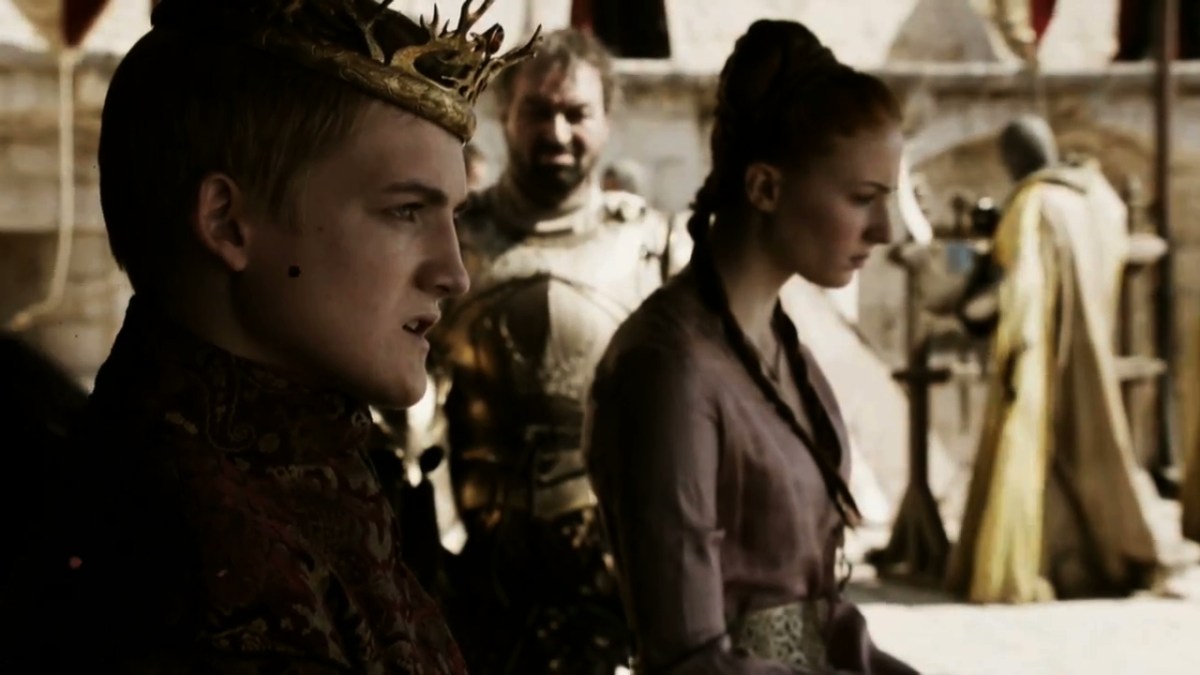
GAME OF THRONES RECAP 1: THE NORTH REMEMBERS

GAME OF THRONES RECAP ONE: THE NORTH REMEMBERS

null

The second season of the densely, intricately plotted fantasy series Game Of Thrones is going to have to attempt something never before done on television. Even the most complex television series, such as David Simon’s The Wire and Treme, with their sprawling casts of characters, focused intently on different aspects of a single city. Game Of Thrones has dozens of major characters, scattered across a fantasy world. Its increasingly fractured and complicated story will, in the second season, have to maintain some level of coherence, even though the structure of Ned Stark’s tale that it used in the first season is largely gone.

Season One of Game Of Thrones was a fairly simple story, told with complex detail. It was the story of Ned Stark, a lord called by his king to maintain the kingdom’s peace, and his failure to achieve that goal, climaxing with his execution. Most of the show’s major characters were tied to Ned somehow. They were primarily his family, but also his advisors, friends, and betrayers. There were two major exceptions: Tyrion Lannister provided a necessary counterpoint to the way the Starks viewed the world. And Daenerys Targaryen, half a world away, still had a significant connection to Ned: her actions triggered a split between Ned and the king.

The novel maintained coherence by labeling each chapter with the name of the character who narrates it. That wasn’t possible for the show, so it attempted (and usually succeeded) at doing this by making its settings distinct. Most of the major players were at the capital, King’s Landing, with Ned and his daughters. Jon Snow was at the Wall, guarding the realm in the north. Dany was growing up in the exotic Dothraki homelands. Robb and Bran remained in Winterfell. Everything of import occurred in these four places, and when it didn’t, there were problems. There was very little sense of place (or time to travel) in “The Kingsroad,” the second episode. The Aerie, where Tyrion was imprisoned and tried, was the most fantastic (and least believable) locale in the series. The final war between the Starks and Lannisters was ill-defined, with apparently meaningful battles taking place entirely off-screen.

I think the show, to its significant credit, understands just how important a sense of place is in this wide-ranging fantasy world. Its credit sequence, one of the most powerful mechanisms for assigning meaning, is all about creating a sense of locale. We see maps, and we see focal points built up before our eyes. Its focus is dragged across Westeros, giving us a feel for each location on the map, as we watch those locations being constructed.

The plot of the first season demanded an increase in scope in the season following it. Ned’s failure to maintain stability in the realm has led to a massive civil war, with several different factions vying for control. On a personal level, many of the characters left their home bases last season: Jon Snow rode beyond the Wall, Arya Stark was dragged away by the Night’s Watch, Dany was forced to leave Dothraki, and Cat and Robb Stark were in the field, at war with the Lannisters. Immediately in the first episode of the new season, we see some of these new locations: Dragonstone, home of Stannis Baratheon, and Craster’s Keep, beyond the Wall.

I’ve never seen a series escalate its ambition as quickly as Game Of Thrones needs to, and I’m very interested in seeing how well the show manages to accomplish it. I’m not entirely certain that A Clash Of Kings, the second novel of the series, managed to succeed in maintaining the coherence established by the first book, and I will be fascinated to see if the second season show follows in the first season’s footsteps, falls apart, or (my guess and hope) improves upon the source material.

So, place-by-place, what is Game Of Thrones doing, and how well is it doing that?

King’s Landing is the heart of the series, ruled by the arch villains Queen Cersei and King Joffrey, and served by minions of various loyalties: Littlefinger, Varys, the Hound, Grand Maester Pycelle, and the guard captain Janos Slynt. The one sympathetic character remaining from the first season is Sansa, the most feminine of the Stark daughters, who discovered far too late that gallantry, handsomeness, and good manners do not prevent a prince from being a sociopath. And the wildcard, Tyrion Lannister, rides in to rule as the Hand, a title given to him by the father he hates, to rein in a king he hates as well. At a social level, King’s Landing is in chaos as well. Refugees are flooding the city, and Cersei demands that the guard keep them out. At the end of the episode, she (or Joffrey) also order the death of all of King Robert’s bastard children, in a real sucker punch of a montage.

Although it is the most important place in the story, I had mixed feelings about King’s Landing in the first season. It felt a little bit too artificial, all beautiful and warm reddish sets. It had memorable aesthetics from room to room, but it never felt like a bustling city or an important castle, only a collection of rooms. In a single moment, the second season dispels that effect to a certain extent—Tyrion’s new favorite prostitute, Shae, is looking over a balcony at the city, which looks cramped with houses, huge, and beautiful. It also looks totally fake, a reminder that no matter the scope and budget of Game Of Thrones, there are some things it just can’t do perfectly. Still, I respect it for trying.

The strongest location in the first season was Winterfell, home of the Starks, in the north, and the place where the whole story (except for Dany’s) started. Winterfell still feels exactly as it should, a place where civilization is scraping by in ramshackle villages, but it is ruled by rugged men in equally rugged castles.

Only one major character is left there now, Bran Stark, left crippled in the events of the pilot. He’s leading as best he can, accompanied by Maester Luwin of Winterfell, a recurring bit character in the first season, as well as Osha, the wildling woman who joined the Starks, and Hodor, his carrier. He’s also dreaming of wolves, or perhaps dreaming as a wolf. The shaky camera used for the wolf sequence was a little jarring, to be honest, but I don’t know how else this could have been done. Bran is seeing through his wolf’s eyes in his dreams, and that can’t feel normal.

Apart from those two locations, the sense of place is less solid in this season. “The North Remembers” ties disparate locations together with the red tail of a comet in the sky. Conveniently enough, everyone can claim the comet is an omen of whatever they wish, serving as a good way for Game Of Thrones to reintroduce characters’ motivations and standings in the world at large.

One theory put forth is that it signals a sign of dragons’ returning to the world (“Stars don’t fall for men”), but Daenerys Targaryen, the woman in possession of those dragons, does not appear powerful as the season begins. Her husband is dead, his power scattered, and her handful of people are stuck fleeing into an unknown wasteland. I enjoyed the constantly-changing grasses of Dany’s story in the first season. This fluid sense of place seemed perfect for the “Dothraki Sea.” The Red Waste, as the show labels her current location, is equally effective. It looks nasty, and if that’s not enough, we see Dany’s silver horse die—an appropriate symbol, as it was her best gift, when she became Drogo’s Khaleesi.

Two other settings on-the-move are less successful. Robb Stark’s Camp is where he, his lords, his mother, and Jaime Lannister are at the moment, but there’s little to be done that can give that a sense of place. Just the inside of a tent here, and a cage at night there: it’s enough to move the plot along, with Robb sending his friend Theon Greyjoy to form an alliance with his people on the Iron Islands, and his mother to treat with Renly Baratheon, the other most powerful rebel king. The characters are powerful—my favorite scene in the episode might have been Robb’s verbal sparring with Jaime Lannister —but it’s hard to grasp the scope of the war.

Likewise, it’s difficult to make much of the Night’s Watch at Craster’s Keep, Beyond The Wall in the far north. Craster is a mean little man, and the show does well to show just unsavory he is. He’s selfish, demands gifts, insults the Watch, and is rumored to have taken all his daughters as wives, but there’s not much else going on in this storyline yet. Jon Snow is still impetuous, and a “King-Beyond-The-Wall,” Mance Rayder, may be gathering his forces. And his keep, well, it’s a little shithole stopover in the middle of nowhere, and I suppose effective for that. But the excitement of being Beyond The Wall isn’t to see Craster’s tiny Keep.

I was, perhaps, most pleased with the new setting, Dragonstone, seat of Stannis Baratheon. It was quickly shown to be a foreboding place, all fire and darkness. Its statues are brown and grim, and our first vision is of scarecrows burning on the beach at night. All of these characters are brand new: Stannis was mentioned by name but never appeared in the first season. We also meet his advisor, Ser Davor Seaworth, but he has little to do other than very effectively force Stannis to reveal his painful rigid modes of thinking, refusing to even call his dead brother, King Robert, “beloved.” But the most important thing here is the imagery, and the introduction of Melisandre, the Red Priestess of the Lord Of Light. She feels alien, and survives a poisoning attempt so ominously that it demonstrates  something is clearly wrong at Dragonstone, and that Stannis is not going to be a hero to sweep in and save the day, even if he is the rightful heir.

Game Of Thrones is going to have a difficult time tying all these different threads together in a meaningful fashion. It might even be impossible. But “The North Remembers” makes a fine case for the show continuing to do what it does, because it does it so damn well—it looks great, its characters are vivid, and there’s a feeling that anything can happen. The sections in King’s Landing, the Stark Camp, and the Red Waste are immediately interesting, and the final shot of Arya is also a reminder that one of the show’s best characters still has her own story ahead of her. Season premieres often have difficulties maintaining the momentum of the end of the last season, but that’s not an issue here. Game Of Thrones is more confident than ever. That’s more than enough to carry the seemingly weaker sections.

Adaptation

I’m a reader of the books, and I like discussing them, although they have too many issues for me to call myself whatever George R.R. Martin super-fans prefer to call themselves. So the show is doubly interesting to me as a subject of criticism and as an adaptation of something that resists adaptation. So I’m going to discuss this (without specific spoilers, although I can’t say that there won’t be thematic discussions overall, or notes of what’s important or not) in a separate section, going forward.

I’m particularly interested in two things: how the show will adapt the books in terms of overall narrative structure, and what new scenes it adds to tell its story. On the first level, this season already seems to be diverting from the source material far more than the first season did. It’s accelerating Jon’s storyline with the Night’s Watch, and seems to be accelerating the story of Jaime Lannister’s captivity, which was the biggest event in the first season. We will be seeing more of this, though—a trailer for the season showed a certain character screaming “But I love her!”, a reference to events of the third book.

I’m always curious to see what the show does outside of the constraints of the characters’ perspectives. A Clash Of Kings loses Ned Stark, of course, but gains Davos Seaworth and Theon Greyjoy. Any scene depicting characters that doesn’t include them or the original POV characters (Tyrion, Dany, Cat, Arya, Sansa, Jon, and Bran) is entirely new to the series. Fascinatingly, in the first season, those were often the best scenes, a trend which continues here in “The North Remembers.” In addition to Robb's confronting Jaime, I also very much enjoyed Cersei’s argument with Joffrey, which depicted the story’s two biggest villains at odds, as Joffrey tried to buck her regency and insulted her to her face. And that final montage of the episode is something that would be impossible in the novel’s usual structure, and is brilliantly done here, demonstrating just how high the stakes are by depicting the murder of innocent children.

Note on spoilers: If your comment includes a spoiler from the novels, please label it SPOILER.

http://www.hbo.com/bin/hboPlayerV2.swf?vid=1241799


http://www.hbo.com/bin/hboPlayerV2.swf?vid=1234943

 
Rowan Kaiser is a freelance writer currently living in the Bay Area, who also writes for The A.V. Club, and has been published at Salon, Gamasutra, Kotaku, and more. Follow him on Twitter @rowankaiser.

VIDEO SERIES – MAD MEN Moments

VIDEO SERIES – MAD MEN Moments

nullWith the long-awaited premiere to Season Five imminent, Mad Men is on many a person's mind. For the next thirteen weeks, some may revel in a neverland of glamorous mid-60s living fraught with social strife; others may wonder what jaw-dropping, life-changing events await their favorite characters. But for us here at Press Play, it's about the moments. Moments that have us instantly rewinding our DVRs as soon as an episode is over, or poring over blog recaps all Monday long while real work lies unattended. Mad Men has yielded four seasons stuffed with such moments. We decided to produce a series of videos dedicated to spotlighting some of the best.
This was no easy task and involved a fair amount of deliberation in selecting four iconic moments to produce the video essays that are our specialty here at Press Play. We decided to pick just one moment from each of the previous four seasons that lent itself best to video essay treatment. What surprised us was how each selected moment organically led to distinctly different approaches in our analysis. Watch each video and see what we mean. If anything they will have you salivating for more from Matt Weiner, Jon Hamm & company.

Press Play is especially fortunate to have as co-producer of the series Deborah Lipp of the popular Mad Men blog Basket of Kisses. Deborah co-runs the blog with her sister Roberta Lipp (who lent her estimable voice talents to three of these videos) and was an invaluable presence in bringing this series to fruition. Not only are we proud to co-present these videos with Basket of Kisses, we are doubly excited to announce that Deborah will serve as Press Play's very own Mad Men specialist, writing episode recaps throughout the season. Look for her first recap this Sunday IMMEDIATELY following the end of the two-hour season premiere, which starts at 9PM on AMC. For the next thirteen weeks, Press Play will be an essential destination for replaying another season's worth of Mad moments.

Index of "Mad Men Moments" Video Essays:

It's a Mad World: A video essay by Serena Bramble, essay by David Ehrenstein

Season One: The Carousel by Tommaso Tocci and Kevin B. Lee

Season Two: The Sad Clown Dress by Deborah Lipp, Roberta Lipp and Kevin B. Lee

Season Three: The Lawnmower by Amanda Marcotte, Roberta Lipp and Kevin B. Lee

Season Four: The Fight by Serena Bramble, Deborah Lipp, Roberta Lipp and Kevin B. Lee

Top Five Mad Men Moments, selected by the Mad Men blog Basket of Kisses

Deborah Lipp is the co-owner of Basket of Kisses, whose motto is "smart discussion about smart television." She is the author of six books, including "The Ultimate James Bond Fan Book."

Kevin B. Lee is Editor in Chief of IndieWire’s PressPlay Video Blog and contributor to Roger Ebert.com. Follow him on Twitter.

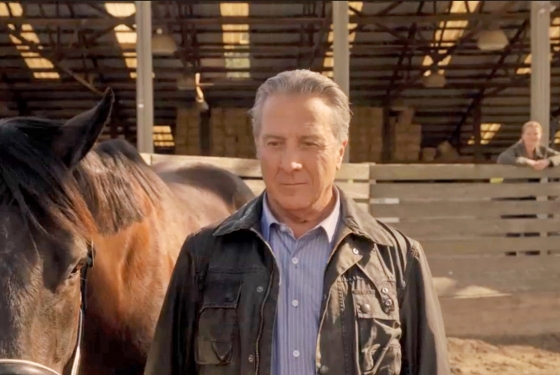
LUCK RECAP: A Herd of Two

LUCK RECAP: A Herd of Two

null

Episode seven of Luck at first feels like a placeholder, until you look back over it and realize that the universe is reordering itself beneath the surface of things. In the pilot, most of the characters seemed detached from life, or isolated; but now, with just two episodes left to go until the end of the season, they've formed or deepened relationships. More importantly, given the show's seeming belief in kindness as good karma, a lot of the characters have taken responsibility for another human being or fellow creature.

Horse trainer-owner Walter Smith seemed terrified and nearly paralyzed by that letter from the estate of the Colonel sticking him for a $140,000 bill, but now that he's got himself a lawyer (Bruce Davison) who seems serenely confident in what he's doing, Walter seems a bit more relaxed. The moment where Walter moves to pay the lawyer in cash and is politely refused is a wonderful example of how trust can make the more cynical social niceties unnecessary. (It also indicates that Walter has probably never had a lawyer before; he's used to the economy of the track, which seems to be based around paper money changing hands.) After being berated by Walter last week for taking an unauthorized crop to Gettin'-Up Morning, Rosie the aspiring jockey asks Joey Rathburn the agent to intercede on her behalf, and Joey counters by subtly indicating that if he's going to be acting as her agent, he should actually be her agent; Rosie agrees, and another formalized partnership is born.

Lonnie, arguably the least essential member of the Foray Stables, tries to expand their operation by claiming another horse, Niagara's Fall. The animal nearly wipes out during the race; Leon, who was kind of a disaster in earlier episodes, responds quick, preventing worse injury. But rather than earn the group's unabashed contempt (or at least Marcus's), the mishap seems to get written off as the sort of thing that happens when four guys go into business together. The group itself seems to be maturing in the way that an individual matures; its individual members are deepening and softening as well. Jerry, a genius-level race picker who has can't stop blowing his horse winnings on poker games, enters a high-stakes tournament, and does surprisingly well. He seems emboldened by his erstwhile poker partner, the ex-card dealer Naomi (Polish actress and model Weronika Rosati). They get it on in the parking lot, and later in the episode he returns with her to the hotel and interrupts a meal between the other three amigos with a wonderfully unconvincing "Hey, guys, what's up?" nonchalance. Anybody who's ever tried to introduce a new lover to a circle of friends while pretending that the aura of sex isn't hanging over everything can relate.

You can read the rest of Matt's recap here at New York Magazine.

Matt Zoller Seitz is co-founder and publisher of Press Play and TV critic for New York Magazine.

VIDEO: The Story of BREAKING BAD, As Told by The Cousins

VIDEO: The Story of BREAKING BAD, As Told by The Cousins

[Editor's note: Tuco Salamanca's twin cousins Marco and Leonel were among the most fascinating characters on Breaking Bad. Stoic, menacing and quietly murderous, they were quickly established as a force to be reckoned with. We wondered: If we were to reorder each of their scenes from Breaking Bad's third season into a chronology, would their story be as compelling? Would it be different entirely? Could we glean greater insight into these two men?

We asked Press Play contributor Dave Bunting, Jr. to edit these scenes together (in addition to the prologues of all four seasons to create two self-contained Breaking Bad episodes, one covering Seasons 1 and 2, the other covering Seasons 3 and 4.) He arranged all of The Cousins' material in chronological order except for a late-season flashback to their childhood, which he placed at the start. Then we asked another Press Play contributor, Sheila O'Malley — who has never seen a frame of the series — to watch the compilation and write down her impressions. Sheila was asked not to read any supplementary material before or during the experiment, and she agreed. Her written account of The Cousins is derived entirely from having watched Dave's compilations. Shorn of everything but its openings, was Breaking Bad still Breaking Bad? Read on and see.]

The two boys were inseparable growing up.  They were twins, and although they fought on occasion, there was a special unbreakable bond between them at all times.  Words were rarely necessary.  They would just look at each other and know what the other one was thinking.  It was a psychological and intellectual bond, bordering on the spiritual.  It is a profound thing to not need words.  Nobody else could enter their cyclical closed bond.  That was okay by them.  As long as they had each other, they didn't need anyone else.

There is always a moment in life when your character is determined.  It usually happens early.  And character can mean destiny.  All else follows from that one moment; it is as though it was written in the stars.

nullSomething happened when they were young that was crucial to the development of their characters as men.  They were about 10 years old, and playing in the yard, as their uncle looked on, talking on a giant phone the size of a computer modem.  Their uncle was a bigwig in the family drug cartel, a behemoth with many tentacles, reaching into the United States.  He was running his business from a lawn chair, as the boys played and taunted one another.  To the boys, their lives were normal, of course.  They didn't know that their lives were any different than anyone else's.  One boy takes the other's G.I. Joe doll and holds it just out of reach, taunting his brother until his brother breaks into tears, shouting, "I wish you were dead!"  This innocent comment gets the uncle's attention.  He calls both boys over, taking in the situation wordlessly and then asks the boy who had taunted his brother to get him a beer out of the bucket of melting ice beside his chair.  The little boy reaches in, grabs a beer and holds it out but the uncle rejects it, telling him to get him one that is really cold.  Leaning over the bucket, reaching in deeper, the little boy is caught unaware when the uncle swiftly pushes his head beneath the water.  A struggle ensues.  The uncle remains imperturbable, and asks the boy standing in front of him, "This is what you wanted, right?"  The panic of the boy being held under the water intensifies, and his brother, desperate, starts hitting his uncle ferociously.  Just before the submerged boy would have drowned, the uncle lets him go, and the boys huddle together by the bucket.  The uncle stares down at the boys and says, "Family is all."

In that moment is the destiny of these beautiful boys.  It would be a scar, of course.  Their uncle was willing to kill one of them to teach them both a lesson.  They would never feel the same way about him again.  However, the lesson was learned.  Family is all, and to wish death upon a family member is forbidden.  In the ensuing years, as they grew older, they mind-melded to such a degree that they became one larger impenetrable entity.  They were not two individuals.  They had coalesced into a terrifying Third.

nullAs teenagers, they began working for the family business.  While their uncle was a negotiator, the twins were the muscle.  They killed enemies of the family with a breathtaking swiftness.  They were perfectly suited, emotionally, for the job.  They didn't experience an adrenaline rush like normal people in the face of danger.  On the contrary, when faced with a dangerous situation, their blood pressure lowered.  They were able to be very still.  They had patience, they could wait.  They had a deep coiled core of rage inside them, but their faces remained placid and flat.  They liked to kill people with axes.  Sure, you could shoot someone, but it wasn't as satisfying.  They felt nothing as they chopped off the head of a man in the back room of a bar.  He screamed, of course, but that didn't matter.  They all scream.

Genetics had favored the boys with beautiful movie-star good looks.  They both shaved their heads.  They preferred to dress in silk suits, monochromatic and flashy. Maybe they had seen some <i>Miami Vice</i> episodes as kids.  They were vain.  They were constantly having to change clothes, due to the blood splatter of their victims, and they were always on the lookout for a clothesline.  They wore stunning custom-made cowboy boots, with an upturned lip featuring a leering skull.  It was their trademark.

By the time they reached adulthood, the boys had settled into a routine, and had no need for language at all anymore.  Their movements remained calculated and yet almost casual.  Normal people experience tension from time to time, especially in stressful situations.  The twins rarely betray tension.  Indeed, they rarely experience tension at all.  Instead, what they seem to experience, on almost a cellular level, is that there is unfinished business out there, and they will not rest until the scales have been righted.

nullAfter their cousin Tuco is betrayed by some meth guy in Albuquerque named "Walter White", the twins know what they have to do.  They move forward inexorably, getting closer and closer to their target.  In a makeshift shrine devoted to death and their enemies, they place a sketch of "Walter White" beside a skull.  Gleaming in their silver suits, they stare at the sketch, glance at one another, and then stare back.  They have him in their sights, like a hungry lion spotting a lame antelope, and waiting, patiently, until the time is right to pounce.

Occasionally, regular people have interactions with the twins.  And, without fail, the regular person will make eye contact, and immediately sense that something is "off", and draw back in confusion and revulsion.  The twins are used to social rejection on that level.  They know they aren't like other people.  They wouldn't want to be like other people, screaming and whining just before death, and laughing about stupid things, and talking about nothing.  Regular people are so undignified.  They are bored by everything.

Their difference is acknowledged by the cartel representative himself during a negotiating moment with a meth supplier in the Albuquerque area.  The cartel has come to the supplier to explain that the twins need to exact revenge for the betrayal of their cousin.  The supplier politely says that he needs Walter White alive, he is working with the man and White is crucial to his business.  Pulling the supplier aside, the cartel rep says, "I totally understand.  But you have to understand that the boys might not be able to wait."  He then says, pausing, as he tries to find the words, "These boys …. are not like you and I."

Even hardened criminals recognize that these boys are different.

In their pursuit of Walter White, they remain unflappable.  One day, they walk into White's house, holding their favorite axe, polished to a highly reflective gleam.  White is singing in the shower.  The boys, betraying no nervousness that they are in someone else's house, stroll casually through the rooms, checking out the pictures on the fridge, glancing at one another for eloquent moments of silent conversation.  They sit on the bed, waiting for Walter to come out.  Their faces are the blank faces of a cobra, just before it strikes.  All the energy and desire inside of them has poured itself into a tiny container, with no escape valve until the axe falls.  At the last minute, they are called off the job by an urgent text from the cartel, and, with White just emerging from the shower, the twins get up and leave the house.

They have been told that Walter White is off limits.  This is one of the only times that their beautiful faces betray any emotion.  They look stopped up with annoyance, but more than annoyance, they are truly baffled that someone has the balls to say "No" to them.  It does not compute.  Their brains are set up on a very simple wiring system, and their impulses flow naturally from thought and vice versa.  There is no need to analyze any of it.  When there is unfinished business, you handle it.

nullThe meth supplier, realizing that he is in a world of trouble by saying "No" to the twins, sets up a private meeting with them in a vacant field outside of town.  He acknowledges their family feeling and he acknowledges their need for revenge, but Walter White needs to stay alive.  However, he must remind the twins that Walter White did not actually pull the trigger on the gun that killed their cousin.  That job was done by White's brother-in-law, who was a DEA agent.  One of the twins says, "We were told the DEA was off-limits."  It is rare to hear either of them speak.  The meth supplier assures them that this is his territory, and he calls the shots here.  Go kill the DEA agent if that is what you need to do.

The scene ends with the supplier saying to them, realizing that he is in the presence of something completely "other" and not altogether human, "I hope his death will be satisfying to you."

In the shootout that follows, things do not go according to plan.  They stalk the DEA agent to his car in the parking lot of a mall.  The DEA agent has been tipped off by an anonymous phone call that two people are coming to kill him right now, he has 5 minutes left.  While the DEA agent looks around the parking lot, palpably terrified, he sees nothing.  Until, from out of nowhere, in gleaming silver and white suits, the twins appear.  One shoots through the window.  The DEA agent has been shot but still puts the car in reverse and slams on the gas, crushing one of the twins between his car and the one behind him.  The DEA agent crawls out of his vehicle, and the crushed twin is released, falling to the pavement.

Here we finally see how character is destiny.  The uninjured twin, thrown off his game for the first time, runs to his fallen brother.  It is already inconceivable to him how he will live without the other. It's not just that he is a half-person without his brother.  He is nothing at all, and will implode completely.  The fallen brother, in agony, says up to his twin, "Finish him."

It is the final request of the only person he has ever loved, and is the fulfillment of the prophecy of the uncle many years before when they were boys on that fateful day.  "Family is all."

And while he may finish off the DEA agent, for the first time he is rattled enough to make an error, a deadly mental error.  The person finished off here will be him.

Sheila O'Malley is a film critic for Capital New York. She blogs about film, television, theater, music, literature and pretty much everything else at The Sheila Variations.

Dave Bunting, Jr. is a writer, musician and audio engineer, and a frequent narrator of videos for Press Play, The L Magazine and TomatoNation.

VIDEO: The story of BREAKING BAD, as told by its opening scenes, seasons 3 & 4

VIDEO: The story of BREAKING BAD, as told by its opening scenes, seasons 3 & 4

[Editor's note: The Press Play Breaking Bad intro compilation for season 3 is here. The season 4 compilation can be found here. Each episode of AMC's drama Breaking Bad starts with a prologue or teaser. Some of these advance the season's ongoing plot. Others feel like self-contained, at times experimental short films. We wondered: If you strung all of the opening scenes from the various seasons together in chronological order, would the show's basic narrative make sense? And, if people who had never watched Breaking Bad watched only these curtain-raisers, would they come away with a more or less accurate impression of the show? Or would it seem like a different program entirely? We asked Press Play contributor Dave Bunting, Jr. to edit the prologues together in chronological order to create two self-contained Breaking Bad movies, one covering Seasons 1 and 2, the other covering Seasons 3 and 4. Then we asked another Press Play contributor, Sheila O'Malley — who has never seen a frame of the series — to watch the two compilations and write down her impressions. Sheila was asked not to read any supplementary material before or during the experiment, and she agreed. Her written account is derived entirely from having watched Dave's compilations. Shorn of everything but its openings, was Breaking Bad still Breaking Bad? Read on and see. If you want to see exactly what Sheila saw, the prologues for Season 3 and 4 are embedded above.]

nullSeason 3 opens with a surreal scene of a group of people crawling in the dirt through a rustic Mexican village.  It seems that some well-known ritual is taking place.  Nobody seems too surprised at the sight.  A gleaming car pulls up and two men get out.  They are bald, handsome, and dressed in immaculate suits.  They are also identical twins.  Without hesitation, they join the ritual, lying down in the dirt, despite their silk suits, and crawling along with the others.  The destination is a run-down shack which has been built into some kind of shrine.  Inside there are lit candles with dripping wax and bouquets and skulls draped in beads.  The men in suits pin a picture up on the wall.  It is a sketch of the chemistry teacher.  Wherever we are in this opening scene is far from the sun-blasted streets of Albuquerque (the stomping grounds of the chemistry teacher), but it is clear that his fearsome influence is spreading.

Delving more and more into the backend machinations on the Mexican side of the border, Seasons 3 and 4 feature Mexican drug dealers, drug lords and drug runners, all far removed from the American scene, and yet connected by an unbreakable thread.  The identical twins have targeted some of their main competition in New Mexico, and the shrine is devoted to keeping track of those targets.  Not only is a sketch of the chemistry teacher up on the wall, but a photograph of the chemistry teacher's brother-in-law (who also happens to be a DEA agent) is added to the mix.  Both characters experience attempts on their lives over the course of the two seasons.  The situation is no longer local.  Mexico is coming in, and hard, the tentacles of the drug war proliferating.

Jumping around in time, we see how the chemistry teacher got hooked up with the young man whom we have come to know as his partner in the first two seasons.  In his time teaching chemistry in high school, the young man was one of his students.  As they begin to set up their partnership, the chemistry teacher orders the kid to buy an RV, which will be essential to setting up a private meth lab, as well as transporting the drugs.  The young man, who is clearly undeveloped as an adult, promptly goes to a strip club and spends almost all of it on strippers and Dom Perignon.  A friend of his, the drug dealer in the white track suit whom we saw murdered by the child on the bicycle in an earlier season, hooks him up with an RV (illegally, of course).

nullThis young man lives in isolation in a ratty room, spending most of his time playing violent video games, imagining his real-life enemies before him.  He dates a pretty young woman, who takes him to a Georgia O'Keefe exhibit.  He is singularly unimpressed, staring at one of O'Keefe's famous flower paintings and declaring,  "That doesn't look like any vagina I ever saw." In the car afterwards, they talk about art, and repetition, and she tries to tell him what he is missing in his interpretaion of O'Keefe's work. In this scene he is almost fresh-faced.  He kisses her gently.  You really see how far this kid has fallen when you consider that in most other scenes he is either jacked up on meth, buying gas he can't pay for and then trading drugs with the cashier to pay for it, or beaten almost beyond recognition.  There is a slow steady progression into hell with this character, and leaping around in time nails that point home.

We see the frightening poker-faced identical twins in flashback, two little boys playing in the yard, while their uncle looks on.  In a terrifying scene, the uncle pushes one of the boy's heads underneath the water in a bucket of beer beside him.  It is to teach his nephews a lesson.  The little boy almost drowns.  As the two boys crouch together staring up at their uncle, it is clear why they would grow up to be the demonic straight-faced killers that they become.
Out in the desert, the twins commandeer an isolated house, murdering the resident, and setting up shop, casually hanging out their clothes to dry.  A cop shows up to check on the resident who hasn't been seen in a long time, and they murder him too, hacking him to death with an axe.  The twins are moving closer every day, closer to their targets on the shrine wall.
nullSeasons 3 and 4 also deal heavily with the chemistry aspect of meth production (which is a propos seeing as how the opening credits sequence features a periodic table), as well as the ins and outs of running a successful drug dealing business.  A local Mexican restaurant in Albuquerque called Los Pollos Hermanos is a front, and freezer trucks filled with crystals hurtle across the desert, with armed men crouched in the back, their breath showing in the cold darkness.  Often these trucks are stopped by rival drug-dealers.  Multiple shoot-outs occur.  We also see the creation of the meth itself, characters in white suits and gloves moving the gleaming blue crystals along, bagging them up.  Later, we learn that this particular brand of meth is 99% pure, and industry-standard appears to be around 96%.  Others wonder what the secret is, how this meth can be so pure, and how it is done.  That 3% gap in quality serves to "up" other people's games.

The chemistry teacher finds himself deeper and deeper in the netherworld of crime and danger, separating from his wife and child even further.  His brother-in-law is shot by one of the Mexican twins, fulfilling the prophecy on the shrine's wall.  Both twins are killed by police in the aftermath.  The DEA teams up with the FBI and local homicide detectives, and so the chemistry teacher knows that his time is nearly up.  He meets with a gun seller and buys a gun with the serial number scraped off.  He knows how bad it will be if he is caught with such an illegal weapon, but he needs the protection.  Alongside of these scenes, we see him in flashback househunting with his pregnant wife, looking forward to a better and more aspirational future, even though he already has the cancer that is slowly killing him.

nullBut the chemistry teacher has been living in two worlds for too long. As Season 4 progresses, that separation becomes harder and harder to maintain
Breaking Bad has multiple visual references to John Ford's The Searchers, with its famous opening and closing shots of dark interiors with doors opening onto colorful desert vistas.  This has to be a deliberate choice, since those shots are so famous, and they are used so often here.  The Searchers is a story not only about a man's desire for revenge, but also racism and the deadly culture clash that existed in the old frontier West.  We may think we have moved on past those days, we may pride ourselves on being more civilized and enlightened.  But Breaking Bad, with its consistent nod to The Searchers in those visual cues, is a reminder that the same tensions exist.  The frontier in America is as wild and lawless as ever, and there is the same stark separation between darkness and light.


Sheila O'Malley is a film critic for Capital New York. She blogs about film, television, theater, music, literature and pretty much everything else at The Sheila Variations.

Dave Bunting, Jr. is a writer, musician and audio engineer, and a frequent narrator of videos for Press Play, The L Magazine and TomatoNation.

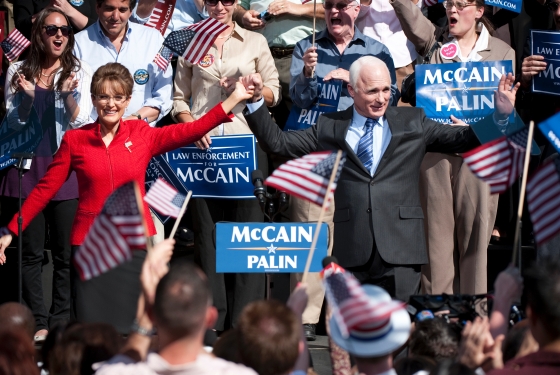
MATT ZOLLER SEITZ: GAME CHANGE, Sarah Palin, and the Limits of Competence

MATT ZOLLER SEITZ: GAME CHANGE, Sarah Palin, and the Limits of Competence

nullIn a scene from the great 1984 comedy Top Secret!, American rocker Nick Rivers (Val Kilmer) is savagely beaten by East German jailers and falls into a hallucination. He's back in high school, racing around the hallways trying to learn the location of the final chemistry exam. "All the exams are over," a classmate tells him ominously. "Haven't you been to class?" "No!" Nick cries. "No! I haven't studied! I'm back in school! I can't believe I'm back in school!" Then he wakes up to find himself being savagely whipped. "Thank God," he says.

HBO's Game Change, about the making and unmaking of vice-presidential candidate Sarah Palin during the 2008 presidential election, is basically that scene stretched out to feature length — an agonizing experience. You don't need to know the names of political consultants or remember every detail of the campaign to become immersed in it, because in its heart, it's about coming up against the limits of one's own competence. This harsh lesson is learned not by Palin, but by the people who submitted her as McCain's running mate, and by McCain himself, who unknowingly ceded the election the minute he added her to the ticket.

For Sarah Palin (Julianne Moore), indeed for everyone on the McCain campaign team, the election season is final exam week, and as the big day draws near, they become increasingly surly and depressed. McCain (Ed Harris) and his campaign strategist Steve Schmidt (Woody Harrelson) signed off on the drafting of Palin because they wanted to find an authentic and unique running mate, a woman who would kick McCain out of the old-white-guy perception rut he'd been stuck in, reestablish his "maverick" bona fides, shake up the race, and lend him a proxy version of Barack Obama's rock star buzz, which the McCain team misinterprets as empty flash. ("If he heals a sick baby, we're really fucked," McCain grumbles, after catching a glimpse of Obama thronged by admirers at a campaign event.) The film's conception of Palin as a woman who's in over her head, and a campaign that's every bit as overmatched, might account for all the early reviews that note, with some surprise, that Game Change isn't the gleeful hatchet job a lot of people anticipated, and that at times it even treats the former Alaska governor with something like sympathy. But that's no giant shock, really. Even a mostly loathsome and laughable public figure becomes likable when you put her in a position that everybody can relate to. So many scenes in this docudrama-styled movie are about people stumbling onto the precipice of their own ignorance or ill-preparedness, then pinwheeling their arms like cartoon characters to keep from falling into the abyss.

You read the rest of Matt's article here at New York Magazine.

Matt Zoller Seitz is co-founder and publisher of Press Play and TV critic for New York Magazine.

VIDEO: The story of BREAKING BAD, as told by its opening scenes

VIDEO: The story of BREAKING BAD, as told by its opening scenes


[Editor's note: Each episode of AMC's drama Breaking Bad starts with a prologue or teaser. Some of these advance the season's ongoing plot. Others feel like self-contained, at times experimental short films. We wondered: If you strung all of the opening scenes from the various seasons together in chronological order, would the show's basic narrative make sense? And, if people who had never watched Breaking Bad watched only these curtain-raisers, would they come away with a more or less accurate impression of the show? Or would it seem like a different program entirely? We asked Press Play contributor Dave Bunting, Jr. to edit the prologues together in chronological order to create two self-contained Breaking Bad movies, one covering Seasons 1 and 2, the other covering 3 and 4. Then we asked another Press Play contributor, Sheila O'Malley — who has never seen a frame of the series — to watch the two compilations and write down her impressions. Sheila was asked not to read any supplementary material before or during the experiment, and she agreed. Her written account is derived entirely from having watched Dave's compilations. Shorn of everything but its openings, was Breaking Bad still Breaking Bad? Read on and see. If you want to watch exactly what Sheila saw, the prologues for Season 1 and 2 are embedded above.]

Albuquerque has a huge meth problem.  Meth labs blow up in the desert, in the suburbs, in the center of urban areas. High schools are broken into, chemistry labs ransacked.  The situation has gotten so extreme that an FBI task force has been assigned to investigate.  They argue over what to call their investigation.  "Operation Icebreaker." "But isn't that a breath mint?"  There are two Mexicans of the criminal class who have vanished, and it is thought that their disappearance has something to do with the Albuquerque meth war.  The meth found at the various crime scenes is purer than anything before seen in the area, so it is clear there are "new players in town".  The FBI is determined to find out who they are.

Breaking Bad is told in a non-linear, non-chronological fashion.  Season 1 opens with a climax. The rest of the series is told in flashback.  An RV barrels through the desert at breakneck speed, being driven by a man wearing a gas mask.  Is he fleeing from a nuclear event?  Is he some sort of ecological terrorist?  He is so panicked he loses control of the RV.  There are dead bodies in the back of the RV.  His passenger has been knocked out by the crash, head smashed against the dashboard.  The man tosses the gas mask into the dirt, and stands in his underwear beside the crashed RV, recording a farewell message on a flip-cam to his wife and child at home.  The sound of sirens fill the air, and he walks up to the road, gun drawn, ready to meet his pursuers.

The series is devoted to showing us how this man got to that desperate point.  It leaps around in time.

There are multiple characters whom we follow and track.
nullFirst we have gas mask man, who is a chemistry teacher, on medical leave due to his fight with cancer.  It is clear that he is living a double life.  His wife, Skyler, appears to have no idea that he is also a Drug Lord running a meth lab out of a battered RV.  They visit the oncologist.  The prognosis does not look good.  He is very ill, balding and thin (although he has a full head of hair in the first scene with the getaway RV).   The FBI calls a meeting of the school board to discuss the recent theft of chemistry equipment. The teacher gets a round of applause because he is so ill and yet has the commitment to show up at the meeting.  Little do they all know that he was the one behind the ransacking of the chem lab in the first place.  He spends the meeting distracted, silent, and putting his hand between his wife's legs under the table.

He partners up with a young kid who used to be one of the main meth dealers in town.  The kid has been trying to go straight. We first see him applying for a job at a local business, gleaming-eyed with ambition that he "would make a great salesman".  Unfortunately, without experience or a college education the best he can hope for is to put on a silly costume and stand on the sidewalk as a walking ad.  He thinks this is beneath him and storms out.  Meanwhile, he can't walk down the street without former customers coming up to him asking him if he has anything he wants to sell.  He deals with some pretty unsavory characters and is finally roped into business with the chemistry teacher who informs him ferociously that this will be an unequal partnership:  If anything bad goes down, then they do not know each other.  "I want no interaction with the customers whatsoever," he says. In a quick cut, he is then seen emerging from an exploded building, blood pouring from his nose, carrying a bloodstained bag. The two of them wander the desert, burying a gun, and hitching a ride with a passing truck.

nullWe also see them back in the crashed RV in the desert, staring at the dead bodies in the back, one of which, horrifyingly, starts to move and moan.  Flashing back, we see the two of them in a house, wearing gas masks, cleaning up after a brutal murder, body parts blown apart, flushing the meaty pieces down the toilet.  They choke and gag at what they are doing.  These two bodies are the missing Mexicans we've seen earlier, swimming across a muddy river.

The chemistry teacher gets sicker and begins to lose his grip.  He is found standing stark-naked in a crowded convenience store. He misses the birth of his baby because he is in the middle of a crisis situation with his meth business.  He tells his wife he was stuck in traffic.  A neighbor had driven her to the hospital.  The chemistry teacher fears that she is having an affair with the neighbor, and judging from the tender way she kisses the neighbor goodbye in the hospital, it seems that his fears are not unfounded.

The drug war in Albuquerque is shown in various innovative ways, an ongoing and creative theme the series revisits again and again.

There's a veritable music video, with three Mexican singers standing out in the desert, in flashy jackets, playing guitars, and singing about the new Gringo drug lord in town.  "Now New Mexico is living up to its name …” they croon in Spanish.

In a cliffhanger of a scene, a rival drug lord, in a white track suit, is murdered by a 10-year-old kid on a bicycle.

nullA meth lab has blown up in a nice suburban home with a swimming pool.  A charred pink teddy bear, with one missing eyeball, floats in the pool, before being lifted out by a looming figure in a Hazmat suit.  Evidence is bagged and lined up on the concrete.  There are two body bags in the driveway.  These are recurring dreamlike images, filmed entirely in black and white, except for the teddy bear, which blazes in pink against the monochromatic background.  The bear is shown floating through the water, one side completely burnt from the explosion.  This scene is shown repeatedly throughout the series and takes on an increasingly haunting aspect with each insistent repetition.  The floating lone eyeball peers up through the water into the blazing light of day before being sucked into the bowels of the pool.
Everyone in the series is working with just one eyeball.  Nobody can see the whole picture.


Sheila O'Malley is a film critic for Capital New York. She blogs about film, television, theater, music, literature and pretty much everything else at The Sheila Variations.

Dave Bunting, Jr. is a writer, musician and audio engineer, and a frequent narrator of videos for Press Play, The L Magazine and TomatoNation.

LUCK RECAP: No icing error, this

LUCK RECAP: No icing error, this

nullAbout a third of the way through episode six of Luck, a conversation between the horse trainer Turo Escalante and the veterinarian Jo is cut short by portents. A flock of birds erupts from behind, or within, the stands; silhouetted, they look like bats. The horses freak out. Then comes an earthquake. The walls tremble. The ground shakes. And then it's over.

When sudden horrible and/or miraculous events unite all the characters on David Milch's cable series, the shows suggest there are mysterious forces at work in the universe — that's "forces", plural. Nature is an insistent presence on Luck, with its talk of equine and human health, blood, and broken bones. (The relationship between Ace and his parole officer revolves around piss tests.) Accounting and probability are important, too: Every episode is filled with talk of percentages and dollar figures, odds and payouts. But that's as far as the intimations go. The great shake-up this week might be a metaphor, or it might be just a physical event. The show's opening credits suggest a multiplicity of possible manifestations of luck — praying hands, crucifixes, a shamrock, dice, a spinning coin, coins in a fountain — without favoring any one of them. Ultimately, what matters isn't what's happening or how the events came about, but how the characters interpret events and react to them — how they respond to good and bad fortune.

The manager Joey Rathburn loses his stutter when the gun that he's about to kill himself with misfires because of the tremors; the bullet ricochets through the room, inflicting only a flesh wound. "Hello. My name is Joey Rathburn," Joey says, upon discovering the change. Then, reading a clothing label: "Tommy Bahama. One hundred percent cotton. Extra large. Made in China. Machine wash. Cold water." The change in his personality is subtle but instantly apparent: Joey seems a bit more confident and forthright, not as much of a shmo demoralized by a failing marriage. Entering the bar, he exclaims, "Good evening, one and all!" as if he owns the place. By the end of the episode his stutter has returned, though in that last conversation with Ronnie, it seemed to me that he was able to at least assert a bit of control over it.

You can read the rest of Matt's article here at New York Magazine.

Matt Zoller Seitz is co-founder of Press Play and TV critic for New York Magazine

MATT ZOLLER SEITZ: What makes MAD MEN great?

MATT ZOLLER SEITZ: What makes MAD MEN great?

nullWe head into Mad Men’s" fifth season knowing nothing about it. The on-air promos recycle moments from past seasons, and the teaser art has been cryptic even by this show’s standards: an opening-credits-styled image of a falling man that could be hawking any season, and a photo of hero Don Draper staring at two mannequins — a clothed male and a naked female* — through a dress-shop window. Matthew Weiner, who banned advance screeners after a New York Times review revealed innocuous details from the season-four premiere, has dropped a cone of silence over the production. We have no idea if Don went through with plans to wed his young secretary, Megan; if Joan had Roger’s baby; or if the new agency is still in business. We don’t even know the year in which this season takes place, which at least would prepare us for the wingspan of Roger’s lapels.

On first glance, the black-ops secrecy seems insane. This isn’t a plot-twisty series like Breaking Bad or Homeland; it’s a low-key drama consisting largely of men and women in vintage clothes bantering on the same eight or nine sets. And yet the cloak-and-dagger shtick is of a piece with what’s onscreen. It’s a rare show that can vanish for seventeen months, make a tight-lipped and rather self-satisfied return, and presume we’ll give it a prodigal son’s welcome and be right. Mad Men has earned that level of blind trust because it’s serenely sure of what it’s doing.

You can read the rest of Matt's piece here at New York Magazine.

Matt Zoller Seitz is founder and publisher of Press Play and TV critic for New York Magazine