
http://www.movingimagesource.us/flash/mediaplayer.swf?id=54/801
EDITOR'S NOTE: Contributor Tony Dayoub marks the 25th anniversary of the premiere of Michael Mann's Crime Story. We have paired his new piece with Matt Zoller Seitz's video essay Zen Pulp, Pt. 5: Crime Story, which was created for the Museum of Moving Image.
On September 18, 1986, director Michael Mann (Heat) made good on his promising career in TV and film with the debut of his new period cops-and-robbers saga, Crime Story. Not only did Crime Story’s feature-quality production design live up to that of its TV antecedent, Mann’s stylish Miami Vice; Crime Story also fulfilled its aim to present a morally complex world in which it was often difficult to tell those who broke the law from those who upheld it. Set in 1963, the show explores the multiple facets of a young hood’s rise to power in the Chicago Mob through the viewpoints of its three protagonists. Ray Luca (Anthony Denison) is the pompadoured criminal quickly ascending the ranks of the “Outfit.” Lieutenant Mike Torello (Dennis Farina) is the cop in charge of Chicago’s Major Crime Unit (or MCU) who bends the law in the service of justice. And David Abrams (Stephen Lang) is the idealistic young lawyer caught between the two men and their obsessive cat-and-mouse game. Today, a little over 25 years since its premiere, Crime Story: The Complete Series (Image Entertainment) comes out on DVD. At press time, review copies were not made available, so it’s impossible to ascertain if any improvements have been made over the questionable video quality of previous iterations. But this short-lived series, an influential precursor to the well-written serials littered throughout cable this decade (i.e., The Sopranos, Mad Men, Justified, and others), is worth owning despite any potential issues with its digital transfer.
In 1984, the success of Miami Vice’s MTV cops premise had made Mann a household name, allowing him to develop virtually any project for NBC. Mann went back to a theme that informed his earlier films and would recur again and again in subsequent ones: the razor-thin borderline between order and chaos. In his first feature, Thief (1981), Mann focused on the rigid code of honor of a Chicago jewel thief named Frank (James Caan), zeroing in on his professionalism and expertise as counterpoint to the crooked methods used by the police and his criminal associates to bring him under control. Manhunter, a crime procedural, took a different tack, examining how FBI profiler Will Graham (William Petersen) experiences a progressive loss of his own identity as he tries to get inside the head of an active serial killer. With the same skill Vice displayed in applying memorable music to key moments of its violent tale, only now taking a period setting into account, Crime Story represented a sort of apotheosis of all of these elements.

In much the same way Heat would later, Crime Story looked at opposing sides of the law – both in sharp relief and, in some cases, muddled reflection of each other. (Heck, Heat even lifted one scene from Crime Story whole cloth – Al Pacino’s cop discovers he’s being cuckolded and takes his TV as he moves out, just as Torello does in an early episode.) Torello’s poisonous hatred of Luca spills onto his personal life, rupturing his marriage and often bringing death to his loved ones. At one point, Torello acknowledges his obsession privately to Luca, “You know, when you chase someone as long as I’ve chased you, in the end, it really comes down to two people: you and me.” With little regard for his officers – big-hearted Sgt. Danny Krychek (Bill Smitrovich), cigar-chomping Walter Clemmons (Paul Butler), jokester Nate Grossman (Steve Ryan), and rookie detective Joey Indelli (Billy Campbell) – Torello rushes headlong in pursuit of Luca, frequently endangering the lives of innocent bystanders. The lethal Luca, meanwhile, cooly dispatches orders and manages his lackeys in much the same way a company CEO does. Public defender Abrams justifies his work on behalf of criminal scum by righteously pointing out that everyone is entitled to a top-notch legal defense. But as the series continues, Torello begins fumbling the rest of his police work in order to focus on Luca, coming under fire from a federal attorney. Abrams starts feeling the sting of his close association with mobsters, especially when his father (himself a famous mob lawyer) is killed by a car bomb meant for him. The ambitious Luca becomes more reckless in his hunger for power.
By the time Luca makes it to the top of his organization, he is paranoid. Luca turns on his closest henchmen, Pauli Taglia (John Santucci) and Max Goldman (Andrew Dice Clay), in an episode directed by Mann himself, “Top of the World.” The real-life events that inform the episode (perhaps the pinnacle of the entire series) also provide the backstory for Martin Scorsese’s Casino. Like Joe Pesci’s Nicky Santoro, the character of Luca stands in for real-life mobster Anthony “the Ant” Spilotro whose cowboy antics began interfering with the Chicago Outfit’s Vegas dealings. The character of Max Goldman, like Robert De Niro’s “Ace” Rothstein in Casino, is a stand-in for Frank “Lefty” Rosenthal. Casino’s opening scene, in which Rothstein survives an abortive car explosion, is also depicted in “Top of the World;” Goldman survives an explosion meant to eliminate him for discovering Luca cheating with his wife.

Crime Story came by its gritty realism honestly. It was created by Chuck Adamson, a former Chicago cop who consulted Mann on Thief, and Gustave Reininger, a former investment banker turned screenwriter with a tendency to put himself in dangerous undercover situations while researching his work. In fact, Mann filled out Crime Story’s cast, much the same way he did in Thief, with actors who had once been cops or felons in Chicago. Lead actor Farina had been a cop and Adamson’s partner. And Santucci, whose supporting character of Pauli was the show’s breakout favorite, had been a highline jewel thief busted by Adamson and Farina. Santucci’s exploits served as much of the foundation for Thief, and he doubled as a technical consultant on Crime Story.
While it wasn’t the first prime-time series to have serialized elements, Crime Story was one of the most cohesive, at least in the first of its two seasons. The first season follows Luca’s meteoric rise from simple home invader (in the pilot episode directed by Abel Ferrara) in Chicago to chief enforcer for syndicate boss Manny Weisbord (Joseph Weisman) in Las Vegas. Torello rides his coattails, in a sense, graduating to G-man with the Justice Department along with the disillusioned Abrams, both of them tasked specifically with bringing Luca and the Outfit to justice. The time-compressed first season comes to a natural and nihilistic conclusion, in which few of the characters seem to get out alive, Mann’s nod to the slim chances that the ratings-challenged series would return for a second season. But return it did, and now, the Crime Story writing staff, or what was left of it after many moved on to other projects, had to figure out how to get themselves out of the corner that they had painted themselves into. With two, possibly three, of the lead characters at death’s door in the first season finale, the ultimate resolution was far-fetched for a show that had always prided itself for its verisimilitude. The show wound down its second season with inconsistent episodes set in the Vegas milieu before concluding with a tight trilogy of episodes filmed in Mexico, where Torello’s squad goes vigilante in order to finally stop Luca once and for all. One wonders if today’s TV landscape might have been more supportive of Crime Story.

Though ratings played a part in its cancellation, another significant contribution was the expense of recreating the early ‘60s. Today’s cable series have learned to amortize their costs – not to mention increase the production time allotted in filming an episode – by producing seasons that are half the number of episodes as those of network series. With less need for filler episodes – Crime Story produced a number of episodes that mostly consisted of clip compilations to bring its audience up to speed – then season-long storylines take on more potency. Just look at the current season of Sons of Anarchy, another show in which the criminals are the protagonists. Kurt Sutter’s outlaw biker series had to ask for one more episode than its allotted 13 when it became clear this year’s plotline involving SAMCRO’s dealings with a Mexican drug cartel was bursting with too much story potential.
Still, as a forerunner to the morally relativistic worlds seen on TV crime sagas like Boardwalk Empire and its cable confreres, Crime Story stands out as a beautifully executed and engaging exemplar.
Atlanta-based freelance writer Tony Dayoub writes about film and television for his blog, Cinema Viewfinder, and reviews DVDs and Blu-rays for Nomad Editions: Wide Screen, a digital weekly. His criticism has also been featured in Slant’s The House Next Door blog, Opposing Views and Blogcritics.org. Follow him on Twitter.



 Simon Weisenthal’s greatest contribution to the world was his dogged pursuit of Nazi criminals who escaped punishment at the end of World War II. His second greatest contribution was his reminder that despite being described as “the Good War” or “a just war,” not enough good was ultimately done, and comparatively little justice was meted out. Some of the most prominent and heinous architects of mass murder simply got on with their lives, and some were the recipients of largesse — jobs, travel assistance, even money and government protection — that was denied to the people who endured their cruelty. And we tend to forget that for every high-ranking sadist or mass murderer who was imprisoned or executed after the war, thousands more who assisted them directly (through action) or indirectly (through silence) were never even called to account.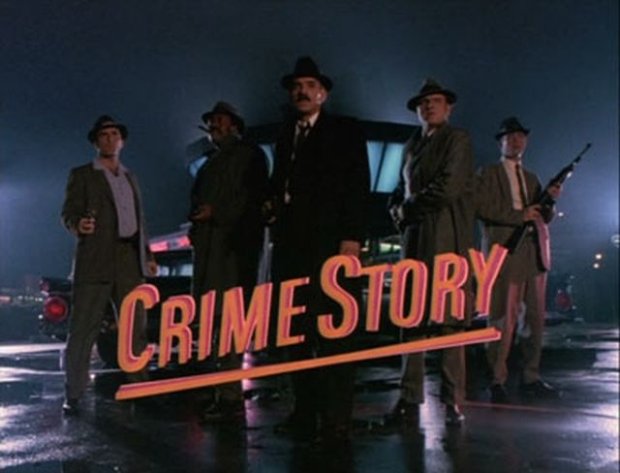





 Press Play Video Blog