MATT ZOLLER SEITZ: Why, After 500 Episodes, Slagging The Simpsons Is Unfair

MATT ZOLLER SEITZ: Why, After 500 Episodes, Slagging The Simpsons Is Unfair

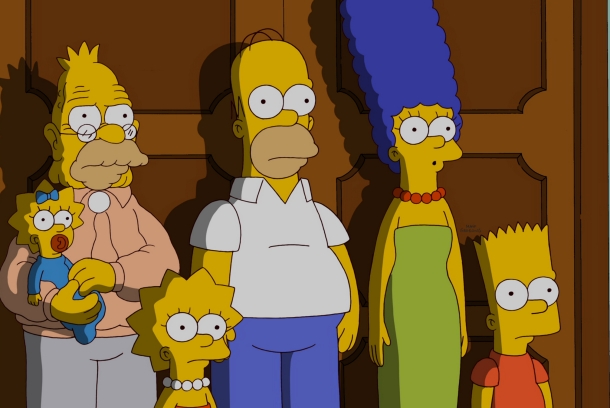
nullAt some point, a show stops being a show and becomes a utility: gas, electricity, water, The Simpsons. That’s not my line; it’s cribbed from a quote about 60 Minutes by its creator, the late Don Hewitt. But it seems appropriate to recycle a point about one long-running program in an article about another when it’s as self-consciously self-cannibalizing as The Simpsons. Matt Groening’s indestructible cartoon sitcom has run 23 seasons and will air its 500th episode on February 19. It hasn’t been a major cultural force in a decade or more, unless you count 2007’s splendid The Simpsons Movie, but it’s still the lingua franca of pop-culture junkies, quoted in as many contexts as the Holy Bible and Star Wars, neither of which includes lines as funny as “Me fail English? That’s unpossible!” I haven’t seen the 500th installment yet because it wasn’t done when I wrote this piece, and that’s probably for the best; pin a thesis to any single chapter and the kaleidoscopic parade of The Simpsons will stomp it flat. Early in the show’s run we rated episodes. Now we rate seasons. In seven years, we’ll be rating decades.

Homer, Marge, Bart, Lisa, and Maggie Simpson appeared in short segments of Fox’s The Tracey Ullman Show in 1987 and got their own series roughly two years later. By now, the series has sunk its roots so deep into the popular imagination that we tend to forget it was once considered déclassé, maybe even dangerous. Twenty years ago, Evangelists and politicians denounced The Simpsons as a televised toxin that weakened parental authority and coarsened the culture. Oblivious to the love that Homer, Marge, and the kids showed for one another, they blasted the clan as a disgusting, dysfunctional unit that was unfit to anchor a prime-time cartoon. During his 1992 reelection campaign, President George H. W. Bush even pledged to help U.S. families be “a lot more like the Waltons and a lot less like the Simpsons.”

You can read the rest of Matt's article here at New York Magazine.

Matt Zoller Seitz is publisher of Press Play and TV critic for New York Magazine.

MATT ZOLLER SEITZ RECAP: LUCK: If Wishes Were Horses …

MATT ZOLLER SEITZ RECAP: LUCK: If Wishes Were Horses …

null

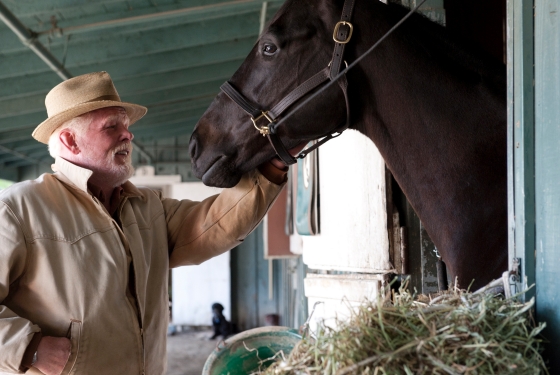
Before we delve into HBO's Luck, I need to get some housekeeping out of the way. I wrote about it in a very general way for New York magazine, then asked to recap the first season for Vulture. Luck is a rare TV drama that benefits from wonky auteurist scrutiny, and that's how I'm going to approach it. I'm fascinated by series creator David Milch and have written extensively about his great western drama Deadwood for the Star-Ledger, The House Next Door, and Salon. I'm also an aficionado of the show's executive producer and pilot director, Michael Mann. In 2009 I wrote, edited, and narrated a series of video essays about Mann's film and TV work. As I recap each episode of Luck, I'll delve into Mann and Milch's creative histories and sensibilities. I might also break down scenes and sequences in detail and talk about why they succeed or fail. I'm not interested in the details of plot except as they relate to character and theme, and I tend to hop around in an episode's chronology rather than writing about events in a linear way.

One other thing you should know: HBO sent the whole first season of Luck to critics in December, so bear in mind that when you read my (and others') recaps, you're reading observations by people who already know how everything turns out. Beyond urging readers who might be on the fence about Luck to stick around through episode four, where things really start to come together, I'll try to avoid spoilers, and ask anybody out there who's seen future episodes to do the same. I plan to delete anything resembling a spoiler from the comments threads and ban anybody who makes a habit of posting them. Them's the rules.

And … we're off!

If you would like to read the rest of Matt's recap of Luck, click here.

A critic, journalist and filmmaker, Matt Zoller Seitz is the staff TV columnist for New York Magazine and the founder of Press Play.

MATT ZOLLER SEITZ: The Sexy, Gory, Low-Rent Spectacle of SPARTACUS: VENGEANCE

MATT ZOLLER SEITZ: The Sexy, Gory, Low-Rent Spectacle of SPARTACUS: VENGEANCE

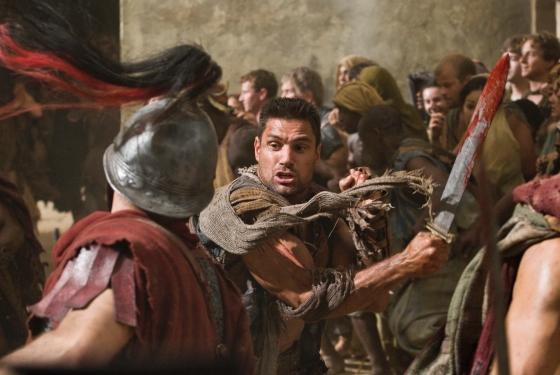
nullSpartacus is back with a new Spartacus. Both the new actor and the revamped series take some getting used to. For the most part, the reincarnation works, in large part because this cable franchise doesn't have a pedigree to sully. The latest edition, Spartacus: Vengeance, picks up where the original 2010 hit Spartacus: Blood and Sand left off, with the title character and his lusty band of former slaves afflicting their former Roman masters, and the Romans trying to contain the rebellion. Liam McIntyre takes over the title role, replacing Andy Whitfield, who died of cancer last year. Whitfield, whose sinewy torso and sweaty earnestness helped turn the original series into Starz's biggest ratings hit, was diagnosed with early-stage non-Hodgkin lymphoma after the first season wrapped. Starz delayed the second season to accommodate his treatment, then plugged the long hiatus with the six-episode prequel Spartacus: Gods of the Arena, which was pretty good for a period piece thrown together in a hurry. Production of the mothership show was supposed to resume after Whitfield was declared cancer-free, but the actor relapsed and died September 11 of last year. Starz approached McIntyre as a contingency; McIntyre says he had some contact with Whitfield near the end, though they never actually met, and took over with Whitfield's blessing.

This would be a tough situation for any performer, and I'm sure some fans will feel that the show can't or shouldn't continue with a different star no matter who he is. But I like McIntyre. He doesn't have Whitfield's odd sweetness and Joseph Gordon-Levitt eyes, and he has a somewhat more square, old-movie presence (except for the fussed-over eyebrows), but he's a good actor, and his Tom Cruise–like relentlessness suits the story.

If you would like to read the rest of Matt's piece, click here.

A critic, journalist and filmmaker, Matt Zoller Seitz is the staff TV columnist for New York Magazine and the founder of Press Play.

PAMELA AUCOIN: How HOMELAND validates the war on terror

How HOMELAND validates the war on terror

null[EDITOR'S NOTE: The following piece about Showtime's drama Homeland contains spoilers for season one. Read at your own risk.]

Pop culture serves to entertain and reinforce cultural norms. Television shows have always done this; studying them and their attitudes towards authority reveals a lot about America.

One of the most well-received shows of the season is Showtime’s Homeland. The series features a fine cast including Claire Danes and Mandy Patinkin, and was originally an Israeli TV show. While that may not sound exactly like the BBC, Homeland still has the allure of the foreign-produced, which suggests a less provincial background.

The New Yorker critic Emily Nussbaum praised Homeland as “an antidote to NBC’s 24,” accused of glorifying torture abroad. Homeland is presented as a show with more liberal values, one which portrays a more nuanced C.I.A that's less likely to promote bigotry against Muslims and enhanced interrogation techniques.

nullThis has not been my viewing experience. While Homeland is undeniably compelling, it is not a balanced show that seems very interested in presenting American intelligence services honestly. Rather, it is very validating. The all-star, critic-proof cast somehow sublimates the very undemocratic policies the show suggests need to exist in order for the Claire Danes character to succeed in her mission.

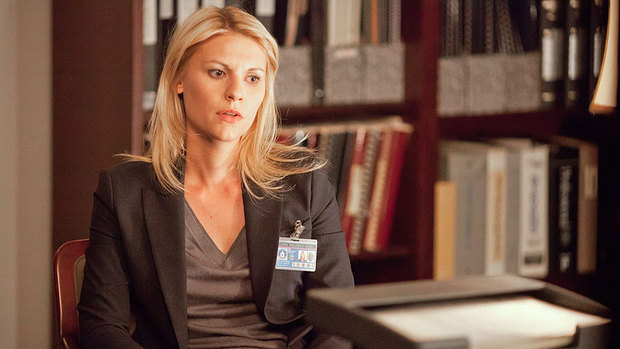
Danes' Carrie Mathison is a complicated character with an undisclosed mood disorder that may actually help her do her job; after all, what kind of sane person could reconcile leading the double life of the spy? Yet her actions are quite horrifying; she installs bugs on the home of a terror suspect, which she has been ordered to take down before she can gather any meaningful intelligence. Isn’t that convenient? Our civil liberties are what come between sniffing out Al Qaeda operatives, who just won’t allow well-meaning if somewhat psychotic spies to do their jobs properly.

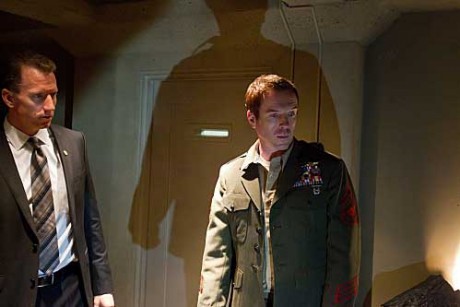
The fact Carrie does not lose her job is telling; ultimately, Homeland’s C.I.A. bends the rules a lot. Carrie’s boss Estes is supposedly the “smartest guy in Near East, by a mile,” yet is short-sighted enough to allow a Marine P.O.W., Nick Brody (Damian Lewis), to visit a former jailer who is kept locked up in an interrogation room. Naturally, Brody attacks his former torturer and possibly slips him a razor blade.

There are many other slip-ups by Carrie’s boss, and Carrie herself; she even has a brief affair with said Marine, who she suspects is a sleeper agent. She also manages to inadvertently let it slip she’s been spying on him. All of this suggests that the C.I.A. is a rather sloppy organisation, but such criticism is not blatant in Homeland. Carrie is the rogue genius who might become occaissionally unhinged, but her unorthodox methods are what is needed, and can lead to results.

nullBut do they really? Not according to interrogation research, which has shown time and again that torture leads to bad intelligence and creates even more terrorists. Yet Homeland embraces torture as a viable tool to get information. The captured Al Qaeda operative is tortured in a C.I.A. cell which is freezing cold (he is undressed), and plays bursts of heavy metal music and blasts strobe lights to unnerve him sufficiently to name names. Just before he is about the provide them with specific information, he manages to commit suicide. The subtext is not missed by the viewer. Geneva conventions be damned, torture works, and an exceptional America must be allowed to practice it.

It is also telling that when innocent Muslim bystanders are shot and killed in a mosque by American law enforcement, the issue is not dealt with; it is understood this will not create an international or even domestic incident. They are Muslims, and therefore expendable; this seems to be the show’s message.

Viewers of the far superior British program The Sandbaggers would likely notice that Homeland is a far less sensitive program. The show’s eponymous “sandbaggers” are a group of British agents who would fit in well in John Le Carre’s The Spy Who Came In From the Cold. They are low-paid civil servants who engage in highly dangerous, and certainly morally ambiguous missions to keep the KGB in check. What was brilliant about this show (and, to some extent, Le Carre in general) was how it questioned the sanity of the Cold War and those who ordered these excursions in the first place. The agency bosses are portrayed as careerists, all too willing to send the sandbaggers on highly dangerous and morally ambiguous missions while they wine, dine, and dream of knighthood.

Expect no such honestly from Homeland, which can admit no such complexity. Nussbaum mentions the program’s “deep characterization.” Certainly, the writers take their time detailing some of Carrie’s family background and inability to sustain romantic relationships. This is to appease critics, who cannot simply criticize the characters as one-dimensional Jack Bauers or James Bonds. It hints at it to woo critics just enough, but it would never go so far as to suggest that there is something rotten about the State Department, whose endorsement of internationally illegal prisons abroad has served to encourage the growth of terror cells and damaged our authenticity when we criticize other nations like China, Syria, and Russia for not respecting civil liberties. The show recently won several Golden Globes, lending even more credibility to the show’s dangerous message that the war on terror can, and should, indulge our “dark side.”

Pamela AuCoin is a freelance journalist living in New York City. She has written investigative articles on the Manhattan real estate market for New York Living magazine, and currently teaches world history and occasionally German in the New York City Department of Education. 

MATT ZOLLER SEITZ: The Failures, Successes, Possibilities, and Danger Signs of HELL ON WHEELS

MATT ZOLLER SEITZ: The Failures, Successes, Possibilities, and Danger Signs of HELL ON WHEELS

nullLike a lot of people, I watched the first few episodes of AMC's Hell on Wheels,Joe and Tony Gayton’s drama about the building of the transcontinental railroad, and then checked out. It wasn't awful, but a lot of it was weak, and even in its better moments it seemed not to have found its tone yet. The pilot and the next couple of episodes seemed stranded between grubby naturalism and slick, empty mythmaking. In one scene, the show would feel like a wannabe McCabe and Mrs. Miller or Deadwood, muddy and lyrical and depressive. In another it would echo Sergio Leone or early Clint Eastwood (High Plains Drifter and The Outlaw Josey Wales especially). Yet another scene would feel anachronistic, glossy, and weightless. When I finally did catch up after the New Year, what I saw made me wish I'd been watching the show in real time. Hell on Wheelsdidn't turn into a great drama, but it settled into a distinctive groove, growing more relaxed and confident by the week, dealing with painful historical subjects and unique personal crises that most TV, even Western-themed TV, often ignores, and indulging in some of the most deliriously cinematic montages this side of Breaking Bad. Some scenes and moments were flat-out amazing — so unlike anything else on TV that they made me want to forgive or forget the just-okay dialogue and production design and hit-and-miss performances.
Last night's season finale — which cut between vengeance-obsessed lone wolf hero Cullen Bohannon (Anson Mount) chasing one of the men he believed raped and killed his wife and a dance party celebrating the completion of 40 miles of track — encapsulated the show's flaws as well as its promise. The gathering-of-a-misfit-community scenario is such a durable Western trope that it's tough to mess up, but here the editing was choppy and the staging of important action was undistinguished (few of the dancers looked comfortable dancing). And the dialogue — never the show's strong suit — was so full of clunkers that I'm having a hard time singling out the worst line; it's probably a toss-up between the former John Brown follower turned man of God, Reverend Cole (Tom Noonan), telling Bohannon, "Choose hate, it's so much easier," and the ex-Pawnee concubine turned prostitute Eva (Robin McLeavy) telling her ex-slave boyfriend, "I love you, Elam, and I'm tired of being a tramp."

You can read the rest of Matt's review here at New York Magazine.

A critic, journalist and filmmaker, Matt Zoller Seitz is the staff TV columnist for New York Magazine and the founder of Press Play.

MATT ZOLLER SEITZ: PARADISE LOST 3: PURGATORY Offers Only a Fleeting Sense of Relief for the West Memphis Three

MATT ZOLLER SEITZ: PARADISE LOST 3: PURGATORY Offers Only a Fleeting Sense of Relief for the West Memphis Three

nullBy Matt Zoller Seitz

Press Play contributor

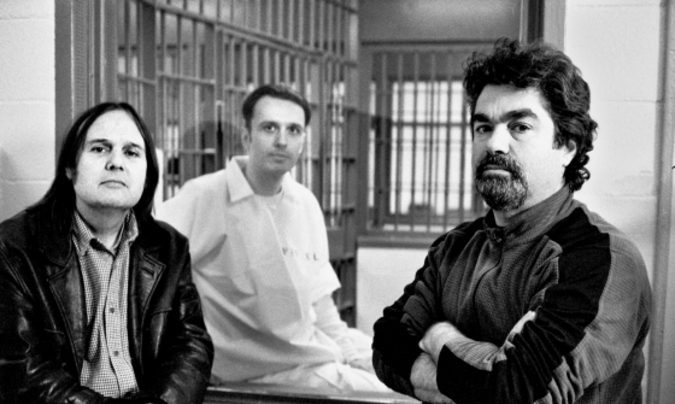
By all rights, Joe Berlinger and Bruce Sinofsky's Paradise Lost 3: Purgatory (HBO, 9 p.m. Eastern) should feel more triumphant than it does. It is, after all, about the release of the West Memphis Three, men who were imprisoned — wrongly, it now seems — for murdering and mutilating three young boys in West Memphis, Arkansas, nearly two decades ago. When convicted killers Damien Echols, Jason Baldwin, and Jessie Misskelly, Jr. were sentenced back in 1993, they were mere boys themselves, high school kids with pimply skin and uncertain voices.

Thanks in large part to the efforts of Free the West Memphis Three, a legal defense fund, the once seemingly impregnable case against them fell apart, exposed as circumstantial and shoddy and tainted by ineptitude and bureaucratic self-protection. When Berlinger and Sinofsky visited West Memphis in 1996's Paradise Lost, it was the story of a court case, pure and simple, and the filmmakers viewed it with an ominous and slightly clinical detachment. By the time they made their follow-up, 2000's Paradise Lost 2: Revelations, the trio were already starting to seem like victims of a witch hunt. When they're finally let go at the end of Paradise Lost 3 — the result of a bizarre plea-bargain arrangement that I'll get into shortly — there is a sense of relief and a surge of sentiment, but it's fleeting, and in the end it's eclipsed by a sense of emotional, physical, and spiritual exhaustion. Berlinger and Sinofsky titled this movie before the trio found out they were finally going free, but the word "Purgatory" still fits, because it encapsulates their predicament over the last eighteen years. The trio was condemned not just to rot in prison, but to wait for a resolution, an exoneration, that most people figured would never come.

To read the rest of the review at New York Magazine's Vulture web site, click here.

A critic, journalist and filmmaker, Matt Zoller Seitz is the staff TV columnist for New York Magazine and the founder of Press Play. 

SLIDE SHOW: Movies for a desert island

SLIDE SHOW: Movies for a desert island

null

You don’t need much of a setup for this one: It’s a Desert Island List of visual media that I’d like to have with me if I were shipwrecked.

Here are the rules:

1. This list is composed solely of motion pictures and TV shows. Music, books, paintings and other media are not included. It is assumed that you’ll have an indestructible DVD player with a solar-recharging power source, so let’s not get bogged down in refrigerator logic, mm’kay?

2. You can list 10 feature films, one short and a single, self-contained season of a TV series.

3. NO CHEATING. Every slot on the list must be claimed by a self-contained unit of media. You can put all 15 hours of Berlin Alexanderplatz on the list because it’s considered one long film (or if you saw it in Germany, a TV miniseries), but you can’t put The Godfather and The Godfather, Part II in the same slot because “it counts as one long film” (it doesn’t!). You can’t put 10 seasons of I Love Lucy on their, either, or "Twin Peaks up through the part in Season 2 where we finally find out who killed Laura Palmer.” Part of the fun of this exercise is figuring out what you think you can watch over and over, and what you can live without. Stick to the parameters, otherwise we’ll have human sacrifice, dogs and cats living together, and mass hysteria.

I’ve listed my short film pick and my TV season first, followed by a list of 10 theatrical features in alphabetical order. Please add your own picks to the Letters section; I want to see what you’d put in your suitcase.

You can view Matt's final slide show here at Salon.

A critic, journalist and filmmaker, Matt Zoller Seitz is the staff TV columnist for New York Magazine and the founder of Press Play.

MATT ZOLLER SEITZ: Should HOMELAND have quit while it was ahead?

MATT ZOLLER SEITZ: Should HOMELAND have quit while it was ahead?

null

[Editor's Note: The following article contains spoilers for the season finale of Homeland, season one. Read at your own risk.]
 

Bugs Bunny and Daffy Duck might not seem to belong in a review of a searing cable drama about terrorism, but bear with me, OK? In the climax of Show Biz Bugs (1957), in which Bugs and Daffy compete for the right to claim top billing in a show, Daffy decides he’s had enough of being bested by the rabbit and hauls out his trump card, self-immolation. “I must warn those with weak constitutions to leave the theater for this performance,” the duck says, then swallows gasoline, nitro glycerine, gunpowder, uranium and a lit match, and explodes. “That’s terrific, Daffy!” Bugs exclaims from the wings, over thunderous applause. “They loved it! They want more!” “I know, I know,” says Daffy’s ghost, floating toward the rafters. “But I can only do it once!”

As knocked out as I was by the first season finale of Homeland, a part of me worries that the series might be the self-immolating Daffy Duck of cable dramas — incapable of topping itself in future seasons because the nature of its achievements this year are innately singular, and can only be diluted by a storyline that stretches out for two-plus years. (I have the same fears about American Horror Story, and I remember having them after Twin Peaks finally revealed who killed Laura Palmer, then sort of stumbled along until ABC canceled it.)

I even worry that the only major tactical mistake that Homeland made in its 90-minute season-ender was letting Marine Sgt. Nick Brody end his weird odyssey free and unharmed at the end. If producers Howard Gordon and Alex Gansa had let Brody swallow the match, so to speak — and complete his suicidal terrorist attack, or get shot or otherwise neutralized in the State Department bunker, or be talked down by his teenage daughter Dana, or his wife Jessica or Carrie, and sent to prison — the series would have still dazzled as a stand-alone while leaving us lots of plot and motivation questions to chew over. Brody’s statement on the phone to Abu Nazir — about how it might be more advantageous to have a fifth column influencing U.S. foreign policy rather than a sleeper agent plotting a bloodbath — makes dramatic sense, and it works as a setup for a second season, one set in the heart of executive branch power rather than on the military-intelligence fringes. But it’s damned hard to imagine how a scenario like the one that Brody laid out to Nazir could produce TV more exciting than the season that we just finished watching.

You can read the rest of Matt's recap here at Salon.

Matt Zoller Seitz is the publisher of Press Play and TV critic for Salon.

SLIDE SHOW: The best TV shows of the year

SLIDE SHOW: The best TV shows of the year

nullWe’re living in some kind of new Golden Age of scripted TV, and this year’s best offerings were amazing. I decided to be rigorous and restrict myself to just 10 entries. It wasn’t easy.

These 10 picks represent what I think were the most creative and consistently satisfying scripted comedies and dramas that aired on American TV during 2011. If I’d expanded the list to account for shows that were somewhat more erratic but that produced terrific individual episodes, this list would have had 30 or maybe even 40 titles on it. If anybody’s curious, I may post the expanded list in the comments section.

You may see some of the runners-up cited next week, when I will present a slide show honoring the best individual episodes of scripted series. There might be an article listing the best nonfiction programs as well.

You can view Matt's slide show here at Salon.

Matt Zoller Seitz is the publisher of Press Play and TV critic for Salon.

MATT ZOLLER SEITZ: Where can AMERICAN HORROR STORY go from here?

MATT ZOLLER SEITZ: Where can AMERICAN HORROR STORY go from here?

null

EDITOR'S NOTE: The following article contains spoilers for "American Horror Story" season one, episode 11, "Birth." Read at your own risk.

“Just because we’re dead doesn’t mean we don’t have wants … desires,” said Tate, the pouty, bratty, forever-teenage rubber-suit-wearing, mom-of-the-house raping, suicide pact-making … sorry, I feel like there should be about 12 more adjectives in there, because the ghostly Tate, like most of the characters on FX’s aggressively lurid “American Horror Story,” requires them. But let’s stay focused on Tate’s statement, because it’s key. Yes, of course! He and the other ghosts have wants … desires. And one of the many amazing things about the show is how, over the past few episodes, it has subtly moved the ghosts to the center of the narrative, to the point where the ever-dwindling number of living characters have started to seem like the supporting cast on a show that they were ostensibly the stars of. (Of course, now that they’re all dropping like flies — even money on Constance to bite the dust by the end of season two — they get to be at the center of the story again.)

I’ll spare you a detailed recap because if you didn’t see the episode, you shouldn’t be reading this article in the first place — and besides, appreciation and speculation is more fun. As written by Tim Minear and directed by Alfonso Gomez-Rejon, it was perhaps the show’s spookiest episode to date, campy and trippy (check out all those dissolves!) yet straightforwardly horrific, in the art house/grindhouse vein of a 1970s Ken Russell or Dario Argento picture.

You can read the rest of Matt's piece here at Salon.

Matt Zoller Seitz is the publisher of Press Play and TV critic for Salon.