Eastwood’s “J. Edgar” takes few risks with its controversial subject

Eastwood’s “J. Edgar” takes few risks with its controversial subject

null

You'd think Clint Eastwood would be the right guy to direct a movie about J. Edgar Hoover. After all, who better to tell the story of the 20th century's most influential law enforcement officer, the man who wrote the rule book on fighting crime only to disregard those rules when they prevented him from getting his man, than Dirty Harry himself? Or, to be less obvious, what would the man responsible for White Hunter Black Heart, A Perfect World and Million Dollar Baby — movies about men who defied authority, be it Hollywood, the law or God — bring to the life story of the man who held authority over the country for nearly 50 years? Alas, Clint Eastwood's stately biopic J. Edgar is a frustrating experience. For nearly 2 hours and 20 minutes we are held captive by the possibility of a major revelation or insight into a man whose obsession with cataloging every single detail of a person's personal and professional lives foretold the collapse of privacy. We get hints, intimations and suggestions of darker urges that shaped Hoover's behavior, but nothing concrete about the man's personality, and no attitude whatsoever toward his actions. Eastwood mistakes vagueness for ambiguity and puts us in the position of being armchair psychiatrists.

Working from a screenplay by Dustin Lance Black and starring Leonardo DiCaprio in the lead role, J. Edgar certainly has a high-end pedigree, but the film is so concerned with being "refined" that it sacrifices momentum. Opening with Hoover dictating his autobiography in an effort to set the record straight, the film shows promise, even if the investigative flashback structure it employs should've been retired a long time ago. It inevitably leads to a then-this-happened-then-this-followed-by-this rhythm that can be a grind. But Hoover's origin story is fascinating, especially as he tries to convince his boss Mitchell Palmer (Geoff Pierson) to invest in new sciences like fingerprint analysis. We see how Hoover's crusade against communist radicals led to his being put in charge of the F.B.I., which he would remake into his own image of clean-cut American righteousness. We are introduced to the three key people in his life: his mother Annie (Judi Dench), who molded her Edgar into a model of properness; Helen Gandy (Naomi Watts), his loyal secretary; and Clyde Tolson (Armie Hammer), his most loyal…friend?
null
Then…we wait, patiently, for a theme or pattern to emerge. One never quite comes through. By trying to condense a 50-year history into a 2 1/3-hour runtime, J. Edgar becomes a highlight reel with some of the best parts edited out. Hoover's war against '30s gangsters like Baby Face Nelson and John Dillinger is reduced to more or less a montage. Hoover during World War II? Nothing. Hoover during McCarthyism? We get one line of dialogue dismissing McCarthy as an opportunist. The movie's greatest flaw is how it does not deal with Hoover's clashes with the Kennedys, especially Bobby. Hoover's hatred of Bobby Kennedy was legendary, and for a movie about his life to omit that part is just wrong. Instead we get too many scenes of Hoover's mother laying on guilt trips about what he must do. This is Psych 101 screenwriting territory, way below the thinking of Eastwood and his collaborators.

The most obvious (and possibly most entertaining) approach to this material would be to treat it like one of those ripped-from-the-headlines '30s Warners pictures, complete with gossip and innuendo. (We get a charge in one scene when we see famous bits from The Public Enemy being shown to a cheering audience.) The other approach to the material would be to concentrate on just a few defining moments. It is extremely difficult to condense a man's life into an extended runtime. Malcolm X did it, but then again it was focusing on 20 years, not 50. (It still managed to bring it up to the present with that startling final scene of Nelson Mandela addressing a classroom.) <i>Nixon</i> also did it, but Oliver Stone, unlike Eastwood, has a singular gift for innovative visuals and editing that gives his movies drive. The model for a movie like J. Edgar is something like Danny DeVito's criminally underrated Hoffa. Like J. Edgar, it also uses a flashback structure, but screenwriter David Mamet doesn't bother with trying to cram a man's life into a conventional narrative. Hoffa is simply presented as-is, and we take in how those around him react to his actions. By doing that, we come away understanding Hoffa's achievements as a labor leader, but also understand that his ego and quest for power led to him eventually losing sight of his original intentions. (Interestingly, the highlight of Hoffa is the extended sequences where he squares off with Robert Kennedy.) A typical scene in J. Edgar is of two people sitting in a darkened room talking around what is on their minds. If you're going to make a movie consisting of these kinds of scenes, you'd better make sure they have something interesting to say. Or, at the very least make clear what it is they are <i>not</i> saying. (Tom Stern's drab cinematography doesn't help matters. While not as bad as his work in Eastwood's Changeling, it makes you not want to see the color brown for at least three months. His lighting is like Gordon Willis minus texture — or soul.)

At 81, Eastwood has spent the last 10 to 15 years making movies where he seems to be re-examining not only his own image, but the image of stoic, non-verbal men, He's been deconstructing the notion of masculinity before men were told it was okay to get in touch with their feelings. The idea that men needed to do whatever it took to get the job done was being undercut by the (necessary) assertion of feminine and racial equality. Eastwood's best films are about men reeling from change and how they either reject it or are humbled by it. In Million Dollar Baby (his best film in the last decade), boxing trainer Frankie Dunn is constantly questioning God's plan only to get a comeuppance when he demands unquestioning faith in his training methods from his fighters. A Perfect World saw Eastwood deconstructing the Western showdown by setting a generational clash of law and disorder on the eve of the Kennedy assassination. (A Perfect World is a far more complex breakdown of Western myths than the somewhat overrated Unforgiven.) White Hunter Black Heart told a thinly fictionalized version of John Huston's recklessness while making The African Queen, with Eastwood playing Huston as a filmmaker learning that trying to exert the same kind of control he has on a movie set in everyday life can lead to self-destruction. Even less successful efforts saw Eastwood attempting to re-think history, considering if his generation got things wrong. His two-part World War II saga Flags of Our Fathers and Letters from Iwo Jima had moments of great irony hinting that Eastwood might've learned something from Saving Private Ryan; too bad, in the end, he wound up buying into the myths of the Greatest Generation. Hereafter found Eastwood confronting mortality; too bad the movie got all New Age-y in its final sequence. And in the disastrous Gran Torino, Eastwood directed himself in what felt like his farewell performance as Korean War vet Walt Kowalski, a longstanding racist forced to realize he was wrong about everything; too bad the movie played Walt's racism for laughs and came off like a recruitment film for the Tea Party.
null
Every movie Eastwood makes seems to be in preparation for his next one. Taking on the life of J. Edgar Hoover suggested Eastwood was ready to tackle one of the most polarizing figures of his generation, and by doing so confronting the two topics he's often accused of shying away from: sexuality and race. There is evidence that Eastwood is more than capable of handling adult sexuality; his performance in the New Orleans cop procedural Tightrope saw him playing a man grappling with unhealthy sexual urges. Unfortunately Eastwood has given his critics more than enough opportunities to accuse him of insensitivity with ugly portrayals of women and gays in movies like The Rookie and Sudden Impact. His track record for handling race is even spottier, with black characters being subservient yet equal. (Don't even bother bringing up Bird.) But with J. Edgar it would seem Eastwood would have to tackle these issues head-on. He doesn't. He blinks. Hoover's sexuality is treated as a case of repression crossed with the smothering of a mother from hell. Screenwriter Black, who wrote the terrifically insightful Milk, seems to have written the script of J. Edgar from a 2011 perspective, as if he's saying, "Isn't it too bad Hoover wasn't allowed to live in a more open society where his sexuality wouldn't have been an issue?" That's a great notion but it's one that Eastwood and DiCaprio are not operating from. The movie winds up working at cross-purposes, and would've been better served by simply dumping all the scenes with Hoover's mother or just relegating her to one early sequence. (That's why biopics like Citizen Cohn and The Aviator work so well.) That extra time could've been used to strengthen one of the other more interesting relationships, like Hoover's connection with his longtime companion Clyde Tolson. As it stands, Hoover's relationship with Tolson comes awfully close in some scenes to resembling that of Mr. Burns and Smithers. They're like the first bromance. They're so chaste in their affection that when they have their big fight, the scene seems to come out of nowhere. When they kiss, we laugh, not out of nervousness, but because there's no passion or preparation. When Hoover takes out Ms. Gandy on a date and she rebuffs his advances, we don't know if her rejection sours him on women or if he's thrilled that she's as dedicated to her work as he is. On a basic psychological level the movie doesn't even bother with suggesting that Hoover wanted to sleep with his mother, Ms. Gandy or Tolson. We think that's what's going on, but we're never certain. (If we were to go by the movie, Hoover apparently died without ever having sex.)

And Hoover's racism is transformed into his crusade against communist radicals. His battles against civil rights leaders are reduced to his attempts to ruin the reputation of Dr. Martin Luther King, Jr. When he's listening to a recording of King having sex, we wonder if Hoover is jealous of such a blatant act of sexuality. The same goes with his taping of President Kennedy. Is Hoover envious because they're having all the fun? And why does he hate communists so much? We never hear him articulate an argument. When Bobby Kennedy tells him that our enemies are now foreign, not domestic, he makes perfect sense. But Hoover disregards his warnings, suggesting a deep-seeded paranoia of everyone. There's a whiff if Jack D. Ripper to his campaign against Dr. King. He believes King to be a communist threatening to contaminate the soul of the American people. (I was going to write "our precious bodily fluids.") A racial slur by Hoover's mother plants the notion early on that he is someone who parrots his mother's views, but we never hear him use a racial slur himself.

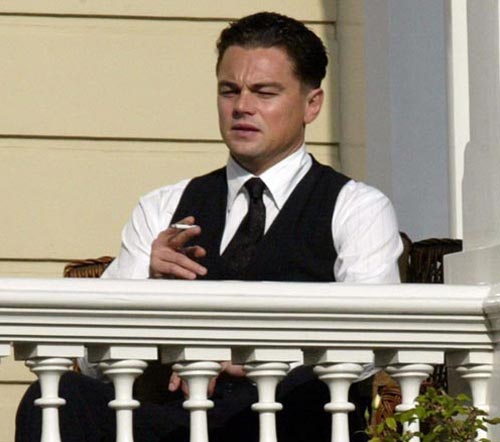
But there are moments when you feel the movie starting to come alive. All the scenes involving Charles Lindbergh and the kidnapping of the Lindbergh baby crackle with tension. (Unfortunately these scenes are broken up by that damn flashback structure. You spend a good part of the time doing your own mental re-editing of the movie.) This entire episode should be the centerpiece of the movie. It should both showcase Hoover's achievements and his weaknesses. His defiance of his superiors to employ new techniques of gathering evidence in order to apprehend those responsible for the Lindbergh kidnapping plays like the origin story of C.S.I. The case also shows Hoover's eagerness to present the appearance of justice without bothering with the thorny details of degrees of guilt or innocence. DiCaprio gives another strong performance, all the more impressive considering he has to fill in the blanks of the script. He's able to suggest what isn't on the page through a glance or a sigh or his old-man shuffle. (The aging makeup would seem to have a lock on the Oscar.) There are moments where DiCaprio gets you to feel Hoover's loneliness and repressed rage. A startling scene late in the movie when Hoover is dictating a letter that he hopes will intimidate Dr. King into declining the Nobel Peace Prize suggests the darker movie this could've been, while also pointing out the weakness in the character of Ms. Gandy. It's the only time she seems to question her "Edgar" if he's doing the right thing. Is this really the first instance of someone questioning Hoover? I doubt it. Very little is known about Hoover's secretary, but that shouldn't prevent Eastwood and his team from speculating on the nature of their relationship. The same goes for Armie Hammer's characterization of Tolson. There's a hint of Tolson assuming the role of submissive to Hoover, but it's never followed through. Hammer, coming off his triumph as the Winklevoss twins in The Social Network, gives one of those supporting performances you find on the IMDb page of big movie stars; it's a good credit to have at the start of your career, as proof you're willing to tackle "risky" material. He's captivating and, like DiCaprio, does his best to fill in the blanks. And Josh Lucas gives his best performance since Wonderland in the small but vivid role of Charles Lindbergh.

In the end, J. Edgar is neither defensive nor offensive. It's the definition of "respectful," and that's something you'd never expect from a movie about J. Edgar Hoover. There is one scene towards the end that does manage to create a sense of discomfort. A montage of late '60s turmoil (including the assassination of Dr. King) is juxtaposed with Hoover narrating that if we don't remember history we're destined to repeat it. For a few fleeting moments, the movie seems to be offering a justification of Hoover's tactics. The scene suggests that the upheavals of the Vietnam era were a result of Hoover not being allowed to keep an eye on everyone. That's a provocative stance that the movie doesn't attempt to defend or refute. (A better movie would pick a side. A great movie would suggest Hoover was both right and wrong.) That scene is topped by a brief scene of Nixon being informed of Hoover's death; the president's immediate response is like an outtake from an Oliver Stone movie. It's moments like these that J. Edgar flirts with playing dirty.

San Antonio-based film critic Aaron Aradillas is a contributor to The House Next Door, a contributor to Moving Image Source, and the host of “Back at Midnight,” an Internet radio program about film and television.

LISA ROSMAN: Lars von Trier’s MELANCHOLIA is a masterpiece

Melancholia, directed by Lars von Trier and starring Kirsten Dunst

null

Lars von Trier is not a brother who provokes a neutral response: there are those who feel he can do no wrong, and then there are naysayers like me. Although I consider Dancer in the Dark one of the best movies of the last decade, I swore I’d never sit through another of his films after suffering through the school-play machinations of Dogville. A guy who so unilaterally criticizes America without ever having stepped foot on its soil deserves a similar boycott, I declared.  

But now that he’s taken psychological projection to unprecedented proportions, he’s become downright fascinating.  

More navel-brandishing than navel-gazing, his last two films have served as gorgeous canvases upon which his worst fears and miseries are writ so large that they articulate the human condition with a grandeur normally only achieved by Michel Gondry and Charlie Kaufman. In 2009’s Antichrist, for example, von Trier makes literal that most scorching of Freudian themes – castration – and his latest is by far the cleverest rendition of the strain of pre-2012 apocalyptic films circulating through cinemas. In it, he not only globalizes his own depressive and suicidal tendencies but renders them universal in the form of a deadly asteroid dubbed Melancholia hurtling directly toward planet Earth. Subtext as supertext; subconscious as supercosmos. Not to mention supercalifragilisticexpialidocious.

nullThat said, this isn’t just Lars’ world that we’re living in this time. It’s also Kirsten Dunst’s. Women cast in the Danish writer/director’s films rarely fare well, as they’re typically limited to only one of the three faces of Mommy von Trier: wan, hysterical or brutal. (Should this sound hyperbolic, consider the 2009 New York Film Festival videoconference in which von Trier claimed that not even the psychotic, castrating mother of Antichristcompared to [his] mother.”) Here, Dunst is cast as a stand-in for von Trier himself, and she sinks her famously crooked fangs into his despair but good.  

She’s always been a more nuanced actress than is widely recognized, radiating a weary patience that elevates even her most flatfooted projects (Marie Antoinette, Elizabethtown). But as Justine, the melancholic in question, she mines new colors in her work. This would be ironic since, like most depressives, von Trier’s film is usually monochromatic in tone if not in its often-lush cinematography. But Dunst, who’s been open about her own struggles with depression, seems liberated by the dark material – much like her character as she prepares for the end of a world she finds so painful.  

The film is divided into two sections; the first, “Justine,” consists of the character’s horrific bridal party at the palatial estate of her sister Claire (Charlotte Gainsbourg, as green at the gills as most of L.v.T.’s heroines). From the first scene, in which she and her new husband (Alexander Skarsgård, so housebroken that he’s virtually unrecognizable from his True Blood incarnation), get stuck on a country road in their garishly large stretch limo, the point is clear: this girl doesn’t fit in the materialistic (or arguably even the material) world. And yet, also like Lars himself, she’s not terrible at manipulating these slick surfaces, a reality which only seems to exacerbate her self-loathing. (I've alway found it amusing that this pronounced anti-materialist makes films that look like Obsession commercials.) In fact, she’s such an advertising whiz that her cad of a boss (Stellan Skarsgård) weasels for her help even in his wedding toast. Capitalists being von Trier’s second-favorite scapegoat after bad mommies, this is one of the clunkiest notes of this film. Her tight smile is not.  

nullAll the bridal toasts put Justine under the table. The more others urge happiness upon her, the more she visibly cringes. (I couldn’t help but recall my Israeli ex-shrink’s words to me: “Happiness is so America! Better to aim for truth!”) Worse, her divorced parents use their toasts as a platform for skewering each other in front of an audience. A lethal contrarian masquerading as a mere nonconformist, her mother (Charlotte Rampling sporting tie-dye!) is so solipsistically scathing (“I don’t believe in marriage!”) that Justine crumples into a state from which she, and ultimately everyone around her, cannot recover. She disappears from the wedding party in order to take a bath, reappears to take a piss on the lawn as well as on her boss (only slightly less literally) and, finally, fucks a corporate lackey out on the golf course for all to see. There’s no wedding cake in the world sweet enough to take the edge off that move.  

By the beginning of “Claire,” the film’s second section, Justine is so catatonic that she can’t keep her eyes open, let alone bathe or feed herself. Claire and her ever-irked husband (a brilliantly cast Kiefer Sutherland) do their best to prop her back up, but they’re unhinged by the threat of the potentially lethal asteroid rushing toward Earth.  

nullIronically, by helming a film that basks in the depressive’s view on life, von Trier finally has created a film that legitimately allows for other perspectives as well. Claire may also recognize the weakness and selfishness of the world around her, but she still embraces its blessings. She may have been as unnurtured as Justine (and may have chosen a sheep-in-wolf’s-clothing husband to provide cold comfort) but she can still love her son and sister as well as life itself. So it makes sense that, faced with its extinction, she now needs care-taking, while Justine, whose depression has previously rendered her as cruel as her black hole of a mother, can finally exhibit compassion and vitality. She can afford to. Since she views Earth as an extension of the squalid emptiness roaring within her, the prospect of its demise is enthralling.  

In what very well may be one of the loveliest moments in 2011 cinema, a panic-stricken Claire trails her sister as she steals into the woods. There, Justine offers her naked body to the moonlight like a sylph, like a siren, like a sister of no mercy. Only what is wild, what is wholly undoctored, is real to her. The rest, all of what humankind has created, is bullshit that deserves to be put out of its misery – including herself. No wonder she surrenders to the coming maelstrom with ecstasy.

In Melancholia, von Trier has created a mission statement of a masterpiece, one that reminds us that nihilism itself can serve as a legitimate form of creation, a means as well as The End. It’s the ultimate inversion of the old hippie phrase “think global, act local,” and, against all odds, it works.

Lisa Rosman writes the indieWire film blog New Deal Sally and has reviewed film for Marie Claire, Time Out New York, Salon.com, LA Weekly, Us Weekly, Premiere and Flavorpill.com, where she was film editor for five years. She has also commentated for the Oxygen Channel, TNT, the IFC and NY1. You can follow Lisa on twitter here.

RECAP: Dexter heads over the edge

RECAP: Dexter heads over the edge

null

This recap contains spoilers for "Dexter" season six, episode seven; read at your own risk.
 

Something extraordinary happened on “Dexter” this week. As Dexter split into two personas as he struggled to hang on to his remaining humanity, a show that’s been MIA suddenly reported ready for duty.

It’s as if the death of Brother Sam (Mos Def) last week performed a ritual cleansing of all that was wrong with “Dexter’s” sixth season. Gone is the ceaseless God talk, the ill-advised forays into slapstick comedy — serial-killer slapstick golf, really? — and even a super-tardy entry into the Manic Pixie Dream Girl sweepstakes.

Brother Sam’s murder also quashed any hope that Dexter (Michael C. Hall) had in redemption, as it led to the rebirth of the ghost of Dexter’s brother Brian (Christian Camargo), a killer who Dexter himself killed in the show’s first season. Brian is here to remind Dex of some core principles, such as “You don’t turn the other cheek — you slice it.”

Brian’s monstrous effect on Dexter runs parallel to Travis’ attempts to free himself of the monstrous Professor Gellar (Edward James Olmos). And you know what? Salon readers discussing the show in the comments were probably right. There probably is no Professor Gellar. The Apocalypse-crazed installation artist may actually be Travis’ killer alter-ego. It would have been nice if it hadn’t taken six episodes to get to this fascinating juncture, but let’s not dwell. Instead, let’s appreciate how this episode didn’t feel like the writers dutifully hitting plot points they didn’t care much about. About how director Romeo Tirone favored long, moody takes of this gifted cast.

You can read the rest of Matt's recap of Dexter here at Salon.

Matt Zoller Seitz is the co-founder and publisher of Press Play.

RECAP: “The Walking Dead” Season Two, episode 5, “Chupacabra.”

RECAP: “The Walking Dead” Season Two, episode 5, “Chupacabra.”

null"The Walking Dead" has craft and atmosphere; if only the characters weren't so insufferably earnest and dense. This recap contains spoilers for "The Walking Dead" Season Two, episode 5, "Chupacabra." Read at your own risk.

There were huge revelations on Sunday’s episode of “The Walking Dead,” including a tantalizing hint that the missing girl Sophie might still be alive, and a climactic reveal that the courtly old religious veterinarian Hershel (Scott Greene) was keeping captured zombies alive inside his barn, presumably in hopes of one day curing them. There was another big revelation last week in the form of a surprise pregnancy, Lori’s.

But that’s not enough to stave off charges that “The Walking Dead” is taking a Hamburger Helper approach to TV drama, padding out meager amounts of dramatic meat with bags of bland dramatic stuffing. Sophie has been missing for the entire season; Carl has been bedridden since the end of episode two; Lori found out about her pregnancy last week but still hasn’t told Rick; etc. If you added up the screen time devoted to the genuinely interesting elements, they might total maybe ten minutes per episode, if that. The rest is wandering, suffering, and talking, talking, talking, courtesy of characters who are for the most part so naive and/or irritating that if you were watching them on a big screen at a drive-in movie theater, you’d cheer for them to be eaten.

The “WTF?” count in my “Walking Dead” notebook is nearing 200 by now, and this week’s installment, “Chupacabra”, added a few more, including the cutesy back-and-forth between end-of-the-world sex buddies Glenn (Steven Yeun) and Maggie (Laurie Cohen), complete with scribbled dinner-table notes; the protracted sequence of the wounded Daryl (Norman Reedus) falling down that cliff, then climbing up, then falling again; and that somebody-please-kill-all-these-stupid-characters moment when Andrea (Lauren Holden) mistook the returning Daryl for a zombie and winged him across the temple with a rifle shot. (I’m sure the producers didn’t intend this as a “You can’t trust women with guns” moment, but given the male-dominated power structure on this series, that’s how it played.)

You can read the rest of Matt's recap here at Salon.

Matt Zoller Seitz is publisher of Press Play.

RECAP: A bear, a baseball glove and Boardwalk Empire

RECAP: A bear, a baseball glove and “Boardwalk Empire”

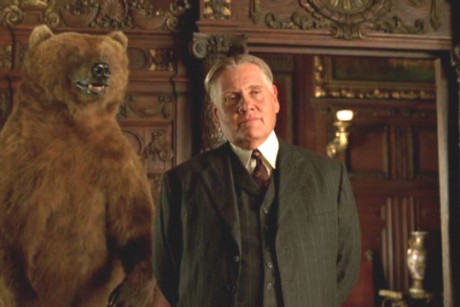
nullEditor's Note: The following article contains spoilers for "Boardwalk Episode" season two, episode eight, "Two Boats and a Lifeguard." Read at your own risk.

“Powerful” episodes of cable dramas make a huge impression on viewers, and are often acclaimed as the best of their season. Sometimes the praise is deserved; other times it’s a reaction to the sight of characters we like being diagnosed with fatal illnesses, beaten, raped, killed, etc.  Meanwhile, low-key but complex episodes often get short shrift from critics and viewers. I hope that doesn’t happen with tonight’s “Boardwalk Empire” episode, “Two Boats and a Lifeguard,” because in degree of difficulty, it’s impressive, in some ways extraordinary.

As written by Terence Winter and directed by Tim Van Patten — a dynamic duo on a lot of great “Sopranos” episodes — “Two Boats and a Lifeguard” seems like just a  “housekeeping” episode that’s mainly concerned with wrangling subplots and exploring characters. But as I’ll explain in a moment, the episode went way beyond that.

Nucky and Eli buried their father and had an uncomfortable moment of almost-reconciliation at the memorial. (This episode marked the final appearance of the late stage and screen actor Tom Aldredge, who played both Nucky and Eli’s dad and Carmela’s father on “The Sopranos.”) Nucky responded to his dad’s death — the psychological aftershock of the second assassination attempt against him, this one set up by his surrogate son Jimmy Darmody — by declaring that he was quitting his job as Atlantic City treasurer and was going to try to mend his ways and become a respectable citizen. (Fat chance of that happening on a show like this, but it was still a fascinating development that let star Steve Buscemi show us intriguing new shadings.) Nucky even asked Margaret’s son to address him as “Dad” rather than “Uncle Nucky” — a huge step toward commitment and emotional availability, even though it was conveyed in a rigid 19th century manner. Van Alden hired a nanny to take care of his baby with Lucy, in the process confirming his near-total inability to respond to the child as a father should, but revealing very faint glimmerings of potential near the end. (Or was that just wishful thinking on my part? Probably so — Van Alden is such a rancid sour persimmon — and so encrusted with lame graphic novel pathology, from religious fanaticism to sexual hypocrisy to cold sadism and murderous rage — that the writers might be unable to salvage him as a workable character.)

You read the rest of Matt's piece here at Salon. 

Matt Zoller Seitz is TV critic for Salon  and publisher of Press Play.

Eastwood’s “J. Edgar” takes few risks with its controversial subject

Eastwood’s “J. Edgar” takes few risks with its controversial subject

null

You'd think Clint Eastwood would be the right guy to direct a movie about J. Edgar Hoover. After all, who better to tell the story of the 20th century's most influential law enforcement officer, the man who wrote the rule book on fighting crime only to disregard those rules when they prevented him from getting his man, than Dirty Harry himself? Or, to be less obvious, what would the man responsible for "White Hunter Black Heart," "A Perfect World" and "Million Dollar Baby" — movies about men who defied authority, be it Hollywood, the law or God — bring to the life story of the man who held authority over the country for nearly 50 years? Alas, Clint Eastwood's stately biopic "J. Edgar" is a frustrating experience. For nearly 2 hours and 20 minutes we are held captive by the possibility of a major revelation or insight into a man whose obsession with cataloging every single detail of a person's personal and professional life foretold the collapse of privacy. We get hints, intimations and suggestions of darker urges that shaped Hoover's behavior, but nothing concrete about the man's personality, and no attitude whatsoever toward his actions. Eastwood mistakes vagueness for ambiguity and puts us in the position of being armchair psychiatrists.
null
Working from a screenplay by Dustin Lance Black and starring Leonardo DiCaprio in the lead role, J. Edgar certainly has a high-end pedigree, but the film is so concerned with being "refined" that it sacrifices momentum. Opening with Hoover dictating his autobiography in an effort to set the record straight, the film shows promise, even if the investigative flashback structure it employs should've been retired a long time ago. It inevitably leads to a then-this-happened-then-this-followed-by-this rhythm that can be a grind. But Hoover's origin story is fascinating, especially as he tries to convince his boss Mitchell Palmer (Geoff Pierson) to invest in new sciences like fingerprint analysis. We see how Hoover's crusade against communist radicals led to his being put in charge of the F.B.I., which he would remake into his own image of clean-cut American righteousness. We are introduced to the three key people in his life: his mother Annie (Judi Dench), who molded her Edgar into a model of properness; Helen Gandy (Naomi Watts), his loyal secretary; and Clyde Tolson (Armie Hammer), his most loyal…friend?

Then…we wait, patiently, for a theme or pattern to emerge. One never quite comes through. By trying to condense a 50-year history into a 2 1/3-hour runtime, "J. Edgar" becomes a highlight reel with some of the best parts edited out. Hoover's war against '30s gangsters like Baby Face Nelson and John Dillinger is reduced to more or less a montage. Hoover during World War II? Nothing. Hoover during McCarthyism? We get one line of dialogue dismissing McCarthy as an opportunist. The movie's greatest flaw is how it does not deal with Hoover's clashes with the Kennedys, especially Bobby. Hoover's hatred of Bobby Kennedy was legendary, and for a movie about his life to omit that part is just wrong. Instead we get too many scenes of Hoover's mother laying on guilt trips about what he must do. This is Psych 101 screenwriting territory, way below the thinking of Eastwood and his collaborators.


The most obvious (and possibly most entertaining) approach to this material would be to treat it like one of those ripped-from-the-headlines '30s Warners pictures, complete with gossip and innuendo. (We get a charge in one scene when we see famous bits from "The Public Enemy" being shown to a cheering audience.) The other approach to the material would be to concentrate on just a few defining moments. It is extremely difficult to condense a man's life into an extended runtime. "Malcolm X" did it, but then again it was focusing on 20 years, not 50. (It still managed to bring it up to the present with that startling final scene of Nelson Mandela addressing a classroom.) "Nixon" also did it, but Oliver Stone, unlike Eastwood, has a singular gift for innovative visuals and editing that gives his movies drive. The model for a movie like "J. Edgar" is something like Danny DeVito's criminally underrated "Hoffa." Like "J. Edgar," it also uses a flashback structure, butscreenwriter David Mamet doesn't bother with trying to cram a man's lifeinto a conventional narrative. Hoffa is simply presented as-is, and we take in how those around him react to his actions. By doing that, we come away understanding Hoffa's achievements as a labor leader, but also understand that his ego and quest for power led to him eventually losing sight of his original intentions. (Interestingly, the highlight of "Hoffa" is the extended sequences where he squares off with Robert Kennedy.) A typical scene in "J. Edgar" is of two people sitting in a darkened room talking around what is on their minds. If you're going to make a movie consisting of these kinds of scenes, you'd better make sure they have something interesting to say. Or, at the very least make clear what it is they are "not" saying. (Tom Stern's drab cinematography doesn't help matters. While not as bad as his work in Eastwood's "Changeling," it makes you not want to see the color brown for at least three months. His lighting is like Gordon Willis minus texture — or soul.)
null

At 81, Eastwood has spent the last 10 to 15 years making movies where he seems to be re-examining not only his own image, but the image of stoic, non-verbal men, He's been deconstructing the notion of masculinity before men were told it was okay to get in touch with their feelings. The idea that men needed to do whatever it took to get the job done was being undercut by the (necessary) assertion of feminine and racial equality. Eastwood's best films are about men reeling from change and how they either reject it or are humbled by it. In "Million Dollar Baby" (his best film in the last decade), boxing trainer Frankie Dunn is constantly questioning God's plan only to get a comeuppance when he demands unquestioning faith in his training methods from his fighters. A "Perfect World" saw Eastwood deconstructing the Western showdown by setting a generational clash of law and disorder on the eve of the Kennedy assassination. ("A Perfect World" is a far more complex breakdown of Western myths than the somewhat overrated "Unforgiven.") "White Hunter Black Heart" told a thinly fictionalized version of John Huston's recklessness while making "The African Queen," with Eastwood playing Huston as a filmmaker learning that trying to exert the same kind of control he has on a movie set in everyday life can lead to self-destruction. Even less successfulefforts saw Eastwood attempting to re-think history, considering if his generation got things wrong. His two-part World War II saga "Flags of Our Fathers" and "Letters from Iwo Jima" had moments of great irony hinting that Eastwood might've learned something from "Saving Private Ryan;" too bad, in the end, he wound up buying into the myths of the Greatest Generation. "Hereafter" found Eastwood confronting mortality; too bad the movie got all New Age-y in its final sequence. And in the disastrous "Gran Torino," Eastwood directed himself in what felt like his farewell performance as Korean War vet Walt Kowalski, a longstanding racist forced to realize he was wrong about everything; too bad the movie played Walt's racism for laughs and came off like a recruitment film for the Tea Party.

Every movie Eastwood makes seems to be in preparation for his next one. Taking on the life of J. Edgar Hoover suggested Eastwood was ready to tackle one of the most polarizing figures of his generation, and by doing so confronting the two topics he's often accused of shying away from: sexuality and race. There is evidence that Eastwood is more than capable of handling adult sexuality; his performance in the New Orleans cop procedural "Tightrope" saw him playing a man grappling with unhealthy sexual urges. Unfortunately Eastwood has given his critics more than enough opportunities to accuse him of insensitivity with ugly portrayals of women and gays in movies like "The Rookie" and "Sudden Impact." His track record for handling race is even spottier, with black characters being subservient yet equal. (Don't even bother bringing up "Bird.") But with "J. Edgar" it would seem Eastwood would have to tackle these issues head-on. He doesn't. He blinks. Hoover's sexuality is treated as a case of repression crossed with the smothering of a mother from hell. Screenwriter Black, who wrote the terrifically insightful "Milk," seems to have written the script of "J. Edgar" from a 2011 perspective, as if he's saying, "Isn't it too bad Hoover wasn't allowed to live in a more open society where his sexuality wouldn't have been an issue?" That's a great notion but it's one that Eastwood and DiCaprio are not operating from. The movie winds up working at cross-purposes, and would've been better served by simply dumping all the scenes with Hoover's mother or just relegating her to one early sequence. (That's why biopics like "Citizen Cohn" and "The Aviator" work so well.) That extra time could've been used to strengthen one of the other more interesting relationships, like Hoover's connection with his longtime companion Clyde Tolson. As it stands, Hoover's relationship with Tolson comes awfully close in some scenes to resembling that of Mr. Burns and Smithers. They're like the first bromance. They're so chaste in their affection that when they have their big fight, the scene seems to come out of nowhere. When they kiss, we laugh, not out of nervousness, but because there's no passion or preparation. When Hoover takes out Ms. Gandy on a date and she rebuffs his advances, we don't know if her rejection sours him on women or if he's thrilled that she's as dedicated to her work as he is. On a basic psychological level the movie doesn't even bother with suggesting that Hoover wanted to sleep with his mother, Ms. Gandy or Tolson. We think that's what's going on, but we're never certain. (If we were to go by the movie, Hoover apparently died without ever having sex.)

And Hoover's racism is transformed into his crusade against communist radicals. His battles against civil rights leaders are reduced to his attempts to ruin the reputation of Dr. Martin Luther King, Jr. When he's listening to a recording of King having sex, we wonder if Hoover is jealous of such a blatant act of sexuality. The same goes with his taping of President Kennedy. Is Hoover envious because they're having all the fun? And why does he hate communists so much? We never hear him articulate an argument. WhenBobby Kennedy tells him that our enemies are now foreign, not domestic, he makes perfect sense. But Hoover disregards his warnings, suggesting a deep-seeded paranoia of everyone. There's a whiff if Jack D. Ripper to his campaign against Dr. King. He believes King to be a communist threatening to contaminate the soul of the American people. (I was going to write "our precious bodily fluids.") A racial slur by Hoover's mother plants the notion early on that he is someone who parrots his mother's views, but we never hear him use a racial slur himself.
null
But there are moments when you feel the movie starting to come alive. All the scenes involving Charles Lindbergh and the kidnapping of the Lindbergh baby crackle with tension. (Unfortunately these scenes are broken up by that damn flashback structure. You spend a good part of the time doing your own mental re-editing of the movie.) This entire episode should be the centerpiece of the movie. It should both showcase Hoover's achievements and his weaknesses. His defiance of his superiors to employ new techniques of gathering evidence in order to apprehend those responsible for the Lindbergh kidnapping plays like the origin story of "C.S.I." The case also shows Hoover's eagerness to present the appearance of justice without bothering with the thorny details of degrees of guilt or innocence. DiCaprio gives another strong performance, all the more impressive considering he has to fill in the blanks of the script. He's able to suggest what isn't on the page through a glance or a sigh or his old-man shuffle. (The aging makeup would seem to have a lock on the Oscar.) There are moments where DiCaprio gets you to feel Hoover's loneliness and repressed rage. A startling scene late in the movie when Hoover is dictating a letter that he hopes will intimidate Dr. King into declining the Nobel Peace Prize suggests the darker movie this could've been, while also pointing out the weakness in the character of Ms. Gandy. It's the only time she seems to question her "Edgar" if he's doing the right thing. Is this really the first instance of someone questioning Hoover? I doubt it. Very little is known about Hoover's secretary, but that shouldn't prevent Eastwood and his team from speculating on the nature of their relationship. The same goes for Armie Hammer's characterization of Tolson. There's a hint of Tolson assuming the role of submissive to Hoover, but it's never followed through. Hammer, coming off his triumph as the Winklevoss twins in "The Social Network," gives one of those supporting performances you find on the IMDb page of big movie stars; it's a good credit to have at the start of your career, as proof you're willing to tackle "risky" material. He's captivating and, like DiCaprio, does his best to fill in the blanks. And Josh Lucas gives his best performance since "Wonderland" in the small but vivid role of Charles Lindbergh.

In the end, "J. Edgar" is neither defensive nor offensive. It's the definition of "respectful," and that's something you'd never expect from a movie about J. Edgar Hoover. There is one scene towards the end that does manage to create a sense of discomfort. A montage of late '60s turmoil (including the assassination of Dr. King) is juxtaposed with Hoover narrating that if we don't remember history we're destined to repeat it. For a few fleeting moments, the movie seems to be offering a justification of Hoover's tactics. The scene suggests that the upheavals of the Vietnam era were a result of Hoover not being allowed to keep an eye on everyone. That's a provocative stance that the movie doesn't attempt to defend or refute. (A better movie would pick a side. A great movie would suggest Hoover was both right and wrong.) That scene is topped by a brief scene of Nixon being informed of Hoover's death; the president's immediate response is like an outtake from an Oliver Stone movie. It's moments like these that "J. Edgar" flirts with playing dirty.

San Antonio-based film critic Aaron Aradillas is a contributor to The House Next Door, a contributor to Moving Image Source, and the host of “Back at Midnight,” an Internet radio program about film and television.

MATT ZOLLER SEITZ: The big tease of “Glee”

MATT ZOLLER SEITZ: The big tease of “Glee”

null


EDITOR'S NOTE: The following recap of Glee season three, episode 5 contains spoilers; read at your own risk.

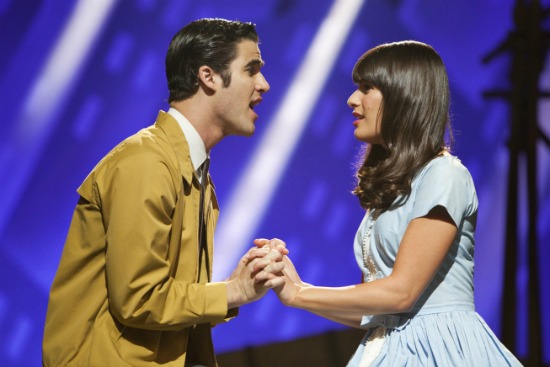
Really, Glee? Was it really necessary to end an episode revolving around virginity loss with a shot of a roaring fireplace?

That’s a trick question. Midway through its third season there’s little that’s necessary about Glee, save for the underused Chris Colfer’s performance as out gay teenager Kurt Hummel, the even more severely underused Mike O’Malley’s performance as his dad, one out of every five musical numbers, and Sue Sylvester’s surreal rants, which Jane Lynch sells even when the writing is just sassy word salad. And even those compensatory values aren’t enough to make me watch each week. After a long and increasingly desperate infatuation with this musical comedy soap — which repeatedly threatened to be astonishing and sometimes delivered, only to settle for cheerfully incoherent inanity at least 80 percent of the time — I’ve relegated it to the second tier of my DVR, which consists of shows that I skip for weeks at a time, then catch up on in one dutiful burst. I doubt I would have watched this installment in real time if my 14-year-old daughter hadn’t reminded me that it promised to deliver big moments this week. Her reactions were more entertaining than the show. She contrived reasons to leave the room whenever nooky threatened to break out, and ended up watching the parts she’d skipped while I was in the next room writing this recap. “If you were 14, would you want to watch this episode with your dad?” she asked later. Hell, no. I vividly recall being in the same tiny house with my mom while she watched The Postman Always Rings Twice on cable with the sound cranked way up, but only because my therapist dug that repressed memory out through hypnosis and primal scream therapy.

You can read the rest of Matt's piece here at Salon. 

Matt Zoller Seitz is TV critic for Salon and publisher of press play.

MATT ZOLLER SEITZ: The awesome, thrilling spectacle of Vietnam?

The awesome, thrilling spectacle of … Vietnam?

null


Before I review Vietnam in HD, the six-hour History Channel epic, I need to get a couple of caveats out of the way.

First, if you have a high definition television, access to the History Channel’s HD signal, and a killer home stereo system, you should record the series and watch it in a dark room with no interruptions, preferably while indulging your inebriating substance of choice. It’s a sound and light show extraordinaire — a trip.

But you should only do this if — and here comes caveat No. 2 — you consider intense, often shockingly bloody documentary images to be just another thing to gawk over; something to toss up on a big screen instead of, say, Sucker Punch or The Dark Knight or The Dirty Dozen. Judged purely as a technical achievement, “Vietnam in HD” (Nov. 8-10, 9 p.m./8 Central) is impressive. It merges thousands of bits of footage collected via the History Film Corps into a nearly seamless whole — a roiling canvas of chopper evacuations, napalm strikes, city and jungle infantry skirmishes, and shots of wounded and dead soldiers with burned and mangled flesh. And it weds these images to the narratives of individual American soldiers who served in different phases of the war, from the early advisor stage (roughly 1961-1964) through the peak of infantry combat (1965-1969), the post-Tet Offensive period of “Vietnamization” and the fall of Saigon. (I’ve previewed the first four hours; the last two, “A Changing War”/”Peace With Honor,” weren’t available for critics.)

You can read the rest of Matt's piece here at Salon. 

A critic, journalist and filmmaker, Matt Zoller Seitz is the staff TV columnist for Salon.com and the founder of Press Play.

SLIDE SHOW: THE SIMPSONS save halloween, again

SLIDE SHOW: THE SIMPSONS save halloween, again

null

The Simpsons airs its latest installment of “Treehouse of Horror” this Sunday — a long-standing tradition that lets an already formally daring cartoon show let its imagination run wild. The “Treehouse” segments have been the show’s most reliably inventive during its second decade; while composing this list of my personal favorite segments (not entire episodes) I was pleasantly surprised by how many installments from the later years ended up claiming slots.

What else is there to say? Oh, right: If you’re wondering where “Dial Z for Zombies” is, it’s No. 11, which means it’s not on here. I love it — especially the immortal line “Is this the end of Zombie Shakespeare?” — but I like these just a little bit more. List your own favorites in the Letters section. To quote Marge in “The Shinning,” go crazy.

To view Matt’s slide show at Salon, go here.

Matt Zoller Seitz is TV critic for Salon and publisher of Press Play.

RECAP: THE WALKING DEAD, Season 2, Episode 3: Save The Last One

RECAP: THE WALKING DEAD, Season 2, Episode 3: Save The Last One

null

Editor’s Note: The following recap of The Walking Dead season 2, episode 3 contains spoilers; read at your own risk.

The best and worst qualities of The Walking Dead were on display in tonight’s episode; the extremes were so pronounced that my notes suggest the exuberant jottings of a split personality. “Gorgeous.” “Oh, for chrissakes, quit while you’re ahead — you already showed that, why re-hash it?” “Some of the best atmosphere on TV.” “Oh, shut up.” “Jon Bernthal is KILLING in this episode; he has Richard Gere’s oily, furtive, ‘What am I NOT guilty of’ body language.” “I wish Rick and Lori would get eaten so I didn’t have to hear their ‘discussions’ anymore.” “Brilliant ending — best of series so far.”

My sister, my daughter, my sister, my daughter, slap, slap, slap.

Scott M. Gimple wrote this episode; Sopranos veteran Phil Abraham directed. It was the best of Dead, it was the worst of Dead. Bottom line: When The Walking Dead is dramatizing its characters ‘ moral and ethical conundrums and letting them play out through physical action (or inaction), it’s as good as the very best zombie films that inspired it. But when one character says to another, “Can I talk to you for a second?”, the show’s slow-burn momentum halts so abruptly that they might as well signal an upcoming heart-to-heart by laying a “screeching brakes” noise on the soundtrack. [“Hey, Shane, ya got a minute?” SCR-EEEeeeeEEEEEEEE!] I wish this show would have faith in its B-movie spirit and considerable filmmaking prowess, model its dialogue on an old cowboy picture, and keep things moving. There’s no reason to keep turning every scene into Zombie Oprah. Honest.

You can read the rest of Matt’s piece here at Salon.

Matt Zoller Seitz is the publisher of Press Play.