Peter Sarsgaard: On NIGHT MOVES, Marine Biology, and Blowing Up Dams

Peter Sarsgaard: On NIGHT MOVES, Marine Biology, and Blowing Up Dams

null

When I think of Peter Sarsgaard, I think of An Education. I think of him breaking Carey Mulligan’s
heart, and then devastating others in Boys
Don’t Cry.
I think of him as the creepy villain in Green Lantern, the slippery student in Kinsey, and Linda’s awful boyfriend in Lovelace. Common denominator: bad guys.

In Night Moves, directed
by Kelly Reichardt (Wendy and Lucy, Old
Joy)
Sarsgaard stars opposite Dakota Fanning and Jesse Eisenberg as
environmentalists who plan to blow up a hydroelectric dam. Recently we discussed his own
personal activism, passions, past, and perhaps why he’s so drawn to play those
“evil” characters.

MA: Your father was
in the air force and your family traveled a lot when you were a child. Did this
ignite your inclination towards acting, to play different characters in
different environments?
 

PS: I mean I don’t think it got me interested in acting. I
think it might be what makes it so that I can have the idea of the variety of
people in the world, different incomes. That helps. When you’re going to play
someone it’s interesting and nice to see experiences that aren’t like yours.
But there’s always the remarkable similarity of all people.

MA: What made you decide to become an actor? 

PS: I was at Washington University in St. Louis. I thought
of myself as an athlete and a writer.  I’d gotten concussions and injuries playing
soccer so I quit and I needed something to fill my time. I never daydreamed
about being an actor, although my interest in literature was in Shakespeare.  

MA: Was there ever a
different path you considered choosing, or still consider today?

PS: Marine Biologist.

MA: Why Marine
Biology?

PS: Because the oceans are pretty unexplored places and the
final frontier on our planet; also because they’re the source of life. There
are dramatic things happening to them at the moment, and they’re worth exploring.  

MA: You were raised
Roman Catholic. You’ve said that something that always fascinated you was the
concept that you’re supposed to love your enemy. Did this influence your work
with evil characters, John Lotter in Boys
Don’t Cry
being one of them? How do you access that?

PS: “Evil characters” is not something I would ever have
thought of them as. It may have been my upbringing in Catholicism, may have
been me. It’s not helpful to think of anyone as evil. I’ve always looked at the
world as a place where people have done evil things. There are people in the world, for instance, that would describe Americans
as evil.

MA: Who’s the most
frightening person you’ve ever played?

PS: Who would I least want to hang out with? Probably John
Lotter. I guess I have a place of understanding for everyone I’ve
played.

MA: Who was the most
challenging?

PS: I always had a very hard time connecting to Chuck in
Lovelace. With John Lotter, it was understood thoroughly why he was doing what he’s
doing. Chuck was like a big baby, super destructive
and self-serving. 

MA: How did becoming a husband and then a father change your work as an actor?

PS: I don’t know the answer to that. I mean, my daughter is
desperate for me to do something she can watch. That’s not really up to me!

MA: You need to play
a Disney villain.

PS: I could segue into it by playing the voice of a bad guy,
maybe, and go from there! 

MA: Do you use your
family as emotional triggers in your work or try to steer clear of that type of
personalization in your method?

PS: It’s all personalization. There’s nothing else. It has
nothing to do with the people immediately around me. It’s more self-oriented
than that. I’ve done my best work when I’m away from my family. 

MA: What are your
methods, or does it depend on the film?

PS: It depends. If no one on the movie has met me before or knows
me, that’s the easiest. I don’t do a lot of things that don’t relate
to being the person. I will try to keep it going for my other actors. I want
them to do the least amount of pretending as possible.

MA: In Night Moves, the characters take an
environmental issue into their own hands, blowing up a hydroelectric dam. Is
there any issue you are this passionate about?

PS: The death penalty. My first movie was Dead Man Walking. I was around people
that really felt strongly about it, and they made me think about it. Usually the
way I think someone is radicalized is through a personal experience. The thing about environmental activism is that we are all having a personal experience
with our environment, whether we open our eyes or not. I think these people [in Night Moves] are not able to disassociate
as well as some people. A lot of us don’t hear the DefCon 5 alarm bell ringing
as loud as these people do.

MA: How has being a
working actor given you a platform for your political, environmental or social
activism?
 

PS: When I did The
Killing
, I did that part because I felt it explored the issue
in a way that was challenging. A lot of people, practically all the way through,
thought this person was supposed to die. I believe even the guilty should
not be killed. We can all agree that the 4% of people on death row that are innocent
is a big problem. That’s how I’ve used it.

MA: What was the most
interesting thing you learned working with Kelly Reichardt? What was it like on
set?

PA: It doesn’t feel like anything to be in Kelly’s movies.
There’s not that performance feeling, ever. You’re not opening on Broadway. Kelly
wants it to be easy, without a lot of fretting.
She values the way in which people don’t think about what they’re doing. In
life, people turn on the radio and end up singing to James Taylor on the way to
blow up a dam. It’s difficult to keep a thought like that in your mind.

MA: What’s an
aspiration you have in life apart from something in the arts?

PS: I would like to sail across the Atlantic. I would like
the experience of being that far away from land.

Meredith Alloway is a LA local and Texas native. She is currently Senior
Editor at TheScriptLab.com where she focuses on screenwriting education
and entertainment resources. She also launched her own interview show,
“All the Way with Alloway,” where she scoops the latest up and coming
industry insiders. She received her Playwriting and Theatre degree from
Southern Methodist University and continues to pursue her own writing
for film and stage.
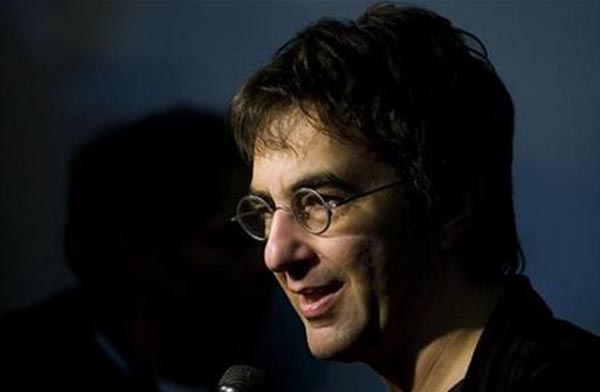
Atom Egoyan Discusses Seeking Truth with DEVIL’S KNOT

Atom Egoyan Discusses Seeking Truth with DEVIL’S KNOT

nullThe case of the West Memphis Three has been dissected, inspected and interpreted for years. In 1994 three teenagers were tried and convicted of the murder of
three young boys in Memphis, Arkansas. They were accused of involving Satanic
ritual in the killing. During their life sentence in jail, their innocence was in
question. Musicians, activists and artists have raised the question for years: Who was really to blame in this modern day
witch-hunt?

The
Paradise Lost documentary trilogy explored the verdict, gaining
support when Metallica offered their music to the soundtrack. Amy Berg’s
documentary West of Memphis premiered with success at Sundance in 2012, produced by Peter Jackson. Novels have explored the case as well, such
as Blood of Innocents by Guy Reel and Devil’s Knot by
Mara Leveritt, the latter of which inspired Atom Egoyan
’s film.

Egoyan,
known for his incredible The Sweet
Hereafter
and breakout film Exotica, directs
this narrative adaptation. Reese Witherspoon came on board the project on early
to produce and star as Pam Hobbs, mother to one of the deceased children. Colin
Firth, Dane DeHaan, Mireille Enos, Stephen Moyer and Kevin Durand round out the cast.

I had a moment to speak with Egoyan, eager to
discover his own intention in revisiting the case. He reveals his personal
motivations for making the movie, how he handles actors, their boundaries and
his troubling search for justice.

MA: The West Memphis
Three were released from prison in 2011. Did you spend any time with them or immerse
yourself in study of the judicial system in preparation for the film

AE: I spent time with Jason [Baldwin] certainly. In
terms of preparing for the film, really it was a film that was concentrated on
what happened in that town 20 years ago. Looking at all the possible other
avenues that the court did not explore, to me, that was the intention.
I think whats most
troubling about this case is that there were so many routes that were not
followed. The trial was
handicapped by a judge who clearly had an agenda. This was the most horrifying crime
scene imaginable. It was also supernatural because there wasn’t any
hard evidence. Its as though
these evil perpetrators had to be created. The film is trying to show that you cannot use circumstantial evidence
unless all other avenues are completely exhausted. The film is presenting the
full spectrum.

MA: Both Devil’s Knot and The
Sweet Hereafter
center on a tragedy that affects a community. What
fascinates you about exploring this ripple effect of mourning, sanity, and
blame? 

AE: Im Armenian,
and April 24th was the 99th commemoration of the genocide. The perpetrator never
admitted the crime. I was raised with that, this question: how do you actually find
the truth
of such a traumatic event? Im obsessed
with that issue. I find it deeply upsetting when I see justice not being served.
How do we as human beings deal with the unknown? The West Memphis Three trial is a joke on so many different levels.
The documentary [West of Memphis] actually finds in its structure a person who should have
been followed. Even that is a dramatic solution thats convenient. But there so many other elements of
drama and mystery. Were still living with this ambiguity. That is so
troubling. I wanted to create this sense that it‘s unresolved.

MA: Many of your films have elements of the thriller
genre, withholding key information from the audience early on. You did so in this film and
also in Exotica. Tell
me about this withholding and how you use it to build
tension.

AE: Thats a really good question because it’s a little
perverse,
the way it‘s
done in this film. The audience expects Colin Firth to come in as the knight in shining armor, Atticus Finch. Hes the
gentleman in the southern court. To see hes excluded in the court
in one scene subverts our expectation. It has all the elements of a courtroom
thriller. It was also very unusual and Im actually obsessed with the idea, because I’ve seen justice not
served, that the only justice is acknowledgement between two individuals. This happens between Reese and Colin in the forest at one point: something is fucked up and is deeply upsetting.
Sometimes thats where
healing can maybe begin.

MA:
Reese Witherspoon really championed this film early on. What was
your relationship with her
on set, considering she also produced the project?

AE:
The thing thats amazing about Reese in this movie is that shes so generous. Shes part of
this fabric, and she was prepared to plunge into that and not look like a
Hollywood star. She was prepared to be this mom who lost her son. She was so concerned
that it be tonally right, that it not use any clichés.
Ultimately
, the forest is a place
steeped in religion and belief. What happened in the forest
was
so demonic. In absence of evidence, demons had to be
conjured in the courtroom.

MA:
Colin Firth is an incredible actor and Dane DeHaan has an incredibly
promising career ahead of him. What did you learn from working with both
actors, given theyre at opposite
ends of the spectrum when it comes to experience?

AE:
I have to admit that this whole
experience is overwhelming because I couldn’t believe the caliber of
actor drawn to this project. I was in awe of these actors. Dane was mind-blowingly great in
this role. Mireille is so great in this tiny role, I cast her in my next film. Kevin Durand, every one of these actors,
became really possessed. The film was unique this way, it existed in this pocket of consciousness. Chris Morgans interviews in that room are online. Dane got to reincarnate that character. Hes replicating whats on that tape.

MA:
Many directors have pushed their actors to dangerous places. We recently
read the backlash from the actors in Blue
is the Warmest Colour.
 Have you ever had a moment where you had to
pull an actor back
from that place
? That, or push them forward, but with a watching eye?

AE:
Every actor has a different
temperament. Part of my job is to know what those boundaries are. The actor has
to know youll be there
at the other end, that youre trying
to represent
them in the best light, who they are as theyre harnessing these roles. The methods vary
from actor to actor. With this film, all these great actors in the
courtroom
were in this place
together. They got to share that with their fellow actors in this theatrical way.

Meredith Alloway is a LA local and Texas native. She is currently Senior
Editor at TheScriptLab.com where she focuses on screenwriting education
and entertainment resources. She also launched her own interview showm
“All the Way with Alloway,” where she scoops the latest up and coming
industry insiders. She received her Playwriting and Theatre degree from
Southern Methodist University and continues to pursue her own writing
for film and stage.
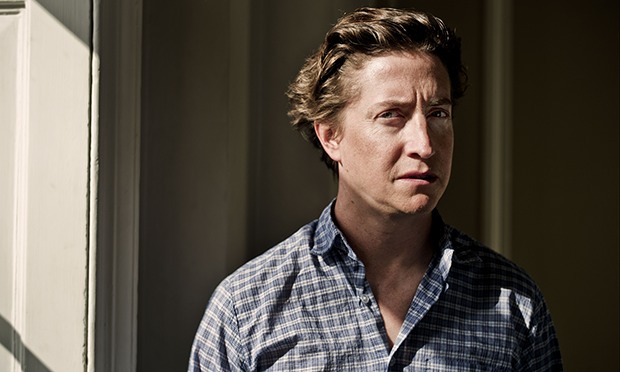
David Gordon Green on Challenging the Audience and Challenging the Character

David Gordon Green on Challenging the Audience and Challenging the Character

nullDavid Gordon Green has proved himself to be a remarkably flexible and unpredictable
filmmaker. After All the Real Girls, he has vacillated between blockbuster
comedy and intimate indie. His evolution from George Washington to Pineapple
Express
to Prince Avalanche brings
him now to Joe.

In this dark drama, Nicolas Cage plays Joe, an
ex-con who befriends a young boy, Gary (Tye Sheridan). The boy’s abusive father
Wade (Gary Poulter) only further ignites Joe’s urge to step in as a father
figure. As Gary’s safety is pushed to dangerous limits, Joe must decide what
he’s willing to sacrifice and where his redemption lies.

I chatted with Green at The Four
Seasons in LA this week about his complex film. It was refreshing to see such a respectable filmmaker be so
incredibly personable. After a few Texas hellos, we got down to business, as Green revealed insights on his film family, his role as a
ringmaster of sorts, and the complexities of Joe’s characters: Green has always had to ability to make his subjects simultaneously monstrous
and sympathetic.  

Meredith Alloway: You’ve said that
the story of Joe is ultimately about people that sculpt your life. It’s fitting that
screenwriter Gary Hawkins has been such an inspiration for you. Was that a
theme you were interested in exploring? 

David Gordon Green: Yes. It certainly was. Everybody has father figures or
older brothers or inspirational teachers or gurus of their lives that help keep
them on track. For me, it’s a perfect circle in a lot of ways because Gary
Hawkins was a very valuable professor of mine in college. He introduced me to
the work of Charles Burnett, Jerry Shatzberg, Polanski, [and] Terrence Malick.
A lot of these guys that have become very influential in my movie-loving
appetite were introduced to me by a guy who knew I would connect with the regional stories and voices of these directors. Having met Gary, who had a taste
that was a little left of center and saw that little twinkle in my eye when I
started to discover these films, it’s amazing to now be collaborating with him
on a professional level. He introduced me to Larry Brown, the novelist who wrote the book Joe is based on. My first job was working on a
documentary about Larry, with Jeff Nichols as another production assistant on it; Gary was the director of the film. I work with quite a large family of filmmakers.

MA: I was going to
ask about that, your producer Lisa Muskat and then Tim Orr, your DP. Then you’ve
also got Seth Rogen and that gang. What are those family relationships like?
It’s definitely something all filmmakers look for. 

DGG: I don’t think that’s what all filmmakers look for. I have a lot of filmmaker friends, in fact, that want the
opposite of that. They don’t hire the same crew over and over because then they feel like
they’re getting too close and emotionally attached. Personally, I like the social
endeavor of the production process. I love having people to challenge me, to
question what I’m doing, because if I know they’re coming from an intelligent
and supportive place, wanting what’s best for the end product, those
are questions I should be asking during the production process. I work with
people that are inspiring and challenging. I’m fortunate enough that they
happen to be my friends, and at the end of a hard day we can go out and
celebrate with a beer or commiserate about how to be better the next day.

MA: You also
challenge yourself with actors you work with. You want your actors to get their
hands dirty and pull apart what you’ve written. Tell me about some specific
moments in the script where Nicolas and Tye brought something new to their
characters.
 

DGG: There’s a sequence where they’re searching for Joe’s
dog. It’s all improvised. These are just two guys that have
gotten to know each other over a few weeks, gotten to trust each other and have
a sense of humor; know their characters and how they’re relating to each other.
They’re just speaking from their hearts and they’re having fun with it and we
get to see the humanity and humor of these characters. It’s one of my favorite
sequences as well. ‘How to make a cool face.’ The cigarette lighter–that was an
idea that Nic had with a prop, and we integrated it into the movie. I don’t
approach the process of directing movies like I’m the authority. I’m more the
ringmaster of the circus. Let’s bring all the animals in the ring, and then
let’s get loose. Play, feel out what works. 

MA: You do have that
playful tone in the film but underneath it there are some heavy issues. There
are over a million kids in the US who are homeless, but you rarely see movies
made about it. Was that something you were interested in exploring as well?

DGG: The dramatic realities of the novel really intrigued
me. They’re heartbreaking circumstances that lead to inspirational
discoveries.  There’s difficult subject
matter that’s dealt with … in tenderness. That was one of the things that really
intrigued me about the story, the juxtaposition of
brutality and humanity. Where you can find someone that has very likeable qualities
and then find his flaws? Someone who has monstrous qualities, what’s
sympathetic about them? Challenge the audience. Challenge the characters.

MA: There’s a scene
that wasn’t in the novel with Wade, Gary’s father. You wrote it in to show more
of his humanity. Why?

DGG: Gary Poulter, the actor that played Wade, who’s
amazing, was a street performer in downtown Austin and he was a break-dancer. When you have an actor like that with a face like
that and ability like that, you want to utilize it. If you don’t, you’re a
fool. We knew he had these abilities and this amazing charisma and he was
really funny, a wonderful guy in terms of our chapter together in his life. I
thought it would be important to add some threads of humanity, humility
and sensibility to this character that was going to such villainous places: he’s the bad guy in the movie but I wanted to make it more complicated than that.

MA: The scene where
Wade attacks the other homeless man is crucial. Did you approach that scene to
encapsulate the idea that a man is a villain, but perhaps he’s the product of
his environment? 

DGG: I’m not sure how much Wade is a product of his
environment. I think he’s mentally ill and he’s taking out some of
his own frustration and disappointment with himself out on his son. And I think
he’s desperate, as he sees his son slipping away from his family life and drawn
to Joe, as he sees his son rising to the responsibility of being the caretaker of
his mother and his sister. I think it’s humiliating for Wade to deal with the descent
of masculinity. He does what a lot of desperate people do, really unfortunate
actions.

MA: There’s also the
thread of alcoholism and substance abuse in a lot of your work, in Pineapple Express and even Prince Avalanche. Being from the south
as well, I see it’s a big issue. Do you approach it from a personal place?

DGG: Alcohol, drugs, violence, affection, all these things
illustrate the emotions that are explored with these characters. They’re
all devices to get to know people, devices to watch a character exhibit
something internal. In Avalanche,
the characters use alcohol as medication and as a cleansing that connects two
people in a joyous way. It’s a celebration of life, and getting over it, and
moving on.

MA: I wish I were
part of that party.

DGG: That’s a good party! That’s a positive party. In Pineapple
Express,
it’s what slows these guys down but also makes them really
likeable. In Joe, it’s illustrated as
a disease as something that really debilitates the character of Wade. At the
same time, it helps suppress some of the actions Joe might normally do. He uses it to
medicate. If he sees Gary getting hit by his father, and he’s about to open the
door, luckily he’s got a little sauce in his truck to take that edge off. I don’t
think Joe’s an alcoholic, per se. If so, he’s highly functional. I don’t think
he’s ever late for work, I don’t think he wakes up too hung over. I don’t think
he needs alcohol to talk to the ladies.

MA: Was
it a conscious decision to have the last shot not have Gary looking at Joe, but down at his real father, Wade?

DGG: It was a conscious decision for a couple of reasons.
One is, I wanted to reveal that his father was dead. I didn’t want viewers to see it
through Joe’s eyes because that was less important. I wanted them to see it through
his son’s eyes. Then, technically, we shot it day for night. It wouldn’t have looked
consistent if we were to show it from Joe’s perspective anyway. There’s a
different exposure to it.

MA: It’s a story
about redemption and Joe finds it when he puts himself in front of Gary and
says I will commit this act you’re about
to commit.
Did you, even in your imagination, explore if Gary had gone
through with killing his father?

DGG: Always. I think to communicate effectively with Nic, we
needed to be in Joe’s head, and Joe’s playing out the story in his own head.
That’s why Joe steps up to really be the protector in that situation. He’s considered what will happen if Gary falls on the other side of the fence.

MA: You had to go
there with Nic to visualize it.

DGG: We talked about what would happen. You know if someone doesn’t step in, you know Gary’s capable.
He’s a man. He’s not an adolescent in
this movie. It’s the coming of age into manhood. He says to Joe, ‘I could kill him
just as well as you could.’ And Joe says, ‘I know you could.’ Earlier in the
film Joe says, ‘I don’t like to get my hands dirty in every little thing.’

MA: This is not a
little thing, though.

DGG: This is not a little thing, so it’s time to get his
hands dirty.

Meredith Alloway is a LA local and Texas native. She is currently Senior
Editor at TheScriptLab.com where she focuses on screenwriting education
and entertainment resources. She also launched her own interview showm
“All the Way with Alloway,” where she scoops the latest up and coming
industry insiders. She received her Playwriting and Theatre degree from
Southern Methodist University and continues to pursue her own writing
for film and stage.

Waleed Zuaiter Discusses Producing and Starring In OMAR

Waleed Zuaiter Discusses Producing and Starring In OMAR

null

Over
the past decade, actor Waleed Zuaiter has made a strong impression in
theater, film and TV roles such as an Iraqi translator screwed over by
the American military in George Packer’s play Betrayed (filmed and broadcast by PBS) and Saddam Hussein’s friend in the HBO/BBC mini-series House of Saddam.
Born in California to Palestinian parents, he grew up in Kuwait and
traveled around the U.S., the Middle East, and Europe as a youth. He has recently appeared on American movie screens in Palestinian director Hany
Abu-Assad’s Omar, in which he plays the crucial role of Israeli
Agent Rami. Rami, who seems to work for the Israeli equivalent of our
FBI, convinces the title character to snitch on his radical Palestinian
friends in order to get out of jail. In other hands, the part could have
become that of a caricatured tough guy, but Zuaiter brings out Rami’s complexity
and nuances. In addition to acting in Omar, Zuaiter also
produced the film. In fact, he played the  main role in bringing the
film into existence, setting up a production company along with his two
brothers to fund it.  Zuaiter is also appearing in the NBC series Revolution. He spoke to me recently by phone from his California home. 

Steven Erickson: How did you get involved with Omar
Waleed Zuaiter: Hany Abu-Assad is a friend. We were introduced by a mutual friend in L.A. shortly after he made Paradise Now.
We hit it off and always wanted to work together. Then, about three
years ago, he sent me the script and said he was interested in having me
play the role of Rami. It was one of the fastest scripts I’ve ever read. I read a lot
of scripts, but I’m not a quick reader by any means. This one I just
ripped through. It was 72 pages, one of the shortest feature-length
scripts I’ve ever read, but it felt very full and fleshed-out. I called
him up and said “I love the role,  but even more than the role, I love
the script. Where are you with financing?” He had some feelers out to
European financing, but nothing too firm. I said, “I’d love to help you
produce this film and raise money.” That’s how I came onboard as a
producer. 
SE: Given your Palestinian background, did you have any second thoughts about playing an Israeli? 
WZ:
I did. Very briefly. I just felt a sense of responsibility. I feel that
with every role I play, but especially with what the world would
consider the enemy of Palestinians. I’ve been in this business for a
while and have seen non-Arabs play Arab roles. Sometimes I’ve been
extremely impressed and sometimes I’ve thought, “I wish they’d done a
little more research or been a little more authentic.” My opinion has
changed over the years. Ultimately it comes down to the essence of the character. Hany
saw the essence of Rami in me. If this guy was living under different
circumstances, he probably wouldn’t have this job. That’s what I saw
when I read the script. Then it was up to me to make it authentic,
believable, grounded, and personal. I’ve always felt that apprehension at
the beginning was because, as a Palestinian playing an Israeli, I wanted
even Israelis to feel like the performance was real. I also feel that
one of the first steps to peace is stepping into your enemy’s shoes and
walking in their life, seeing things from their perspective. Looking at
it from the other side was very important to me. 
SE
I was surprised by the scene in which you speak in Hebrew. Did you have
any knowledge of the language before taking the role? 
WZ:
Absolutely none. I knew a couple words, like “shalom” and “l’chaim.” My
grandmother, who’s from Haifa, spoke Hebrew fluently. I remember
hearing her speaking it as a kid and I had no idea what she was saying.
That was one of the things I was very nervous about, heading to the
shoot. But I had the luxury as a producer of being involved in every
single detail of production for two to three years. I was physically
there for four months, and everyone spoke Hebrew. We also had a really
great dialect coach named Yoni Lucas. He works on all the big Israeli
films and even works with politicians. I went to his home two or three
times for several hours each time. We broke down every syllable. every
sound. That’s just the way I approach it when I’m learning new
languages. I needed to know what the stresses are for each word, how the
character would say it. I tested it on everybody: people who hadn’t
read the script, people who had, Israelis, Palestinians,
Russian-speaking Israelis. Everyone has a different opinion on how
something is said because of the immigrant community in Israel. Hany
didn’t necessarily want people to know where Rami is from. We wanted to keep it ambiguous, but one of the things we
did do, just as backstory, was deciding that Rami’s wife is Ashkenazi,
and there’s a little tension between them because he’s trying to be
Ashkenazi but he’s not. There’s a bit of elitism in Israel. The
equivalent here would be a husband who’s more urban and trying to be a
yuppie. 
SE: There was an interesting documentary called Forget Baghdad about Iraqi Jews living in Israel, and the discrimination they face. 
WZ: I had heard a lot about that from actors on House of Saddam.
The star of the mini-series, who played Saddam Hussein, is
Iraqi-Jewish. I played his best friend on it, and we became friends in
real life. There
were 4 or 5 other Iraqi-Jewish cast members. They were the ones who told
me that there’s some discrimination against them. The actor who played
Saddam refused to serve in the Israeli army because he refused to be an
occupier, but he’s very proud of being Israeli and being Jewish. I think
it’s because of those very qualities that he didn’t want to serve on
occupied land. I hope I’m not outing him here, but one of the ways you
can get out of the army is if you can prove you have some medical
handicap, so he convinced them he was crazy. I really respected that. 
SE: The film was made almost entirely with private Palestinian money,
right? Would it have been easier to go to Canal + or other European TV
channels? 
WZ:
From the beginning, I had the dream of doing a privately financed,
entirely Palestinian film. I even sent out emails to investors calling
it “a purely Palestinian film.” There were some bites, but ultimately it
was very hard. So I reached out to everybody. Hany had some interest
from Germany and France and a company in the Middle East. So we said,
“Let’s try to get at least half the financing from Palestine.” My
brothers were my anchor investors. They have a very good reputation in
the Palestinian business community. I knew with them onboard, it
would help raise money in Palestinian and Arab circles. What wound up
happening is this MIddle East company that was in for a quarter of the
budget dropped out in preproduction. We didn’t have a good meeting of
the minds. I had to replace $500,000 in preproduction and delay shooting
for a month and a half. There was a very good chance the movie wasn’t
going to happen. My brothers insisted
that we get the movie bonded, which means that all the money has to be
in at the same time, otherwise you can’t start spending. People had
been working since June or July, and we were supposed to start shooting
in August. I think it was October 21st
when we first started shooting. It was a very stressful time. I
remember being on the rooftop of Hany’s place. The production offices
were in the basement, and his mom lived on the floor above us. I was on the
rooftop, with very bad cell phone reception trying to make calls
everywhere with sirens and mosques around us. I went back to one
investor who doubled their investment and another investor who initially
refused us but came back and said yes and brought two more people
onboard. Hany and I also loaned out the bulk of our salaries. That’s how
we were able to raise the money. It just happened that 95%  of the
financing ended up being Palestinian. 5% came from Dubai, for
post-production funds. I went to everybody, especially when we were
fighting the calendar, and it just so happened that we wound up with
what I had originally imagined. 
SE: This may be a naive question, but does the whole West Bank look as scarred as it does in Omar
WZ: What do you mean by “scarred”? 
SE: Well, it often looks like a construction site. There’s a real irony to
the way all these billboards with positive messages are next to the
separation wall, which looks ugly and is often covered in graffiti. Did
Hany search out ugly locations or just depict them? 
WZ:
Some of the locations are actually much more beautiful than a lot of
the places in the film. It’s a combination of both. There are some
beautiful places in the West Bank, like Nablus. That’s where my father’s
from. Everything with the separation wall was actually filmed in East
Jerusalem. The graffiti you see on the wall is real. The billboard was a very artistic choice for Hany. He didn’t
want to use title cards or spoon-fed people  about the passage of time. I
was actually surprised when I went to Ramallah with my father, and it
seemed like a very progressive, very commercially active place. We
wanted to show that too. Because we were doing this almost entirely
Palestinian funded and made film, we wanted to show a vibrant
Palestinian culture. But there’s the irony of companies like Paltel
giving messages of hope and family and “living a normal life” juxtaposed with the actual circumstance of Omar, which is anything but that. We did it in green-screen. We shot those scenes in the
first week, with a blue screen, and then added the billboards. The last
one is this nice bright blue, which is a contrast with what Omar’s
wearing. It felt very new. 
SE: Do you plan to produce any more films, either in the U.S. or Middle East? 
WZ: That was probably the hardest, most stressful thing I’ve had to do in my
life. Because I made so many mistakes along the way, I learned a lot. I
ultimately came to the conclusion that I would like to produce
again. I just have to be extremely selective with what I produce. I’m
interested in the Middle East, but ultimately I’m just interested in
very good stories. 
SE: Looking over your resume, your ethnicity seems central to the
bulk of the film and TV roles you’ve played. Do you struggle with that,
feeling typecast, or have you made your peace with it? 
WZ:
I do feel fortunate because you have to make peace with it in
order to move beyond it. I have made peace it but a lot of people in the
industry have told me, “You can play anything, and you should be playing
anything. You’re very versatile.” When you have casting directors
telling you that, it gives you confidence. I kind of compare myself to
Tony Shalhoub, who’s a friend. I wanted him to direct a play I was
interested in here in L.A. We met up, and I said, “I’d like to try to
utilize you as a mentor of sorts, because I love how your career has
gone.” He’s less Arab than me, because he doesn’t speak the language and
he’s originally from Kansas or Kentucky. But both of his parents are
Lebanese. And I’d love to have a career like his, where he’s played
MIddle Eastern, Italian and Jewish characters. I was a little nervous
accepting the role of a terrorist on Homeland. What attracted me
to the role was that he was an unapologetically powerful presence. I
liked that. I hadn’t played a character like that before, where they’re
so powerful and not a victim. In another context, he could be Bernie
Madoff. It just so happens that he’s from Syria and he’s a terrorist
torturing Nicholas Brody. Acting and good storytelling is about power
shifts and struggles. One of the first acting classes I took said that
the three most popular themes are violence, sex or love, and power. As I
saw it, this guy had all three qualities in him. Rami’s role is similar
to that. I’ve come to peace with it, but it comes down to who I’m
working with and whether I’m going to be challenged. Also, when I did Homeland,
I was broke. That’s also the practical reason of why actors take
certain roles. Who knows? That may change in five years, but it’s how I
feel now. 
SE: Do you think American TV and movies are heading towards a greater
comfort level with Arabs, rather than just using you as the go-to guys
for “Terrorist #1”? 
WZ:
That’s a good question. I don’t know where TV’s heading in terms of
what types of roles are available for Middle Eastern people. My wife
noticed a couple of years ago that all these new shows had a token
Indian person. She wondered if it would be the same for Arabs. If
anything, it would show how Arabs are assimilating. It’s hard to tell
where that’s going. The Tv world is really exciting now. I’m an
optimist. You kind of have to be if you’re an actor to survive. I’m
looking for interesting, complex roles. They don’t have to be good guys.
Look at Shakespeare. He wrote some of the greatest villains. Giancarlo
Esposito on Breaking Bad is such a great, versatile actor played such a good bad guy. I see Rami like that. I watched four seasons of Breaking Bad
in the span of two weeks when I was in Nazareth when we were filming.
Hany didn’t have TV, just a monitor and an amazing collection of films. I
went through a lot of the films I wanted to see. I was looking for more
material. David Gerson, the producer we hired, had his iPad with him,
with Netflix on it. I had watched maybe the first season of Breaking Bad
with my wife before I left. I said “We’re hooked on the show. Let’s
wait and pick up where we left off.” Of course, I couldn’t keep my
promise. I was almost missing my wake-up calls because I was up till 2 AM watching it and I had to get up at 6 AM. Unintentionally, it was part of my preparation for my role because I learned so much about acting from that show. 
SE: Has Omar played Israel yet, and if so, what kind of reaction did it get? 
WZ: We had a premiere, January 7th
of this year, in Tel Aviv. It was very well-received. Hany was just
over last night, and he was talking about how all the Israeli papers had
mostly good things to say about it. The box office doesn’t reflect
that. I heard this from an Israeli paper that interviewed me: films
about the Israeli-Palestinian conflict don’t do well there. Although Bethlehem,
which is somewhat similar, did well. There’s been some mixed reactions
here and there,but we found some mixed reactions from Palestinian
papers. Most Palestinians loved the movie and felt that it told their
story, but some felt that it perpetuated the image of Palestinians as
violent. I can see where that perspective is coming from, but I think
that’s a surface reading.   

Steven Erickson is a writer and
filmmaker based in New York. He has published in newspapers and websites
across America, including
The Village Voice, Gay City News, The Atlantic, Salon, indieWIRE, The Nashville Scene, Studio Daily and many others. His most recent film is the 2009 short Squawk.

Director Chiemi Karasawa on Elaine Stritch, Documentaries & Working With Spike Jonze

Director Chiemi Karasawa on Elaine Stritch, Documentaries & Working With Spike Jonze

null

One of the great actresses of the cinema, television, and
theater was brought to light recently in the documentary Elaine Stritch: Just Shoot Me. Stritch has won three Primetime
Emmys and been nominated for a Tony five times. Most recently, she played the
hilarious Colleen Donaghy in 30 Rock. Additionally, she
starred on Broadway in multiple plays, including Stephen Sondheim’s Company. 

As director Chiemi Karasawa studied Stritch’s body of work. the idea to make a film about Elaine emerged. Countless actors are interviewed for the documentary, including Alec Baldwin, Tina Fey and James Gandolfini.
Through archival footage from performances and appearances alike, Stritch’s
unique and inspiring talent is showcased.

I had a chance to chat with Karasawa about her path from
script supervisor to documentary producer to director. From working alongside
Spike Jonze, to starting her own production company, to befriending Elaine
Stritch, an inspiring story exists within Karasawa herself.

Meredith Alloway: You first
worked with Stritch on Romance and Cigarettes! She
was in the cast and you were a script supervisor. Did you know her then? 

Chiemi Karasawa: No! That was maybe three years earlier. I do remember the
particular reverence that John Turturro [the director] had towards her.
I had the challenging job of being in charge of her lines and blocking and
continuity. She was a tornado of energy and performance! And she was so
spontaneous. I looked at him and said, ‘How would you like me to handle this?’
He said,  ‘It’s Elaine Stritch. You just
have to let her go.’

MA: Is there a particular
performance of Elaine’s that most impacted you as a filmmaker? 

CK: Having worked in the narrative film business for 15 years
and then getting into documentaries, it was the body of the work and the diversity of it. She is so unconventional
and has such a unique talent that nobody else has. Here is somebody that has
such a history behind her. She had such empathy watching herself 40 years ago.
She’s very complex and dynamic.

MA: There are some
incredible cameos in the film. How do you conduct interviews with acting icons
as well as Elaine, making the atmosphere comfortable and open? 

CK: I think the key to a lot of this success of the
accessibility of filmmaking I really have to hand over to Elaine. We never sat
her down for a formal interview; we never put up a light. As soon as she gets
past that stage of understanding who you are and she can like you, it’s all
access. She doesn’t think of herself as a star by any means. She considered
herself a working actor. She considers herself like anybody else. She kept
asking me why when I wanted to make
this film.  She and I gradually become
close friends. 

MA: Given that she’s
such an icon and you were initially blown away by her work, in what ways did
your image of her change after making the film? 

CK: First of all, I think going into it I had no idea what I
was in for. In the beginning I was so trepidatious. She scared the shit out of
me! She can be really prickly when you don’t know her. When you do know her, you
know you can’t take it personally. Now I see her as a dear friend. I recognize
the vulnerability behind her personality. That she really has such a dynamic
and modern sensibility. There’s something ageless about her that’s so
appealing. Off camera, I was going through so many of my own challenges in my
life and she would offer me so much counsel and conversation. She never
pretended to know everything. She can see so many different perspectives on
things and she’s a survivor. 

MA: You founded
Isotope Films in 2005 in order to produce non-fiction films. How has the
company’s journey been?

CK: I had been working in narrative film and TV for about 15
years as a script supervisor and I had an amazing career. I recognized that I
actually started out as a script supervisor as a stepping-stone to directing. You
have these key relationships with the actors and the DP. The crews were getting
younger and younger and I found myself giving a lot of advice. I started to
think maybe I should be doing this myself.
I recognized it was easier to turn the camera on real life, start
constructing a story, and raise money with that story. By sheer luck I fell into
making the film Billy the Kid with
Jennifer Venditti. We just started working together and that’s when it hit me.
You don’t need millions of dollars and fancy movie stars. Nonfiction filmmaking
has been much easier and more accessible. 

MA: Documentaries are
notorious for not making money and because of this, many filmmakers steer away
from the medium. How can a documentary filmmaker stay passionate about their
non-fiction story without spending too much money? 

CK: I think first off all you have to [want to] tell a story
a lot of people will want to see. That will facilitate investments. Also,
having the talent to bring those stories to life in the best way helps. You have to
have a talented editor. Editors are storytellers, they’re among the most important
elements of the team. The other thing is there are so many other avenues for
filmmaking now. People are making short web content sponsored by industries.
They’re looking for content. A lot of commercials are borrowing from the
non-fiction world. A lot of doc filmmakers are making commercials. People need
to explore all the other avenues of content and figure out how they can align
with corporations and people that have the money.

MA: You’ve been a
script supervisor on some incredible projects, from High Fidelity to Coffee and
Cigarettes
. It’s a position that I think many aspiring writers
and filmmakers overlook. How did you get involved and what does the position
actually entail?

CK: It’s true with many positions below the line on a film
crew. I was exposed to it because I was an assistant to a producer. His film
went into production and I got taken to set many times and that’s when I first
saw the woman sitting next to the director and I thought that’s the job that I want. It’s a perfect vantage point. You’re watching
take after take. You’re engaging with all the key players. You’re on set every
moment the camera’s rolling. Your job is to pay attention to the take. It’s a complicated
job, but it you can master it, it’s the best place to watch a director
direct.

MA: Given Spike
Jonze just won the Oscar for Her, and
you’ve worked with him many times, I have to ask what was it like working with
him!

CK: I worked with him when he was coming out of the music
video world. It’s interesting because by the time I was working with Spike on Adaptation, we’d
already been working in commercial work for seven years. I had a lot more experience working with
directors before he directed his first film. I think he found it a relief for
me to be with him! He is not afraid of experimentation. He’s not afraid of the
first take. He’s not afraid to roll camera without a rehearsal. He exploits the
spontaneity of the situation, the authenticity of response.

MA: So you’ve done
narrative and documentary. What’s next? 

CK: Just because I spent so much of my career in the
narrative world, I really don’t see any boundary between fiction filmmaking and
nonfiction filmmaking. Right now I’m being commissioned to produce a screenplay
of a true story. That’s what I enjoy, bringing a story to the screen. I just
like storytelling, and the way it can change and affect people.

Meredith Alloway is a LA local and Texas native. She is currently Senior
Editor at TheScriptLab.com where she focuses on screenwriting education
and entertainment resources. She also launched her own interview showm
“All the Way with Alloway,” where she scoops the latest up and coming
industry insiders. She received her Playwriting and Theatre degree from
Southern Methodist University and continues to pursue her own writing
for film and stage.

Academy Award Nominated Screenwriter Craig Borten on DALLAS BUYERS CLUB

Academy Award Nominated Screenwriter Craig Borten on DALLAS BUYERS CLUB

null

One of the most
talked about films of the season is Dallas
Buyers Club.
This film has been in development for over a decade, as
star names have come and gone, and directors have been attached and then detached. But as
screenwriter Craig Borten puts it, “The film had so many champions along the
way.”

Writing duo
Borten and Melisa Wallack helmed the script based on real-life AIDS victim Ron
Woodroof, whom Matthew McConaughey plays superbly. In 1985 Texas, Woodroof
begins a grueling battle with the FDA to get the drugs patients need. At the
heart of the story is Ron’s relationship with a victim named Rayon,
played by Jared Leto. The two create their own business, the Dallas Buyers Club,
in order to distribute medication to others who suffer from the epidemic. Jennifer
Garner also stars as Eve, a supportive doctor.

The film has
garnered 6 Academy Award nominations including Best Picture, Best Actor,
Supporting Actor and Best Original Screenplay.

I had a chance
to chat with Borten this week in LA. We discussed the inception of the project and the passion that kept it alive.

Meredith Alloway: The first time you met Matthew he
invited you over for lunch. Tell me about the salmon experience.
 

Craig Borten: You know it
was just a little meet and greet. But when we went outside to have lunch it was just a tiny
little piece of salmon and a plate of greens and some water.

MA: He was already dieting?

CB: He was
already thin and in it. But for the next 6 hours we went through the screenplay. He had
notes from the cover page to the end page. He asked incredible questions about
the FDA and about AZT and AIDS . . . and he just was so invested and such a
passionate person. I didn’t feel like I was meeting with an actor, I was
meeting with a filmmaker. We had just lost all our money. He said, ‘We’re gonna
get ‘er done.’ I’m driving back on the PCH and the sun’s going down and I was
like I think he’s going to get it done. It
was a great moment, a great day.

MA: It sounds like the meeting you had
with Matthew mirrored the meeting you had in 1992 with Ron Woodroof. You saw
this passion. Did you find that those two were parallel?

CB: I think
there’s something incredible about people who have passion and they’re like, I’m going to do this. This is important to
me.
It becomes a self-fulfilling prophecy not only for them, but also for
those around them. Leading by example in a sense. With Ron’s passion to live, the
endgame was awareness more than anything else, more than a cure or even drugs that
worked. For Matthew, it was I’m
going to get this film made.
By virtue of losing the weight, it became Oh, he’s losing it for this film—this
film that has no money right now.
But the perception is that it’s
already happening. His passion affected all of us to go out and make sure we got
this money. I think it was a pervasive feeling for everyone.

MA: A lot of your passion to write about
this comes from your dad surviving cancer. How did that fuel the project?

CB: One part of it is that I had two fathers, actually:
a father and a stepfather who both succumbed to cancer. Suppose someone says to you, ‘You’re
going to die. You have this long to live.’ What does that do to you? You go
through all these stages. That’s how I personally came up with this idea for the
beginning of the movie. I watched these two men go through it, and it’s a pretty
powerful thing to observe. As they were going through it and got more into
their acceptance stage, they became extremely reflective. What it could have been,
what they’d like it to be, and what they hope for. When I met with Ron Woodroof,
those same things came out of him. That was one part. The other part was
some of the ineffectiveness of the doctors in my own experience with
cancer.   Given the drugs available and
their pervasive attitude of this is it,
everyone gets a standard of you have 6 months to live
, there was something
cold about it. There was a lack of self-empowerment: This
is our protocol, you can go by it, and that’s it.
You feel helpless.

MA: Given that you were writing about
the pharmaceutical industry, which is a touchy subject, how was the research process? Were there any roadblocks, anyone that gave you resistance?

CB: As the years
went on, the landscape changed. AIDS changed, the drugs changed, along with the attitude
towards the disease. There were no roadblocks. We didn’t try to meet with any of the
more controversial figures. We didn’t need to. It was all in the public domain. Also, we weren’t doing a documentary.  

MA: I think the film blossoms into
something more than what you think it’s about. Ultimately it’s a friendship
story between Ron and Rayon. How did you cultivate that relationship?

CB: Rayon’s not
real. Eve is not real. They’re created to tell a point of view. We didn’t
even follow traditional three-act structure. Jean-Marc really wanted to
keep it a small movie about this unlikely friendship. The only thing that we
tried to stay true to was the personality of Ron Woodroof for those three
days. It’s based on stories that we heard. But the relationship itself we
created to make an emotional core, a journey that ultimately draws
people into the movie.

MA: You and Melisa went through therapy in
the process of writing this!

CB: I think that
writing partnerships are extremely challenging and incredibly intimate. You’re
spending large amounts of time with someone in a room. It’s gets heated, it’s
passionate. I always say this as a joke, and people think it’s funny, but it’s literally
like being in a relationship with a woman or a man but without sex. So it’s
even harder! There are, in fact, a lot of writing partners who
end up in therapy. If it’s worth it, you want to work through it. 

MA: You really fought for this script
for a long period of time and it’s comparable to the story you’re telling. In
the process of making the film what were the moments of hope that kept you
going?

CB: The film had
so many champions along the way. Robbie Brenner read the script 18 years ago
and she said this is an incredible
story. This would make an incredible character. This is a really great film.
The
remaining people along the way said the same.

MA: So it was the people surrounding you.

CB: Yes, the
people who were moved by the film and the people who supported me as a writer,
and supported Melisa.  The incredible producers Robbie
Brenner, Rachel Winter, Jean-Marc Vallée… and Matthew. They helped pick each other
up as human beings. It’s such a beautiful thing.

MA: Melisa has said, ‘Ron’s unwillingness
to listen and follow protocol literally kept him alive.’  In what ways did your team’s unwillingness to
follow protocol keep the film and script alive?

CB: Hollywood means
going to war. You grow a backbone and you fight your battles, the important
ones. You just learn to be a fighter; I shouldn’t even just say Hollywood, I
just think in life. It’s not kids’ play, it’s business. Business is shrewd.
So you learn and you grow and fight for what’s important. Everyone in the film
is a fighter, very strong passionate people. I think our strength held it
together. Everyone. Matthew, Jared, Jennifer, Jean-Marc. I think you just fight
for your beliefs.

MA: Your next project is also about someone
who is a fighter: [Titan: The Life of] John D. Rockefeller.

CB: He’s an
anti-hero as well. People hated him, but people didn’t really know him. Nobody
can really say who he is. This story will let you inside this man who I
think was an incredible person. Possibly through his need for his father’s
validation, he learned to divide and conquer and to create wealth. It’s character driven, and Lasse Hallström, who’s one of my favorite directors,
is really interested in making a character driven film.

MA: He, like Ron, is a questionable hero, which fascinates our culture right now, as with Walter White. Do you think we relate more to Macbeths and Iagos more than
Othellos?

CB: Human beings are flawed, we’re not perfect people, and I
think that’s what makes us interesting. Really we’re flawed and we have many sides and
shades …and so in cable or smaller movies we’re able to really show those
sides. I think that’s why people are drawn to it. Walter White: look at this
journey, but it started because he was dying and he wanted to help his family.
For that, we’ll forgive him for everything and it’s relate-able.

MA: Oscar day! Is
there anyone you want to meet?

CB: I swear it’s not like that for me! At all these events
I’m meeting these people and it’s almost effortless! It’s really fluid. It’s
just been wonderful. But only because
you ask, I’d love to talk to Bono. He’s a humanitarian ultimately and their
music I’ve loved since I was a teenager and also he’s a big supporter of AIDS research.

Meredith Alloway is a LA local and Texas native. She is currently Senior
Editor at TheScriptLab.com where she focuses on screenwriting education
and entertainment resources. She also launched her own interview showm
“All the Way with Alloway,” where she scoops the latest up and coming
industry insiders. She received her Playwriting and Theatre degree from
Southern Methodist University and continues to pursue her own writing
for film and stage.

Screenwriter Bob Nelson Talks About What’s Personal and What’s Payne in NEBRASKA

Screenwriter Bob Nelson Talks About What’s Personal and What’s Payne in NEBRASKA

null

Since Premiering at Cannes this year, Nebraska has become an indie darling. The hype around Alexander
Payne’s new feature was buzzing long before its release: Bruce Dern makes his comeback! First time
screenwriter Bob Nelson makes his debut! Nelson has now been nominated for an
Independent Spirit Award and Golden Globe.

Nelson, who worked in TV for years in Seattle on shows like Almost: Live! brings us an impressive,
intimate first feature script. After winning a sweepstakes prize for a million
dollars, Woody Grant (Dern) is set on claiming his prize. His son David (Will
Forte) decides to take him on a trip to obtain the cash, despite the fact that it’s
clearly a scam. The film is a raw, poignant look at a crumbling patriarch and
his compassionate son. Although the story may seem melancholy, the movie finds
levity in its humor. (After all, this is a Payne film.)

I spoke briefly with Nelson about this film at the red carpet
premiere of Nebraska at the AFI Film
Festival:

Meredith Alloway: This is your
first feature. How did you get it in the hands of
Payne? 
 

Bob Nelson: I was working at a Seattle show called The Eyes of Nye. Producer Julie Thompson
came up. I had written a screenplay to try and get a TV job. Julie got the
script to Ron Yerxa and Albert Berger, who have a company called Bona Fide
Productions.  They decided to send it to Alexander
[Payne], not with the intention to direct it but just to produce it and raise
money. I was very fortunate, very lucky, and it doesn’t happen a lot. The one
take-away is that even though I was in Seattle, I was still working in the business.

MA: Nebraska was
optioned back in 2003. What were some elements that Payne infused into your
original draft, over the years?

BN: He’s got a
little bit spread throughout the script. Right off the top, he did some work on
the first act. In my version, David worked in a cubicle and Ross [his brother
played by Bob Odenkirk] was an insurance salesman. He changed their professions,
giving a 40 year old a job where there didn’t seem to be many advancement
possibilities. He created this tension between the brothers, which is nice.
When they have the moment later on with the air compressor, it kind of completes
their story. Mount Rushmore was his idea. He said, ‘You know they’re going
pretty close to Mount Rushmore. Why don’t you have them stop there?’ Those lines that they’re saying in that scene are
pretty much Alexander.

MA: I can’t imagine
anyone else playing Woody. Are there particular moments where you witnessed
Dern make the Woody you wrote his own?
 

BN: It’s pretty much the whole thing—that’s even better. As
much as you can do in your mind when you’re writing, nothing compares to having
an actor fill it out and make it real. This is pretty special. I was on the set
for a week and I got to see a little bit of that. I got in the video truck and
watched. Boy, when I saw the whole thing put together I was amazed. One of the
first scenes I saw him doing was when he walks into the tavern and sees Ed Pegram
[played by Stacy Keach] with the letter. I knew he was Woody.

MA: Which character
are you the most like? I often feel the writer’s voice speaking through David.
Was he your vehicle?
 

BN: The script did start with my own father, my relationship
with my dad. I could have imagined my dad doing this, as he was more confused. He might want to make a trip like that. How
would you deal with it?
I honestly used some real life instances that are
in the movie. David brought up those old thoughts of, what do you do with this person you love that had this addiction? You’re
trying to do the right thing by them and give them dignity and show some
forgiveness. My dad was shot down in WWII and was quite a changed person. He
was a generous guy who loaned tools out and never got them back.  The scene at the railroad tracks was from
real life. I used those and at a certain point I started inventing things based
on that. It did help in the beginning to mine from real life.

MA: My favorite
scene in the movie is when all the men in the family sit in the living room,
drink beer and stare at the TV. The dialogue is so terse that it’s hilarious.
How did this scene evolve from your initial idea to what we saw on screen?

BN: Well that’s Alexander’s staging. In my mind, I was
remembering from my childhood that they wouldn’t necessarily watch TV all the time; they would sit in a circle but still not talk. Alexander came up with the idea
of them staring forward. If they have something to say, they say it. There’s
no awkwardness.

MA: You wrote for
years on Almost Live! What resources
did you use to make the transition and tackle a feature?

BN: In fact, I started out and got to page 20 and realized I
should educate myself. I read some screenplays. Some of them would be Casablanca or North by Northwest, but they helped me to get a feel for the film.
I read some books, but I prefer reading books about people talking about the
screenwriting process.

MA: What are your
feelings on the charges that the film is condescending?
 

BN: Yeah that’s a tough one to talk about. I
come from a comedy background, and I always wanted to do drama and mix the two,
and that’s what Alexander does. Basically if I’m going to write something,
since we’re both humorous at heart, I think every project we do is going to have
some gentle humor about the participants. It’s personal, in a way, because these
are people I love. I don’t think of them as any less smart than we are. I also
don’t want to paint them as “salt of the earth.” The guys staring at the TV,
they had dry senses of humor. I loved those guys. But I can’t change people’s
perceptions. We’re all a little silly. I
could do a scene about some hipsters in New York watching television and make
fun of them talking all the time. That would be the New York version.

MA: Any filmmakers
or artists from this year’s crop of films you find inspiring?

BN: I grew up with Billy Wilder. I love The Apartment. Any screenwriter starting out should watch The Apartment for structure. I grew up
on 70s films. Hal Ashby also combines drama and humor. I also had a
fondness for Horton Foote; you can see that in Nebraska. These days I love the Coen brothers. Albert Brooks was a big
influence. Christopher Guest—there’s a guy who’s accused of being condescending! We
love his films!

MA: What’s up next
for you?

BN: One of my friends is Joel McHale; I’ve written a
script for Joel that I’m directing. We’re out trying to raise
the money now. My last goal in life is to turn Joel McHale into a movie star!

MA: You’ll be
directing this one as well?

BN: That’s what I’m telling people! I have to find someone to
believe it that has money! I just wrote another script that’s even smaller than
Nebraska. It’s inspired by Bicycle Thieves. It’s another dramedy.

Bob Nelson was born on July 18, 1956 in Yankton, South Dakota, USA. He is a writer and actor, known for Nebraska (2013), The Eyes of Nye (2005), and The Magic Hour (1998).

Meredith Alloway is a LA local and Texas native. She is currently Senior
Editor at TheScriptLab.com where she focuses on screenwriting education
and entertainment resources. She also launched her own interview showm
“All the Way with Alloway,” where she scoops the latest up and coming
industry insiders. She received her Playwriting and Theatre degree from
Southern Methodist University and continues to pursue her own writing
for film and stage.

Gregarious and Kind, Dark and Mysterious: Greg Sestero on THE ROOM

Gregarious and Kind, Dark and Mysterious: Greg Sestero on THE ROOM

null
There’s no
way to talk about The Room without talking
about irony. The theater 2003 release of the movie —funded mysteriously by its
writer/director/self-proclaimed vampire Tommy Wiseau—failed to outlast the
Hollywood billboard Wiseau purchased to advertise it. Given that The Room was considered cinematic
anti-matter, a piece of cinema so illogically conceived that Scott Foundas of Variety said it “
prompts most of its viewers to ask for their
money back…before even 30 minutes have passed,” that was no surprise. What was a surprise was how The
Room
rediscovered life in the late aughts as a new-millennium Rocky Horror. Prime ironists like David
Wain, David Cross and Patton Oswalt
saluted the splendor
of its awfulness
. Theaters began holding raucous midnight showings
packed with scene-quoting devotees who threw platsic silverware at the screen
and chanted its creators name wildly throughout the credits, proving that the
nation’s complex relationship to irony was—almost a decade after its proclaimed
cutural death—a pretty resilient thing.

Which makes
it all the more remarkable that The
Disaster Artist
, cast member Greg Sestero’s memoir about his experience
making The Room and living with its
aftermath, is a work of shocking sincerity. Written with an assist from
journalist/Room enthusiast Tom Bissell,
Sestero’s smart, wicked, yet (somehow) moving book proves sneakily ambitious. Yes,
it chronicles the making of the worst movie ever, and how Sestero was
reluctantly cast as Mark, the traitorous best friend of the film’s hero. But it’s
also a tale of Sestero’s peculiar, enduring friendship with Wiseau, a ruthless
tell-all, a fluid critique on the nature of mass enthusiasm, and a work of
invesitigative journalism, positing what might be the closest anyone’s gotten
to the slippery origins of The Room’s
creator.

I talked
with Sestero about the making of “the making of The Room,” the legacy of irony, what he (and the film) owes to
Anthony Minghella, and how he forced himself to say one
of the worst lines of dialogue in cinema history
.

Mike Scalise: You mentioned you’d been working on The Disaster Artist for four years. What
made you stick with it?

Greg Sestero: I really
felt strongly about the material. The stories about my experience were etched
in my memory. I told them to several people over the years, and they thought it
was such a unique and fascinating story. Then, in 2008, I got a call from Clark
Collis at Entertainment Weekly, who
had just experienced the movie and wanted to write an article about it. Once that article
ran in late 2008, The Room completely
took off. Needless to say, I was shocked. So I started to piece together how I wanted
to tell my story. I met Tom Bissell, who
wrote an incredible piece about the movie in Harper’s around that time, and we instantly clicked. We
came up with a narrative to tell about both the making of The Room and my unlikely friendship with Tommy.

MS: Part of your goal seemed to be to
clear the air about the nature of your involvement with The Room, and how important your previous friendship with Tommy
[Wiseau] was to that movie’s existence.

GS: The only
reason I ever ended up in the movie was to help him make it. Obviously when
you’re in your early twenties, you don’t think about your decisions and their
long term effects [laughs]. I decided
to take an acting class in San Francisco and ended up meeting this eccentric person
no one really gave a chance to, mostly because of his vampirish exterior and his
awkward social skills. But maybe because of both of us coming from a European
background, I could see something was interesting there. I’ve always been
fascinated by characters, and part of me wanted to help him at least accomplish
something he’d always wanted to do. But then there were times on set where he
would sabotage everything, yelling at people who were trying to help him
finally realize this goal of being a “movie star” or make this movie he’s
always wanted.

That’s part
of what got me through, I think: helping him complete this passion project. A
lot of the movie is about friendship, which is kind of weird [laughs]. In the
original script, everybody’s best friends. Michelle and Lisa are best friends,
Peter and Johnny are best friends. Its really kind of a fascinating study about
the life Tommy wanted to have.

MS: In the book you don’t shy away from
the many ways in which The Room was a
complete mess, from the script to the casting, filming, and editing. Those are
the funniest parts of the book, but you still remain so generous with regards
to your depiction of Tommy. How difficult was it to maintain that balance when
you wrote it?

GS: I know that
many of the book’s readers will have never seen the movie. So the only way to
do it was to be genuine and say, “this is really how it was” rather than
judging it. And to honor both sides of Tommy. The gregarious and kind coupled
with the dark and mysterious.

MS: Which is an acting credo as
well—don’t judge your character.

GS: I felt like
if I glamorized it, or protected it, or made it something that it wasn’t, that
wouldn’t be the right experience for people dying to find out what really
happened and people who are following the story.

MS: Like in that insane scene in the
book in which Tommy forced the cast to be silent for five straight minutes
(“for America”) while prepping for a day of shooting…

GS: Tommy’s
always got to do everything to the extreme—not ten seconds of silence, but five
minutes. Let’s not shoot with one camera, let’s shoot with two.

MS: Did you earn any sympathy for Tommy
when you tried with the book to add order to all the chaos?

GS: Absolutely.
I realized how hard it is to get something off the ground, and to get someone
to believe in what you’re trying to do, and for you, yourself, to take that
vision of what you want and make something that resembles it.

MS: I get two kinds of responses when I
bring up The Room: one is from the
type who I imagine shows up to the screenings, who see something valuable in
it, ironic or not. But there’s also the kind of person that responds to the
idea of The Room as a vanity
project—that Tommy’s an unchecked narcissist, out just to self-promote. But the
book makes the case that The Room
came from a far more complicated place.

GS: It
definitely does. Tommy had several motivations. One, I think, was to feel
understood. To feel accepted. No one was wiling to hire Tommy as an actor, so
he figured, “I will do it myself.”  It
was therapeutic for him to explore the ways in which he didn’t fit in, or to
explore aspects of human nature that he had a vendetta towards. We’ve all had
someone break our hearts, or have been fired from a job, or have been cheated.
For him, I think it was a way to show everyone he was mainstream.

One review called
it a vanity project gone horribly wrong, and there definitely is some truth in
that. But I think he made it with sincerity, and that’s what people respond to.
 Watching someone really put himself out
there, even if it’s an inept attempt.

MS: And as you detail in the book, Tommy
went to a really dark place during
the months he was writing it.

GS: I think in
some ways, he was trying to survive himself, tearing apart his psyche in a way
that he couldn’t even see. I don’t think it was to get fame, or girls, he was
just coming out of this dark place, and needed to feel accepted.

MS: You start each chapter with an
epilogue from either Billy Wilder’s Sunset
Boulevard
, or Anthony Minghella’s film adaptation of The Talented Mr. Ripley. What do you think those films to say to
the experience of filming The Room,
watching The Room, watching people
watch The Room

GS: Both films
deal with not only delusion, but—like I said—wanting to be accepted. Norma
Desmond sees herself as someone meant to be a star, and Joe Gillis’ tries to
guide her, and protect that delusion. Poor guy. So much of that movie paired up
with The Room in strange ways, all
the way down to where The Room premiered, which was at Schwab’s Pharmacy, where
Joe Gillis goes to get work.

With Tom Ripley,
again, it’s a character who wants to feel like he’s respected and important.
And he sees in Dickie Greenleaf a guy who he thinks has all that and pursues a
friendship. Tommy, I think, saw me as this all-American kid who made him feel
like he belonged.

MS: You talked a bit about how you
wanted to bring The Room to a new
audience, but you also debunk many of the myths that persist among the film’s
rabid, midnight-screening-attending, spoon-carrying fanbase.

GS: One of the
things I did was consult with some of the biggest Room fans out there to make sure they were getting what they
wanted. My goal was to give them correct information and make the movie a
deeper, richer experience. Those people are the original fans, and have seen
the movie so many times, so I took their feedback.

MS: I think they’ll be happy with the
long, anguished passages that depict the inner struggle you endured in order to
say the line “leave your stupid comments in your pocket.”

GS: That was a
definite challenge to say that line with a serious face. When people watch this
movie, they probably see a bunch of young actors who thought this movie would
be their big break. That’s obviously not the case, but I I’ve done the same
thing with certain movies. You wonder what actors were thinking when they had
to say certain lines in a movie.  They
almost become a figment of your imagination. If you remember this movie called Private Resort, which came out in 1985. .
.

MS: Oh, I remember Private Resort.

GS: I’d watch
it as a kid and make fun of the characters, and they weren’t real to me: just
these people on screen. Obviously with The
Room
, I wasn’t on set thinking “I’m going to be Daniel Day Lewis” playing
Mark, but explaining how I even got involved in the movie shows how we all get
stuck in situations as actors—and this one ended up being one of the craziest.
Working on this movie, saying that dialogue, you’re almost surviving rather than acting. Saying that line—you just had to “get
it out” rather than “say it right.”

MS: Despite the quality of the end
product, through your involvement with The
Room
you’ve actually gotten many opportunities to try your had at a ton of
different roles. You were a model before you were an actor. You acted in The
Room, but you were also a crew member. Now you’re an author. What do you want
to focus on next?

GS: In the end,
I’m grateful for the experience. I’m looking forward to going in a different
direction and do creative projects I believe in and am passionate about. 

Mike Scalise’s essays and
articles have appeared or are forthcoming in
Agni, The Paris Review, PopMatters, The Wall Street Journal, and elsewhere. Follow him on Twitter here.