FESTIVAL: Rotterdam final report: Sex, politics and family secrets
Forty-one years and perpetually young at heart, the Rotterdam International Film Festival is a distinguished venue for cinematic discovery. It debuts more first and second films by emerging filmmakers than just about any festival in the world, with its prestigious Tiger Award bestowed upon three up-and-coming talents. With a special emphasis on films from Latin America, Africa and Asia, there's a clear mission to foster a truly global film culture. This year, new ground was broken along gender lines: for the first time all three Tiger Awards went to women directors. More noteworthy is how different the winning films are, each with their own way of telling their respective young heroine's story on screen.
The most controversial winner by far is "Clip," by Serbian filmmaker Maja Miloš, in which a 14-year old girl spirals down a teen vortex of drinking, drugs and sex. The last activity is almost always captured on camera phones, suggesting that today's teens can't enjoy sex without a video mediator. What's more, hardly any shots are filmed from the girl's point of view, especially the sex scenes, which are seen from the male partner's perspective through the camera phones. Is Milos suggesting that girls today can't help but see themselves as sex objects, influenced by their exposure to online porn clips and slutty pop songs? Provocative stuff, but Milos' treatment of the subject feels more exploitive than exploratory, rubbing the audience's noses in teen debauchery to cheap effect. While many critics deemed it a realistic portrayal of juvenile delinquency in the digital age, to me it seemed like an update of the hypocritical sordidness found in movies like Larry Clark's "Kids."
FESTIVAL VIDEO: Rotterdam Sunset Chat with IndieWire Press Play + The House Next Door + Cine Qua Non
The International Film Festival Rotterdam (IFFR) has been called a cinephile’s festival. This year’s edition (January 25-February 5) is living proof. Indiewire/Press Play editor-in-chief Kevin Lee talks with fellow critics Aaron Cutler (The House Next Door/Cine Qua Non) and Michal Oleszczyk (The House Next Door) about what films to see, old and new, in and out of competition. Recorded February 1, posted February 3. (pictured above: Awakening of the Beast, from the IFFR series "The Mouth of Garbage")
Index of video highlights:
0:20 – Why Rotterdam Matters
1:10 – Rotterdam vs. Sundance
2:52 – Competition Favorites
5:13 – Our Favorite Things from the Festival: Brazil's "The Mouth of Garbage", China's "Hidden Histories," James Benning's "small roads"
Rotterdam Dispatch #2: One Stand-out Drives Through the Competition
This is the first of (hopefully) several dispatches from Press Play Editor Kevin B. Lee at the Rotterdam Film Festival. A full festival wrap-up with highlights will appear at RogerEbert.com.
In my previous Rotterdam dispatch I employed a ten minute drill to sift through the competition lineup for the five titles with the most potential. A draconian measure to be sure, and judging by how most of the select few played out, a not entirely successful one either. Only two of the five films I continued watching lived up to their intriguing openings.
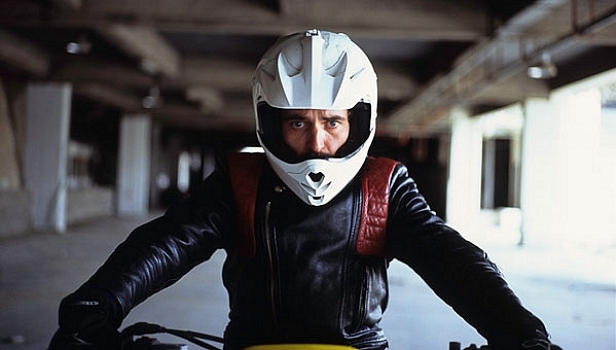
The most accomplished is L, writer-director Babis Makridis’s first feature, which premiered at Sundance and by appearances fits snugly within the Greek posse who brought us Dogtooth, Attenberg and ALPS. These films amount to a bona fide Greek micro-movement that deserves its own nomenclature: Athenscore? The Haos School (named after queen bee Athina Rachel Tsangari’s production company responsible for the first three films)? L plays as if that gang had made a parody of Drive to mock Ryan Gosling’s car-obsessed chivalry. Here, a nameless chauffeur is so in love with his job that he practically lives in his car, each night fanatically reciting the silly instructions of his narcoleptic boss, only to have his boss betray him by hiring a smarter replacement. Employing the same writer and cinematographer of Dogtooth, the dogtoothmarks are everywhere: deadpan performances, flat compositions and a predilection for teasing out the casual cruelty and absurd power plays behind language and social relations.
At the same time L is the most overtly comic of the bunch, both in script and style, with confrontational close ups out of Segio Leone by way of Napoleon Dynamite, and a lovably hubristic protagonist a la Ron Jeremy or Ricky Bobby that could have been played by Will Ferrell on downers. (The driver’s motorbike riding buddy even looks like John C. Reilly). The film has an Anchorman-like plasticity in its free associational riffs on an automotive scenario: after the driver’s firing, he falls in with a rogue motorbike gang who detest cars so much that when they come upon a roadside hit and run victim, they declare "even the ambulance that is arriving any minute is dangerous because it is a car." Sometimes the deliberately inane dialogues get too cute for their own good, and the jury is still out on the ending, though its obstinate commitment to its own strange music cannot be denied.
The other film that holds its own from start to finish is Voice of My Father, a relaxed, beautifully composed Turkish film about an ethnic Kurd who visits his mother and discovers tape recordings made by the father he barely knew, who worked and died in Saudi Arabia. Deeply personal (based on the family of co-director Zeynel Doğan and scripted by co-director Orhan Eskiköy), it uses the voice recordings to haunting effect, triggering hypnotic scenes that flood the present moment with nostalgic pain. Less successful at lyrical docu-realism is In April the Following Year, There Was a Fire. After a playfully Apichatpong-esque opening sequence, the film lapses into a rather straight homecoming narrative of slow ethnographic long takes, the lingua franca of international art cinema. Similarly, Vasily Sigarev’s Living much abandons its most intriguing element, a bloody nosed man with a bicycle, electing to ping pong between separate half-baked domestic dramas of diminishing interest. Huang Ji’s Egg and Stone is perhaps too intent on swaddling its alienated rural teenage girl protagonist in feminist symbology, even indulging in doting close ups of her menstrual fluids. But what close-ups! Cinematographer Ryuji Otsuka (who also produced and edited) boasts some of the most extraordinary HD lensing in recent memory, doing exciting things with shallow focus and texturing of surfaces (including aforementioned menstrual fluids).
Perhaps most disappointing – not for what it is, but for what it could have been – is Southwest, which as reported earlier, has the most jaw-dropping opening sequence among the competition films. This Brazilian magical realist fable charting the stages of a girl's life in and around an impoverished salt farm loses its momentum as it bulldozes its way towards a foregone “circle of life” conclusion; the sentimental soundtrack makes it feel like a Disney movie directed by Bela Tarr on Prozac. But Eduardo Nunes, clearly a very talented director, establishes himself as a strong visual storyteller, even if his dramatic instincts betray an inclination to go Hollywood over Cannes.
Another film that plays more like an impressive demo reel than a fully realized work is Park Hong-Min’s debut A Fish, which has the distinction of being the first 3D movie to compete for the Rotterdam Tiger Award. A man suspects that his missing wife may have become a shaman, but his search leads into a narrative hall of mirrors and his mental disintegration. Its Mullholland Dr.-inspired narrative rabbit hole feels more like film student precociousness lacking emotional investment, but the film is remarkable in exploiting the inherently disorienting qualities of 3D to evoke a state of perceptual distortion, further underscored by a distressed stereophonic soundscape. Like several Rotterdam films, it’s exciting less for what it is than for what it promises for the future.
Kevin B. Lee is editor-in-chief of IndieWire Press Play, and a contributor to Roger Ebert's Demanders and Fandor Keyframe. Follow him on Twitter.
FESTIVALS: Rotterdam dispatch #1: How to find the next big director in 10 minutes
This is the first of (hopefully) several dispatches from Press Play Editor Kevin B. Lee at the Rotterdam Film Festival. A full festival wrap-up with highlights will appear at RogerEbert.com.
Where to start watching? That's the question facing anyone at a film festival with hundreds of movies to offer. But with Rotterdam, the question is doubly difficult: it's one of the world's major showcases for unknown talent looking to break out. Unlike Cannes or Venice, there's no glut of Malicks, Dardennes or other brand names. But this is where careers can shift into high gear by winning the coveted Tiger Award, as happened to Christopher Nolan (The Following), Kelly Reichardt (Old Joy) and Hong Sang-soo (The Day a Pig Fell Into a Well). As a showcase for tomorrow's best talent, it's as youthful and forward-looking as any festival out there.
All well and good, but we're still looking at a program of 500 films at this year's Rotterdam, mostly by first or second-time directors with not much of a track record to go on. Perhaps due of this overwhelming degree of the unknown, Rotterdam has one feature that beats that of any festival I've been to: a video library. One huge room has over 30 booths where professionals can watch online screeners of most of the films; you can also log into a secure network and watch them on your laptop. It's a tremendous convenience for critics and programmers trying to cram as many films as they can.
But are they really watching? Online viewing doesn't instill nearly the same concentration as sitting in a theater with an audience, and may just shorten the fuse of attention spans unwilling to stick with a film long enough for it to reveal its virtues. It's a delicate topic among some programmers I've talked to; they don't want to give the indication that they've done anything less than treat films with decorum. But when I discussed this with critic Aaron Cutler (who's covering Rotterdam for Slant), he shared a remarkable anecdote that the festival's late founder, Hubert Bals, boasted about being able to tell within three minutes whether a film was worth programming. I wouldn't be surprised if programmers have developed skills akin to an NFL quarterback's hot read when facing a blitz, or a batter knowing what the pitch is the microsecond it rolls off a pitcher's fingers.
Somewhat akin to sports, my way of handling the films competing for this year's Tiger prize (just one of the festival's several programs, all demanding attention) is by using a tournament-style process of viewing. On my first day I watched 10 minutes of 10 competition films in the video room (four aren't available, and one I decided to see in the theater because it was projected in 3D – more on that film later). Based on the first 10 minutes of those 10 films, I picked five to continue watching. Maybe it's NFL playoff season getting to me, but it adds a twist that makes me more focused in my viewing, by having me commit to what I think is worth watching. It also reminds me of one of Roger Ebert's favorite quotes, by early film exhibitor Oscar Brotman: "If nothing has happened by the end of the first reel, nothing is going to happen."
So here are the results of my Day One 10-minute drills. I offer this with the caveat that these are not meant to be evaluations of the films as a whole, just their opening moments. Then again, those moments matter.
ADVANCING:
1. SOUTHWEST (dir. Eduardo Dunes, Brazil) Just wow, especially if this is a first-timer. Incredible control of images shot on black and white film in super-wide Cinemascope frame. Reminiscent of Bela Tarr, with a camera that's always moving, thinking about how it's looking at things.
2. LIVING (dir. Vassily Sigarev, Russia) Mysterious narrative fragments mostly revolving around an old man who has an accident on his bike, and how different people in the neighborhood see him. Great atmosphere if diffuse in structure – very curious how this will play out.
3. IN APRIL THE FOLLOWING YEAR, THERE WAS A FIRE (dir. Wichanon Somumjarn, Thailand) Very playful from the start: what looks like the lead character stops by an indie film set and asks his buddy what film they're shooting; friend replies "In April the Following Year, There Was a Fire," the name of this film. Later at a bus depot at first it sounds like ambient muzak playing in the back, but reveals itself to be a non-digetic score for the credit sequence, and very lush at that. These are the kinds of slippages on which Apichatpong Weerasethakul made his bones; so for this is lively enough not to be dismissed as a carbon copy.
4. EGG AND STONE (dir. Huang Ji, China) Dramatic, mysterious: girl puts something over her head and lies down, as someone pounds on her door. Like "Living", shot with a misty, almost mythic feeling, like Sokurov.
5. L (dir. Babis Makridis, Greece) Directed by the co-writer of Yorgos Lanthimos' Dogtooth; one could assume as much given how one character imparts seemingly arbitrary rules to children; drives around the city with overhead shots emphasizing geometries of locations; or finds other man lying on front lawn like a stroke victim while still holding a running garden hose, played by… the father in Dogtooth. But these Dogtoothmarks aren't so bad, at least so far…
MAY REVISIT LATER:
6. DE JUEVES A DOMINGO / THURSDAY THROUGH SUNDAY) (dir. Dominga Sotomayor, Chile) This also looks like a Dogtooth in its flat framing. Opening as kind of a road movie with a family going on a car trip, it's got a soothing, open feel, though stakes or real points of intrigue have been established yet.
7. RETURN TO BURMA (dir. Midi Z, Taiwan/Myanmar) Opening shot in Taiwan is a long take playing off activity in foreground and background – reminiscent of Tsai Ming-liang. Then story shifts to Myanmar, has a documentary feel trying to preserve the look and feel of the country in the wake of democratic reform. Particularly memorable are the radio pop songs celebrating the reforms, otherwise it's kind of coasting on taking in its surroundings.
8. ROMANCE JOE (dir. Lee Kwang-Kuk, South Korea) Korean film about a struggling director at the end of his rope, who after a long conversation at a restaurant over cigarettes and wine goes on a retreat to get his creativity back. Surprise, the director was one of Hong Sang-soo's crew. Like the pseudo Apitchatpong and Lanthimos films mentioned above, makes you wonder if the festival marketplace sparks demand for clones or knockoffs. To it's credit it's well shot, in a slightly different way than Hong (none of those telescoping zoom-ins), it just feels like familiar territory.
NO DICE:
9. TOKYO PLAYBOY CLUB (dir. Okuda Yosuke, Japan) This feels kind of amateurish even by Japanese exploitation standards. Sloppily shot with a couple of uninspired skit-like scenes involving one guy getting his head cracked open and another pulled into a strip club, but no stripping, alas.
10. CLIP (dir. Maja Milos, Serbia) Kind of like Thirteen set in Serbia – some not particularly bright girls who scream a lot and tart themselves up for a night in the club; catfight ensues. I sense a rape scene in the near horizon, but someone else will have to confirm that.



 The other film that holds its own from start to finish is Voice of My Father, a relaxed, beautifully composed Turkish film about an ethnic Kurd who visits his mother and discovers tape recordings made by the father he barely knew, who worked and died in Saudi Arabia. Deeply personal (based on the family of co-director Zeynel Doğan and scripted by co-director Orhan Eskiköy), it uses the voice recordings to haunting effect, triggering hypnotic scenes that flood the present moment with nostalgic pain. Less successful at lyrical docu-realism is In April the Following Year, There Was a Fire. After a playfully Apichatpong-esque opening sequence, the film lapses into a rather straight homecoming narrative of slow ethnographic long takes, the lingua franca of international art cinema. Similarly, Vasily Sigarev’s Living much abandons its most intriguing element, a bloody nosed man with a bicycle, electing to ping pong between separate half-baked domestic dramas of diminishing interest. Huang Ji’s Egg and Stone is perhaps too intent on swaddling its alienated rural teenage girl protagonist in feminist symbology, even indulging in doting close ups of her menstrual fluids. But what close-ups! Cinematographer Ryuji Otsuka (who also produced and edited) boasts some of the most extraordinary HD lensing in recent memory, doing exciting things with shallow focus and texturing of surfaces (including aforementioned menstrual fluids).
 Perhaps most disappointing – not for what it is, but for what it could have been – is Southwest, which as reported earlier, has the most jaw-dropping opening sequence among the competition films. This Brazilian magical realist fable charting the stages of a girl's life in and around an impoverished salt farm loses its momentum as it bulldozes its way towards a foregone “circle of life” conclusion; the sentimental soundtrack makes it feel like a Disney movie directed by Bela Tarr on Prozac. But Eduardo Nunes, clearly a very talented director, establishes himself as a strong visual storyteller, even if his dramatic instincts betray an inclination to go Hollywood over Cannes.
 Another film that plays more like an impressive demo reel than a fully realized work is Park Hong-Min’s debut A Fish, which has the distinction of being the first 3D movie to compete for the Rotterdam Tiger Award. A man suspects that his missing wife may have become a shaman, but his search leads into a narrative hall of mirrors and his mental disintegration. Its Mullholland Dr.-inspired narrative rabbit hole feels more like film student precociousness lacking emotional investment, but the film is remarkable in exploiting the inherently disorienting qualities of 3D to evoke a state of perceptual distortion, further underscored by a distressed stereophonic soundscape. Like several Rotterdam films, it’s exciting less for what it is than for what it promises for the future.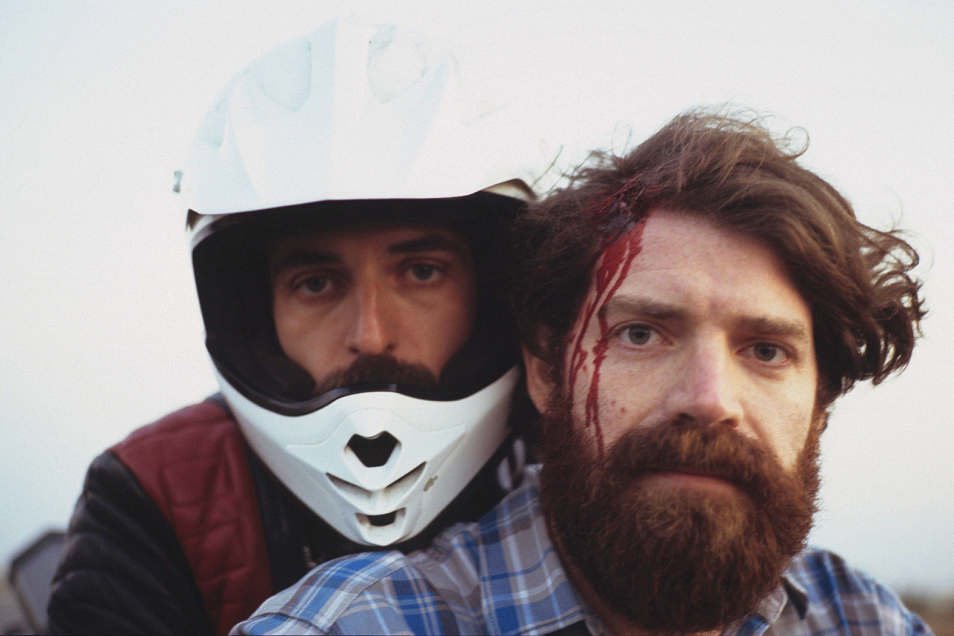


 Press Play Video Blog