VENICE INTERNATIONAL FILM FESTIVAL: Brian De Palma’s PASSION

VENICE INTERNATIONAL FILM FESTIVAL: Brian De Palma’s PASSION

null

If it weren’t for 2007’s Redacted, Passion would be a neat, coherent follow-up to both Femme Fatale and The Black Dahlia in Brian De Palma’s filmography, in addition to being a rehashing of many of the director’s themes and trademarks. And yet Redacted, with its fragmented approach and centerless viewpoint, still seems like a thorn in Passion’s side. In the newer film, the classic De Palma milieu—doubles, voyeurism, camera movements, split screens, etc.—greets viewers like a cozy living room after a long vacation, but you’ll find that this is milieu coated in digital frenzy and wild proliferation of recorded footage. This might just be an inevitable update to go with the times, or indeed the result of a particularly heavy product-placement strategy, but it’s possible that this film's approach can be traced back to Redacted. Back then, it felt like the director was taking an unfamiliar, daring turn; now, in the age of the second screen, it could be said that there are few filmmakers out there more suited to its celebration than De Palma.

Shooting almost entirely indoors, De Palma plays hide-and-seek in his Berlin location, while simultaneously making the most of the city's predictably modern, clear-cut interior design in the advertising agency where Christine (Rachel McAdams) and Isabelle (Noomi Rapace) are working on Panasonic’s new smartphone campaign. Tension is palpable between the two—professional as well as personal. There’s attraction, a sharp rivalry, and a power struggle, in addition to a cheating boyfriend (an impressive Paul Anderson, completing the reunion of Sherlock Holmes cast members and adding an elegant hint of danger) caught in the middle. Things quickly take a turn for the worse, leading to psychological warfare at first and outright violence later on.

Before the situation escalates, giving De Palma a chance to unleash his wild imagination with a rollout of his most famous visual tricks, the story (a remake of Alain Corneau’s Love Crime from 2010) unfortunately gets stuck in a series of unconvincing and ultimately puzzling sequences. At times it feels like a parody, like a self-conscious, deliberate repetition of old solutions to new visual problems. Constantly pulling away from the characters, the camera traces sinuous trajectories in the air with no noticeable result. Everything feels stiff, as if each shot were only a stripped-down placeholder. The more visceral experimentalism of Redacted, however problematic, felt comparably much more lively (bagging a Best Director award in the process, right here in Venice). That was a new direction; this film is a retracing of the director’s footsteps, albeit without quality in mind.

The latter part of the movie proves that De Palma is still perfectly able to engage his own legacy and put a spin on it, but it’s also proof that the preceding part is simply unworthy of his talent. An anticlimactic conclusion for the Venice Competition, but hopefully yet another step in the evolution of a great director. 

Tommaso Tocci is an Italian film critic, copywriter and translator. Follow him on Twitter.

The Venice International Film Festival reviews are in. Viva Italia!

The Venice International Film Festival reviews are in. Viva Italia!

null

EDITOR'S NOTE: Writer Tommaso Tocci is covering the Venice International Film Festival for Press Play this year and so we have created this landing page which collects all of those links together. Here they are.

VENICE INTERNATIONAL FILM FESTIVAL: Robert Redford’s THE COMPANY YOU KEEP

VENICE INTERNATIONAL FILM FESTIVAL: Robert Redford’s THE COMPANY YOU KEEP

null

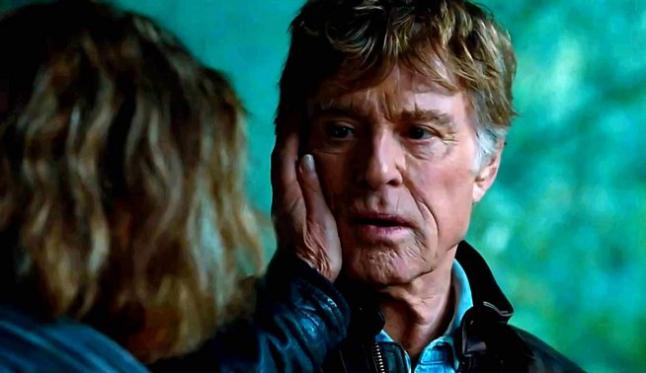
The title of Robert Redford’s The Company You Keep, adapted from Neil Gordon‘s 2003 novel of the same name, echoes the title and sentiment of Sarah Polley’s excellent documentary Stories We Tell, also shown here in Venice a few days ago. While the latter is a very intimate story dealing with the plurality of voices and truths at the heart of family narratives, and the former engages American history looking at the actions of radical-left organization the Weathermen in the 70s, Redford is just as concerned as Polley with the necessity of starting a discourse, specifically an inter-generational one. He seems earnestly consumed by this feeling, and does nothing to hide it in his movies. The last three films he’s made, in particular, all have this signature.  

Usually, for this discourse to happen, Redford needs a recipient, a representative of youth to interact with. This time the honor goes to Shia LaBeouf, who has played an awful lot of "young recipients" in the last few years and seems to have no intention of stopping. Here he plays Ben Shepard, a scruffy reporter for the Albany Sun Times who uncovers the real identity of Jim Grant (Redford), a lawyer and seemingly model citizen. It turns out Grant is actually Nicholas Sloan, a former member of the Weathermen, wanted by the FBI for the murder of a security guard during one of the group’s attacks. The revelation triggers a double quest for the truth that sends Redford and LaBeouf on two parallel strands, one trying to clear his name and go back to his daughter, the other interviewing his way to the core of the group’s past.

Predictably, there is little excitement here. The whole film seems to be an excuse for Redford to do a bit of talking, and discussing, and negotiating. He explores the subject of the actual Weathermen group far less than he deals with the twin themes of legacy and memory. He meets LaBeouf at the start and end of the movie, basically paraphrasing what he told Andrew Garfield's young student in Lion for Lambs. Not that there’s anything wrong with that—you have to admire Redford’s trademark benevolent prodding. It’s never too preachy, it’s never absolute. And it always has just the right amount of cheekiness. He excels at telling young kids to get off their arses and pay attention to what’s around them.

Despite his being at the front and center of the movie (it’s interesting he chose to play Nick Sloan, given his dislike of simultaneously acting and directing—a sincere reluctance that transfers to his portrayal of a fugitive, tired, single-dad character), the most impressive feature of The Company You Keep is the roster of supporting players Redford strategically places in Sloan's path. Mostly appearing as Redford’s ex-comrades, the likes of Susan Sarandon, Nick Nolte, Chris Cooper, Sam Elliot, Brendan Gleeson, Richard Jenkins and Julie Christie all make lasting impressions as worn-out survivors from a different era. Each new encounter provides a different viewpoint on the group’s cause, methods, and struggle, while also making great use of such an abundance of talent to create little sketches of different shades of humanity, from all walks of life.

Enjoyable despite its limitations, The Company You Keep (safely kept away from the Competition here in Venice, yet still given the exposure Redford presumably wanted) is an undoubtedly sincere entry in the director’s gallery of movies devoted to illuminating gray areas of American history. Yes, it’s terribly didactic, but one suspects Redford doesn’t really care, as long as he can have a kid in front of him to nudge towards awareness. Gently.

Tommaso Tocci is an Italian film critic, copywriter and translator. Follow him on Twitter.

VENICE INTERNATIONAL FILM FESTIVAL: Harmony Korine’s SPRING BREAKERS

VENICE INTERNATIONAL FILM FESTIVAL: Harmony Korine’s SPRING BREAKERS

null

I haven’t seen a longer queue for a Venice press screening this year than the one for Harmony Korine’s Spring Breakers, which premieres today in Competition. It makes sense—the film carried with it the promise of wild excitement, some young American stars who attract a lot of attention (Vanessa Hudgens, Selena Gomez, Ashley Benson) plus James Franco, who knows a thing or two about attracting attention as well. The sort of loud mainstream baggage the film brought to the Lido was somewhat awkwardly paired with the long-lasting cinephile appeal Korine has garnered with his cultish body of work (Gummo screened here in Venice in 1997, and he has been throwing audiences off balance ever since).

And Spring Breakers certainly did not disappoint, positioning itself in a fascinating dead zone of expectations. Those who came to see the aforementioned young stars partying and making a mess of their college spring break found exactly that—only cranked up to eleven, speeding past darkness to reach a kind of deranged grotesque. On the other hand, those who came for Korine found the director’s trademark themes bathed in glittering softness, apparently downplayed even in the undeniable aesthetic of excess on display here.

Similarly to this year’s intriguing Project X, the beginning of Spring Breakers seems to tap into a form of "alienated awareness," as it confronts the viewer’s gaze with a spirit of defiance. Opening with a prolonged montage of a beach party—naked bodies, hip-hop, alcohol, etc.—Korine knows that context is everything: he takes his time before getting to the story itself, letting a couple of other introductory sequences accumulate to establish a mood and philosophy. This has always been his main asset, after all; he loves spaces, locations that need to be filled, the feeling of emptiness, the collective void.

With its repetition and estrangement, this sharp collage makes it clear that our four girls hate their college life and are staking everything on the upcoming spring break, hoping to somehow alter their entire existence. The problem, though, is money—they don’t have enough to properly enjoy their trip to Florida. Their solution is, of cours,e an armed robbery (a gem of a tracking shot from the outside of a diner, with the action only intermittently visible through the windows), and the fact that this still seems like reasonable thinking on their part says a lot about what comes later in the movie.

Once the girls get to St. Petersburg, it’s suddenly the James Franco show: he plays a gangsta-hustler-dj with golden teeth, tattoos and dreadlocks, too conceptual and on-the-nose to work in any self-respecting movie. Here, though, it’s all part of the meta-grinding fun. And at moments it actually achieves a higher poignancy, transcending this character's joke of an exterior and finding something truly unsettling about him: as in a piano rendition of a Britney Spears ballad framing a slow-mo montage of drug rips, or a painstakingly long enunciation of things he possesses, from guns to perfume, as the ultimate reclamation of individual identity. Listen to him shouting Look at mah shit! and for a moment you’ll spring free from the alienating cage of this film.

This is a director who’s always been great at using ugliness (urban or personal) as a vehicle for meaning. With Spring Breakers he seems to have updated that notion to include the worst degradation of low-brow residue in contemporary American culture. Everything is pink, red, and glossy; Britney Spears is evoked nostalgically and ironically as a lost icon. Teen starlets are used as bait. Gangsta culture is a cartoonish reminiscence. It’s a bit like a farcical distortion of Drive, if that film's references were from ten minutes ago. And yet, for all its uneven pacing and debatable cunningness, Spring Breakers is an energetic and formally daring effort.

Tommaso Tocci is an Italian film critic, copywriter and translator. Follow him on Twitter.

VENICE INTERNATIONAL FILM FESTIVAL: Olivier Assayas’s SOMETHING IN THE AIR

VENICE INTERNATIONAL FILM FESTIVAL: Olivier Assayas’s SOMETHING IN THE AIR

null

A revolution might not be a dinner party, but its aftermath presents similar problems: someone has to clean up, someone else arrives tragically late, and someone who wasn’t there at all may still want to hold their own the next day. Olivier Assayas, whose last festival appearance was in Cannes in 2010 with Carlos, has now brought to Venice Apres Mai (which literally means "after May" but is internationally titled Something in the Air), looking back to his formative years in 1971 France—when the 70s still looked like the 60s, and a new generation of teenagers was starting to come into its own in a world in which the idea of the revolution was no longer a chimera; in fact, it was an ongoing process.

With his semi-autobiographical focus on the character of Gilles, still in high school but more concerned about painting and politics than class lectures, Assayas strikes an impressive balance between nostalgic understanding and critical assessment of high school students' hopes and aspirations. This young cast of virtually-unknown actors slips with ease into their perfect costumes ("I remember every single shirt," gasped an older critic next to me) as they play characters who are collectively stuck in a very crowded no-man’s land. In many ways, they are the ones truly in contact with the time, having been born into it. And yet their "revolution" is already a second-hand struggle. Those who were there in May ‘68 disagree with their methods, foreshadowing the nasty consequences of one of their raids on police barracks. The older generation remains light-years away.

Instead of applying their own cultural and political education to the revolutionary business, these kids have no choice but to dive into action first, trying to make sense of it only later. Après Mai is punctuated with references, influences, mentions, with allusions ranging from literature to philosophy, from music to cinema—but the winning card up Assayas’ sleeve is the uncanny ability to let these references float softly around the characters, never bringing them to the foreground. You only see them as reflections in their eyes, parts of a confused sentimental education without boundaries.

Where Bertolucci’s The Dreamers was reverent, Après Mai opts for a healthy dose of relativism. Where Garrell’s Les Amants réguliers felt a little one-dimensional, Assayas covers all grounds, moulding characters who are believable when they fight, when they love each other, when they learn, and when they make stupid mistakes. This is not a studious placement of pieces on a board, like Michele Placido’s borderline-offensive Il Grande sogno. There’s no need to assign "functions" to characters in order to correctly recreate a conflicted period.

With its free-flowing narration and gentle directorial style, this strong entry in the Venice Competition has the relaxed confidence its protagonists have, with the ability to be many things at once. It’s about political commitment—Assayas casts his generation’s journey in a melancholic light—just as much as it is about the process of creation. It even finds a way to discuss the necessity of a "revolutionary syntax" in cinema. This is all a bit tongue-in-cheek, but ultimately the movie creates a rich, ambivalent, and heartfelt portrait of a generation who arrived too late at the dinner party and must now decide where to go next.

Tommaso Tocci is an Italian film critic, copywriter and translator. Follow him on Twitter.

VENICE INTERNATIONAL FILM FESTIVAL: Terrence Malick’s TO THE WONDER

VENICE INTERNATIONAL FILM FESTIVAL: Terrence Malick’s TO THE WONDER

null

A movement from the universal to the particular: that’s what Terrence Malick’s To the Wonder feels like, a year after The Tree of Life. The short period of time that elapsed between the two films—unprecedented in the director’s career—suggests they have much more in common than any of his earlier efforts. Ironically, The Tree of Life's all-encompassing perspective on human relationships, faith and the universe itself could have indicated that the film was a final statement in his career or in his life. Instead, what looked like the end was just another beginning—as so often happens in Malick’s stories—and the guy who once let twenty years pass between his second and third movie is now back on our screens mere months after his fifth movie.

This time the focus is quite different. Set in the present, this story follows the relationship between Neil (Ben Affleck) and Marina (Olga Kurylenko). Neil falls in love with Marina when he is visiting Paris; he subsequently brings her and her daughter to the United States, to live with him in Oklahoma. With little dialogue and the familiar depiction of fleeting moments, voice-overs and natural exploration, the growth and decay of the romance live in the space between each image on screen. We learn that Neil’s feelings are sincere, but somehow his hesitancy prevents him from fully committing to anything in his life. We find out that Marina has her own doubts, that she wants “to be a wife” but is also scarred by a dark past and confused by Neil’s reluctance. Less actually happens here than in other Malick movies, but at the same time this is the purest investigation of love in the director’s career. Two things happen as a result of that investigation.

The first is that we see an amplified emphasis on life in the present moment. Not in the chronological sense, although that has been a factor in Malick’s previous settings, but rather as an enhanced perception of time passing by rapidly, closing doors and making unalterable truths from ambiguity. The Tree of Life grounded its burning questions in the probing of the past, placing a family’s struggle in the context of a millennial journey. To the Wonder has no such frame to wrestle with. “You thought we had forever, that time didn’t exist,” Marina says to Neil at one point. Immediacy is a joy, and a killer. This is the stuff every love relationship is made of, but the Malick treatment—undisturbed by other narrative elements—makes it all the more painful.

The second thing that happens is that a menacing dread looms over the characters. Lead and cadmium poison the earth in Oklahoma. The tide is rising in Mont Saint-Michel. Emmanuel Lubezki’s versatile cinematography can show us numerous scenes, from Tree of Life’s sunny yards to the lunar-surface grayness of this movie. Rarely in Malick’s films has there been an objective correlative like this one. He usually prefers to throw everything together, with no separation to solidify a theme, letting emotion rise from spontaneous contrast. This method is still present here, but it’s joined by a more direct connotation. Not all things are shining, now.

The nature of Affleck and Kurylenko’s romance is reflected in the character of Javier Bardem’s wandering priest – a doubtful soul who’s supposed to comfort others and yet must also acknowledge his unsteady faith. He serves as a link between the lovers' struggle and the more literal spirituality of Malick’s world view—once again, signalling a clear separation of the film's components. Rachel McAdams appears as Neil’s ex-girlfriend, recalling at first Christian Bale’s turn in The New World: filling a void with grace and dignity. Marina is not John Smith, though. She comes and goes, unable to reconcile the two impulses she contains within herself, almost like two different women. One is “full of love” for him; the other “pulls her down towards the earth”.     

Here in Venice, where the film screened in Competition, many are already saying that To the Wonder is just a patchwork of leftovers from The Tree of Life, and that’s harsh, even despite the end-credits confirmation that footage from Malick’s previous film has in fact been used. In a broader, less derogatory sense, these criticisms might also be true. This film feels like a smaller island in the Malick archipelago, more fragmented and full of things we’ve seen before, but also highly permeable and interconnected with the others, almost in dialogue with them. Several actors were cut completely from the finished version of the film, as usual (Rachel Weisz and Jessica Chastain among them), and just as we can imagine their characters alive somewhere in this universe, asking questions to the sky, we can view To The Wonder’s closeness to The Tree of Life as a seamless, frictionless proximity.  

Tommaso Tocci is an Italian film critic, copywriter and translator. Follow him on Twitter.

VENICE INTERNATIONAL FILM FESTIVAL: Paul Thomas Anderson’s THE MASTER

VENICE INTERNATIONAL FILM FESTIVAL: Paul Thomas Anderson’s THE MASTER, At Last


null

Long awaited at the Lido, after a prolonged game of cat-and-mouse between the Festival and Harvey Weinstein’s marketing machine, Paul Thomas Anderson's The Master has finally been shown.

This is an elusive film, destined to stand out due to its surrounding circumstances. First, the anticipation, five years after 2007's There Will Be Blood; then the will-they-or-won’t-they dance with the Festival before it was announced (separate from other announcements) in the Competition line-up. In the meantime, The Master started popping up at surprise screenings in the United States before turning up in its full 70mm glory—an atypical approach, as was that of Samsara—at the actual Festival.

Expectations were sky-high, like nothing else around here in the past few years. And yet the film itself doesn’t, on its surface, justify that kind of momentum, because it tells the story of a man who is unable to find a sense of purpose. A WWII veteran clumsily forced back into society, Freddie Quell struggles to keep a job, drinks heavy cocktails (which include solvents, pills, and any kind of alcohol he can find), and is prone to angry outbursts. The Navy is not entirely to blame, though, since flashbacks show him in a similar predicament while on duty on the Pacific front. In fact, Joaquin Phoenix’s body and Anderson’s composition make it clear that Freddie and the space he inhabits will always be painfully at odds.

His meeting with Philip Seymour Hoffman’s Lancaster Dodd, a self-professed uber-thinker with a group of followers and a desire to find solutions to the world’s problems, quickly ignites another one of the director's trademark relationships involving fatherhood issues, conflicting trajectories, and opposing Weltanschauung. Only this time the dynamic appears to be more subtle. It’s quite obvious why Freddie would jump at the opportunity to follow such a master; Dodd’s grand delusions and clarity of intentions provide Freddie with the purpose he has been desperately seeking. More intriguing is Dodd’s fascination with the man who has entered his life: at first it’s mutual intoxication, as the two swap promises in exchange for the ‘good stuff’ that Freddie’s talent can provide. But Freddie is also an ever-regenerating blank slate onto which Dodd can project his quest, a renewable source of infatuation. A scene showing the two men hugging, shot from the side, demonstrates their dynamic perfectly: as Hoffman’s rotund form lunges into the space of the Other, Phoenix’s torso creates an emptiness to accommodate him.

The subtle dynamic between the two central characters informs the style and the pace of the whole film, making it hard to grasp. The core tension is generated by verbal repeition, as in the "applications" and exercises Dodd subjects his “guinea pig and protegé” to. Anderson replicates this with his use of depth in his shots, locating Phoenix behind elements in the foreground, placing him at odds with gorgeous backgrounds—courtesy of the film’s 70mm crispness and Mihai Malaimare Jr.’s cinematography—and generally stripping The Master of structural drive, an element which was crucial to There Will Be Blood. A fitting change, considering that Freddie Quell is the polar opposite of Daniel Plainview. The former is desperate to find a place, even though he doesn’t know how. The latter will stop at nothing to make his place, knowing all too well where to drill and what to hit. Plainview exuded directness, from the center of Anderson’s symmetry. Quell pathologically refuses progress (yet, sooner or later, everybody has to “pick a spot”…) and seems always well-positioned to disrupt those symmetries, starting with the twisted mess that Phoenix turned his face into for the role. Despite the enormous performance of Philip Seymour Hoffman, and despite the fact that the story is essentially about two men, Anderson cannot help focusing the film on its central character. There Will Be Blood was a radical departure in Anderson’s career; The Master displays similar scope and weight but has a more ambiguous texture.

Tommaso Tocci is an Italian film critic, copywriter and translator. Follow him on Twitter.

CANNES 2012: And the Winners Should Be…

CANNES 2012: And the Winners Should Be…

null

Read our critics' personal predictions of who SHOULD win the awards, and who WILL win the awards, at Cannes 2012:

Glenn's Predictions:

With the last Cannes competition screening in the books, let the award prognostications begin. Since Cannes 2012 has been the year of non-consensus, trying to pick the award winners is like playing a game of musical chairs.  But here goes:

Best Actor:

If there’s any justice in this world, Denis Lavant will carry the day for his breathtaking, transformative performance in Holy Motors. There’s no male performance in competition that compares. Aniello Arena of Reality has an outside chance of pulling an upset here, as does Jean-Louis Trintignant of Amour, but I see the latter and his co-star Emmanuelle Riva getting a special mention award instead.

Will and Should Win: Denis Lavant, Holy Motors

Best Actress:

This category is more of a crapshoot, with Margarete Tiesel (Paradise: Love), Marion Cotillard (Rust and Bone) and Emmanuelle Riva (Amour) all serious competitors. Cotillard should take it as the local favorite, especially since Paradise: Love is an incredibly divisive film and the performances in Amour should get their own award.

Should Win: Margarete Tiesel, Paradise: Love

Will Win: Marion Cotillard, Rust and Bone

Jury Prize:

Sergei Loznita’s In the Fog has an outside chance at the Palme, but I see him getting either the Jury Prize (his great War film would be my choice) or Best Director for his brilliantly dire work. But my prediction for third place is Cristian Mungui’s stark indictment of religious ideology, Beyond the Hills, a resounding technical achievement hindered by taxing hysterics and a blunt “fish-in-a-barrel” ending.

Should Win: In the Fog

Will Win: Beyond the Hills

Best Screenplay:

Andrew Dominik’s talky gangster film Killing Them Softly deserves this one for its amazingly dense dialogue sequences and interesting subplots. But I see David Cronenberg’s talky satire Cosmopolis pulling this one out. If Resnais doesn’t get the Palme, he might get a Screenplay win in return.

Should Win: Killing Them Softly

Will Win: Cosmopolis

Best Director:

It would be wonderful if Wes Anderson were honored with Best Director for Moonrise Kingdom, the one American film in Competition that grows more complex and enjoyable by the day. But he seems like a long shot despite the overall warm reception. If Holy Motors doesn’t win any other award, Carax has a shot at director as well. But the aforementioned Loznitsa will walk away with the prize.

Should Win: Wes Anderson, Moonrise Kingdom

Will Win: Sergei Loznitsa, In the Fog

Grand Prix:

Michael Haneke’s stunning Amour has been the one film most festivalgoers agree on, gaining both critical acclaim and audience praise. But since the Danish director won for his last film (The White Ribbon), look for it to receive the runner-up prize.

Will and Should Win: Amour

Palme d’Or:

Four films have a viable shot at winning the Palme d’Or (Amour, You Ain’t Seen Nothing Yet, Like Someone in Love, and Holy Motors), but directors of two (Haneke and Kiarostami) have already won the top prize. Kiarostami’s brilliant Like Someone in Love deserves the award for its audacity, complexity, and sheer thematic force, but it’s hard to imagine the jury giving this divisive a film the big prize.  I’m going with Resnais, mostly because he’s never won the award and this is reportedly his last film. The master of the French New Wave will undoubtedly be jury president Nanni Moretti’s sentimental choice. But don’t count out Leos Carax’s loony Holy Motors, the one film in competition with the most impassioned momentum.

Should Win: Like Someone in Love

Will Win: You Ain’t Seen Nothing Yet

SIMON'S PREDICTIONS:

I’m usually pretty bad at prognosticating anything, so please do take that in mind when reading these predictions. I’ve tried to keep in mind the warm reception some of these films have gotten from colleagues, audience members and myself as well as what a jury (any jury, really) might be inclined to reward. But really, this is a tough year to predict. There have been a number of exceptional films in competition and also a bunch of awful ones, too. Choose wisely, Nanni and co.

Best Actor:

Who Will Win: Denis Lavant, Holy Motors. Lavant plays an actor that transforms from one scene to the next in Leos Carax’s astounding ode to film (the rise of digital cinema weights heavily on him). I tend to think this will win because Lavant’s not only typically versatile but he also has a very physical and demanding role. It’s an impossible-to-miss performance.

Who Should Win: Denis Lavant, Holy Motors. He really is that good, you guys.

Best Actress:

Who Will Win: Emanuelle Riva, Amour. Admittedly, there’s a look-at-me quality to the role that Riva plays in Michael Haneke’s suffocating and disturbing (but in a rewarding way!). How could an award’s body ignore the actress that plays an elderly woman losing her memory? At the same time, Riva really is excellent so this seems like an easy pick.

Who Should Win: Anne Consigny, You Ain’t Seen Nothin’ Yet! Alain Resnais’s newest (and possibly last) film is characteristically rich. He gathers a bunch of actors and has them perform the same roles as each other for the sake of a meta-textual and meta-physical commentary on, well, life, death and performance. Of the three actresses that play Eurydice in the film, Consigny stands out the most, however. This is saying something, considering that she’s playing the same part as the equally impressive Sabine Azema.

Jury Prize:

Who Will Win: Like Someone in Love. I’m not even sure what this award is for. What’s this award for? In any case, Nanni Moretti, the competition jury’s president, apparently made a push for Like Somone in Love director Abbas Kiarostami’s The Taste of Cherry to win a prize. And Kiarostami’s “due,” as they say. Oh, and the movie’s good, too.

Who Should Win: Holy Motors. I seriously don’t know what this prize is. And Carax’s new film is kind of amazing but I don’t think it will win the Palme. Still, I think it will win…something, certainly. This prize could just as easily go to Moonrise Kingdom though.

Best Screenplay:

Who Will Win: After the Battle. Again, being the jaded ass that I am, I don’t think jury members can resist this film’s blunt, dialectical discussion of the recent and highly publicized Egyptian coup. I mean, they should try to resist it, but I think it’ll be a difficult resistance.

Who Should Win: Cosmopolis. David Cronenberg’s adaptation of Don Delillo’s novel is seriously impressive. The changes he’s made to Delillo’s narrative are small but significant, as they only serve to bolster Delillo’s complex and fascinating story. Cronenberg’s script is the backbone for a very well-paced and canny bit of speculative fiction (ie: scifi). So it won’t win but it should.

Best Director:

Will Win: Reality. I rather like Matteo Garrone and am okay with the assured but subtle creative decisions he made for this film. But honestly, the real reason I chose this one is because Garrone's apparently stuck around. So, hey: the prize goes to the guy that directed First Love. Noiiiiice.
 
Should Win: Killing Them Softly. You can say what you want about the film's obnoxious politics but Dominik is one assured filmmaker. The way he juggles the acidic irony of certain lines of dialogue with relatively playful song cues and then, you know, a serious heist plot–really impressive, even if the rest of the film isn't as good as his previous efforts.
 

Grand Prix:

Who Will Win: Holy Motors. Leos Carax’s deeply felt passion project has understandably impressed almost everyone I’ve talked to at Cannes. It’s a great film and a complex one, so I tend to think it has something for everyone. Plus, it’s about cinema. So the guys that thought The Artist would tickle the 2011 Cannes jury’s fannies, I mean fancies might have just been off by a year.

Who Should Win: Cosmopolis. I dunno, guys, it takes a lot of skill to pull off an adaptation of Delillo’s knotty source novel that’s as great as Cronenberg’s is. And this sure as hell won’t win the Palme. Plus, the subject’s contemporary, it’s hip, it’s happening. I dunno, I think this movie should win a major award and as long as I’m being both hopeful and realistic, this is probably the prize it should win.

Palme D’Or:

Who Will Win: You Ain’t Seen Nothin’ Yet! Alain Resnais is considered to be the favorite for the Palme by everyone and their mother because, well, he’s old, probably dying and a great fucking filmmaker. So he’s “overdue,” as they say. Oh, and his new movie is really good, too.

Who Should Win: The Paperboy. Make no mistake: Lee Daniels’ new movie is not good by any stretch of the imagination. He confuses sleazy mugging with meeting tawdry material at its own level and trite notions of sex and race as if they were deep sentiments to live by. But holy guacamole, if this movie won, Cannes would be burned to the ground overnight. The prize would be stolen, along with viewers' hearts (?!), by the guy that directed such faux-works of holier-than-thou kitsch as Shadowboxer and Precious: Based on the Novel ‘Push’ by Sapphire. How awesome would that be, right?!

Glenn Heath Jr. is a film critic for Slant Magazine, Not Coming to a Theater Near You, The L Magazine,andThe House Next Door. Glenn is also a full-time Lecturer of Film Studies at Platt College and National University in San Diego, CA.

Simon Abrams is a New York-based freelance arts critic. His film reviews and features have been featured in The Village Voice, Time Out New York, Slant Magazine, The L Magazine, The New York Press and Time Out Chicago.He currently writes TV criticism for The Onion AV Cluband is a contributing writer at the Comics Journal.His writings on film are collected at the blog, Extended Cut.

Cannes 2012: Sang-soo Im’s THE TASTE OF MONEY

Cannes 2012: Sang-soo Im’s THE TASTE OF MONEY

null

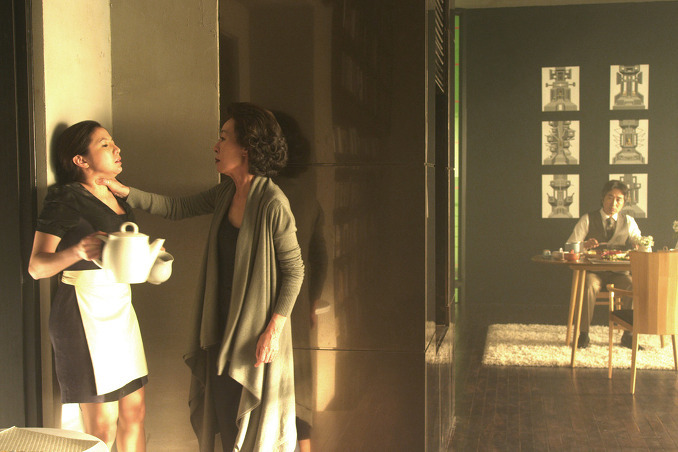
You have to really want to say “F*** you” to anyone watching your work to make a black comedy as rancid as The Taste of Money. Money is a needlessly self-parodizing, feature-length supplement to South Korean Sang-soo Im’s (The President’s Last Bang) recent remake of Ki-Young Kim’s The Housemaid. In fact, Im rubs that connection in viewers’ faces by alluding to The Housemaid three times in Money, even going so far as to have his hatefully stupid protagonists watch both versions of The Housemaid.

For comparison’s sake: both versions of The Housemaid focus on a working-class domestic who suffers a hilarious psychotic breakdown on refusing to be bought off by her corrupt bosses, who naturally come from old money. The Taste of Money's two hirelings reluctantly climb the corporate ladder and look on in mute disdain while their screwy bosses literally screw each other over, acting like rejected antagonists from Passions. Im actively encourages laughter at hysterical, one-dimensional protagonists. This aggressively broad satire is designed to needle everybody and satisfy no one.

Young-jak (Kang-woo Kim) is a factotum-cum-personal assistant for Chairman Yoon (Yoon-sik Baek), a wealthy owner of a multi-billion dollar international conglomerate. Yoon has Young-jak do almost everything for him. And, as is explicitly spelled out in the film’s first scene, in which Young-jak is told to “taste” (ie: pocket) some money for himself, he’s being groomed for a higher position.

But Young-jak doesn’t know if he wants to climb the corporate ladder in the weird, unexpected ways required in this film. He’s awkwardly caught between Geum-ok Baek (Yeo-jong Yoon), Yoon’s wife, and Yoon, who is having an affair with his Filipina maid Eva (Maui Taylor). And to keep everything copacetic between everyone in the Yoon clan, he also has to schtup Na-mi (Hyo-jin Kim), Yoon’s attractive daughter, too. Despite his reluctance to admit it, there is a line that even a would-be sell-out like Young-Jak isn’t prepared to cross. And he’s made to cross it several times over.

The Taste of Money’s smugly shrill sense of humor delights in ridiculing its soft target protagonists. The film is punishing-ly surreal in that way, being insanely melodramatic, but it also never reaches a Mel Brooks-level of farce. If anything, Im is just so in love with his jokes that he reaches a new strata of semi-self-aware camp. Topless women, too many gimmicky POV shots, and the random presence of a white CEO named Robert Altman (played by the respected real-life Korean film critic Darcy Paquet) are not even the most bewildering things about the film. It’s an utterly baffling film: not because it’s hard to understand what Im’s doing (money corrupts, apparently!) so much as why he won’t stop doing it.

Unfortunately, The Taste of Money isn’t even batshit on an inspired level, like the ending of his The Housemaid remake (One word: SELF-IMMOLATION). It’s just a noxiously tedious bit of fuckwittery and a big waste of time. If the ending of Im’s The Housemaid was his way of exhaling sharply and letting his gut out, then The Taste of Money is his way of keeping his beer belly out and playing The Green Hornet theme song with his navel, over and over and over again. 

Simon Abrams is a New York-based freelance arts critic. His film reviews and features have been featured in The Village Voice, Time Out New York, Slant Magazine, The L Magazine, The New York Press and Time Out Chicago. He currently writes TV criticism for The Onion AV Club and is a contributing writer at the Comics Journal. His writings on film are collected at the blog, Extended Cut.

CANNES 2012: Jeff Nichols’ MUD

CANNES 2012: Jeff Nichols’ MUD

null

Some film critics have described Jeff Nichols’ Mud as the perfect way to end Cannes 2012, a fun and accessible slice of cinematic Americana. But considering the film’s hammy sentimentality and bogus emotional connections, I can’t think of a more disappointing send off, especially considering the promise Nichols showed in his first two films, the great Shotgun Stories and equally excellent Take Shelter. Both examine generational trauma in sobering ways, never shying from the physical and psychological consequences caused by familial denial and repression. Complex yarns about people in transition grappling with daily uncertainty, each film is vital in its own way. If Mud lacks anything, it’s this sense of vitality. While it’s as equally concerned with change as Nichol’s previous work, Mud fails to instill palpable tension in its very standard and melodramatic story.  

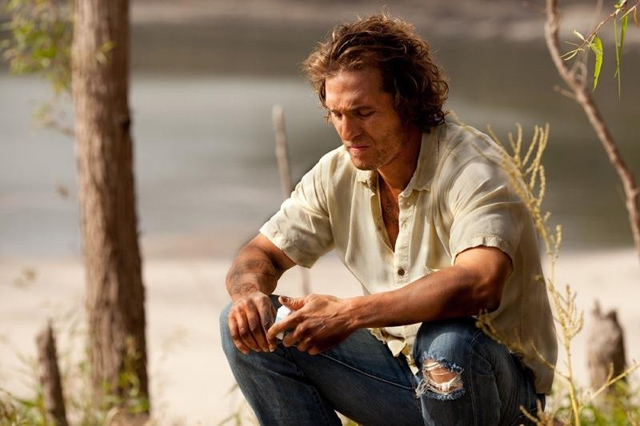
Like so many of its genre forefathers, Mud’s coming-of-age fable begins with children on a mission: best friends Ellis (Tye Sheridan) and Neckbone (Jacob Lofland) sneak out into the early Arkansas morning to visit a desolate island deep in the swamp where a large boat is nestled snugly in the branches of a tall tree. During their trip, the boys come across Mud (Matthew McConaughy), a mysterious and charming stranger lampooned on the island after fleeing his murder conviction of a wealthy Texas businessman.

Ellis quickly develops an admiration for Mud, whose sad story of unrequited love involving an old flame named Juniper (Reese Witherspoon) sparks a romantic key in the youngster’s heart. Ellis’s devout belief in strong emotional ties becomes a key motivating factor as well, especially when Mud tasks the boys to be his go-betweens with the mainland, bringing food, supplies, and later critical intelligence about the gang of Texas bounty hunters on his tail.  

Mud’s languishing, plot-heavy story swirls around in circles, establishing conflicts through long bursts of exposition and simplistic thematic groupings. Ellis’s troubled home life becomes an obvious parallel with the other failing relationships in the film, leaving little in the way of mystery when it comes to character relationships. While McConaughy has a blast turning Mud into a semi-delusional narcissist, nuanced performers like Michael Shannon and Sarah Paulson are wasted on the periphery. Thankfully, newcomer Sheridan is consistently excellent at exuding both confidence and fear in the more intense sequences.

Nichols’s eye for compositions is still apparent in Mud, but the visuals often lack poetic essence, an emotional connection between nature and the characters themselves. While the wide-screen compositions in Take Shelter give the film danger, possibility, even dread, there’s no such dimension in Mud, which is incredibly safe it both it’s depiction of location and regional identity.

What’s most heinous about this Southern potboiler is its sluggish pace and complete disregard for female complexity. The men of Mud are dense, dumb, or delusional and the women voiceless, timid, or disloyal.  Characters like these are neither interesting nor lasting, and Nichols’s sudden right turn into mainstream melodrama, littered with easy answers and clean-cut denouements, is frustrating to say the least.  We’ve come to expect brilliant regional cinema from Nichols, and maybe after just two films it’s unfair to have such high hopes. But with Mud he’s delivered a collection of safe conventions strung together by faux-lyricism, something that’s tough to dismiss during any point of a director’s career.

Glenn Heath Jr. is a film critic for Slant Magazine, Not Coming to a Theater Near You, The L Magazine, and The House Next Door. Glenn is also a full-time Lecturer of Film Studies at Platt College and National University in San Diego, CA.