EDITOR'S NOTE: We are proud to present an unusual and personal series of articles by critic Peter Tonguette about grief and mourning on film, and how certain moviegoing experiences affected him in the aftermath of his father's death. Peter's series includes pieces on Hereafter, The Darjeeling Limited, Running on Empty, Men Don't Leave and A Soldier's Daughter Never Cries. If you would like to read part 1 of the series, Pictures of Loss: Hereafter, click here. If you would like to read Pictures of Loss: The Darjeeling Limited, click here. If you would like to read Pictures of Loss: Running On Empty, click here.If you would like to read Pictures of Loss: Men Don't Leave, click here.If you would like to read Pictures of Loss: A Soldier's Daughter Never Cries, click here.—— Matt Zoller Seitz
Ever since I began writing professionally about film, my father nearly always read what I wrote. Yet it was only recently that it hit me: Before he died in January of 2010, the last article he read by me concerned the death of a parent, and most of the films I have thought to write about since then concern losses like my own.
My article was about a new memoir by Orson Welles’s eldest daughter, Chris, whom I interviewed for the occasion. If I made a point to emphasize how much of her book had to do with a daughter missing her father—I referred to its “preoccupation with filial matters” and “sometimes sorrowful tone”—perhaps it was because Welles, who was a distracted, often incommunicado father, died at seventy.
Seventy: an age I considered not at all elderly.
Seventy: only two years younger than my father was when I wrote (and he read) my article.
Yet as I reread it now, so much about it rings so hollow. When I wrote it, I didn’t know the first thing about losing a parent, as Chris Welles did, as Orson Welles did. (By the time he was a teenager, both of his parents had died.) “Filial matters”? A fancy phrase, but little more.
I wish I could go back and rewrite my article. I wish I could go back and re-ask my questions of Chris. Of course, what I really wish is that I could return to my former state of ignorance. That would mean that my father was here again and, as before, I could only guess at what losing him would feel like.
As my father read my article about Chris Welles, I am certain that he did not for one moment place himself in the shoes of the lost parent, any more than I did the bereaved child. My father’s death was sudden and unexpected. Yet for this to have been the last thing of mine that he read is an inescapable irony. I’ve come to think of it as my unknowing goodbye to him. Yes, my words were written in innocence of my subject, and yes, they seem dreadfully stilted to me now.
But aren’t goodbyes always innocent, always stilted?
After my father died, my interest in movies—and in writing about them, too—went on vacation. For a long time, I thought it was a permanent vacation. Gradually, though, I found myself drawn back to movies, but they were always movies about grief and I always happened upon them by accident. Like the accident of my being in the middle of writing a book about a filmmaker (James Bridges) who made a lot of movies about the sorrow of losing a loved one. Or like the accident of being in a room when a movie about the living trying to communicate with the dead (Clint Eastwood’s Hereafter) was playing on television.
Were these things really accidents? There was the time I went to a screening of Bergman’s Persona and a trailer for Powell and Pressburger’s A Matter of Life and Death preceded the feature attraction. The trailer introduced the film by way of excerpting the astonishing opening scene: As RAF pilot David Niven is hurtling toward his death, he falls in love with Kim Hunter, the American radio operator communicating with him in his final minutes. I had not thought about A Matter of Life and Death in years and years, and I had not gone to Persona to think about matters of life and death. But for the next 90 minutes, as Liv Ullmann and Bibi Andersson were talking in Swedish, I could think of nothing but it, about the indomitability of love and the utter waste of death.
The poet Meghan O’Rourke, author of the extraordinary memoir The Long Goodbye (which I will return to throughout the pieces in this series), has talked about finding more solace in literature than in self-help books after her mother died. She said she experienced a “shock of recognition” when she re-read Hamlet and it dawned on her that the play was really about a young person in mourning, not unlike herself. Eventually, I, too, found it helpful to ponder my feelings through a work of fiction, to experience the anguish and loneliness of loss vicariously, through characters on a movie screen or television set.
“You think your pain and your heartbreak are unprecedented in the history of the world, but then you read.”
Or in my case: But then you see.
One afternoon in the summer I was seventeen, I was in a restaurant with my parents and younger brother. We were not celebrating any particular occasion and the meal itself was completely unmemorable. But I’ve never forgotten what I saw. Directly across from me, not visible to anyone else, was a middle-aged woman sitting in a booth by herself. As she tentatively nursed a Coca-Cola, a song was playing on the radio. I couldn’t possibly say what it was, but it was not unlike, say, the Beach Boys’ “God Only Knows.” It had that same poignant feeling to it. As the woman sat there, her eyes downcast, she began mouthing the sad words of the sad song. She didn’t appear to be mentally ill or disturbed in any way. Something had simply gone wrong for her. How was I to know? Who was I to guess?
It was like the scene in Magnolia (a movie I don’t care for) when the characters sing along to Aimee Mann’s “Wise Up,” except that it actually affected me.
I remember feeling such great pity for her that it spoiled the rest of my day. I feel less sorry for the woman than I used to it is because I am now in her shoes, looking to pop culture to give voice to my pain, and I wouldn’t want people to think I’m feeling sorry for myself.
Meghan O’Rourke begins her memoir with an epigraph from a novel by Iris Murdoch called An Accidental Man: “The bereaved cannot communicate with the unbereaved.” Perhaps, going forward, I am only able to communicate with bereaved movies. I no longer love films only for their graceful direction or witty dialogue, for their mise-en-scene or montage. For a film to reach me, it must speak to my loss, as the films examined in this series do. Hereafter. The Darjeeling Limited. Running on Empty. Men Don’t Leave. A Soldier’s Daughter Never Cries. There are so many others. I found that I needed them at a time when I thought I was beyond needing movies.
I was wrong.
For Alexandra Asher Sears, who read and encouraged.
Peter Tonguette is the author of Orson Welles Rememberedand The Films of James Bridges. He is currently writing a critical study of the films of Peter Bogdanovich for the University Press of Kentucky and editing a collection of interviews with Bogdanovich for the University Press of Mississippi. You can visit Peter's website here.
GREY MATTERS: With “Grimm” and “Once Upon A Time,” TV fantasy casts its spell with mixed results
Fall's two biggest TV hits center on traumatized people waking up to a universally terrible reality, and all anyone can do is work endlessly to prevent things from perpetually worsening. But what I wonder about the ascendancy of Grimm and Once Upon a Time is if people are tuning in because they directly validate our sense of things falling apart, or if viewers feel so battered that they can’t even enjoy fantasy without a substratum of neo-Depression dread and jitters. Certainly, both shows’ hard-times elements are in your face so often that interpretation mostly becomes a critical redundancy.
For this way-dedicated Joss Whedon fan, Grimm feels like a karaoke version of a cover band's take on an Angel episode, with mise-en-scène ported from Jennifer’s Body. (Steal from the best.) The show's co-creator is Angel main man David Greenwalt, which explains Grimm’s similarities but does nothing to shed light on why it's so, well, awful.
It takes place in Portland, where there's a lot of moss. Nick Burkhardt (David Giuntoli) is a pretty detective who starts seeing flashes of citizens with monster faces. His Aunt Marie (Kate Burton) drops by in a beat up '70s station wagon, mobile home in tow – a visit from the terrible economy. Unemployed thanks to a fight with cancer that has her bald and near death, Aunt Marie wants Nick to know something: his parents did not die in a car crash. They were murdered.
Also, he's a Grimm, as in “Grimm’s Fairy Tales,” which were actually reports by Nick’s ancestors on their ongoing battles against a seemingly endless profusion of creatures that walk among us. That’s why he can see monster people.
After the workman-like pilot, Grimm riffs a version of "Goldilocks and the Three Bears" that only makes sense to people living in the stuck-in-glue daymare of Depression 2.0. The hook: an attractive couple breaks into a swanky country home. Do they use super criminal skills to computer-transfer gold bonds to an anonymous account in the Cayman Islands? To steal a rare diamond? To hot-wire the family's classic 1963 Porsche 356B Cabriolet Convertible?
No. They’re just two members of Generation Debt who want to pretend to be rich for a couple hours. They drink rich people wine, eat rich people food and fuck on rich people sheets. That is, until the rich people return and only the girl can get away in time, leaving the boy as prey for the week’s beasties: bear people. Like, bears in a bear market. Well, I thought it was funny.
Anyway, Grimm is a rote procedural glued to a weekly creature feature. The only time it has a pulse is when it is most Angel-like, with Nick playing straight guy to the hilariously constantly annoyed "big bad wolf," played by the delightful Silas Weir Mitchell. But while David Boreanaz owned an enjoyably self-deprecating brand of comic timing and Angel (the character) always had a backstory of epic woe to texturize his prettiness, the Brandon Routh-ian Giuntoli just leaves the always-game Mitchell with a puppy’s eagerness for a foil. Could be limiting.
Perhaps Greenwalt’s master plan is to bring current social anxieties to the forefront to get our minds off the fact that the show proper hasn’t that much on its own mind. Or perhaps Grimm's real objective is to officially add “supernatural” to the doctor/cop/hospital list of approved genre presets.
Luckily, there’s Once Upon a Time to distract us from such mercenary things, doing that awesome TV thing: teaching us how to watch it while also creating the kind of giddy, free-associative buzz you get after a couple hits of mellow sensimilla.
Lots of shows have practically sold the souls of virgins wetted with the tears of newborns to get people to think, “This is the new Lost”. Well, this is the new Lost in the way it sucks viewers into its tale of spiritual entrapment, now updated for the new hopelessness and told in a way that’s just super sui generis. (It helps that the show is written by ex-Lost scribes Adam Horowitz and Edward Kitsis.)
Once Upon a Time’s hook is that fairy tales are real, and that at some point in the world of these tales, the Evil Queen (Lana Parrilla) let loose a curse that threw everyone to the worst of all places in all the universes: America in 2011. Now, fairy tale characters live as normal Americans in Storybrooke, Maine, which allows us to enjoy, for example, the magnificent and delightful Robert Carlyle in two roles: Rumpelstiltskin and Mr. Gold, Storybrooke’s local one-percenter.
Our P.O.V. character is Emma Swan (Jennifer Morrison), broadly played (like many of the people in Once Upon a Time) as a sort of bounty hunter with a large chip on her shoulder. Her life's efforts have gained her a Volkswagen Bug, a red faux-leather Forever 21-style jacket, and that’s about it. (Unlike Grimm, where Nick casually sports a good $5,000 of McQueen-level leather couture. The fashion folks here understand how class represents in style.)
Anyway, Emma meets 10-year-old Henry (Jared S. Gilmore), who – long story short – she becomes so compelled to take care of that she brings him to his hometown of Storybrooke to see what the deal is with his mom, Regina (the Evil Queen in fairy world), who's a real piece of work and basically runs the town. Swan instantly feels a deep affinity with Mary, Henry's elementary school teacher (Ginnifer Goodwin, rockin’ an adorable and practical short Mia Farrow/Vidal Sassoon cut), who in fairy world is Emma’s mother, which is kind of kinky in my opinion.
Little Henry, clearly a nascent Obama Democrat, thinks that by remembering how things got so terrible, the residents of Storybrooke will get back to where they once belonged. But will they? Are the events unfolding in the past/fairy world fixed, or can they be changed to change this world? Will knowing what you once were influence who you are now?
The human incarnation of the Evil Queen, Regina, loves her child Henry, but she knows something is existentially wrong about everything in Storybrooke, and we’re already getting indications that, a la Lost's Others, she may not be the repository of pure, unmotivated evil that “Grimm’s Fairy Tales” would probably like us to believe. (Holy inter-textuality, Batman!)
A lot of people gave the show’s pilot shit for being too earnest – as if irony and self-snarkiness were automatic virtues – but by its second episode, Once Upon a Time was already showing a stealthy sense of humor about itself, with Snow White giving Prince Charming (Josh Dallas) shit about his name, and the Prince pulling out a warrant for White, showing her wanted for treason, murder and the like. The original multi-camera laziness has been perked up by zippy single camera moves. Morrison has grown comfortable enough with a very stylized character; she casually tosses extra-value curveballs into already funny lines like, "Kid, telling someone their soulmate is in a coma is probably not helpful."
And I’m loving a narrative strategy that doesn’t work by linear storytelling but by skillfully randomized accumulation of themes, images and recalled interactions. The writers not only have cocky confidence in their skills, they have confidence in their audience. Most of all, the show works in shades of entrapment, which is why, I believe, five or so million Americans keep tuning into it during a terrible Sunday night time slot.
Just like the surviving passengers of Lost’s Flight 815 can’t really leave the island even when they leave it, the rudely Americanized fairy tale folk of Once Upon a Time feel somehow displaced, with glimmers of basic, existential wrongness indicating something vast and malign is writing the script. At a time when so many critics seem willing to wait years for Boardwalk Empire to match in quality what it has in stylish depictions of cruelty, gore-violence and horrible men (the things that automatically signify "quality" and "seriousness" sight unseen these days), it’s no surprise that viewers are happy to vote with their remotes and tune in to a show like Once Upon a Time, a show that entertains and connects with wit, spirit and soul about things that matter to them.
Me, I’m more than happy to put my Best Show sticker on Once Upon a Time, a wee smidgen above Homeland – a great show, but still a super-honed iteration of things we’ve seen before, while the loopy, lysergic Once Upon a Time has the right stuff to transcend the nihilism craze, to become awesome in a way we’ve never seen.
Ian Grey has written, co-written or been a contributor to books on cinema, fine art, fashion, identity politics, music and tragedy. Magazines and newspapers that have his articles include Detroit Metro Times, gothic.net, Icon Magazine, International Musician and Recording World, Lacanian Ink, MusicFilmWeb, New York Post, The Perfect Sound, Salon, Smart Money Magazine, Teeth of the Divine, Venuszine, and Time Out/New York
In creating “Blind Love: In Memory of Steve Jobs,” Illusionist Paul Gertner wonders how humans will process emotions in a digital realm
Look, I don't mean to come across as crass or insensitive, but I'm officially tired of hearing about Steve Jobs' legacy. I'm not saying he wasn't the visionary, creative genius we've been reading about or that the changes he brought to the human world aren't remarkable. But there are only so many words one can read and only so many lazy documentaries one can watch on this one guy. (Besides, I’ve read tens of thousands of words by writers famous, infamous and unknown, and none come closer to explaining Jobs' purpose, personality and legacy than the commencement speech that he himself delivered at Stanford University.)
So, when my friend Rich sent me a link to a Steve Jobs tribute video by a magician named Paul Gertner, I will admit to a little eye-rolling – that is, until I saw the video.
About halfway into "Blind Love: In Memory of Steve Jobs", a six-minute video featuring one of illusion's most talented figures, it hits you hard that this is no magic trick. Sure, we see the traditional moves and we watch familiar tools whiz by us – the deck of cards, the coins, the delicate unfolding of hands and fingers. But what stands out is the power of the story itself, and every sublime detail, every articulated nuance of emotion is conveyed in the most unusual way possible: through sleight-of-hand magic.
"Blind Love" couldn't possibly be mistaken for a feature film at just six minutes in length, but its theme – how technology has come to dominate our lives – and its kaleidoscope of sublime choreography takes the viewer through an emotional transformation that seems just as effective as it would be a feature. With a little help from an iPad and Tom Waits' classic "Grapefruit Moon," Paul Gertner weaves an unexpected spell of melancholy and longing, detailing one man's inner journey from love to the bittersweet celebration of loss.
I'm under no illusions that this routine was created especially for America's newly minted patron saint of technology. It wasn't. The choreography is far too complex to have been created in a matter of days and the technical preparation seems head-spinning when you start to deconstruct it. Therefore, it seems all the more remarkable and generous to me that Mr. Gertner, who makes his living performing at trade shows on behalf of companies like Apple, took his intimate, hard-won creation and handed it to the memory of Steve Jobs, and he did it free of charge!
Depending on who you are, the name Paul Gertner will either inspire wondrous amazement or utter indifference. Those in the former camp know him to be without a doubt one of the finest sleight-of-hand, close-up magicians in the world, and that's no hyperbole. For the purposes of this article, those in the latter camp sit uncomfortably, indeed, because it is likely they have never had the good fortune of witnessing his remarkable deceptions, whether in person or on television. (The late Johnny Carson, himself an amateur magician, sat in the former camp, having witnessed Paul's work up close and personal on the Tonight Show on three occasions.)
Penn and Teller and David Copperfield – acts who work on a larger scale – get more press because they play to big crowds. By its very nature, Paul Gertner's specialty, micromagic (or table magic), is an intimate and intricate affair traditionally performed sitting down at a table with a skeptical audience surrounding the magician on all sides, scrutinizing his illusions from mere inches away.
While researching Paul's career for this piece, I came across his most renowned creation: an ingenious variation on the well-worn cups and balls routine. In the past, magicians who had mastered this illusion gave themselves an advantage by using felt or rubber balls to make it easier to move them around. (Such balls don't make any noise when you load them under the cups.) But, as you can plainly see in this video, Paul doesn't give himself any advantage; he uses balls made of steel, and the result is thrilling. Take a look.
But, this piece doesn’t seek to burnish the man's reputation; he certainly doesn't need any help from me. I wanted to know how a man like Paul Gertner, a technical sleight-of-hand master, came to create a video as transcendently moving and fascinating as the one you saw above.
So, I called him and we talked about it.
Ken: Thanks for doing this. Talk about this type of performance art – the use of music and emotion in magic. I know David Copperfield does a little bit of this.
Paul: You're right. Copperfield has done a good bit with this angle, these ideas, in terms of using the music and a story. Magicians are always attempting to incorporate a story or emotion into magic […] and I say attempting because a lot of times what magicians tend to do is they base everything on the trick. And if it fools you, that's all there is to it. But there is history of [illusionists] doing that. I'm certainly not the first one to attempt it. But it's not done as often as it should be.
Ken: When you created "Blind Love," did you tell yourself, "I want to move my audience. I want to speak to them in a way that I've never spoken to them before"?
Paul: Yes. In fact, this was designed for a magician audience initially and my thoughts were to confront them with the emotional choice that many performers make. That choice is between people – their relationships and so on – and their art. The initial routine had a different ending than the one we see now. The initial routine was designed to present a performer sitting with a deck of cards and thinking of the woman who he [is in] a relationship with. He had to make a choice between her and the cards. In fact, at the end of the routine, he did make a choice. In the original version, she ended up on the floor. It was a bit of a brutal ending. In the magic world there are magicians out there, very well-known magicians, that have made that choice, and I wanted to confront [them] and [have them] see themselves in that situation and say, “Oh my god. This is about me and [what] choice did I make.” Some magicians have made the same decision to have both, like I did – a career and a relationship. Some chose just the career. Some [have] said the magic just has to be a pastime and that family is more important.
Ken: That comes across in a section of the routine where you are dealing below a picture of your wife. You appear to have a choice between your two loves: your wife and your magic.
Paul: I'm doing at that point what magicians refer to as a “second deal.” It's a gambling technique. You aren't dealing the top card. You are dealing the one under [it]. The second card. Hence the name second deal. I'm [attempting] to grab the woman's photograph and
it is my wife's high school photo, and each time I attempt to, there is a flash on the screen of her image. Finally…I grab the card and the moment it's in my hand, my face on the screen morphs into her image just for a few seconds…and as I set her down she fades away. My thinking [is], what's going on at home? What am I missing by staying on the road? Ken: It does come across.
Paul: Good.
Ken: The way I figured it, about 3 1/2 minutes of this routine is accomplished holding your breath. I read about the…secrecy surrounding the methodology of magicians. Is that something you want to talk about?
Paul: I'm trying to be careful not to reveal too much of the method. Because, hopefully, I'm not going to see too many people picking up and copying the ideas.
Ken: Did Tom Waits' “Grapefruit Moon” reach you in some way? How did you come to pick that one for this routine?
Paul: I had the idea for the act sitting on a plane going from Pittsburgh to L.A. I always wanted to do something with a Tom Waits tune. So, I started going through Tom Waits' music on my iPhone […]. When I hit “Grapefruit Moon,” as I listened to the song, this whole routine came into my head. Within three hours, the exact routine was in my head. That hasn't happened too often. It was kind of a bolt of lightning.
Ken: To be clear, you thought of it in three hours and it took you how long to execute it?
Paul: Yeah, five months to put together. Before I could do it the first time, I had to build it. The little tree [in the video] took a month and a half to build. You don't go into a magic shop and buy one of those. Ken: In this piece, there's plenty of acting on your part – most of it projected onto an iPad. I was struck that this appears to be the perfect metaphor for the way technology has changed the way we conduct our lives. The way we remember. The way we grieve. The way we fall in love. All of it projected into cyberspace. There is, sort of, a digital version of ourselves now that didn't exist 20 years ago. This feeds the idea of dedicating this piece to Steve Jobs, who brought these technologies together that changed our lives.
Paul: I think you’re right on target in terms of this whole idea of projecting our emotions into cyberspace. You see this on YouTube. It's very freeing on some level. I'm not an actor. I'm a magician and I've been taking acting lessons over the last ten years. Most magicians probably view me as more corporate and…business-like. So, when they see me do something like this, it's like – whoa! Where did that come from? For this piece, I was [acting] for a camera that was going to be on an iPad that I can't see. It frees you up to be totally different. It's sort of like an actor [getting into] a role and [letting] himself go. I can't see [the audience], and since I can't see them, I don't pull back in relationship to how the audience is reacting, and I think many times, actors do [exactly that]. In my case, [the performance] is already done. I've done it in my private little studio. Ken: Let's zero in on this. Are digital emotions just as valid as real ones?
Paul: That's where it will be interesting to find out. I don't know. That's the big question mark…whether these digital emotions that I'm doing on the screen are able to connect with the audience. I don't know whether it does [connect] as well over the video. When I've done this act live, it's freaky, because people forget whether it's me [looking] through the screen at them and at the cards or if I'm not looking through the screen at the cards. I've gotten quite a few responses from magicians who have watched this online who have said, "Damn, I was halfway through the routine before I realized that he can't see anything. That's not him looking at me. That's the video." I just had a good friend write me, and he told me, "It's not connecting with me because of that wall there. The video."
Ken: That guy is nuts.
Paul: (Laughs)
Ken: I totally bought into the idea that I was looking at an expression of your digital self. That those emotions were valid. There is a bittersweetness to that performance which really affected me.
Paul: If it does comes through, [it's because] it's an honest performance. I've been through that phone call with my wife many, many times. Fortunately, we're still married. She's put up with a lot – a crazy performer who’s obsessed with magic.
Ken: How many magicians out there – and I'm talking about micromagic performers – how many are doing this kind of emotional storytelling?
Paul: There's a small handful. There's a gentleman named René Lavand from Argentina. Juan Tamariz from Spain. It's an honor to be considered in those categories. These are my heroes. I think it's kind of harder with close-up magic because you're so close to your audience. It's much easier to fool people with a card trick. [Creating a storyline] is much more risky because…you're baring your soul a little bit. When I did this the first time, my feet were shaking […] because it was for a group of magicians in Buffalo, New York at a very exclusive close-up magic convention.
Ken: How long have you been in this business?
Paul: Since 1974.
Ken: Coming up on 40 years. How much of that time have you spent speaking to your audience emotionally, rather then just inspiring a sense of awe through your illusions?
Paul: Unfortunately, sad to say only within the last 10 years. I started working with an acting teacher. I started that in 2001. That opened me up toward being willing to do things a little different. Before that, I was more corporate. Very business-like. My magic was very good technically. My presentation was a bit more one-dimensional, though. I could fool you really bad. But, I wouldn't draw you in as much because I would not expose that much of myself. My magic was almost robotic at times. If I hadn't been exposed to acting class, I wouldn't have been able to come up with this routine.
Ken: You got past 50 and you decided to take more risks.
Paul: You look at things differently. I wish I would have taken acting class when I was 20. The weird thing you have to realize about magicians as performers is they do everything themselves. They write the script. They direct the show. They pick the music. Other performers have directors and composers. A magician is a solitary [profession]. Ken: Talk about how technology affected your life.
Paul: I recently did this act at a TEDx conference [Technology Entertainment and Design] and…I opened up the presentation by showing home movies that were filmed by my father on Super 8 in 1954, 1955, 1956 when I was a one-, two- and three-year-old, and he loved making movies. Do you remember the show Candid Camera?
Ken: Of course, Allen Funt.
Paul: He loved Candid Camera. My sense of reality was distorted at a very young age and in our house nothing was quite as it seemed. My father liked making these crazy, funny home movies with me, the kid, being the butt of most of the jokes. That was what created my interest in this world of magic and illusion. [In the movies] he was basically pulling magic tricks on me, but using editing. He did it with a Bell & Howell camera and a Cathcart editing machine. Today, he would be shocked to discover what I'm doing with an iPad. He wouldn't understand what an iPad was because he died at age 47 in 1969. So, that was the beginning of my experience with technology.
[Note to reader: if you would like to watch Paul's home movies, go here.]
Ken: People are going to say that this trick was built in the editing room with digital effects. I want you to speak to those people directly. I know that's not true because you are completely blind in this routine. They only way to know where you are in the trick is to listen to the music and take your cues from that.
Paul: What you see there is what I'm performing live. Now, obviously, I shot a number of takes in the course of doing the routine. I'm shooting from a couple different angles only to give the best representation of the routine. When I showed it to my brother for the very first time on video, he looked at it and said, "Now, this isn't something you're going to do for anybody live. Right?"
Ken: (Laughs)
Paul: I said, "What do you mean?" He said, "Who did the C.G.I. for you? Who did the green-screen stuff? How are you creating that illusion of your face?" I said, "No, you're watching a live performance." So [there is] no trick photography. If you watch me do it live, that's what you'd see.
Ken: You're considered one of the finest technical sleight-of-hand magicians around. A friend of mine told me that you can force a card behind your back. Is that right?
[Note to the reader: When a magician asks you to "pick a card" as part of a magic trick, he is usually executing a classic "force." The magician has usually picked the card ahead of time, and with various techniques, he can induce you to choose the exact one he wants you to pick.]
Paul: Yeah. (Laughing)
Ken: You can force a card from behind your back!
Paul: Yeah, I can fan out a deck of cards behind my back and ask you reach in and pick a card. I can control what you take and make you feel like you've had a free choice.
Ken: That seems impossibly hard, like learning to read lips or something. Deaf people can read lips but that doesn't make it any less remarkable. This seems amazing to me.
Paul: Without revealing too much of a magic secret, there are certain techniques magicians learn on the fly. You use your audience as guinea pigs and after you've done it for five years, it gets to the point where it becomes natural.
Ken: Let's change course. Why Apple? Did Apple products change your life?
Paul: I bought one of the very first Apple computers in 1981, I think it was. I've had nothing but Apple my entire life. About 30 of them. I love Apple products.
Ken: What about this latest round of technologies? The target [market] is the regular guy on the street [as opposed to the techno-hobbyist] who wants to experience that Jetsons moment.
Paul: I'm fascinated by this new round [of technologies]. In the TEDx talk, I use the Arthur C. Clarke quote, "Any sufficiently developed technology is indistinguishable from magic." I tell my audience, “If today I was able to demonstrate some of the technologies you’ll be using 40 years from now, you’d walk out of the room thinking you'd seen the most amazing magic trick you've ever seen.” The technology we'll be using 40 years from now will be inconceivable to us while we sit here today. When I saw the iPad for the first time, I didn't want to see it right away, ‘cause I didn't want to buy one.
Ken: (Laughs)
Paul: I couldn't afford to go home with another device. I didn't look at it for the first two or three months. And somebody showed it to me and I went out that night and bought one. Because I said to Cathy [Paul’s wife], it's like a [magic] trick. If I went into a magic shop and plunked that thing down on the counter and said, "This is a new trick," I'd pay thousands of dollars for that. I've paid thousands of dollars for [magic] tricks many times that didn't do half of what [the iPad] does. It was just shocking at the time that it was available to the general public.
Ken: What about Steve Jobs himself?
Paul: Yeah. I found him to be an interesting personality to keep an eye on. They say that he wasn't that technically brilliant. But he could envision what people would buy next. He had an interesting mind on him and on some level, it was magical thinking. I'm sorry I didn't get to meet him.
Ken Cancelosi lives in Dallas, Texas and is co-founder of Press Play.
A couple of weeks ago, my young son asked me if I had “any more DVDs of John Williams movies.” It took me a second to register what he meant by this. He thought that the prolific Hollywood composer was actually the director of some of his favorite movies, a list that at this point consists entirely of the fantasy, science fiction and adventure films that thrilled me and his older sister as kids and kids-at-heart: “E.T.,” “Jaws” and “Close Encounters of the Third Kind,” the “Jurassic Park” and “Harry Potter” and “Star Wars” and the Indiana Jones pictures, and many others. I started to explain that Williams was not actually a filmmaker. But then the truth of his assumption hit me: In a sense, Williams is the unnamed co-author of a good many of the films he’s scored. His galloping, wondrous tone promises a particular type of entertainment, and is so recognizable that we can’t think of certain blockbusters without hearing their themes in our heads.
But as even some adult moviegoers sometimes have to stop and remind themselves, there is more to Williams’ career than iconic theme music for tales of mayhem and magic. He’s been the go-to composer for a particular type of blockbuster ever since his second collaboration with Spielberg, 1975′s “Jaws”; their long collaboration will be analyzed on Turner Classic Movies next week in an episode of “AFI Master Class.”
But the 79-year-old multiple Oscar-winner’s work predates the career of Spielberg, George Lucas and almost everyone else he’s worked with. His career spans an array of eras, genres and modes. He started out as a jazz pianist and session musician and has often worked brilliantly in that vein. He’s done superb scores for horror films, mysteries, romances and grim historical epics. He even did fanfare for the 1984 Olympic games and the long-running theme to “The NBC Nightly News With Tom Brokaw.” He’s as versatile as any character actor and as durable as any great movie star. His résumé is so lengthy — 140 titles and counting! — that the following list of 10 favorites could easily be swapped out for a totally different list. And knowing you, my dear reader, you’ll do precisely that in the Letters section.
You can read the read the rest of Matt's slide show here at Salon.
Matt Zoller Seitz is publisher of Press Play and writes for Salon.
SIMON SAYS: Is Frank Henenlotter a horror genius or sick bastard?
Somehow, it seems wrong to single out two of Frank Henenlotter's more "horror-comedy" films as examples of the writer/director's style — which, in a sense, is fitting. Henenlotter's a guy whose crew has abandoned him on two separate projects because they found what he was making to be in such poor taste that they refused to be a part of it. You can complain all you want about how his films are juvenile and gross and unpolished and what have you. But don't you want to see a penis-shaped monster suck the brains out of a woman through her mouth like he were a very evil boner and she were giving the world's worst blowy? Doesn't the thought of seeing something so uniquely low and disgusting intrigue you? Don't you want to see a man with no shame, no sense of good taste and no self-restraint at work?
The main pleasure in watching Henenlotter's films is in watching an inspired caricaturist earn yuks through some genuinely vile horror-themed body jokes. Between 1982 and 1990, Henelotter, whose films are being celebrated at New York's Anthology Film Archives this weekend, made his splatter comedies while David Cronenberg was at the height of his powers. Cronenberg made everything from "Videodrome" to "Dead Ringers" in the time it took Henelotter to produce three sloppy but invigoratingly scatological features: "Basket Case," a valentine to the grimy Manhattan of the early '80s and a slobbering tongue-in-cheek dramedy about a boy and the separation anxiety he shares with his evil, lumpen Siamese twin; "Brain Damage," a Lovecraft-inspired comedy about a boy that gets hooked on the mind-altering secretions of a murderous, parasitic "H.R. Pufnstuf" monster from beyond; and "Frankenhooker," a gleefully deranged story about inequality between the sexes that happens to star a slavering, undead prostitute who inadvertently electrocutes all of her clients. This piece focuses on "Brain Damage" and "Frankenhooker," but not because they're necessarily more worthy than "Basket Case." On the contrary, while I prefer these two films because they are more accomplished farces, given the anarchic nature of Henenlotter's comedies, that doesn't make them better films.
Of the two Henenlotter-helmed projects I've singled out, "Brain Damage" is most similar tonally to "Basket Case." Henenlotter makes a more concentrated effort to mix semi-serious melodrama with his eccentric brand of scattershot comedy, frequently crossing lines that other filmmakers, ones guided by more hands-on producers or advisors, almost certainly would not go near. For an especially gross example, see the infamous blowjob scene in "Brain Damage," in which Aylmer (voiced by John Zacherle), the film's bulbous, phallic monster, slithers out of the fly of Brian (Rick Hearst), his host, and devours an incautiously flirtatious woman's brain. Henenlotter's crew reportedly fled when it came time to film the scene, which revels in a proudly crass it's-not-what-it-looks-like-but-it-kind-of-is sight gag.
If you are intrepid and depraved enough to seek out "Brain Damage" after reading this piece, you should thank your lucky stars that Synapse Films released a cut of the film featuring the aforementioned fellatio scene. That sequence was cut from both the film's theatrical cut and, if you can imagine that such a thing exists, its television cut. It's a particularly ugly and uncomfortable scene. Don't miss it!
All kidding aside, "Brain Damage" is as weirdly funny as it is because it seems to have been made by a proudly deranged filmmaker. In one scene, Henenlotter shamelessly asks viewers to care about Brian's addiction to the blue-tinted liquid Aylmer injects directly into his brain — "shamelessly" because that same addiction is the stuff of no-brow comedy in several earlier scenes, my favorite of which has Brian sitting in his bathtub, tripping out of his mind. Meanwhile, his roommate and his girlfriend are both worriedly standing outside the bathroom door, intently listening to him squeal with joy as Aylmer sprays hallucinogenic ejaculate all over his chest. So watching Brian in a later scene shiver and shake while he begs for a fix, soaked in fecal-colored sweat that stains his white cotton wife-beater and his oversized tidy-whities, is remarkably unseemly.
At least when you watch "Frankenhooker," a feature-length put-on that advertises in its title Henenlotter's commitment to a pointedly perverted scenario, you immediately know what you're getting into. "Frankenhooker" doesn't have a serious bone in its body, a fact which becomes apparent when the film breaks down during its half-assed Grand Guignol finale. Jeffrey Franken (James Lorinz), a young medical student in the tradition of Herbert West, loses his mind after Elizabeth Shelley (Patty Mullen), his fiancée, dies in a freak lawnmower accident. We hear the news of her demise as it's covered by an opportunistic news reporter who facetiously pouts about callous community members who are more concerned with the macabre details of Jeffrey's tragic loss than in the victims' well-being. She says this just before she idly speculates that Mary's disembodied head was probably stolen “by person or persons unknown.” Nobody really cares in this film, or at least, nobody really has emotionally stable or sympathetic responses to events. This is especially true of Brian, the film's lead protagonist and a nebbish psychopath who cooks up a batch of homemade "Super Crack" in order to kill prostitutes so that he can chop them up and give Elizabeth a new body composed of his victims' parts. Brian reflexively psychoanalyzes himself thusly: “I seem to be disassociating myself from reality. I’m becoming anti-social, dangerously amoral.”
That sentiment explains the off-kilter tenor of Henenlotter's films, if only partially. They're gleefully unsound films with charming volatility. This is best expressed in "Frankenhooker" when the aforementioned Super Crack causes a cabal of street-walkers to explode one by one in spectacular slow-motion. It's like "Zabriskie Point" but with more prostitutes and less counter-cultural commentary. In other words: "Frankenhooker" is exactly what you've been jonesing for — you just didn't know it until now.
Simon Abrams is a New York-based freelance arts critic. His film reviews and features have been featured in the Village Voice, Time Out New York, Slant Magazine, the L Magazine, the New York Press and Time Out Chicago. He currently writes TV criticism for The Onion AV Club and is a contributing writer at the Comics Journal. His writings on film are collected at the blog, Extended Cut.
Until "Lost Highway," I didn't even know how to contextualize metal as anything more than a mighty but occasional pleasure. But that film's magnificently insane dreamtime imagery opened the floodgates, and suddenly, I understood how certain loud sounds connected to a freighted language of images that in turn connected to all kinds of interior "stuff". By "Lost Highway's" end, I literally stumbled onto Second Avenue buzzed; I was seriously, no-kiddingly "high."
The lockstep tech-metal ache of Germany's industrial titans, Rammstein, was still ricocheting in my cortex while Marilyn Manson, in his disreputable, goth-Ziggy prime, worked the sleazier shadows. And there was Nine Inch Nails pounding away on "The Perfect Drug" which lived up to its name in spades. Everything else just sounded "weak" after that.
(These were my gateway drugs to Mayhem, Enslaved, Isis and beyond, but that's another story.)
I'll say this: if you're a film director in need of an instant jolt of sex, of sadness, of terror, of something really fucking seriously overwhelmingly important RIGHT NOW, metal is your best friend. Whether we're talking highbrow realist, sci-fi, vérité, '80s horror, eerie atmospherics, lowbrow comedy, social commentary or zombies — zombies! — there's pretty much nothing that can't be improved with the application of a little metal.
1.Lilya 4-Ever – "Mein Herz Brennt" by Rammstein
The genius of Rammstein is how their peerless Wagnerian metal pummel and operatic baritone act as delivery systems for an utterly bottomless sense of outraged sorrow. From the start, Lukas Moodysson's nearly flawless film about human trafficking and sex slavery hurls you into a grey, rain-splattered urban purgatory as we follow a girl running nowhere. We see her face already bruised and red, and though we're not even one minute into the film, we already can't stand what she's been through. The most brutally, artfully affective opening in film history? It's up there. Possible without metal? Nope.
2. The Matrix – "Wake Up" by Rage Against the Machine
"The Matrix" planted entire crops of tropes that movies still harvest — in this case, the rolling, super-heavy "Kashmir"-grooved metal elephant as signifier of ultra-triumphalism. See the "Resident Evil" franchise, the "Underworld" franchise, the … oh, fuck it. If there's an apocalypse and someone is kicking ass, especially a fit woman in a cat suit, the sonic Rosetta Stone for how that sounds was set here.
3. Lost Highway – "I Put a Spell on You" by Marilyn Manson
Wiki says it's about a sax player (Bill Pullman) who kills his wife (Patricia Arquette) and, while on death row, starts hallucinating. Whatever. I mean, okay, but that's only an organizing principle amongst several for a system of skits and set pieces and meditations. "Lost Highway" is as much "about" the texture of Arquette's skin against the texture of her satin nightgown as it is about changing identities; about the glisten of blood against the shine of broken glass that's punctured someone's skull, about how precious life is at dawn. It's all those things, a little out of order.
Trent Reznor's soundtrack combines Angelo Badalamenti's richly uncanny orchestrations with a weave of modern rock eccentricities: jungle period Bowie, Smashing Pumpkins, the introduction of Rammstein and Lou Reed-sounding metal over a decade before "Lulu."
But I think it's Marilyn Manson losing his shit on "I Put a Spell on You" — a psychotic power drive of squiggly electronics, O.C.D. waltz-time drums and beyond-distorted guitars/horns — that captures the coiling, crazed erotic soul of Lynch's masterpiece.
4. The Wrestler – "Metal Health (Bang Your Head)" by Quiet Riot
You'd think an '80s glam metal artifact like "Metal Health" would be so spackled with kitsch that its inclusion at the dramatic peak of Darren Aronofsky's elegantly heartfelt elegy for a beaten down wrestler (Mickey Rourke) would be a total fail. But in truth, it makes your short hairs go, "Fuck yeah!" as Randy "The Ram" enters the ring One Last Time. The track explodes like grudging howitzers while singer Kevin DuBrow squees the song's crushed-nutsack screech; dumb-fun metal history does the alchemical with old-school comeback conceit, and, melodramatically, both come out way better for it.
5. Bad Dreams – "Sweet Child o' Mine" by Guns N' Roses
Before Andrew Fleming made his Wiccan softcore feature favorite "The Craft," he cut his teeth on this better-than-average "Nightmare on Elm Street" cash-in about another girl with fatal dream issues. What I remember about "Bad Dreams" is seeing it at a long-demolished Cineplex Odeon in Manhattan. I tried to rise from my seat but heard a guitar that smashed me right back down into the chair. It was the most remarkable of guitars, a way filthy, overdriven, yet very precisely plucked arpeggio. It was gorgeous, transcendent. You always remember your first time.
6. Ace Ventura: Pet Detective – "Hammer Smashed Face" by Cannibal Corpse w/ Jim Carrey
With couplets like "Created to kill, the carnage continues/Violently reshaping human facial tissue," nobody has accused death metal's more extreme goremeisters of being subtle, or even comprehensible without a cheat sheet, what with current vocalist George "Corpsegrinder" Fisher firmly ensconced in the Cookie Monster school of vocalizing. But the bruising cartoon menace of the Corpse and the mania that is Carrey meet in a perfect moment in this clip as Jimbo acquits himself just fine as lead growler, proving that if this comedy thing ever peters out….
7. Natural Born Killers – "Something I Can Never Have" by Nine Inch Nails
"Natural Born Killers:" an epileptic grotesquerie using as many ugly techniques as possible to out-gross itself, all in an effort to lay open the most filthy underbelly of a soul-rotting nation…or just to act out a really epic coke binge. It's a toss-up. Regardless, I've always thought this psycho-killer freak-out is Oliver Stone's most honest, revealing film.
The soundtrack is a violently schizophrenic style mash of Jane's Addiction's alt-metal, Duane Eddy's twang, L7's riot grrrl punk, Patti Smith's "Rock N Roll Nigger" and tons more. But the soul of the film is all Nine Inch Nails/Trent Reznor, in particular this ballad (no, Virginia, slow metal songs are not all power ballads) that gives the film the reverberant despairing soul it desperately needs.
With it, you suddenly sense the psychological depth in the story of Woody Harrelson and Juliette Lewis' gruesome twosome; everything just feels like it "stops" when the song plays. America's pre-millennial tension becomes a dirge and the movie has purpose. I think.
8. Return of the Living Dead – "Party Time" by 45 Grave
There are people who are going to say, "Dude, 45 Grave are totally a punk band," but fuck that because, dude, "Party Time" is a fucking "metal song" in an incredibly metal movie with toxic waste and partying zombies and a girl who begs for and has sex with the dead before they totally eat her to death. Punks have never had sex with anything, ever, and if they did, they wouldn't be nearly as hot as Linnea Quigley, okay?
9. Nightmare on Elm Street 3: Dream Warriors – "Dream Warriors" by Dokken
Seriously, you can't just watch this. You need to prepare, to maybe knock back two fingers of something strong and consider the '80s as a concept, as a gestalt so feckless, naïve and wrongly empowered, so Technicolor-dumbass and cartoon stupid that only America could have barfed it up and gloated, "Yeah, that's me — wanna fight about it?"
What makes the mind reel is that grown-up people who, in less shoulder-padded times, would have been happy with footage of a second-tier hair metal band performing the theme from a cashed-in "Elm Street" sequel were no longer satisfied. "No," they shouted between lines of Peruvian marching powder, "we can do better!"
And better is…this…thing, where a little blonde girl squeals in delight at a forty-something dude in makeup doing his rock face. Where the walls explode and a Dokken dude comes out shredding while the girl claps — "Yeee!!!" Where Freddy mugs, "IT'S A NIGHTMARE!!!" and you wouldn't be surprised if Rod Sterling showed up to do his "Twilight Zone" intro.
10. Valhalla Rising – "Main theme" by Peter Kyed
Before Nicolas Winding Refn mucked around in "Hollywood" with "noir," "movie stars" and other things you have to put in quotes for maximum upward postmodernability, he'd already made a film most people would be happy to kick back and claim a masterpiece, a film that's a before-the-fact neopagan answer to "The Tree of Life: Valhalla Rising."
Through its tale of a boy, a one-eyed Nordic warrior and a group of Christians seeking a crusade in the year 1000 A.D., we see the empty hell on Earth that is the natural world, where a man could go mad not only with the aid of an organic hallucinogen, but with the truth of his insignificance amidst the brutal reality of nature. Where "The Tree of Life" is warm and reassuring, "Valhalla," like its protagonist, is mute, unsparing, alone and apart. Maybe the director needed a trip to Hollywood just to recover from his own art.
For metal heads, the sound of "Valhalla," with the ominous subwoofer hums and the droning, detuned guitar crush crafted by Peter Kyed, is a familiar thing. It's somewhere between the glacial paced chamber doom of Sunn 0))), the unsettling meditations of metal-aligned neofolk masters Sol Invictus and the one-man atmospheric black metal terrornaut, Malefic, who, under the brand name Xasthur, has lent the Cheney years a soundtrack worthy of their horrors.
But I digress. Like the lost and damned in Refn's magnificent film, Kyed's soundtrack extracts the essentials of metal and drops them into a cold world where the gods aren't there to not give a shit. Skål!
Ian Grey has written, co-written or been a contributor to books on cinema, fine art, fashion, identity politics, music and tragedy. Magazines and newspapers that have his articles include Detroit Metro Times, gothic.net, Icon Magazine, International Musician and Recording World, Lacanian Ink, MusicFilmWeb, New York Post, The Perfect Sound, Salon, Smart Money Magazine, Teeth of the Divine, Venuszine, and Time Out/New York
Cinematographer John Bailey interviews Matthias Stork
Matthias Stork is more likely to be found hunched over a research desk at the Academy’s Margaret Herrick Library than in the darker recesses of a multiplex cinema playing the latest Hollywood visual effects laden action flick. He is, after all, a graduate student in the Department of Film and Television at UCLA. He has an M.A. in Education from Goethe University, Frankfurt, in his native Germany. His current focus is on German expressionist films of the 1920s.
In the last decade of the silent era the Hollywood studios siphoned off many of the finest German filmmakers; the stream became a flood with the rise of National Socialism in 1933. It included director Fritz Lang and the great cinematographer Karl Freund, who had emigrated to the US in 1929. Several years earlier, German émigré F.W. Murnau’s first American film, Sunrise, was one of the high water marks of this great stream. But it is the lesser-known director, Paul Leni, who is the object of Stork’s current research. Leni had made the macabre Waxworks in 1924 Weimar Germany. In Hollywood, he directed only four films before an early death at age 44 in September of 1929. He seems a worthy figure for exegesis for a young German film scholar.
But here is the surprise. Stork’s real scholarly passion is the American action film, a genre that at first glance seems ill tailored for an academic suit. But one of the endearing qualities of German scholarship in science as well as in the arts is its ability to imprint an academic perspective on pop culture as easily as on philosophical ontology.
Stephen Pizzello and Martha Winterhalter emailed me the link to a two-part video essay they had found called “Chaos Cinema.” They suggested it would make a good blog essay. Its creator, Matthias Stork, was not someone whom I knew, nor (despite having his own blog) whom I was able to track down easily. Finally, William McDonald, Professor of Film, Television and Digital Media at UCLA, provided me with Stork’s email. The young scholar met me a few days later on a bench outside the Herrick Library. The juxtaposition of his precise, even scholarly, English—as he spoke about the tropes of “action cinema” with its signature cataclysmic car chases and violent shootouts with exploding body parts—and the spatial and psychic dislocation of the films themselves, was intriguing. Even better, it turns out we both share an abiding love of the seminal films of the French New Wave.
You can read the rest of John Bailey's interview with Matthias Stork here at The American Society of Cinematographers website.
Matthias Stork is a Press Play contributor and film scholar-critic from Germany who continues to pursue an academic career at UCLA where he studies film and television. He has an MA in Education with emphasis on American and French literature and film from Goethe University, Frankfurt. He has attended The Cannes film festival twice (2010/2011) as a representitive of Goethe University's film school and you can read his blog here.
MATT ZOLLER SEITZ: A LONE RANGER remake for $215 million? The price of silver has gone up
By Matt Zoller Seitz
Press Play Contributors
Apparently Disney has given Rango and Pirates of the Caribbean director Gore Verbinski and his star, Johnny Depp, a greenlight to shoot a new feature film version of The Lone Ranger, budgeted at $215 million. That might seem an exorbitant price tag for a concept that ran for years on TV in the 1950s, despite Ed Wood-level production values. But it’s a reduced price compared to what Verbinski originally envisioned; Disney pulled the plug on the project a couple of months ago because its initial price tag, $250 million, was deemed too high.
Where is the money going, you ask? Well, originally it was going to pay for all the werewolves.
Yes, werewolves. The Lone Ranger and Tonto were going to fight werewolves.
When Disney spiked the project, citing worries about recouping its massive cost, there was an online outcry about how mind-bogglingly inappropriate it was to add frickin’ werewolves to the Lone Ranger myth, Verbinski and Depp agreed to salary cuts and went back to the drawing board, and supposedly the new film won’t have any werewolves.
But it will, apparently, have $215 million worth of production values.
My question is: Why?
You can read the rest of Matt's piece here at Salon.
A critic, journalist and filmmaker, Matt Zoller Seitz is the staff TV columnist for Salon.com and the founder of Press Play.





 A couple of weeks ago, my young son asked me if I had “any more DVDs of John Williams movies.” It took me a second to register what he meant by this. He thought that the prolific Hollywood composer was actually the director of some of his favorite movies, a list that at this point consists entirely of the fantasy, science fiction and adventure films that thrilled me and his older sister as kids and kids-at-heart: “E.T.,” “Jaws” and “Close Encounters of the Third Kind,” the “Jurassic Park” and “Harry Potter” and “Star Wars” and the Indiana Jones pictures, and many others. I started to explain that Williams was not actually a filmmaker. But then the truth of his assumption hit me: In a sense, Williams is the unnamed co-author of a good many of the films he’s scored. His galloping, wondrous tone promises a particular type of entertainment, and is so recognizable that we can’t think of certain blockbusters without hearing their themes in our heads.


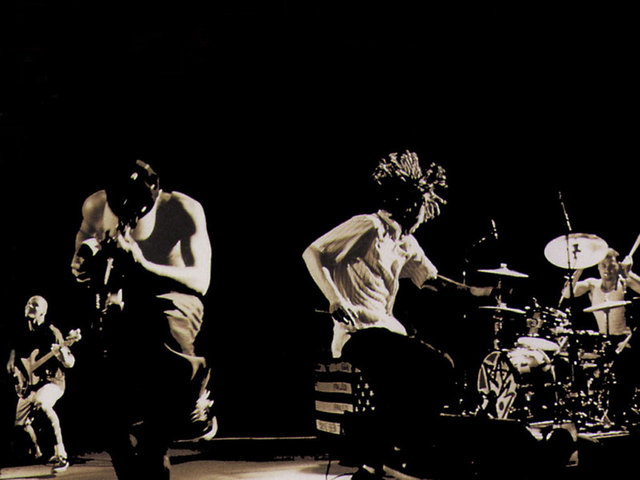
 I blame it on David Lynch.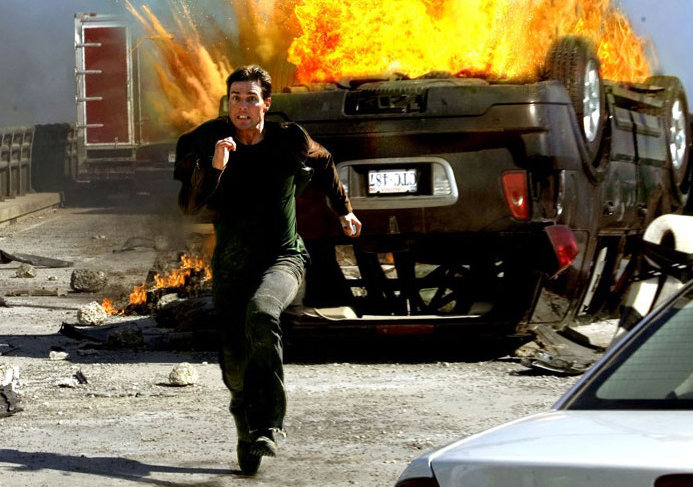


 Press Play Video Blog