AARON ARADILLAS: Taking Aim: Oliver Stone’s JFK @ 20
Released in 1991, JFK is the first official film of the ‘90s. Director Oliver Stone, a dramatist first and foremost, uses the defining moment of the second half of the 20th century – the assassination of President John F. Kennedy – to try to figure out what exactly went so wrong in the wake of America’s triumphant prosperity following World War II. Stone sees the Kennedy assassination as the moment when his generation – the Baby Boomers, the generation to reap the rewards of the Greatest Generation – splintered into those who would forever be suspicious of authority and those who figuratively went to sleep to the constantly changing world around them.
Stone, an only child of privilege, turned his back on his roots by dropping out of Yale to join the Marines and go to the front line of Vietnam. He wanted to find himself. (In his autobiographical film Platoon, Stone’s surrogate, Chris Taylor (Charlie Sheen) says he dropped out of college and volunteered because he didn’t see the point of the poor kids having to go to war. Fellow soldier King (Keith David) laughs and says, “Shit, you gotta be rich in the first place to think like that. Everybody know, the poor are always being fucked over by the rich. Always have, always will.”) He came back from the war a decorated hero but just as confused as when he went, maybe more so. His experiences with combat, drugs and clashes with authority gave Stone the ammo to become one of Hollywood’s top screenwriters, writing such pulp landmarks as Midnight Express and Scarface. He energized the second half of the 1980s with his electrifying directorial efforts Salvador, Platoon, Wall Street and Talk Radio, muckraking docudramas that flirted with danger with their confrontational attitude toward accepted history. Then, with Born on the Fourth of July, Stone began a transition into a moreimpressionistic, near hallucinatory directorial style. By casting Tom Cruise as Ron Kovic, the Vietnam veteran who came home paralyzed and became a raging force in the anti-war movement, Stone committed a perverse act of image vandalism. He turned the audience’s relationship with Cruise, the ‘80s poster boy for All-American wholesomeness, on its head. The result was an emotionally sweeping film, a The Best Years of Our Lives for Vietnam that moved from anger to sorrow to cautious optimism. Stone’s follow-up was the rock & roll head trip The Doors, a movie that captured for the first time ever the enormous ego and narcissism that was a major part of the hippie dream.
JFK represents the culmination of Stone’s work up to that point, the curtain raiser for his extraordinary ‘90s run of movies that forced us to rethink our collective history and consider the history we were making. Part ‘70s-style political thriller, part Frank Capra dream, part mix-media collage of fact and speculation, JFK recreated the feeling of disorientation that swept across America beginning on November 22nd, 1963. The movie may have been set in the ‘60s, but its sensibility was present-day 1991. Stone uses the story of New Orleans District Attorney Jim Garrison – a flamboyant, controversial, some would say reckless man who remains the only man to date to bring someone to trial for the assassination of President Kennedy – as his way into his own investigation of the case. In ‘70s political thrillers like The Conversation and All the President’s Men, both the protagonist and the audience were shocked to discover how corrupt The System was. JFK has no such illusions. It is infused with a nervous energy and constant state of paranoia, the byproduct of the coke-fueled go-go ‘80s. Hip audiences weren’t shocked to discover a cover-up conspiracy was afoot. They wanted the movie to go even deeper into the heart of darkness.
Old guard critics and historians were outraged at the time at what they saw as Stone playing fast and loose with history. They felt Stone had a responsibility to be clear and not muddy history with speculation. But Stone is not a historian; he’s a storyteller. His responsibility is to emotional truth. JFK is a movie told with hindsight. A scene of the Garrison family sitting around the dinner table as Jim talks about his growing concerns about the Warren Commission is like a Norman Rockwell tableau about to crack, an All-American family unit unaware that its days are numbered. The scene is followed by Garrison awakening from a nightmare, an awakening that America as a whole would be forced to go through. (That scene appears below.)
JFK’s groundbreaking free-form editing style and use of several kinds of film stocks upset traditionalists who felt fact-based docudramas should have clean narratives, as so not to confuse the viewer. But Stone and editors Joe Hutshing and Pietro Scalia knew audiences were ready and capable of processing several pieces of information at once. We had been perfecting the ability to filter fact from fiction, speculation from theory. In a sequence where Garrison walks two of his assistants through his discovery of a secret intelligence community smack dab in the middle of New Orleans, where Lee Harvey Oswald spent his free time, we are shown Stone’s methodology. We see key characters like Oswald (Gary Oldman) or Guy Bannister (Ed Asner) emerge from building doorways as soon as Garrison says their names, as if entering from off-stage and being presented to the audience for consideration. When Garrison recounts documented events the film switches to handheld black and white photography. We take in the information on multiple levels at once and without any difficulty. As Garrison pieces things together, so do we. We begin to put the pieces together, deciding for ourselves what is important and what isn’t. (That scene also appears below.)
The film’s most incendiary instance of speculative imagery occurs when Garrison and his staff are discussing the discovery of Oswald’s palm print on the rifle. Garrison is suspicious of this and suggests that someone could’ve easily grabbed the print while Oswald was in the morgue. The movie cuts to a black and white image of someone lifting Oswald’s hand off the gurney and pressing it against the butt of the rifle. Critics criticized Stone for including such an image, fearing audiences would interpret it as found documentary footage. (Did they really think someone would allow himself to be photographed in such an incriminating manner?) Of course Stone’s critics knew the image was staged for dramatic purposes, but were concerned otherswouldn’t be able to tell the difference.
The movie operates on two realities at once. On one level it tells the story of Jim Garrison’s growing obsession with solving a murder. On a basic high-concept level, JFK plays like Anatomy of a Murder crossed with Blow-Up. On another level, the movie is racing ahead of the characters as history marches past their discovery of new evidence. This is dramatized in the sequence where Garrison and his team sit around a restaurant table discussing the travel history of Oswald leading up to the assassination. The sequence is broken up with the doctoring of the famous photograph of Oswald holding the murder weapon in his hands. We see brief shots of the pasting of the image together in a darkroom. The scene climaxes with Garrison telling his team, “We’re through the looking-glass here, people. White is black and black is white. Maybe Oswald is what he said he is – a patsy.” At that instance we see the finished photograph. Stone is saying no matter how much “truth” we discover there are still forces at work.(That complete scene is below.)
The casting of Kevin Costner turned out to be a masterstroke as he uses his Jimmy Stewart/Gary Cooper-like rapport with the audience to bring them along on Stone’s shadow version of American history. Costner’s casting goes a long way to giving credibility to the frankly shaky reputation of the real-life Garrison. When Costner’s Garrison is walking to the courthouse and John Williams’ militaristic score accompanies him, it’s like an update of Mr. Smith Goes to Washington. This time the difference is that the fight might turn out to be a futile one. Costner is contrasted brilliantly with Tommy Lee Jones’ mysterious C.I.A. man Clay Shaw. Jones gives the character an effete style that turns out to be just a mask. When Shaw leaves Garrison’s office he extends his best wishes to everyone in the room. We’d almost believe his sincerity if it wasn’t for the fleeting moment when his eyes narrow and we realize he hasn’t revealed a thing about himself. The rest of the cast is comprised of actors who disappear into their roles as Stone employs an Irwin Allen-like genius for typecasting. He uses John Candy’s trademark jovial persona to shocking effect as a flamboyantly crooked lawyer. (His constant sweating tells us he’s in a constant state of crisis control.) Joe Pesci is all manic energy, chain-smoking and constantly explaining, as disgraced company man David Ferrie. Oldman is an enigma from beginning to end as modern history’s original Travis Bickle. And Kevin Bacon is terrific as a strutting gay hustler with a radical conservative streak. (He’s like Jon Voight’s Joe Buck minus the naiveté.) The ensemble casting of movies like JFK and Nixon is almost a lost art today. (It takes a Scorsese or Soderbergh to bring together a cast of high profile names willing to give themselves over to an envelope-pushing enterprise.) A scene involving Jones, Pesci, Bacon and Oldman is kind of amazing as we see different generations and acting styles meshing in order to further a story.
The highlight of the movie is Garrison’s meeting with Mr. X (Donald Sutherland), a high-ranking military official who tells him he is very close. The nearly 18-minute sequence is a spellbinding piece of filmmaking as fact, speculation, reenactments and documentary footage add up to a vision of the military-political machine operating on its own, as if human intervention is simply an inconvenience. It is the granddaddy of all walk-and-talk sequences with ‘70s Hollywood liberal icon Sutherland giving the film his seal of approval.(That scene scene appear above this graf.)
That sequence is mirrored by Garrison’s closing summation as he lays bare all the evidence he’s amassed as proof of a conspiracy. The centerpiece of his closing argument is the film’s bold use of the Zapruder 8 mm home movie of the assassination. Stone has Garrison replay the movie over and over again until we become convinced we can see exactly what happened. Or do we? In the end, the legacy of Oliver Stone’s JFK is not whether you believe Garrison or some other conspiracy theory or simply believe Oswald acted alone. What Stone dramatized is the moment when America stopped believing its own eyes, when the notion of “fact” would forever be up for debate.
San Antonio-based film critic Aaron Aradillas is a contributor to The House Next Door, a contributor to Moving Image Source, and the host of “Back at Midnight,” an Internet radio program about film and television.
GREY MATTERS: Here are the top 10 beautiful ideas, people and events that defined 2011
This is my theory and I’m sticking to it: if more things were more beautiful, everything else would be way better. Even in this age of fiscal cholera, beauty for the sake of it is it’s own sacred reward.
But as Americans, we’re saddled with the Protestant curse and the attendant pathologies of fetishizing plainness, respecting the mediocre and being in thrall to outright ugliness, whether that manifests in strip malls, lip-warping Restylane or mind-rotting Rush. We could all use a bit of Stendhal syndrome, that most wonderfully strange of
psychosomatic ailments that causes the individual to experience rapid heartbeat, dizziness and even hallucinations when exposed to beautiful things.
And so: a list, where I don’t worry on a genre or platform and instead celebrate ten people, events or ideas whose beauty shook me of the uglies in 2011.
1. Alexander McQueen, "Savage Beauty," The New York Metropolitan Museum of Art, May 4 – August 7
Experiencing "Savage Beauty" was a ravishment and reminder that form is just a means, and that for Alexander McQueen, fashion, film, hologram, robotics and sculpture were all just avenues to transcendence. McQueen was expert in them all, even if he did make his mint in high end couture.
McQueen had the soul of a Romantic and a Gothic, and the sense of humor of a postmodernist who could contain and cross-reference Scorsese, Corman and Kubrick, Scottish nationalism, man versus and fucking machines, angels in water, angels in light, The Birds, and nature triumphant always. McQueen’s runway shows were performance art mixed with Oscar-worthy short films where nature, death and mourning fused.
As you walked the Met’s reverberant, church-like spaces, you encountered Poe in the thousand hand-placed raven feathers of a dress; HAL 9000 reborn in twisting machines that ejaculate clashing colors on a spinning model; the Alien as phallic chrome spine-jewelry; a hologram box of Kate Moss floating in an eternity-loop in what looked like snowy high fashion seaweed. Georges Méliès would have wept.
McQueen was on the verge of creating a new species in style, a hybrid of anime and aquatica glimpsed in Lady Gaga’s Bad Romance video. But after a protracted depression, the designer of the early 21st century took his own life at age 40.
On July 22, 2011, President Obama, Secretary of Defense Leon Panetta, and Admiral Mike Mullen, Chairman of the Joint Chiefs of Staff, officially started the process that would end Don’t Ask, Don’t Tell on September 20, 2011.
It is beautiful beyond words to know that, because of Obama’s kept promise, unknown thousands now live and serve without the virus of shame eating their guts away as a country begins the process of joining the civilized world.
3. Hugo, directed by Martin Scorsese
Good God, what a fourth act Hugo finds the 69-year-old Martin Scorsese in, taking the Stendhal-inducing gorgeousity of Kundun and triple-upping it.
There isn’t an inch that isn’t gorgeously fussed over to beautiful purpose. You could take any frame from the film and have the best artwork in your home. And yet it isn’t simple-minded pictorialism. Every image powers the one coming while advancing the narrative (exactly like a McQueen runway performance, although Scorsese’s an
Armani man.)
Sandy Powell’s wool-heavy designs are almost pornographically gorgeous in a mid-period Gaultier way. If gorgeous imagery mixed with deep-bone-felt humanism were food, you could feed a family of five for a month on a screening of Hugo.
4. Alex Kingston as River Song, Doctor Who
I remember Alex Kingston from ER: sassy, brassy, British – what wasn’t there to love? But, well, it was ER, you know? Limitations were the order of business.
But then came Russell T. Davies and Steven Moffat’s resurrection of Doctor Who, which gave life to Kingston as River Song, a gleefully amoral time traveller who, unfortunately, is travelling in the reverse time direction as the good Doctor she dearly loves.
The result: every time she sees him, he remembers her a little bit less until, ultimately, he will recall her not at all.
As an elegantly painful metaphor for Alzheimer’s in particular and entropy in general, it’s hard to beat. But this is Doctor Who, for fuck’s sake, so there’s also River Song as butt-kicking, quip-popping action hero in the finest of couture. Being in kissing distance of 50 just adds some could-give-a-fuck Helen Mirren to the mix.
5. Timothy Olyphant's shoulders, Justified
It's been a really long time since a star's physiology symbolized his meaning so elegantly, so beautifully. The gold standard of this sort of thing was John Wayne's gait, which in three steps told you all you needed to know about his essence.
On FX’s Justified, Timothy Olyphant's shoulders do a Wayne sort of thing. The beauty in those shoulders is not just their sculptural appeal. It's how Olyphant, playing a modern day sheriff in white trash Kentucky, elegantly cleaves space, shoulders-first. He's carrying on those wide shoulders the weight of an angry man who must corral that rage with a moral code he most certainly did not inherit from the terrible father who betrayed him. When he's with the women he loves, his head sort of bobs down between his shoulders like a boy in trouble – which he is, really.
Along with the sadness of this new, angry, decent lawman, Timothy Olyphant’s shoulders announce a new, softer iteration of the recent masculinity-in-crisis craze (Breaking Bad, Sons of Anarchy, Terriers). “I’m willing,” those shoulders say, “and I want to be very, very reasonable. But I will hurt you if you fuck with me. And it pains me how much I will enjoy hurting you.”
6. Janelle Monáe
McQueen lived long enough to base his last collection around Lady Gaga’s “Bad Romance”. It’s a terrible tease to imagine what he no doubt would have done with the wonder that is Janelle Monáe and any song off her album The ArchAndroid (Suites II and III). They are, after all, drinking of the same wells – Fritz Lang, Hitchcock, Goldfinger, Ziggy Stardust, Philip-K.-Dickian simulacrum erotica – to which Monáe adds her amazing Cubist Afro/deco space-waitress look and her musical splashes of space-age Afro-funk, spazzy semi-metal, big band
played by a few people. There’s nobody on Earth even faintly in her league; the rapture is in listening to her Technicolor dream-trip mind flipping out at warp speed.
7. Lady Gaga, “Judas” music video, 0:44
Look at her face. The secret is she’s just…nice looking, possible looking, and she’s on this great adventure – that’s why they love her. And in this second and a half we see her at the precipice of the true beginning of the unfolding of the legend she co-wrote, programmed, played, sang, engineered. Unprecedented control. And here’s the release of joy. She may never quite have that expression again. It is ecstatic and pure. 8. The ascendancy of e-reader culture
As the uber-cheap Kindles rolled out this November, the elegant beauty and ascension of e-reader culture became undeniable. At a low entry price during the worst economy, a book lover now gets anything instantly, and in so doing, everyone – the reader, the retailer and (God forbid!) the writer – profits.
I like – I need – to get books at slashed prices. I love supporting my friends’ books or small presses, and I love avoiding snide clerks, battered copies, sitting on dirty floors while I try to read sample chapters or discovering that only volume three of a six-volume series is available.
It’s a windfall being able to choose between biographies on Isabella Blow (the visionary who discovered Alexander McQueen) or books on black metal, or finding fantasies like the Hunger Games books, which
really are quite good, dammit. Having access to informed criticism saves more money and time.
The bookstore as community hub, zine and subculture publication distrib is still vital and needed – Baltimore’s Normals is a best-case scenario – but for first run books, e-books are simply, quantitatively better.
9. Black metal invades (finally!)
Black metal was originally defined in the early ‘90s by low-fi misanthropic bursts of fast-picked, super distorted guitars, blast-beat drums and throat-slashed screams about sundry Satanic miseries. It was seriously niche.
But as it cross-pollinated with ambient, new folk and soundtrack music (see Nicolas Winding Refn’s Valhalla Rising), it morphed into something blatantly beautiful. Hopped up on highly processed guitars, echoed drums and washed out keyboards, I imagine the Cocteau Twins if they'd been born on 9/11, which is probably subliminally part of the picture.
Brooklyn's Wolves in the Throne Room suggest deep space, narcosis and sudden metal attacks. Agalloch, a Portland outfit, are more pastoral: they sound like the prettiest trees ever falling into the most lovely of icy rivers. The documentary Until the Light Takes You made black metal’s ascendancy official, but bands like Agalloch, Wolves, Havnatt, Alcest, Nadja and tons more proved the new breed’s sell is based entirely on a savage glacial beauty. You get it where you can. 10. V for Vendetta masks
Released in 2006 at the peak of the new bellicosity, V for Vendetta’s anti-fascist/Christianist allegory was nobody’s idea of a hit or artistic success, but it did have the blunt-tool power of real political class rage you never, ever get in an American-bankrolled film.
That the film’s sardonically anonymous Guy Fawkes masks should become the 99 Percenter’s fashion accessory of choice was a beautiful bit of intuitive mass pop-political alchemy. The mask wouldn’t define the 99% movement, but a crowd without a few Fawkers just doesn’t feel quite right, you know? Talk about revolting into style.
Ian Grey has written, co-written or been a contributor to books on cinema, fine art, fashion, identity politics, music and tragedy. His column "Grey Matters" runs every week at Press Play. To read another piece about Drive, with analysis of common themes and images in all of Refn's films, click here.
There’s one big problem with compiling a list of great spy movies: How exactly do you define a “spy movie”? Do the spies have to be employed by a government agency? Does the action have to be international, or can it be domestic, even local? Do the characters have to engage in deception and/or information-gathering, or can they mainly be assassins, like James Bond or Jason Bourne? Is the “assassin film” its own separate genre? If movie characters have nothing to do with international politics but engage in surveillance and deception and other classic spy activities, can their story be grouped within the “spy movie” category?
James Bond wouldn’t spend five seconds contemplating any of that. He’d be too busy quaffing martinis with a diplomat’s wife and telling a dealer to pass the shoe. He’s represented on this list of great spy movies, along with grittier, more mundane depictions of espionage, deceit and international mayhem. I included a couple of TV programs as well as movies, because the genre’s emphasis on character and atmosphere makes it especially well-suited to the small screen.
Since these lists always seem to be compiled according to some mysterious private criteria, I’ll disclose mine upfront: If a film depicts characters navigating the treacherous labyrinth of the military-industrial complex, in their own country or abroad, and engaging in deception or impersonation or codebreaking or defection or assassination or other tried-and-true espionage mainstays, I considered it. But if too many of those aspects were missing, I ruled it out. That’s why you’ll see The Ipcress File but not, say, The Conversation. I’ve also arranged the list in pairs, or double features, because some of the films just seemed to fit together nicely. Let’s argue about it in the Letters section, where I hope you’ll volunteer your own list of great spy films, and your own definition of the category. Be sure to use a pseudonym and file from a secure location. You can’t be too careful.
PICTURES OF LOSS: A SOLDIERS DAUGHTER NEVER CRIES, directed by James Ivory
EDITOR'S NOTE: We are proud to present an unusual and personal series of articles by critic Peter Tonguette about grief and mourning on film, and how certain moviegoing experiences affected him in the aftermath of his father's death. Peter's series includes pieces on Hereafter, The Darjeeling Limited, Running on Empty, Men Don't Leave and A Soldier's Daughter Never Cries. If you would like to read the introduction to the series, Pictures of Loss: Introduction, click here. If you would like to read part 1 of the series, Pictures of Loss: Hereafter, click here. If you would like to read Pictures of Loss: The Darjeeling Limited, click here. If you would like to read Pictures of Loss: Running On Empty, click here.If you would like to read Pictures of Loss: Men Don't Leave, click here. — Matt Zoller Seitz
1.
This last one is going to be hard to explain. Bear with me. It all goes back to a book of short stories by Gordon Lish called What I Know So Far, and the question, “Why do I think so often about What I Know So Far?”
I’ve never read the book. I’ve never read anything else by Lish. Yet it has a hold on my imagination.
Of course, I know why. My father gave me a copy of What I Know So Far for Christmas when I was thirteen. I asked for a lot of books that Christmas, and this was one of the few I received that I hadn’t requested. I wondered then, and now, why he selected Lish’s book, but I never asked him. I thought about it every so often. I suppose I always imagined that the title appealed to him. What I Know So Far. Maybe it is more accurate to say that I imagined the title appealed to him for me. I mean: He would want me to read a book with a title that was about imparting knowledge.
In my youth, I was always asking my father to get books for me for Christmas or my birthday or just on his way home from work any old average Tuesday. But he was always trying to augment my choices with books he felt would mean something to me, even if I did not see it at the time. I remember when I asked him to buy me a copy of David Foster Wallace’s Infinite Jest. When he came home and I looked inside the sack, I saw not only the blue trade paperback, but also a copy of The Catcher in the Rye, which he had purchased along with it. I hadn’t yet read The Catcher in the Rye and he briefly explained that he thought I would like it more than the book I had asked for. After skimming the first three or four pages of Infinite Jest, I could see that he was right.
I wish I had read What I Know So Far. Maybe the title was what turned me off. What did Gordon Lish know that I didn’t? I thought I knew everything, but it wouldn’t be until I was 26—the age I was when my father died—that I realized I knew nothing.
There were many books like What I Know So Far and The Catcher in the Rye, books that
my father liked the idea of my reading. This Side of Paradise comes to mind, as does Slaughterhouse-Five and anything by the Beats.
Given that he was first an officer in the Air Force and later a banker, my father’s love of literature—this kind of literature—might sound unlikely. But I grew up with it. I was probably the only twelve-year-old who, on seeing Annie Hall for the first time, knew who Marshall McLuhan was. It sticks in my mind that I saw Annie Hall primarily because
Marshall McLuhan was in it! I knew who he was because my father referenced him so often when he gave speeches or was interviewed by the press or wrote articles.
The Medium is the Massage is another book he gave me without my asking for it.
2.
If I didn’t explain some of this, I don’t think my enthusiasm for James Ivory’s A Soldier’s Daughter Never Cries would make a lot of sense. You see, my family is nothing like the family in the movie—the expatriate novelist Bill Willis, his freethinking wife Marcella, and their children Channe and Billy—but I see us all over it. And I see my father in Bill Willis, a character that Kaylie Jones (from whose novel the film was adapted) based on James Jones—her father.
The differences between Bill Willis and my father are too obvious to bother listing. After all, my father was a banker, not a novelist, and when I was a teenager, we moved from New Orleans back to Columbus, Ohio, not from Paris back to America, as happens in the movie. Yet Bill Willis is just like my father. Some of it must have to do with the fact they had both been in the military; my father could get firm, like Bill Willis does when, as a young girl, Channe is caught forging his signature. Some of it has to do, too, with the love of books I was talking about. What other banker has even heard of Marshall McLuhan, let alone Gordon Lish?
In one of my favorite scenes in A Soldier’s Daughter Never Cries, the Willises are having dinner together, sipping soup and saying nothing in particular, when Channe asks if her unconventional best friend from school, Francis (Anthony Roth Costanzo), can sleep over. There is some back-and-forth between Channe and Billy about where Francis will sleep, which Bill finds so funny that he cannot contain his laughter. He leans back in the Louis Treize chair he is seated in, which Marcella warns him not to break. As Channe finalizes Francis’s sleeping arrangements—“Can we put the cot close to my bed so that he won’t feel so far away?”—Billy gives his father a wild-eyed look, almost as though he is egging him on. Bill again laughs uproariously, utterly bemused by his children and their little quarrels.
When Billy turns from his father and asks his mother to pass the bread, he has a satisfied grin on his face. He got his father to laugh, yet what they just shared was even more profound.
How many times my father laughed in similar circumstances. This is how he was with us. He often said that the four of us were all we needed, and the film presents an us-against the-world attitude about family that I find very pleasant. In Marcella, a certain militancy comes across when her family is imperiled. Billy was adopted in France, and when there are some rumblings about the adoption’s legality, Marcella says she’ll go straight to the president—not de Gaulle, but Eisenhower. A friend protests, “I thought you were this big principled pacifist.” She replies, “Not when it comes to my kids I’m not.”
Midway through A Soldier’s Daughter Never Cries, Bill decides it is time to leave Paris and return to America. Channe, who has grown up overseas, wonders why. He says that his last checkup wasn’t so good, and that he wants to be home “when—if—something goes wrong.” Channe understands. Before the family departs, there is a shot of Channe walking through one of the narrow corridors of her family’s Paris apartment. It looks empty—we can imagine crates of furniture and boxes of books in adjacent rooms—and Channe asks, to whoever might be listening, “No one’s home?” The film then dissolves to a shot of the same corridor, years earlier, the camera cocked at an angle to indicate the shift in time, as young Billy and young Channe ride their bikes on the well-worn wood floors. I can’t think of two images that express as succinctly what it feels like to say
goodbye to a place you love.
It turns out that Bill Willis had a ghastly premonition: once home, his health goes south. In the hospital, as he dictates the novel he is working on to Channe at the typewriter, he admonishes her that a soldier’s daughter never cries. She violently disagrees: “I’m a writer’s daughter!” That’s how I feel: I’m not an Air Force officer’s son or a banker’s son, but the son of someone who loved the arts and encouraged his son to go into them.
3.
One of my favorite things is Leonard Bernstein’s operetta Candide. After I first listened to it, I found myself returning to the final song “Make Our Garden Grow.” One line above all others bewitched me: “And let us try before we die / To make some sense of life.” I thought of it whenever I faced a big decision or found myself in a jam. I’m reminded of the manic-depressive character in Whit Stillman’s The Last Days of Disco, who says he once took as a mantra the hymn “Dear Lord and Father of Mankind.”
I thought “Make Our Garden Grow” was that for me—a mantra—but of course I hardly needed one. I can’t even remember what big decisions I might have faced or what jams
I might have found myself in. They really were that trivial. Everything is different now, and I’ve started to listen to “Make Our Garden Grow” again.
This is the lesson I have learned: to try to allow art about loss—whether a movie or a novel or an operetta—to enter your life. Don’t do it for art’s sake—do it for your sake. A number of years ago, my friend Bilge Ebiri said something that startled me: “Get ready for the day when movies themselves seem less interesting than they used to. It’ll happen, to some degree or another.” At the time, I dismissed this notion without a second’s thought. Needless to say, it turned out to be so absolutely true. But I would revise Bilge’s words as follows: As life goes on, and we lose people, most movies do become less interesting, but certain ones become more interesting than we could ever have imagined.
4.
After their father dies, Channe asks Billy if he can remember the last thing Daddy said to him. He does. I do, too, and there’s no way I could forget it. The agony of losing him means I have tried to commit so much to memory, and there is so much more I want to
say. I feel like F. Scott Fitzgerald, who wrote, “Listen, little Elia: draw your chair up close to the edge of the precipice and I’ll tell you a story.”
Peter Tonguette is the author of Orson Welles Rememberedand The Films of James Bridges. He is currently writing a critical study of the films of Peter Bogdanovich for the University Press of Kentucky and editing a collection of interviews with Bogdanovich for the University Press of Mississippi. You can visit Peter's website here.
PICTURES OF LOSS: MEN DON’T LEAVE, directed by Paul Brickman
EDITOR'S NOTE: We are proud to present an unusual and personal series of articles by critic Peter Tonguette about grief and mourning on film, and how certain moviegoing experiences affected him in the aftermath of his father's death. Peter's series includes pieces on Hereafter, The Darjeeling Limited, Running on Empty, Men Don't Leave and A Soldier's Daughter Never Cries. If you would like to read the introduction to the series, Pictures of Loss: Introduction, click here. If you would like to read part 1 of the series, Pictures of Loss: Hereafter, click here. If you would like to read Pictures of Loss: The Darjeeling Limited, click here. If you would like to read Pictures of Loss: Running On Empty, click here.If you would like to read Pictures of Loss: A Soldier's Daughter Never Cries, click here.— Matt Zoller Seitz
It would seem that what I want are movies about the art of losing, as Elizabeth Bishop might say. But some of those same movies are also about the art of finding.
Take Steven Spielberg’s Empire of the Sun, a film that made a deep impression on me when I first saw it at the precocious age of eight. While young Jamie Graham is separated from his mother and father in Shanghai during World War II, in the end the family is brought back together. The loss is temporary. The loss is remedied. When he sees his mother for the first time since he let go unthinkingly let go of her hand on the fateful day, he almost can’t believe it. He reaches for her face and hands, as if to verify the miracle that she is back. (For some reason, it always struck me that Jamie’s mother wore red nail polish when they were separated, but she doesn’t when they are reunited—after a war, everyone looks worse for the wear, not just Jamie.)
What I am trying to say is that the reunion stays in the mind far longer than the separation.
That isn’t the case in Paul Brickman’s Men Don’t Leave. In Bishop’s parlance, the actual losing is skipped—we don’t see the accident that kills John Macauley, wife to Beth, father to Chris and Matt—and, of course, there is no finding to be had. Unlike Jamie’s parents, John doesn’t—can’t—return.
Before John dies, Brickman gives Beth (brilliantly played by Jessica Lange) a privileged moment. Standing in the driveway of their beautiful, if unfinished house in suburban Maryland, she looks inside their kitchen window and sees Tom playing with their youngest son Matt (Charlie Korsmo), carrying him around on his shoulders. Beth and John had just had a mild row over something unimportant, a raunchy comedy John had taken Matt and his older brother Chris (Chris O’Donnell) to see, prompting Matt to ask his mother questions like, “What does it mean when a girl says, ‘I’m late’? I don’t get it. ‘I’m late.’” The dialogue by Brickman and co-writer Barbara Benedek (also the author
of the superb Immediate Family, directed by Jonathan Kaplan) is consistently witty.
Tom half-heartedly defends his cinematic taste to Beth: “There were prostitutes in this movie, but it wasn’t about prostitutes. It was about guys and coming of age and growing up…” Just parenthetically, I’ve sometimes thought that the movie Tom is talking about just might beRisky Business, which was written and directed by a fellow named Paul Brickman. At least one other critic, Edward Copeland, spotted the reference, too.
Yet all of this is quickly forgotten as Beth peacefully watches her husband and son through the glass, the wind gently displacing her hair. She seems aware of the terrible fragility of a happy life—and maybe even prepared, in a way, for what is to come.
That’s the thing: anyone could have predicted that their lives would fall apart without John, and that’s exactly what happens. The night of his father’s funeral, Chris sits next to Beth on a sofa and tells it like it is. “No one can run what he does,” he says earnestly. “It’s like he’s in charge of everything. He runs everything. How can you get by without him?”
A friend tells Beth, “Buy yourself something—something really expensive. You’d be surprised.” It isn’t terrible advice, actually, except that it doesn’t apply to Beth’s circumstances. She is bewildered by Tom’s substantial business debts. Who can blame her? As she rightly protests to Chris, “It’s all mine… The car, the truck, the house, the bills, the debt, you and Matt. He left it all to me.” In a moment as misguided as the one in Lost in America when Albert Brooks and Julie Hagerty plot their future and find it consists of a motor home and a nest egg, Beth tells her sons that she thinks they should move so she can get a better job (she has been checking groceries to help with the bills).
She saves what she is careful to call “the best part” for last: “You know where I think we should move? Baltimore.” No one likes the idea, and no one likes the reality any better. The apartment is small. The water is brown. The bikes are stored in the living room,
along with everything else. (“Great box collection,” someone comments.) There are too many locks on the door. And B is as miserable in her new job as in her old one.
Dorothy Parker’s line feels appropriate: “What fresh hell is this?”
I hope native Baltimoreans will forgive me if I can empathize with the Macauleys’ dismay. I never lived in Baltimore, but for about 10 months I lived in a suburb in Montgomery County, Maryland, somewhere not too far from Baltimore. We had been in Ohio for some years when my father was offered a position in Washington, D.C., that took us there, but the minute we crossed the state line I was childishly homesick. I felt the way Matt must when he naively suggests to his mother that maybe she can make so much money at her new job in Baltimore that they can return to their old house.
I was game at first, as Beth is when she talks herself into a job at a gourmet food shop. “I
am interested in food. I love food. I know food,” she says to her disinterested prospective
boss, played with aplomb by Kathy Bates. Yet forced enthusiasm only got me so far. Everything seemed to go wrong in Maryland, even the most basic of things, like trying to see a movie. The first time we went out to do so, we ended up getting lost in the side streets of Georgetown. When I learned that our arrival coincided with that of swarms of cicadas—emerging for the first time in the area in 17 years!—I could only think that it was fitting.
When the running of the Preakness Stakes is shown on TV each spring, my first instinct
is to change the channel when the song “Maryland, My Maryland” is played.
We left Maryland soon enough, but the Macauleys are stuck in Baltimore forever. I don’t mean the city itself. Perhaps they will move. Perhaps things will turn out well enough so that they can get a better apartment or a house like the one they used to have. But they
will always be in Baltimore because Baltimore represents life without their husband and father. Baltimore is what life would have been like for Jamie Graham in Empire of the Sun if his parents hadn’t reappeared.
No other film shows the frustrations and depressions that accompany loss as well as this one. C.S. Lewis famously wrote about “the laziness of grief,” wherein “not only writing but even reading a letter is too much. Even shaving. What does it matter now whether my cheek is rough or smooth?” Somewhere in the middle of Men Don’t Leave, Beth gets fired from her job and, with Chris and Matt drifting away from her, she loses heart. She stays in bed for five days, only rousing herself to prepare a peanut butter sandwich for Matt, served with a glass of water (their supplies of milk and juice have been exhausted).
C.S. Lewis would have loved the scene for its truthfulness. Of course, it is a particularly low point, and Beth does get better—but she and Chris and Matt are still in Baltimore.
Some people have wondered why Paul Brickman has not directed anything since making Men Don’t Leave in 1990. Dave Kehr—one of the few major critics to write appreciatively of the film when it came out—is one of them. “He just got disgusted with the whole system,” Kehr told The Village Voice recently, in response to a question about Brickman. “And there was some expression—I definitely remember some interviews with him saying he just can’t work in this system anymore, it’s just too stifling.” Or maybe after grappling with the enormous themes and tones of Men Don’t Leave, Brickman felt he had said it all.
Peter Tonguette is the author of Orson Welles Rememberedand The Films of James Bridges. He is currently writing a critical study of the films of Peter Bogdanovich for the University Press of Kentucky and editing a collection of interviews with Bogdanovich for the University Press of Mississippi. You can visit Peter's website here.
PICTURES OF LOSS: RUNNING ON EMPTY, directed by Sidney Lumet
EDITOR'S NOTE: We are proud to present an unusual and personal series of articles by critic Peter Tonguette about grief and mourning on film, and how certain moviegoing experiences affected him in the aftermath of his father's death. Peter's series includes pieces on Hereafter, The Darjeeling Limited, Running on Empty, Men Don't Leave and A Soldier's Daughter Never Cries. If you would like to read the introduction to the series, Pictures of Loss: Introduction, click here. If you would like to read part 1 of the series, Pictures of Loss: Hereafter, click here. If you would like to read Pictures of Loss: The Darjeeling Limited, click here. If you would like to read Pictures of Loss: Men Don't Leave, click here. If you would like to read Pictures of Loss: A Soldier's Daughter Never Cries, click here.— Matt Zoller Seitz
If I told you I was writing about movies that have meant something to me after my father died, you probably wouldn’t blink if I said that Hereafter and The Darjeeling Limited were among my choices. You might have even thought of them yourself. But Running on Empty? Don’t humor me—you wouldn’t have thought of it in a million years.
After all, no one dies (on screen) in Running on Empty. The film does not take bereavement as its subject as the other two do. And yet every time I watch it now it reminds me of my father.
It began when Sidney Lumet died in April. What a great, great director he was. When I stopped to consider his career, I thought of his towering legal dramas, like 12 Angry Men and The Verdict, and his brilliant filmed plays, like Long Day’s Journey Into Night and Equus. I thought of the key scenes from Dog Day Afternoon and Network (released just a year apart). I thought of the unique way he shot and framed and edited, which Peter Bogdanovich paid tribute to in his chapter on the director in Who the Devil Made It: “Sidney ‘cuts in the camera.’ Which means he knows before he shoots exactly how each scene or sequence is going to be edited and therefore films only what he needs to accomplish this…”
In 2006, as he was finishing his first feature film in nearly seven years—the unfairly neglected Find Me Guilty—I even had the nerve to call him up out of the blue and ask for an interview. To my astonishment, he answered the phone himself. He begged off my request, saying he was in the midst of mixing Find Me Guilty and that I should arrange an interview with him when the movie came out. He was very nice, though, and when I mentioned that I’d interviewed his friend Peter Bogdanovich rather extensively in the past, I remember him saying, rather amiably, “Peter’s a lovely fellow.”
I never did interview Sidney Lumet, but in many ways he had already answered most of my questions. Despite the great variety of films he directed, his obsessions are obvious. Those who know his terrific book Making Movies will remember the section where he gives us what amount to log lines for a number of his best movies. He asks the question, “What is the movie about?” and then gives us his answers. The striking thing is that a couple of answers are repeated. For example, “the machines are winning” is the stated theme of not just Fail-Safe, but also The Anderson Tapes and Network. Daniel and Running on Empty also share a theme. “Who pays for the passions and commitments of the parents?” Lumet writes. “They do, but so do the children, who never choose those passions and commitments.”
Lumet was not coy about the fact that the concerns of those movies overlapped. “See, I don’t know if I’ve ever said this publicly,” he told Joanna E. Rapf in a 2003 interview, “but I’ve done three movies, Daniel, Running on Empty, and Family Business, that are thematically the same thing—the cost that others pay for one’s passions—and I only recognized this afterwards…. Any deep emotional commitment on the part of the parents is going to cost something… not just to the parents but also almost always to the children.”
It so happens that I loved Running on Empty long before I embraced Lumet’s other movies. Naomi Foner’s screenplay is about a married couple named Arthur and Annie Pope (Judd Hirsch and Christine Lahti). They were radicals in the sixties, since 1971 pursued by the FBI for the bombing of a military research lab, but they have spent the seventies and eighties attempting to raise their children while on the lam. The crushing truth of the movie is that it is impossible to do so.
When Lumet talks about the burden the children bear for their parents’ passions and commitments, I see what he means. But I also see something else. However imperfect the lives of Danny (River Phoenix) and his younger brother Harry (Jonas Abry) are, however unfair their birthright is, with the incessant moving, switching of schools, changing of names, they still have their parents. Early in the film, Danny comments sarcastically, “It’s wonderful having a new name every six month.” But consider the person he’s complaining to: his mother, who loves him, listens to him, cares about him. (Perhaps I am especially attuned to this because Annie is played by Christine Lahti, who just a year before Running on Empty starred as Aunt Sylvie in Bill Forsyth’s Housekeeping, a great film about loss.) It could be worse—it could be so much worse. We need only to look to Daniel—the film Lumet was forever grouping with Running on Empty—to see how much worse. It tells the story of Paul and Rochelle Isaacson (loosely based on Julius and Ethel Rosenberg), and of the two children they leave behind when they are convicted of conspiracy to commit treason during the McCarthy years and executed.
At the conclusion of Running on Empty, as the Popes prepare to flee yet another town to begin again, the father allows Danny, a gifted pianist, to stay behind, to be with his lovely girlfriend (Martha Plimpton), to go to Julliard, where he has given a triumphant audition and where he expects to receive a scholarship. At first glance, it is all terribly hopeful. Danny is losing his parents, but gaining a life. Yet I ask myself now: Will Danny ever think back to his father’s earnest plea, as Danny starts to make noises about leaving home and going to college, “A unit is only as good as its weakest link and we are a unit”? Arthur wants to hang on to Danny not because he is controlling or possessive but because he loves him. Will Danny come to realize that success and happiness just aren’t much good without the most important people in your life to share it with? When Danny graduates from Julliard, will he look out into the crowd of proud parents and wonder where his are? Will he remember who is missing?
“We’ll see you again,” Arthur says to Danny in that last scene. “You can be sure.” But can he really? Danny is a smart kid and he knows his fugitive parents are one false move away from being caught. Even if they live for another fifty years, this moment must feel like a final goodbye to son and father both. As far as I’m concerned, the grief-stricken look on River Phoenix’s face after his parents have driven off, leaving him behind, is no different than if he was standing at their graves. Like the children of Paul and Rochelle Isaacson do at the end of Daniel, after their parents have been killed. As a young adult, daughter Susan (Amanda Plummer) drifts in and out of mental hospitals, but as her brother Daniel (Timothy Hutton) reasonably asks, “What if she’s not ill? What if she’s inconsolable?”
That’s what Danny in Running on Empty looks like: inconsolable.
At this point, you may be asking how I ever managed to twist Running on Empty into a story of loss. In my grief, I am reading something into it that isn’t there. Yet I cannot concede that, even though I recognize no one else sees what I see in the movie. I’m reminded of a powerful passage in Meghan O’Rourke’s The Long Goodbye (which I first read not long after Lumet died) in which she writes about the cold spring that followed her mother’s death: “A bitter rain came down for days on end, as if the gods knew my sorrow.” O’Rourke explains that the literary term for this is “‘pathetic fallacy,’ coined by the art critic John Ruskin to describe the attribution of human emotions to nature and inanimate objects; the harsh, angry moors in Wuthering Heights mirror the characters’ lives.”
When I watch Running on Empty now, it feels like Sidney Lumet “knew my sorrow,” even though he couldn’t have, and like we’re doing that interview after all, even though he can’t.
Peter Tonguette is the author of Orson Welles Rememberedand The Films of James Bridges. He is currently writing a critical study of the films of Peter Bogdanovich for the University Press of Kentucky and editing a collection of interviews with Bogdanovich for the University Press of Mississippi. You can visit Peter's website here.
EDITOR'S NOTE: Matt Zoller Seitz and Ken Cancelosi created Never Before, Never Again: Henson and Oz, a video essay which describes the collaboration between Jim Henson and Frank Oz, to mark the opening of a Jim Henson exhibit at the Museum of the Moving Image in July 2011. Press Play is re-posting that essay in advance of the release of The Muppets. Given the length of their 27-year collaboration and their creative influence on the culture, the essay makes the argument that Henson and Oz should be considered a comedy team on the level of Abbott and Costello and Laurel and Hardy. In addition,we are publishing a conversation between the essay's creators about the challenge of sustaining the Muppets after Jim Henson's untimely death .
Ken: Around 1996 or '97, Frank Oz appeared at the USA Film Festival in Dallas, Texas. He was there to give a comedy master class to young filmmakers, and he appeared at a screening of Muppet Treasure Island. After the movie he engaged the audience in a Q & A. It was interesting, because the first two questions were about the movie we'd just seen, and the next ten were about the fate of the Muppets.
We wanted to know who was going to perform these characters that we loved so much. Practically everyone in the audience was a Muppet fan, and we felt that the characters were in jeopardy because the Henson company and Disney — even in the six or seven years or so since Henson had died — had given the impression that they hadn't settled any of the issues related to how they were going to keep some of these characters alive.
We were all worried about it. The types of questions Oz was getting reflected that.
Matt: Right.
Ken: I finally raised by hand and asked my own question about the fate of the Muppets. Frank Oz answered me in a loud clear voice — after a half-hour of this line of questioning — he said, "You people are the most depressing audience I've ever been in front of."
And, Matt, you could feel the whole audience sort of hold their breath: "Oh my gosh, we pissed off Frank Oz." Well, Oz kind of sensed he'd lost the audience and he backed off a bit. I'm paraphrasing, of course — I can't remember exactly what he said — but it was something like, "What happens when any great artist dies? What happened when Jack Benny died? What happened when Groucho Marx died? We grieved for them. We grieve for Jim (Henson). Then, you look at their body of work and you look at what they have created, and you let it influence you. Once it becomes a part of you, you move on with your life. What choice do you have?"
And then he addressed those issues we were most concerned about — who was going to perform the Muppets. He said, "The Henson company will do the best they can to maintain a certain the integrity of each character, to keep up the quality of those performances. If they can't maintain the quality of the characters they will have to retire them. What choice do they have?" He was really nice about it.
I had no clue that the death of Jim Henson would effect me the degree to which it did. For that audience, his comments sort of had the effect of moving us down the road with regard to this issue.
Matt: To be fair to that audience, there is major difference between the death of, say, Jack Benny, and the death of Jim Henson. It is that the performer is not all there is to the Muppets. The Muppets are a franchise, they're a property, and they have an existence apart from the people who physically operate the Muppets. I think that what Frank Oz was coming up against in that Q&A was the reality of corporate America. These characters were properties, and so for financial reasons they had to continue, just as the Warner Bros cartoon characters had to continue after the death of Mel Blanc. Blanc was the closest thing to a Jim Henson over at Warners, in the sense that he was the creative unifier, the spirit of Warner Bros. cartoons. And, for that matter, it's not unlike what happened after Walt Disney died. After Walt Disney's death, the Disney corporation had to continue making children's entertainment for fiscal reasons. They couldn't just shut down the company. They had to find a way to keep going. Disney was like a David O. Selznick. He was the visionary and the micro-manager, and he was quality control.
Ken: Yeah.
Matt: There are two cameos in The Muppet Movie (1979) tell you everything you need to know about Jim Henson. One is Edgar Bergen's appearance at the county fair — and I believe he died not too soon after that. Right?
Ken: Yes.
Matt: Bergen is obviously so old he can barely even speak, but, it's such an incredibly affectionate close-up of him. That's influence number one. And influence number two is Orson Welles, who gets the last cameo in the film — and it's one of the greatest cameos I've ever seen, because it's like Jim Henson is trying to right the cosmic scales in his fantasy, in a way that never could happen in life. You know, giving Orson Welles, who had to fight like hell throughout most of his career to get anything made, a cameo as the head of a studio — I think that's just fabulous. Ken: [Laughs]
Matt: So in his heart, Jim Henson is Edgar Bergen plus Orson Welles. But, unfortunately, Henson had a studio, or a production company, attached to him. So he dies prematurely, and now suddenly you have the Muppets minus Jim Henson, which is just about as bad as Warner Bros without Mel Blanc or Disney without Disney.
The stuff that was made — I would say all the way up until the viral videos that appeared a couple of years ago — all that stuff didn't have the old flavor that the Muppets had when Henson was alive. They've gotten in touch somewhat with that old spirit, and I guess we'll learn when the new movie comes out whether they can bring it to the big screen again. But Jason Bellamy is right in his video essay when he says the major Muppets characters were kind of downplayed after Henson's death. Kermit wasn't really Kermit in the way that we remembered him.
And yet you've also got Muppets like Pepe the Prawn. Pepe's a fabulous character. I think he's almost as big right now as any of the other Muppet characters — you know, among the younger generation — and that's because he wasn't freighted with all of these expectations, and he wasn't carrying the tragic weight of the Jim Henson's legacy.
Ken: Yeah.
Matt: He could just be a new character.
I kind of get Frank Oz's resentment. I don't think his resentment is against the fans. I think he probably has a financial stake in the Muppets still. So, he can't say to your audience what I bet he really wanted to say, which is they should have packed it in after Henson died.
Ken: So, you think there's corporate pressure at work, not artistic pressure?
Matt: Yeah. I think the problem is that Jim Henson was a performer. He was like an actor, but in addition to that, he was a filmmaker and an impresario and a quality control guy who ran everything. So he was Edgar Bergen and he was Orson Welles, and he was also David O. Selznick. But the heart of what he did was really the performance aspect, and when he died, that was gone and could not be replaced.
I think Henson started to go astray a little bit in the 1980s, quite honestly, with things like — and I know this is blasphemy for some Muppet fans — but things like The Dark Crystal and Labyrinth. Those films are interesting, but they're the Jim Henson equivalent of Woody Allen doing Interiors.
Ken: [Laughs]
Matt: I respect those films for all the imagination involved, but I don't love them in the way that I love The Muppet Show.
Ken: Let's talk directly about why that is. I really do feel that the Muppets were designed to be a satire on the idea of show business. The pressures of show business. The conventions of show business. And when they ceased to be that, that's where the Muppets went wrong. It's a little like casting Eric Cartman as Oliver Twist–
Matt: And having Cartman give a straight performance, yeah. Again, I keep coming back to Warner Brothers. That's one of the things made the Warner Brothers characters so funny. If you watch What's Opera, Doc? the source of humor is very complex, if you think about it. It's not just that Chuck Jones and Mel Blanc and everyone are spoofing Wagner. It's the fact that you are seeing Bugs Bunny and Elmer Fudd perform Wagner with great spirit and great emotion while still retaining their Bugs and Elmer-ness. Daffy Duck playing Robin Hood is still Daffy Duck, and that's what makes it funny. He's not doing an English accent. He just Daffy Duck, but he happens to be wearing a green outfit with those little pointy shoes. Ken: Yes. [Laughs]
Matt: My favorite moment of the post-Henson Muppet film projects is the 2005 TV movie The Muppets' Wizard of Oz, just because it's just so damned weird. To me, the future of the Muppets is in this fantastic moment where Pepe the Prawn, apropos of nothing, turns to the camera and says "Those of you who have Dark Side of the Moon, press play now."
Ken: [Laughs]
Matt: That's the modern equivalent of that great moment on that old Muppet Show where you see Kermit the Frog sitting at his desk backstage, and he's drinking a glass of milk through a straw. The image is surreal, and just as you're thinking "What a surreal image," Kermit pauses, looks up and says something like, "Let's all think about this for a moment." And then he takes another sip.
Ken: One of my favorite moments in The Muppet Show wasn't funny at all. One of the worst shows they created in that series was where they got Sylvester Stallone to be the guest star.
Matt: Somehow I knew you were going to say Stallone!
Ken: It was such a boring, terrible show that Jim Henson as Kermit the Frog could be heard saying as the credits rolled, "You've been a really great laugh track."
Matt: [Laughs]
Ken: It's Jim Henson acknowledging that they know the show is kind of awful. [See below]
Matt: Part of what makes the original 1979 The Muppet Movie so brilliant is that it takes that fourth-wall-breaking self-awareness to the next level. When I saw it recently at that Big Movies for Little Kids screening in Brooklyn, I hadn't seen it all the way through in a number of years, and my appreciation for that film deepened a lot during that viewing. It is a postmodern film.
Ken: It certainly is.
Matt: It's all the level of Looney Tunes Back in Action or Blazing Saddles. It's that kind of a movie. It's a movie that's about the conventions of movies. This is going to sound weird to bring David Mamet into the discussion, but David Mamet wrote this play called Sexual Perversity in Chicago.
Ken: Right. It became the movie About Last Night.
Matt: Right, the studio changed the title to About Last Night, which tells you right away that they didn't get it. I remember reading an interview with Mamet from the '70s or '80s where he said his purpose in writing that play was to completely tear down all the conventions of the love story, and of romance itself, in order to demonstrate why they worked. Well, The Muppet Movie starts with a screening of the film you're about to see, and there's even a point where the film breaks and has to be fixed and the movie you're watching is temporarily interrupted. The Muppet Movie climaxes with that finale on the soundstage, and then ultimately returns to the screening room.
The interesting thing is, though, when you're on that soundstage with the Muppets and they're singing, "Life's like a movie/Write your own ending", you're not actually seeing the scenes that they were supposedly shooting for their little Muppet movie. You're seeing the point of view of the crew that is making the movie. You're seeing the lights, you're seeing the cameras. The song itself is about the act of making art. And then the roof collapses and the rainbow streams through, and it's magical. That's a metaphor for the kind of phenomenon that David Mamet was talking about. You foreground the mechanics and call attention to the conventions, but the rainbow still streams in and makes you feel good.
There's a kind of sorcery to pulling off a movie like that, or a television show like The Muppet Show, a production that wants to have it both ways. And I don't think any of the people in charge of the Muppets who came along after Henson ever quite achieved that. The new viral videos are funny, and in some cases brilliant in their own way. [Click here if you want to see the Muppet's version of Queen's Bohemian Rhapsody.] But then you look at the Henson-era Muppets, and the new stuff seems lacking. The Henson-era Muppets had the conceptual brilliance — it was there in a very casual way, and they weren't making a big deal of it — but they had heart at the same time. That's so hard to do! It's like a magician who sits there and systematically explains to you how he does every magic trick, and yet you still go, "Wow, that was amazing."
Ken: That's precisely it. You could appreciate the Muppets for the characters that they created, but you also respected the craft itself that you were witnessing.
Magic is like that. Most great art is like that, I suppose.
Matt: In a weird way, they fact that you're aware that's it's all an illusion and that you've agreed to believe in it is part of what gives it its power.
Ken: Yes. Avenue Q. You can see the performers on the stage.
Matt: I'm excited to see this new movie, but I'm also extremely skeptical. I hope they get in touch with the old magic. I was somewhat heartened reading interviews with Jason Segel. It turns out that he's not anywhere being cynically fascinated by the Muppets. There is no irony to his appreciation at all, and he obviously a very smart guy. So I'm sure he gets what's buried underneath the surface of these characters.
Ken: Yes.
Matt: I think what the Muppets have needed for decades — and I don't know if Jason Segel is the guy — is some kind of guiding force. Someone who sets the tone for everybody. Since Henson's death, there really hasn't been anybody like that. Brian Henson took control for a while and I thought he did a pretty good job. I interviewed him for the Star-Ledger back in the late '90s, and there was a tragic weight to that guy was very unsettling, a sense that he was almost like a Hamlet figure. He had to come in after the death of his father and take over. There was a sense that he was the prince ascending to the throne and he wasn't psychologically prepared to do it. You see that elsewhere in film history, too. Nobody who ran the Walt Disney company made as strong an impression as Disney, except maybe Michael Eisner, but the tone of the work was very different, and he didn't have as long a run.
Ken: Let's get the video essay that you and I created. We should talk about how it came into existence. We felt the need to acknowledge that fact that Jim Henson and Frank Oz were a comedy team. But no one has ever really marketed them that way. They don't have an agent. And unfortunately, it's too late for them. Someone needed to say they had a unique chemistry that was all their own.
I'm sure everyone in the Henson company knew it. It's taken forever for people to understand the nature of that collaboration. Twenty-seven years of working together — that's longer than many other comedy teams, like Abbott and Costello. Matt: And they're not just doing Kermit and Miss Piggy. They're also doing Animal and Swedish chef. And they're doing all these other combinations of characters. Kermit and Grover. Rowlf and Fozzie Bear. There was a wonderful quote from someone, I wanna say it was Henson: "When Frank Oz does Grover, I think he is a better actor than Lawrence Olivier." Those guys really were actors, performers who could dig deeply into the psychology of their characters. You see the characters thinking. You see the characters struggling with their internal demons. The greatest example of that is Miss Piggy. Miss Piggy is a diva and a star and all that, but they fact of the matter is, she is a terrible actress.
Ken: [Laughs]
Matt: She's awful. She indicates everything. She delivers happy lines happily, sad lines sadly, angry lines angrily, and she takes a big breath before she says something dramatic.
Ken: Her unconvincing diva behavior has always fascinated me, because she exists for the same reason Archie Bunker exists. She's there to satirize that a certain kind of behavior, in this case the behavior you'd associate with big stars.
Matt: I would say that, but I would go a step further and say that the Muppets don't just embody showbiz stereotypes, they show you how people conform to stereotypes without knowing what cliches they are.
I thought about the Muppets what I watched (Woody Allen's) Bullets Over Broadway. You know, that could have been a Muppet movie. Very easily. Diane Wiest's character is basically Miss Piggy. You've got the Jim Broadbent character, who is basically a compulsive eater and he gains five pounds ever time you see him. You know, that's the level that film is pitched at. These are psychologically believable characters, but what makes them so funny is that same thing that makes the Muppets so funny, the fact that they don't know that they're stereotypes.
Ken: Let's talk about Gonzo for a moment. I had to become an adult to truly appreciate that character, to truly understand what Henson was trying to say about performance artists. They're basically freak shows, and we love them for it. Gonzo has a mildew collection. He's a truly adult creation.
Matt: If you actually read about or watch a documentary about Evel Kneivel, he has a kind of a Gonzo-like aspect to his personality. You have to have an upbeat, sunny, "I can do anything!" attitude in order to drive a motorcycle off of a cliff with a parachute on your back. Gonzo really captures that. I also love Gonzo because he is a very well-adjusted guy, and he handles adversity better than any of the other Muppets — including Kermit. You never see Gonzo going off into a funk. Occasionally, Kermit will just decide that he's had enough, and he'll go off by himself and go pout somewhere or something. Of course he always comes back. He's essentially a melancholy personality, like Charlie Brown.
Ken: Yes, that's true. What about Rowlf the Dog?
Matt: I can't think about Rowlf without thinking of my Dad — who is a jazz pianist.
Ken: They seem to have imbued each one of these characters with a heightened sense of realism. When Rowlf plays the piano, he does it with the same nonchalant effortlessness of a real piano player.
Matt: Occasionally you'll hear him make these little involuntary noises!
Ken: That's what real pianists do.
Matt: Those are the moments where you can see that Rowlf kind of surprised himself.
Ken: I've been around a lot of pianists in my life. Most of them look like they are working harder than Rowlf, and they're probably not as good a performer as Rowlf is.
Matt: Subtleties like that are just one small testament to the level of quality control in the Muppet company. From the very beginning, they always insisted that Rowlf's fingering look accurate. They didn't do that thing like when Dooley Wilson is playing the piano in Casablanca and he's just sort of pounding on the keys. With Rowlf, you can see that his fingering is correct. The dog can play.
Ken: In that clip in our video essay, it looks like he's actually playing "Claire de Lune."
Matt: Yeah!
Ken: That's just amazing to me.
Matt It seems a strange word to apply, "realism." But there is a level of realism to the Muppets. On one hand you've got this extremely self conscious post modern quality to everything the Muppets are associated with, and at the same time, there's this parallel sense of physical realism. The vaudeville house where The Muppet Show is performed feels like a real place. I feel as though I could draw a floorplan.
Ken: I can think of another example of what you are talking about, the realism existing on the same plane as the postmodernism. The perfect example of that is Kermit on the bicycle in The Muppet Movie. He looks like he's actually riding a bicycle. Yet there's something post-modern about the very idea of a Muppet riding a bicycle.
Matt: There's a moment in Jason's video essay that is almost kind of an inverse of the bicycle scene in The Muppet Movie. It's the bit where Kermit says, "A lot of you have written in to me asking, 'Can the frog tap dance'? Well, the answer is yes." And then he proceeds to do a dance number, but you never see his feet. The number reaches a dizzying conceptual peak when they cut to a prismatic, fly's eye view, and you see like 25 little images of Kermit dancing the "Happy Feet" number, and you don't see his feet there either!
Ken: Yeah. I remember that.
Matt: There's is not even a cut away to a close-up up of his feet, yet you hear this incredibly vigorous tapping, and the crowd is going crazy because presumably the frog is such a great dancer.
Ken: Would you say Jim Henson's crowning achievement is The Muppet Show?
Matt: I think The Muppet Show and the first movie. I think as a producer as a writer as an impresario, those are his peaks. His peaks as a performer are too numerous to mention.
Ken: Yeah.
Matt: You can say that about all the Muppet performers, really. One of the greatest Muppet sketches I've ever seen is the one with Cookie Monster and the computer, which is like from the early 60s. I mean that is perfection. It's one of the most perfect comedy sketches ever — the way it builds, and that fantastic twist at the end. But, the genius of the performers evident in all sorts of places. There are some Muppet sketches on Saturday Night Live where you can see it. And you can see it in Jim Henson's The Storyteller, which I really think is due for a major re-appreciation. You admire the design of the characters and the sets, and perhaps the lighting and camerawork, but at its core, the Muppets is a performer-driven phenomenon. The troupe during the Henson years was as like-minded and cohesive as the troupe that Robert Altman assembled in the '70s, and that carried him from M.A.S.H. all the way through Popeye — a period where he was using a lot of the same people over and over, both in front of the camera and behind it. In fact, I'm a little surprised that Robert Altman and the Muppets never teamed up. Doesn't it seem like it would have been a natural thing?
Ken: [Laughs] Yes, it does.
Matt: Can't you just imagine McCabe and Mrs. Miller with Miss Piggy and Kermit, with Robert Altman directing. It's widescreen with a lot of slow zooms, and you hear all this overlapping Muppet dialogue. There's Miss Piggy lying there with the opium pipe in her hand, and Kermit in his McCabe outfit trudging through the snow with Leonard Cohen playing. I can dream, can't I?
Ken: How does a character become beloved? How do they enter the culture and stay there from one generation to the next? What is it about the Muppets that will endure? Do you think they will endure?
Matt: I think the Muppets will endure, and have endured. People still watch the original Muppet show and the original Muppet movies. I consider the first three Muppet movie to be the true Muppet movies. Not to get all fanboyish on you, but the ones that came after that are increasingly problematic, even through they have their nice points.
Ken: Yeah, Muppets in Space isn't bad.
Matt: But to go back to that original question that you asked, "What is it that makes a character beloved and make them enter the pop culture consciousness," I think it's really simple. I think the character has to be psychologically rich enough and vivid enough that you feel as if you know them as well as you know a friend or somebody in your family, and they've been around long enough that you get used to them. You kind of give them a spot in your imagination, next to real people that you actually know. Once that happens, then they're in.
It helps tremendously if the artists are able to create a character who's basically a new archetype, or stereotype, somebody who's shorthand for a type of personality that we've all known in real life but that we never saw represented onscreen before, in quite that way. Archie Bunker was that kind of character. Mary Richards on The Mary Tyler Moore show as was that kind of character, and Ralph Kramden. Woody Allen created a new type in his standup, then he built movies around it.
Ken: He did.
Matt: There was nobody ever like Woody Allen. That basic Woody allen persona, that hyper-verbal, intellectual, but extremely neurotic, physically cowardly man, was something new. He was like Bob Hope, but Jewish and with glasses, and encrusted with a kind of Freudian self-awareness that Bob Hope never had.
Ken: Yes.
Matt: It's really rare that you see the creation of a new type. The Muppets did that. Kermit is a new type. Fozzie is a new type. There are a lot of them. And just as performers who came after Woody Allen broke off bits and pieces of that original person and did their own thing with it, pop culture after the Muppets was inspired by, or took things from, the Muppets, and the Muppet characters. I always felt that Judd Hirsch on Taxi was basically kind of like a Kermit type. I think a lot of sitcoms owe a lot to the Muppets in the way they will have this well-adjusted central character who's kind of a calm eye at the center of the storm. Any kind of high-strung pretentious diva character is inevitably going to turn into Miss Piggy. Any sad sack guy who'll do anything to get a laugh is inevitably going to turn into Fozzie bear. Do you remember Neil on Freak and Geeks?
Ken: Of course. Great show.
Matt: I think he's basically Fozzie.
Ken: [Laughs] You're right Matt: When Peter Jackson did Meet the Feebles, one of the more fascinating things about that was that, as the film went on, it became simultaneously a parody of a Muppet movie and a Muppet movie. The movie is NC-17 and its certainly not for children. Ultimately, though, it's strangely like a Muppet movie. The hero in that is a combination of Kermit the Frog and Scooter. You have a hippo character who is basically Ms. Piggy, and the filmmakers aren't trying terribly hard to disguise that. And you find yourself rooting for the hero to save the day just as you'd root for Kermit to save the day in an actual Muppet film. The innocent purity of the Muppets ultimately proves stronger than the corrosive satire and parody that Jackson is attempting. Jackson gives in, and he gives in willingly, with pleasure.
And here we're going back to that David Mamet Sexual Perversity in Chicago comparison. In Meet the Feebles, Peter Jackson sets out to critique, undermine, examine, and perhaps even pulverize all of the cliches and conventions of the Muppets, and what does he end up doing? He ends up using them.
Ken: Yes. If you capture people's imaginations, people will think they know those characters.
Matt: I kind of wish someone would come along and just do a new troupe of Muppet characters with their own personalities.
Ken: Thank you!
Matt: There is part of me that thinks when Henson died, the Muppets died. There is almost a zombie-like quality to it — as much as I love them. Why are they still walking around?
Ken: I'm going to go out on a limb and say I think the Muppets we know — Fozzie, Kermit, Miss Piggy — I'm going to say that their years are numbered. I mean a decade or so down the road; it's going to be very difficult to maintain the quality of the performances. When I say their days are numbered, I don't mean in the sense of some vaudeville act from the 1920s that you've never heard of. I think people will always watch the Muppets. They're so clever and funny. People will always relate to those characters. But they'll relate mainly to the characters that were created in the 1970s. The original chemistry between those two guys, Jim Henson and Frank Oz, has long since gone. There's no way to re-create it.
Matt: Well, when you watch Warner bros. cartoons, do you watch the ones from the 70s?
Ken: No. Matt: No, you don't, despite the fact that Mel Blanc was still involved at that point. The heyday of Warner bros cartoons was roughly the 1930s through maybe the early '60s, and that's being generous. After that it becomes a case of diminishing returns. I think they got a new lease on life in that Joe Dante film from a few years ago, but only because that wasn't just a pure Warner Brothers cartoon. It was a post-modern exercise that was as much about being a Warner brothers fan as it was about the characters themselves.
Ken: Yes. The only way the Muppets can continue to stay in the culture is to create a new set of characters — characters that reflect the sensibility of whatever era they happen to be in.
Matt: Yeah, when I want to experience the Muppets, I pop in The Muppet Movie or watch the DVDs of the original TV series. That's when the Muppets were at their peak. And the people who make the Muppets shouldn't feel embarrassed by that.
Ken: Nope. To endure that long is really something. And that takes us back to what Frank Oz said — that when someone dies, you let their body of work influence your work, and you create something new. You create something beautiful from it.
Maybe that's the lesson from the career of Jim Henson for me — this idea that he made it OK to be creative, to be as nutty and as clever as you can possibly be. He freed everybody's imagination. That's really an amazing legacy.
Matt: Yeah, it is. Think about how many kids were inspired to put on a show because of the Muppets, in the way that earlier generations were inspired by The Little Rascals. It is an amazing thing.
Henson's always been a hero to me. It's not just the fertility of his imagination and the sheer breath of his accomplishments that I admire. It's also the warm and generous spirit that he brought to everything he did.
Ken: Yep.
Matt: If they really want to resuscitate the Muppets, that's what they need to go look for. It would be nice if Jason Segel was the guy. But if it turns out that he's not, then maybe there's somebody else out there. And if there isn't, it just means that what we already suspected is true: Jim Henson was one of a kind.
Ken: We'd like it to not be true because we love the characters. But you may be right.
A critic, journalist and filmmaker, Matt Zoller Seitz is the staff TV columnist for Salon.com. Ken Cancelosi is a writer and photographer living in Dallas, Texas.
Martin Scorsese’s Cape Fear is first and foremost a work-for-hire directing job; this doesn’t make it a lesser film, simply a movie he didn’t attach himself to from the beginning. Released 20 years ago this month, Cape Fear was the bookend to that other thriller released earlier in the year, Jonathan Demme’s The Silence of the Lambs. Yes, 1991 saw America’s top two filmmakers try their hands at psychological thrillers – adult horror stories, really – and the results were movies that wiped away the last remaining residue of ‘80s exploitation – mechanized shocks designed to elicit robotic responses. With Lambs, Demme, who had up to that point made a name for himself as the most humane of American directors, used his training from working for Roger Corman to execute an unrelenting serial-killer thriller. What made the movie special was Demme’s refusal to sacrifice humanity for easy scares. He turned the platonic doctor-patient relationship between Dr. Hannibal Lecter and F.B.I. trainee Clarice Starling into one of movie history’s unlikeliest love stories. Even when dealing with monsters like Hannibal the Cannibal or Buffalo Bill, Demme was incapable of seeing then as just monsters. He had to locate their humanity. With Cape Fear, Scorsese left behind his comfort zone of big-city streets to tell an intimate story of a seemingly normal family imploding. His ongoing exploration of sin and guilt – whether it is ever too late for a man who has done wrong to be saved – courses through every frame of Cape Fear. Both films were big hits, but while Lambs became a zeitgeist movie complete with a character cementing a permanent place in our collective imagination, Cape Fear might be, in hindsight, the more disturbing of the two. For some critics, Cape Fear was seen as a placeholder, an attempt by Scorsese to earn some financial security so he could make his more “personal” stories. (The film was produced by Steven Spielberg’s Amblin Entertainment, with Spielberg wanting to produce his friend’s most financially successful film. Cape Fear remained Scorsese’s top grosser until Gangs of New York.) Like The King of Comedy in 1983, Cape Fear was the follow-up to an artistic triumph for Scorsese. King came after Raging Bull; Cape Fear came after GoodFellas. It may be hard to believe, but even as critically acclaimed as GoodFellas was, it was still an underrated movie, and its decent box office showing gives little indication of the film’s current standing in the culture. (It would take Tarantino’s mix of violence and humor – and shock – for audiences to go back and re-evaluate the genius of GoodFellas.) Cape Fear was not Scorsese’s first instance as a work-for-hire director. Ellen Burstyn had picked him to direct her starring vehicle Alice Doesn’t Live Here Anymore. Of all the ‘70s feminist pictures, Alice remains the best precisely because it dares to suggest that the Burstyn character isn’t interested in a man to complete her. Scorsese also brought a sense of dangerous unpredictability, especially in the scenes with Harvey Keitel. In 1986 he directed The Color of Money, a hard-boiled character piece that checked in on “Fast” Eddie Felson from The Hustler. Yes, even Scorsese was seduced into making that go-to staple of the 1980s: a sequel. The movie allowed Scorsese to play with music cues, montages and the expectations of the sports movie formula. It also allowed him to deconstruct the movie star iconography of Paul Newman. (Along with Top Gun, it also helped Tom Cruise form his image as an All-American go-getter.) The Color of Money is a lot of fun, with Cruise and Mary Elizabeth Mastrantonio kicking its energy level into the stratosphere. (You can feel some of the energy leak out of the movie when they are off-screen.) But Scorsese and screenwriter Richard Price blink by not giving the audience what they want; the decision of not having a showdown between Newman and Cruise reeks of “integrity,” as if Scorsese couldn’t bring himself to completely surrender to Hollywood conventions. (Luckily Newman’s delivery of his last line saves the day. It’s a classic star exit.)
But Cape Fear felt different. From the outside it looked like Scorsese might be going on autopilot by signing on to do a remake of a forgotten Gregory Peck star vehicle. The original Cape Fear was a somewhat soft adaptation of a lean piece of pulp by John D. MacDonald about a tight-knit family being terrorized by convicted rapist Max Cady (Robert Mitchum) who holds lawyer Sam Bowden (Peck) responsible for his conviction. Released barely a month after To Kill a Mockingbird, the sight of Peck as an upstanding family man and lawyer who’ll do anything to protect his family was already starting to define him. Director J. Lee Thompson did a solid job of clearly defining good and evil, with Peck as everyone’s protector. The wild card in the movie was Mitchum’s unsettling performance as a man entitled to seek revenge on someone he felt was impossibly upstanding. (With Peck in the role, we have no problem believing he’s flawless.) Mitchum was able to suggest his malevolent nature as almost a virus, capable of infecting even the most honest and innocent of people. Like Norman Bates, Mitchum’s Max Cady was a portent of a shift in society’s identification with weakness.
And it is Mitchum’s performance that’s the jumping-off point for the Scorsese version. (You can imagine a young “Marty” enjoying the squareness of the original, but really lighting up whenever Cady showed up.) The screenplay by Wesley Strick re-works both the book and original film and comes up with its own modern-day moral universe. Sam Bowden (Nick Nolte) is now a former public defender and currently a successful prosecutor in the affluent New South community of New Essex, North Carolina. Sam’s wife Leigh (Jessica Lange) is a graphic designer with just a trace of emotional instability, and their daughter Danni (Juliette Lewis) is your typical 15-year-old who retreats into music and talking on the phone to avoid her parents’ drama. The sly joke of this updated version of the Bowden family is that from the outside they look like your typical, well-adjusted family, and it isn’t until an outside force disturbs their delicate harmony that simmering resentments and old wounds come to the surface and threaten to destroy them. And that’s where Max Cady (Robert De Niro) enters the scene. His rage at Sam is not only palpable, it is justified. It’s revealed that Sam defended Cady for rape and battery 14 years ago, and in the process of preparing a defense, he buried a report that said the girl Cady raped was promiscuous. For Scorsese, Sam’s “moral” choice to protect the community by violating his oath has rendered him a fallen man who has forsaken his rights to protection from the law – and God. Cady, who was illiterate at the time of his conviction, has become a self-taught man and intends for Sam to “learn about loss.”
This would be De Niro’s second-to-last collaboration with Scorsese, which seems appropriate as Cady represents the final evolution of a character they’ve been exploring throughout their work together. From Johnny Boy to Travis Bickle to Jake LaMotta to Rupert Pupkin to now Max Cady, these have been portraits of men who demand to be noticed. (“Listen, you fuckers, you screwheads! Here is a man who would not take it anymore! […] Here is a man who stood up!”) Obscenely pumped-up and covered with tattooed Biblical quotes that make him look like a walking advertisement for the Apocalypse, talking in a soothing Southern drawl that would be charming if didn’t make every word sound dirty, De Niro’s Cady is more than an Avenging Angel. He’s a man who refuses to allow anyone to think they’re better than anyone else, let alone him. (Cady’s class resentment against those who look at him as “white trash” fuels his vanity as he constantly sculpts his body.) While Hannibal Lecter is locked away in his cell, almost dignified in his choice of victims, Cady is on the loose and capable of lashing out at anyone who dares to think they’re smarter than him. (Chances are they’re not.) It’s a great performance by De Niro, who plays Cady as almost mythic in his power and intelligence, but someone who, in the end, is also one of us.
Scorsese’s trademark hard-charging editing rhythms are not present in Cape Fear. This film is quieter, more patient as it slowly ratchets up the tension. When the movie does indulge in editorial flourishes – the quick montage of Sam locking the doors and closing the windows, or when the family is startled by the sudden ringing of a telephone – they’re like spasms of relief. The way editor Thelma Schoonmaker lays in insert shots of, say, a hand grabbing a gun or the tapping of broken piano key (aided sometimes by a stinger from Elmer Bernstein’s re-working of Bernard Herrmann’s terrifically ominous score) keeps us off balance, as if even inanimate objects are ready to pounce. Insinuation is the name of the game.
Cady starts to stalk the family before they even know someone is watching them. (There’s a nice Scorseseian touch of having Cady light a big cigar and laugh obnoxiously during a movie – the ultimate offense to any movie lover.) Sam’s guilt over not providing the best defense his client is afforded manifests itself whenever Cady is around. (As the movie begins he’s resisting pressure from his boss to manipulate the law in a potentially unethical way in order to procure some hidden money.) The more Cady circles the Bowdens the guiltier Sam looks. When he attempts to pay off Cady, we side with Cady’s disgust at such a pathetic appeal to his intelligence. The way he systematically breaks down Sam’s money offer in terms of daily earnings makes clear his intentions are more sinister. (The way De Niro breaks down the numbers like an accountant is funny in its logic, and serves as an early version of the scene in Casino where he tries to account for Sharon Stone going on a spending spree with her pimp boyfriend.)
At first the Bowden women are excited by this unseen threat lurking about. They see it as a distraction to break up the monotony of summer. The possibility of sex and violence colliding runs throughout Cape Fear, with the erotic charge that can occur when you’re in the proximity of evil permeating the film’s more disturbing sequences. Leigh is turned on by the idea of someone intimidating her husband; intimations of Sam’s past indiscretions allow her to tease and taunt him. (After a bout of ordinary Saturday night sex, Leigh gets up and applies makeup as if preparing for a date.) She quickly gets over her curiosity about Cady after she meets him in the harsh light of reality. Cady, however, is more interested in getting to Sam through the more vulnerable women in his life. He first targets Lori (Illeana Douglas), the co-worker Sam’s been carrying on a more or less innocent flirtation with. The scene where Cady assaults her is the most shocking in the film. The sudden cut from Cady and Lori sitting at a bar to the two of them on her bed never fails to startle audiences, and while the actual violence in the scene is brief, it’s so brutal that audiences always seem to claim they see more than is actually shown. Scorsese knows what he’s implying is far worse than anything he could show. (Compared to the prison escape sequence in Lambs, this scene is almost restrained.) When the actual assault begins, Scorsese cuts to an outside shot where we see Cady’s silhouette through a bedroom window doing unspeakable things. It’s interesting how some audience members and even some critics reacted negatively to Cape Fear’s slow-burn inevitability, as if Scorsese was being penalized for making a thriller that was too effective. He was accused in some quarters of being mean, gleefully rubbing our noses in our willingness to be manipulated. (Hitchcock was accused of the same thing.) I guess it boils down to Cape Fear rooting itself in the real-world fear of the sanctity of the family being violated while The Silence of the Lambs tapped into the more abstract fears of abandonment and a woman’s need to assert herself in a male-dominated world. Whatever the reason, there’s no denying that the psychological violence of Cape Fear trumps the ritualistic violence of Lambs. It stays with you.
The film’s most famous scene is all about psychological terror as Danni, having to take summer classes as punishment for being caught with marijuana, is seduced by Cady, posing as the school’s new drama teacher. The scene, with improvisations enhancing Strick’s finely detailed writing, is not fueled by something as obvious as Danni’s attraction to evil. Instead, Cady shows how disarming he can be. He validates Danni in a way her parents don’t. When she asks him why he hates her dad, he tells her he wants to save him – “I pray for him.” Earlier, we saw how Sam dotes on Danni and is still capable of talking to her. Now, we watch in mounting horror as Cady severs that bond. The scene plays likes a primal version of a father’s dread of when his daughter no longer needs his protection. Nolte’s beautifully understated performance peaks in the scene where he confronts Danni about her encounter with Cady. His look of rage and anguish is heartbreaking as he realizes his daughter in not a little girl anymore.
The final act of the movie consists of two set-pieces. The first is a hide-and-wait trap orchestrated by private investigator Kersek (Joe Don Baker) as a way to set up Cady for breaking into the Bowden house in order to justifiably execute him. Baker is so winning that it’s almost cruel: we know he’s doomed. Scorsese has fun playing with the conventions of the situation, complete with false alarms that lull us into thinking maybe everything will be alright. The big reveal of Cady right before he kills Kersek is a wicked homage to Psycho, and Scorsese ends the sequence with a gruesome bit of slapstick as Sam slips on some blood. It’s precisely at this moment that the family starts to bring itself together. (At one point Leigh wonders, “I’d like to know just how strong we are…or how weak.”) A shot of the Bowdens driving to their houseboat is like a skewered version of a typical American family on vacation. It’s when the Bowdens are on their boat, cut off from the rest or the world, that the movie enters another world. Thinking they have escaped their problems, Cady emerges to force the issue. Scorsese uses the works – matte painting, optical effects, extreme close-ups, a dizzying shot of the camera spinning around as things go topsy-turvy – to place us on that boat in that moment. (Shooting in widescreen for the first time, you feel Scorsese’s glee in being able to use the entire frame.) And at the center is Cady putting Sam “on trial,” with his family as jury, for his crimes, his sins. We realize that Cady wants to destroy Sam and his family in order to save them – and himself. The final shot of Cady (a recall to the opening-credit sequence by Elaine and Saul Bass) shows him at peace with the Bowdens. They are a family again. While the final scene of The Silence of the Lambs leaves you with a laugh, the ending of Cape Fear leaves you spent as you emerge from its spell shaken. Cape Fear was just a warm-up for Scorsese tackling psychological violence. His follow-up would be even more brutal: The Age of Innocence.
San Antonio-based film critic Aaron Aradillas is a contributor to The House Next Door, a contributor to Moving Image Source, and the host of “Back at Midnight,” an Internet radio program about film and television.
EDITOR'S NOTE: We are proud to present an unusual and personal series of articles by critic Peter Tonguette about grief and mourning on film, and how certain moviegoing experiences affected him in the aftermath of his father's death. Peter's series includes pieces on Hereafter, The Darjeeling Limited, Running on Empty, Men Don't Leave and A Soldier's Daughter Never Cries. If you would like to read the introduction to the series, Pictures of Loss: Introduction, click here. If you would like to read part 1 of the series, Pictures of Loss: Hereafter, click here. If you would like to read Pictures of Loss: Running On Empty, click here.If you would like to read Pictures of Loss: Men Don't Leave, click here. If you would like to read Pictures of Loss: A Soldier's Daughter Never Cries, click here.— Matt Zoller Seitz
About a year-and-a-half after my father died, I was at the Ohio Theatre (a former Loew’s movie palace in Columbus, Ohio) waiting for a screening of To Kill a Mockingbird to begin when I mindlessly reached for my inside jacket pocket. I seldom wear the navy blue blazer I had on, and I suppose I was curious to see what old to-do list or movie program I might find stuffed in it. What I found instead was some unused Kleenex tissue, neatly folded in the shape of a square. “What was that doing there?” I thought at first.
Then I remembered one of the last times I had worn this jacket. When my father was buried at Dayton National Cemetery (he was an officer in the Air Force before going into banking), I tried to go prepared. I wanted to absorb what was said at the service. I wanted to take in the physical surroundings where my father would be laid to rest, as unimaginable as it is for me to write those words, even now. More than anything, I wanted to anticipate what my own reaction to all of this might be. I did not think I would break down, but I knew enough to know that I could not be sure.
So, in lieu of a handkerchief, I must have placed the folded Kleenex tissue in my inside jacket pocket. I had forgotten all about it until eighteen months later, as To Kill a Mockingbird was about to begin.
When I went to see the movie that ordinary Sunday afternoon in June, it was just another thing to do. I loved Harper Lee’s story and Robert Mulligan’s direction. I wondered what Gregory Peck’s courtroom speeches would sound like in a big theatre. But I was not thinking that I would relive my grief. Then again, I wasn’t expecting to find that Kleenex either.
I realized that day that I would never be able to see an old favorite the same way again. When I revisit certain films now, the magic has dissipated. I’ll always remember how genuinely hilarious I thought Bringing Up Baby was when I saw it for the first time at age sixteen. My reaction was not unlike Peter Bogdanovich’s during his first viewing: “I screamed with laughter, but also with amazement: they had done this!” When I saw the movie again this summer—this second summer without my father—I admired it as much as ever, but something was missing. Missing in me. Bringing Up Baby should be laughed at, not “admired.”
When I decided to have a look at Wes Anderson’s films for the first time since my father’s death, I wasn’t sure what to expect. In my mind’s eye, I pictured nothing but the joyous derring-do of Anderson’s protagonists, like Max Fischer leaving a case of bees in Herman Blume’s hotel room or Raleigh St. Clair listening to a private investigator’s report on his wife Margot Tenenbaum’s extramarital activities. As far as I was concerned, these movies represented the same thing Bringing Up Baby did: a happier time, now lost.
The movies, however, told a different story. A decade ago, in his seminal Film Comment essay on Anderson, Kent Jones identified Max Fischer’s “profound anger and sadness over his mother’s death” as the source of the character’s iconoclastic behavior. In his films since Rushmore, Anderson has become even more preoccupied with mortality. It seems to have been his raison d’être in making The Royal Tenenbaums: “I was trying to make a movie in which there was the possibility that people could die,” he told Film Comment’s Gavin Smith. In that film, of course, the eponymous patriarch does die, and it is the death of, respectively, a beloved friend and a beloved father in The Life Aquatic with Steve Zissou and The Darjeeling Limited that inspire the quests that occupy the main characters of those wonderful movies.
Until The Darjeeling Limited, I think much of this was lost on me. When Max Fischer sat beside his mother’s grave in a smoky cemetery, I know I liked the shot (which, the director says, was influenced by the great final shot of Peter Bogdanovich’s Daisy Miller), but I don’t remember connecting with the emotion. As for the funeral that concludes The Royal Tenenbaums, I think I saw it mostly in dramatic terms—a satisfying grace note to end with. I certainly wasn’t thinking about my own father.
But by the time The Darjeeling Limited came out, I was older. So was my father. The three brothers in the film—Peter (Adrien Brody), Francis (Owen Wilson), and Jack (Jason Schwartzman)—seemed roughly my age. And their father (who has recently died as the film opens) seemed roughly my father’s age.
The movie struck a chord.
In a dozen superficial ways, The Darjeeling Limited got under my skin as no other Anderson film had before. I related most of all to the middle brother, Peter. Let’s start with his first name. For as long as I could remember, my parents had instilled in me a sense of pride in my given name. They liked it and so did I. Growing up, I never knew another Peter, but that didn’t bother me—to the contrary, it made me feel even more special. Oddly enough, I associate my name with the British movies my mother took me to as a child. She would invariably point out the many Peters among the cast and crewmembers listed in the end credits of films produced in England.
Now, all of these years later, there was a Peter in The Darjeeling Limited. It meant something that he was called that rather than Dignan or Max or Royal or Steve Zissou.
In the film’s opening scene, Peter sees the apparition of his father (Bill Murray), who is racing to catch a train somewhere in India. At the last moment, Peter, who is supposed to be on the same train, runs past him, but not before doing a double take. After Peter hops on board, he pauses to take a long look back at the ghost of the man he’s left behind. He seems disbelieving for a moment—could it be him? He lifts up the pair of sunglasses he’s wearing—which turn out to be his father’s—to seemingly get a better view. But then reality sets in—whoever it is back there, he isn’t going on any train trip—and Peter turns away, his eyes downcast, his lips pursed.
As I’ve said, I saw a great deal of Peter in myself. I felt I shared his thoughtful, serious manner—not for me, the whimsy of Max Fischer. I admired his sense of style, too, especially the trim Louis Vuitton suit he wears throughout the film. I liked the insouciance with which he lit a cigarette, even though I myself didn’t (and don’t) smoke. As one who suffers from migraines, I even related to his headaches, which seemed so much like my own (if his perpetual massaging of his temples was any indication). My point is that I think my identification with Peter allowed me to comprehend his stoic grief in the scene I just described. “That could be me,” I thought to myself. “That is how I might look or act if I experienced a death in the family.” I would have been quick to add, “And thank God I haven’t.”
But now I have.
Watching the film again, I seized on the scenes that dealt directly with the brothers’ grief. As Meghan O’Rourke writes in her memoir The Long Goodbye, “I was hungry for death scenes.” It reminds me of the way Peter, seated for dinner with his brothers on The Darjeeling Limited, keeps returning to the short story Jack has written about the day of their father’s funeral (“He had been killed suddenly, struck by a cab while crossing the street”), in spite of the distractions—Francis’s odd behavior and appearance, the two German ladies seated across from them—that surround him. Later, he excuses himself to re-read a portion of the story in the men’s room on the train. He does so by himself because he finds he is moved to tears and doesn’t want to cry in front of others.
Wes Anderson gets it: We let so few see how we really feel.
I have become convinced that Anderson was wrong when he told Gavin Smith that in his earlier films “one thing you knew is that none of these characters could die.” If that is the case, then why, in Rushmore, do I think of Max’s mother every time Max is on screen? And Edward Appleby every time Miss Cross is on screen?
Of course, this is a recent development for me. When I have watched Rushmore in the past, I always looked forward to one especially lovely moment. It comes during the montage sequence set to Cat Stevens’s “Here Comes My Baby,” after Max has asked Miss Cross for them to remain friends “in a strictly platonic way” and has agreed to her request to “make a go of it and settle down at Grover Cleveland.” It’s a very quick shot: at a game of tennis, Mr. Blume and Miss Cross are resting until Max enters the frame and shoos Mr. Blume back onto the court. So that Max can sit next to Miss Cross. Max flashes her a broad smile, which she sweetly returns.
This moment always reminded me of the terrifically romantic first line of Philip Roth’s Goodbye, Columbus: “The first time I saw Brenda, she asked me to hold her glasses.” Maybe it’s because both scenes are set at country clubs.
In that exchange of looks between Max and Miss Cross, I always thought I was watching a hopelessly smitten kid and a beautiful, carefree young woman. But now I see an orphan—and a widow. I am as surprised by this reaction as I was by what I found when I reached for my inside jacket pocket.
Peter Tonguette is the author of Orson Welles Rememberedand The Films of James Bridges. He is currently writing a critical study of the films of Peter Bogdanovich for the University Press of Kentucky and editing a collection of interviews with Bogdanovich for the University Press of Mississippi. You can visit Peter's website here.
PICTURES OF LOSS: HEREAFTER, directed by Clint Eastwood
EDITOR'S NOTE: We are proud to present an unusual and personal series of articles by critic Peter Tonguette about grief and mourning on film, and how certain moviegoing experiences affected him in the aftermath of his father's death. Peter's series includes pieces on Hereafter, The Darjeeling Limited, Running on Empty, Men Don't Leave and A Soldier's Daughter Never Cries. If you would like to read the introduction to this series, click here. If you would like to read Pictures of Loss: The Darjeeling Limited, click here. If you would like to read Pictures of Loss: Running On Empty, click here.If you would like to read Pictures of Loss: Men Don't Leave, click here. If you would like to read Pictures of Loss: A Soldier's Daughter Never Cries, click here.— — Matt Zoller Seitz
Joan Didion says, “We tell ourselves stories in order to live.” In the months after my father died, the story I told myself was that I could write as I always had, about movies and movie directors, and that this would, in fact, serve as a useful distraction from my grief. I was certain that my professionalism would see me through this terrible time.
Most would call it denial.
Soon enough, I found that I couldn’t sit for most movies, and the last thing I wanted to do was write about them. The only words that mattered now—that my father haddied—were the words I could not bring myself to write. I suspect the same is true in the aftermath of any catastrophic event. To write of anything else feels trivial; what could possibly take precedence over the catastrophe? Yet to write about the catastrophe itself is just too difficult.
I managed to do a few interviews for the book I was finishing and a handful of magazine assignments, which I eagerly accepted before finding that my usual dedication and focus had forsaken me. I tried everything, including reminding myself that my father would want me to proceed apace with my career. In hindsight, my putting the matter that way—which I did on more than one occasion—seems telling. If I was so certain about continuing to write about movies, why would I even raise the possibility of stopping?
Eventually, I was nudged back to work by the prospect of collaborating with a friend on a small editing project. The friendship was more helpful to me than the work, which was not particularly creative, but it was a start. Since I hadn’t worked on a consistent basis in months, I regarded the project as a challenge and was eager to do well. Because I had a
partner in crime, and because she was a friend, I had no choice but to hold up my end of the bargain.
The exercise was a turning point. I began to write again in earnest, but ever so slowly, and only gradually did it dawn on me that I had a book to finish, that there were people in this world who actually wanted me to write for them. But what allowed me to see it through to completion, I realize now, was not the professionalism I imagined I possessed or the pressure of not wanting to disappoint a good friend.
My book was about the late filmmaker James Bridges, whose films were often about the heartache of losing a loved one. This is certainly the theme of his best film, September 30, 1955, which stars Richard Thomas as a college student in Arkansas who is bereft at the death of his idol James Dean. Long before my father’s death, I had made voluminous notes about the film, but as I marshaled them into a manuscript, I found that I was obsessed by it. “Death is never far in Bridges’s films,” I wrote, and it wasn’t far from my mind as I typed those words. At first, I did not know why I dwelt so intensely on September 30, 1955. I’m sure I was convinced I did so because it was “among the very greatest of American films of the 1970s.”
But something else was afoot.
I found myself relating to the grief of the Richard Thomas character in a very personal way. I understood his sorrow—and I bickered with it, too. He lost a movie star, not a parent or a family member or a friend. He should know better, though I myself hadn’t always known better. As a teenager, I was always very affected by the death of a public figure I admired, like Stanley Kubrick. Yet when J.D. Salinger died several weeks after I lost my father, I was very sorry, but not devastated.
I watched and re-watched September 30, 1955, and the words poured forth, but I was still unaware of the reason why. So I didn’t seek out other films that gave me the jolt it had.
Instead, they seemed to find me.
One night, I was working in my room when someone decided to put in a DVD of Clint Eastwood’s Hereafter. I used to love Eastwood’s films. I was the sort of person who considered Bronco Billy to be a masterpiece. I saw Mystic River three times when it was first released in theatres. In my present state, however, keeping up with Eastwood was low on my list of priorities. I’m sure I thought, “Why bother? What difference does it make if it’s any good or not?” But as the film started, I caught myself turning to watch every few minutes. A snippet of dialogue would intrigue me. An overheard moment would pull me in. I glimpsed a scene here, a scene there, and I found it harder and harder to turn away. I soon left my work and moved to a chair closer to the TV. The film did more than command my attention. I was—literally—being drawn in by it.
In Hereafter, Matt Damon plays George Lonegan, a psychic who does not wish do be a psychic. It is one of Damon’s best performances. Even though he declines to help many sad, desperate people who feel they can benefit from his gift, he always retains sympathy for the grief-stricken amongst us, a reflection of Eastwood’s own compassionate perspective.
Has the director ever filmed a moment as heartrending as when a British youngster named Marcus (whose twin brother Jason has died in an accident) looks to his sibling’s empty bed and says, “Goodnight, Jas”?
Obsessed with communicating with his brother, Marcus learns of George and tracks him
down when George serendipitously makes a trip to London. Marcus wants him to do a reading, but the answer is—predictably—no. “I don’t do that anymore,” he insists in a huff. But Marcus will not give up that easily and proceeds to stake himself outside of George’s hotel room all day. George’s basic decency finally gets the better of him, as he invites Marcus inside. He begins by asking Marcus a stream of questions, with Marcus either answering or nodding his head yes to each. “Someone close to you has passed away… A male… He was young when he died… Is this person your brother? Older brother? But not by much, he says. Only by a few minutes… I’m sorry, kid.”
Because we have seen Marcus and Jason’s story unfold, we know that everything George says is true. Because George has only just met Marcus, we also know that his psychic abilities are therefore real.
It turns out that Eastwood’s attitude toward the supernatural is as matter-of-fact as his screen persona. He seems to have followed the suggestion of the poet and novelist Robert Graves, who once wrote that “one should accept ghosts very much as one accepts fire—a more common but equally mysterious phenomenon.” In Hereafter, Eastwood accepts George’s abilities much as Graves accepted ghosts and fire: at face value. For example, when George is pestered into doing a reading by a young woman he has a romanticinterest in (played by Bryce Dallas Howard), he relays a message from her deceased father that is greatly upsetting to her, thus ending their nascent relationship. Why would George do this unless he really was psychic? After all, from his perspective, would it not have made more sense to tell the woman something she wanted to hear?
Rilke wrote the line “Who says that all must vanish?” in a different context, but it is easy to imagine Eastwood and screenwriter Peter Morgan asking it of us, as they confidently but casually assert that loved ones are still here, somehow, even after they seem gone. My favorite moment in Hereafter comes when George tours the London home of Charles Dickens (his favorite author). He pauses to admire the painting “Dickens’s Dream,” which, it is explained by a tour guide, shows a dozing Dickens surrounded by “characters from his novels floating in the air around him.” The description beautifully anticipates the way George says Jason describes the afterlife to him: “The weightlessness. He says that’s cool.”
Not since Evelyn Waugh’s A Handful of Dust has the work of Charles Dickens been referenced to such powerful effect.
Even though Hereafter is about death and near-death, I didn’t find it grim. Just the opposite. I remembered the strange truth of what Stanley Kubrick told Stephen King when he was about to make The Shining into a movie: “Well, the concept of the ghost presupposes life after death. That’s a cheerful concept, isn’t it?” There isn’t a single character in Hereafter who I would call cheerful, yet Marcus walks away from his session with George with the reassurance he has been seeking. “If you’re worried about being on your own, don’t be,” his brother communicates to him, through George. “You’re not. Because he is you and you are him. One cell. One person. Always.”
If we must suspend disbelief to fully share in Marcus’s solace at hearing those words, let us remind ourselves that we are in good company. At the end of his final film, Family Plot, Hitchcock allows a fake psychic (Barbara Harris) to demonstrate authentic telepathic abilities. “Blanche, you did it! You are psychic!” her husband (Bruce Dern) exclaims, as if imitating Hitchcock’s own incredulousness. But it’s true—she is!
Of course I loved Hereafter: here was a film that expressed not only my pain but also to my most basic, private wish, the same wish expressed by the son who loses his father in Paul Brickman’s Men Don’t Leave (discussed later this week): “I want to see him again. One more time.”
Peter Tonguette is the author of Orson Welles Rememberedand The Films of James Bridges. He is currently writing a critical study of the films of Peter Bogdanovich for the University Press of Kentucky and editing a collection of interviews with Bogdanovich for the University Press of Mississippi. You can visit Peter's website here.

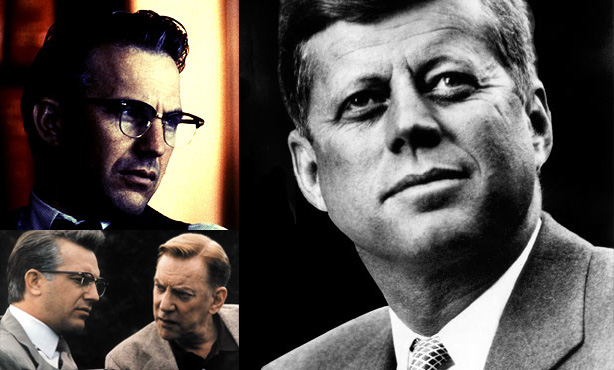

 impressionistic, near hallucinatory directorial style. By casting Tom Cruise as Ron Kovic, the Vietnam veteran who came home paralyzed and became a raging force in the anti-war movement, Stone committed a perverse act of image vandalism. He turned the audience’s relationship with Cruise, the ‘80s poster boy for All-American wholesomeness, on its head. The result was an emotionally sweeping film, a The Best Years of Our Lives for Vietnam that moved from anger to sorrow to cautious optimism. Stone’s follow-up was the rock & roll head trip The Doors, a movie that captured for the first time ever the enormous ego and narcissism that was a major part of the hippie dream.


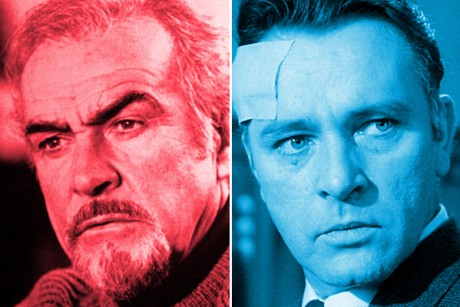

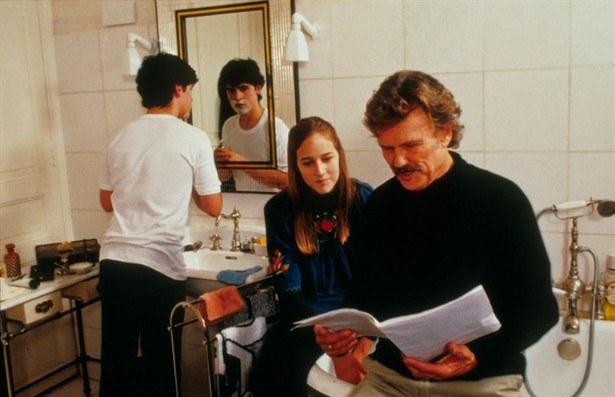


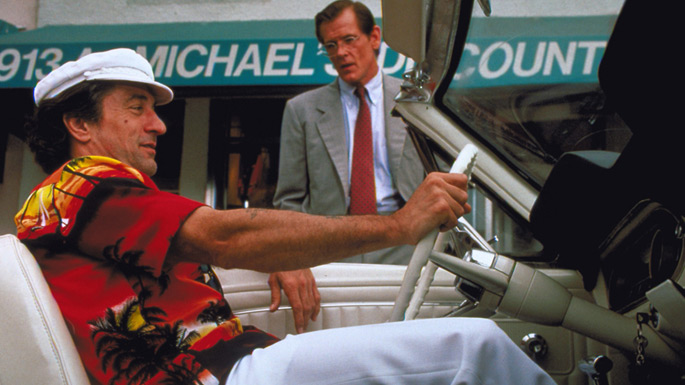
 For some critics, Cape Fear was seen as a placeholder, an attempt by Scorsese to earn some financial security so he could make his more “personal” stories. (The film was produced by Steven Spielberg’s Amblin Entertainment, with Spielberg wanting to produce his friend’s most financially successful film. Cape Fear remained Scorsese’s top grosser until Gangs of New York.) Like The King of Comedy in 1983, Cape Fear was the follow-up to an artistic triumph for Scorsese. King came after Raging Bull; Cape Fear came after
  And that’s where Max Cady (Robert De Niro) enters the scene. His rage at Sam is not only palpable, it is justified. It’s revealed that Sam defended Cady for rape and battery 14 years ago, and in the process of preparing a defense, he buried a report that said the girl Cady raped was promiscuous. For Scorsese, Sam’s “moral” choice to protect the community by violating his oath has rendered him a fallen man who has forsaken his rights to protection from the law – and God. Cady, who was illiterate at the time of his conviction, has become a self-taught man and intends for Sam to “learn about loss.”


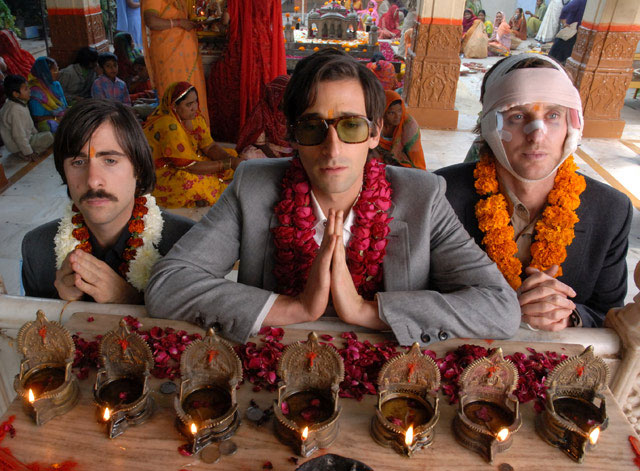

 When my father was buried at Dayton National Cemetery (he was an officer in the Air Force before going into banking), I tried to go prepared. I wanted to absorb what was said at the service. I wanted to take in the physical surroundings where my father would be laid to rest, as unimaginable as it is for me to write those words, even now. More than anything, I wanted to anticipate what my own reaction to all of this might be. I did not think I would break down, but I knew enough to know that I could not be sure.


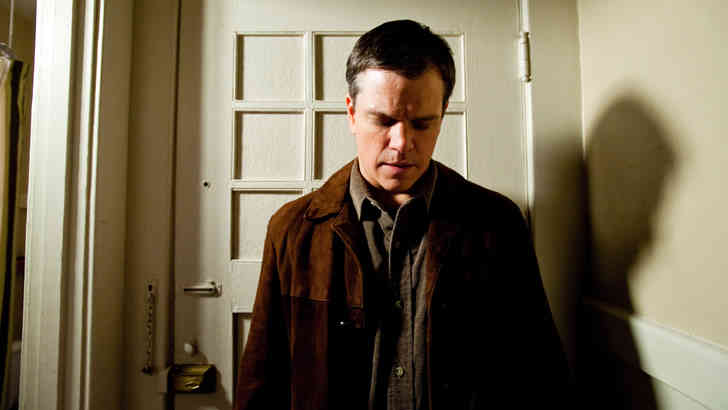


 Press Play Video Blog