SIMON SAYS: Celebrate Chinese New Year with these blockbusters

SIMON SAYS: Celebrate Chinese New Year with these blockbusters

nullThis weekend is Chinese Lunar New Year, a cultural landmark that even some of my Chinese friends needed to be reminded is almost upon us. One way you can tell that the holiday is impending is to look for Chinese films at your local movie theater. In the same way that a crop of big budget Bollywood premieres are perennially released in time for autumn’s Diwali festivities, so too are a number of studio-produced would-be Chinese blockbusters released in time for the new year. But blink and you'll miss ‘em: there are only two Chinese films being released at AMC theater chains.

But hey, that's more than you knew were being released last year, right?

China Lion, a relatively new company dedicated to releasing mostly mainland Chinese (and some Hong Kong) films to American multiplexes, will release All's Well, Ends Well 2012 (unrelated to the Shakespeare play, though it is the seventh film in the romantic comedy series that began in 1992 with a film starring the likes of Stephen Chow and the lamentably deceased Leslie Cheung) next Friday and The Viral Factor this Friday. That may not sound like a three-car pile-up but considering that China Lion has heretofore staggered their releases over a matter of weeks (sometimes even a couple months), it's a sign that the Lunar New Year is here.

More importantly, it's a good time to take stock and see what China Lion has released over the last year. Sadly, while the idea behind the new company is great—introducing both established and new fans of popular Chinese/H.K. films to the latest pop cinema—the results have been mostly underwhelming. Don't expect China Lion to bring you prime-grade films from Wilson Yip, a guy that went from making films with titles like Bio Zombie and Daze Raper to Ip Man and Dragon Tiger Gate. Don't get me wrong, Ip Man and Dragon Tiger Gate are both enjoyable in their own ways, but Magic to Win, Yip's latest and most flavorless film in a while, is totally underwhelming.

If last year's worth of releases is any indication, China Lion films are, at best, immediately likable but largely disposable melodramas. My vote for their most, ahem, outstanding title would be 3D Sex and Zen: Extreme Ecstasy, a funky little softcore comedy that was a hit in Hong Kong last year thanks to its endearingly unsound use of 3D technology.null

Sadly, more often than not, China Lion puts out movies like The Viral Factor, a frenetic but totally shallow and mostly inert action movie starring milquetoast stars Nicolas Tse and Jay Chou. Directed by Dante Lam (Fire of Conscience, Beast Stalker), The Viral Factor is a cop drama high on bathos and lackluster action scenes; Lam and co-writers Candy Leung and Wai Lun Ng haven’t met a cliché that they didn’t like. Two estranged brothers, one an amoral thief (Tse) and one a righteous cop (Chou), reunite in order to fight an evil cartel of corrupt policemen-cum-terrorists. Tse and Chou run around and struggle to remind each other of their similarities.

Between lame plot points, Lam delivers typically frenetic but unpolished action scenes that are distinguished largely by their hints of preposterousness. Early on, Chou’s cop gets shot in the brain, and the bullet is still lodged there throughout the film. Still, he persists in running around and fighting bad guys—with an actual bullet lodged in his brainpan. This is impressive even when you compare it to the scene where Tse stumbles out of a hospital after jumping several stories and landing gracelessly on a car below him. If there were more crazy stuff like this throughout The Viral Factor, it’d be worth the price of admission. Unfortunately, such insanity only serves as garnish for Lam’s otherwise flavorless film.

Thankfully, China Lion hasn’t just released disappointing piffle like The Viral Factor. They’ve also released charming piffle like Love in Space, a romantic comedy about three self-centered sisters that struggle to fall in love, and Aftershock, an epic family drama about two siblings that were separated during the 1976 Tangshan earthquake. null

Aftershock is probably the more durable of the two aforementioned titles. Its pseudo-progressive depiction of Chinese history is fairly compelling, if only for the light touch that director Xiaogang Feng (The Banquet, If You Are the One) brings to his film’s series of minor domestic crises. Love in Space does have one of the most charismatic ensemble casts of any of China Lion’s films to date, but, like The Viral Factor, it’s mostly worthwhile for its quirks. (Love in Space is just as cliché-ridden as The Viral Factor, but it’s mostly amiably cheesy.) Aftershock is at least compelling, if sappy, for its core story, which is taken from a novel by Ling Zhang.

So if you want to celebrate the Lunar New Year with a new Chinese flick, fire up your Netflix account and check out Aftershock, now available on Instant Streaming. It’s not a must-see film, but it is as good of a representative of the China Lion brand as you can currently get. Unless, that is, titillating comedies about libidinal enhancement (i.e., donkey penises) are more your thing, in which case you’ll probably want to check out 3D Sex and Zen: Extreme Ecstasy. Either way, come for the shrill melodrama, stay for the sincere cheese.

Simon Abrams is a New York-based freelance arts critic. His film reviews and features have been featured in the Village Voice< andTime Out Chicago. He currently writes TV criticism for The Onion AV Club and is a contributing writer at the Comic Journal. His writings on film are collected at the blog, The Extended Cut.  Simon reviewed 3D Sex and Zen: Extreme Ecstacy here for Press Play. 

GREY MATTERS: DOCTOR WHO’s sublime study of grief, death and transfiguration continues to captivate its viewers

GREY MATTERS: DOCTOR WHO’s sublime study of grief, death and transfiguration continues to captivate its viewers

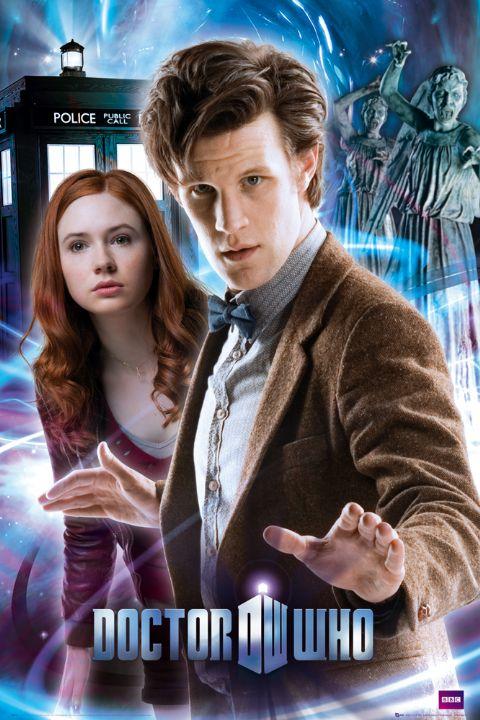
nullOn a recent episode of The Graham Norton Show, the genial goofball host was plainly delighted to have Karen Gillan—known worldwide as Amy Pond, the spirited, ginger-haired companion of The Doctor on Doctor Who—on his guest couch.
 
Of course, Norton couldn’t pass up commenting on a rumor that Amy Pond would meet her maker on a coming Who episode, chiding her, “Everyone knows nobody on Doctor Who dies!” The joke was that everyone on Doctor Who dies all the time and yet comes back to die yet again and again. Because dying is what you do on Who.
 
That said, if the show was just a series of expirations and miracle resurrections, it would quickly become hard to care.
 
But Who is so much more. In the way it ‘does’ mortality, it seems keenly aware of David Cronenberg’s career-long assertion that the SF and horror genres are uniquely able to allow us to rehearse finality, to play act Kübler-Ross, explore entropy, and consider matters of faith and/or the lack of it. This is, after all, a show that not only has an orchestral death theme, but an eerie, reverse-instrumental leading-to-death theme as well. It’s kind of blatant.
 
Here’s the thing: I do not believe that anyone likes anything deeply for innocent reasons, and by innocent I simply mean nobody is gaga over Star Trek, Lisbeth Salender or The Wire just because. There’s always a subconscious shadow text that makes things resonate.
 
It would be absurd not to assume linkage between my deepening attraction to Doctor Who, a time travel show that insists on memory’s primacy, just as I began a new labor in my own memory retrieval process, the result of a bus accident and brain trauma a long time ago.
 
I am even more sensitive to Who’s mortality themes as I write this column. Last week I found out that my mother, who is very old and very frail from several illnesses, will be operated on for cancer.
 
Before I got that news, the show had me thinking about Barbara — Barbara whose death was the first that shredded my world, Barbara of the too-wild black-brown hair, too-white skin, too-loud laugh, the absurd 50s ball gowns, too-everything, dead at 35 of a hidden cancer.
 
When you’re vulnerable the strangest things sneak through the cracks. And so when the Doctor tells one person after another after another that nobody is ever really gone, not really, and when The Doctor himself dies and Amy Pond literally remembers him back to life…well, I could barely swallow.
 
And so as my mother floats between worlds, and Barbara lives in memory, as I slip into a demographic where mortality—if not my own, necessarily, then those around me–the melodies sounded in Doctor Who touch me like no other film or TV. Sometimes the small tears feel almost like healing. Doctor who?
 
“Bowties are cool!”
 
nullThe Doctor himself isn’t actually called ‘Doctor Who’. He’s the last of his race, the Timelords, obliterated after some galactic war.
 
The genius of the Doctor Who conceit—the show runs back to 1963–is that that a Timelord cannot die. Instead, every few years he ‘regenerates’ and is reborn to be played by another actor.
 
Since ’63 ten actors have played him, meaning that, theoretically, Doctor Who could run forever. (I know that the Doctor says that he can only regenerate 13 times. Rule One: The Doctor always lies.) Despite being about 900, he’s a hyperactive, fashionable loon with great hair. Imagine an upbeat Jarvis Crocker and you’re 75% there.
 
The Doctor travels through space and time in what looks like a ‘60’s police phone booth but is actually a time/space travelling machine called a TARDIS.  He’s also pathetically lonely and always finds a companion, usually female, always platonic. (Come on, that thing with Rose was with a human Doctor double, sheesh.)
 
Since Steven Moffat took over the franchise from Who re-animator Russell T. Davis two years ago, the time we’ll be looking at here, the Doctor has shared his adventures with the feckless, insanely brave Rory  and his wife Amy Pond, who is the key to the continued existence of the universes. (Why aim low? the Moffat rule of thumb.)
 
Also in the mix is River Song, vivaciously played by Alex Kingston as a sort of uber-MILF in Prada complete with her own sardonically endgame-based tagline (“Spoilers!”) who may be the Doctor’s wife, mother, or murderer.
 
The Doctor, Amy, Rory, River—the closer they become, the better Moffat can hurt you when he kills them.
 
DYING
 
“If we're going to die, let's die looking like a Peruvian folk band.” – Amy Pond
 
nullHow you die on Doctor Who is romantic in the classical sense because it’s seen as very important. In television/film fan terms, it has additional appeal, as dying is usually a thing done in montage, a montage in waltz time.
 
It can also be, well, funny. There’s death by aquatic-vampire bite, pterodactyl bite, Dalek ray-blast, feral Ood, sentient tumors, infant liquefaction, being turned to dust by alien-possessed senior citizens and to stone by the Weeping Angels.
 
And sometimes death is just meaningless, abrupt and mean. In  “A Good Man Goes to War”, we meet Lorna, a 18-ish girl whose entire life has been defined by a few seconds spent running with the Doctor during an old adventure, a literal extra in his life.
 
She joins a holy war all on the chance that she’ll meet him. After a stupid battle, she’s shot—but she does meet the Doctor.
 
He caresses her forehead and assures her that he does remember her. She smiles, shudders, dies. It’s almost ghoulish it’s so true to life.
 
The same episode offers a waltz-time triptych of montage death so exquisitely morbid I imagine two tremulous thumbs up from the shadow of Alexander McQueen. Against Murray Gold’s typically gorgeous score—rather like Christopher Young’s Hellraiser rhapsody, but with the sinister extracted—we see The Doctor and his beloved cross-cut and succumbing in slo-mo, character-defining ways. I perversely wish it could have gone on a while longer.
 
But Who can also be downright cruel. In a moment that almost shocks with its naked spiritual need, its digital nihilism, “The God Complex” presents us with a Muslim girl trapped in a hallway with a murderous, belief-stealing monster.  The Doctor, trapped in another room watches helplessly on ugly, ‘80s-stle close-circuit TV as she begs him, “Please let me be robbed of my faith in private.” The Doctor, pained into silence, flicks off the video feed. It’s devastating stuff. (Moffat trashes organized religion, but he respects belief. Interestingly, when the Doctor is asked if he is an atheist, he does not answer.)
 
ENTROPY
 
“The Doctor’s death doesn’t frighten me, nor does my own. There’s a far worse day coming for me.” – River
 
nullIf she wasn’t such a fun/hot knock-about, River Song would be unbearably tragic.
 
As at ease leading militarized clerics (“The Time of Angels”) as she is raiding the Third Reich for haute couture (“Let’s Kill Hitler”), River exists in decaying romantic agony, as her ‘time stream’ is running in the opposite direction from that of The Doctor, whom she loves.
 
Every time she sees The Doctor, he remembers her a little less. Eventually, he will forget her entirely.
 
I was on the same page as The Onion’s Keith Phipps when he pointed out that River’s situation “echoes the plight of anyone who’s watched a loved one fade into the shadowlands of dementia. This is not a story that ends well for River and she knows it.”
 
In a show about time and travelling through it, addressing decay is only honest and Who worries on the topic. Every cast member has grown old and fallen apart in multiple episodes to various degrees.
 
The great literary fantasist Neil Gaiman co-wrote an episode called “The Doctor’s Wife” in which the TARDIS itself manifested in human female form just long enough to become frail and die painfully. We’re sad at the Doctor’s loss—and chilled at the reminder that ours isn’t so much longer.
 
DENIAL
 
“Does it ever bother you, Amy, that your life doesn’t make any sense?” – The Doctor
 
nullOne of the ways Who works is by blindsiding you from oblique angles. Witness: “Vincent and the Doctor” is really about Amy and grief and…well, here’s what it seems to be about. The Doctor takes Amy to a museum to see Vincent Van Gogh’s paintings, then to the past to meet Vincent himself, who is miserable and being attacked my an invisible monster. With The Doctor’s help, the monster is slain, Vincent’s taken to 2010 to see that he’s a cherished artist in the hope he won’t kill himself. He still does.
 
But this sad fable is just an armature on which to rest the episode’s real concerns, which have to do with Rory having just died in the episode prior. She cannot recall this due to a crazed religious order’s actions.  Amy’s amnesia is a way for Moffat to metaphorically address Kübler-Ross’s first stage of grief, denial.
 
Amy’s denial is the anxiety engine powering the episode. We know and The Doctor knows Rory’s dead and Amy not remembering is driving us kind of crazy.
 
When she transfers her considerable energies to poor Vincent—the same height and built as Rory—convinced she can stop his depression and suicide, metaphorically like the relative at a wake who’s cooking, pouring drinks and doing everything but admitting somebody is gone now.
 
Anyway, Vincent worries for her.
 
“Amy Pond, I hear the song of your sadness,” he says.
 
She denies it: “I’m fine!”
 
“Then why are you crying?” He asks as tears pour down her cheeks. From nowhere a funeral procession appears, covered in sunflowers. Rory is finally grieved over by proxy—and we’re bowled over and choked up because we were unprepared for this, because it only makes dream sense.
 
Amy is like a child dealing with her first loss. While Vincent’s return to 2010 and discovery of his value is a Spielberg-style spirit lifter, it’s eclipsed by Amy’s rage when she learns of Vincent’s persistent suicide and eclipsed yet again as Amy moves a small step past denial.
 
She sees that her efforts did matter: a dolly-in on a masterpiece reveals Vincent’s signature, “for Amy.” And so grief, a la Who.
 
 
DEALING
 
The Dream Lord: If you die in the dream, you wake up in reality…Ask me what happens if you die in reality.
Rory: What happens?
The Dream Lord: You die, stupid. That's why it's called "reality".
 
nullBut not necessarily. Because this is a time-travel show, it’s possible to be conversant with people earlier in their timelines.
 
But beware of SF show paradoxes. In other words–dead really is dead. Repeatedly, often in interlocking episodes, across time, space, multiverse, people, robots, aliens and elementals covering half a century of TV, films and novelizations,  we see the Kübler-Ross model—denial, anger, bargaining, depression, acceptance—play out in narratives that are so deeply geek that I’d need a some charts, maps, a PowerPoint presentation, and two laser pointers to convey the situations.
 
And anyway, the whole death thing—ultimately, it’s not literally about death. Or rather, it is and it isn’t. Doctor Who will be useless when my mother finally leaves us. And it only offers different ways to think about Barbara. Then again, the later is who lot of something. Doctor Who, I find, doesn’t have fans—it has followers. Some since 1963.
 
Just as The X-Files assured us that The Truth is Out There, Doctor Who assures us, as it obsesses over death, that nobody is forgotten, “not really”.  As The Doctor refuses to deny his faith he becomes an avatar for people with a hungry sort of closeted agnosticism.
 
But sometimes, Moffat lets his cool slip and lets us know what he’s feeling. It’s very qualified, but it’s very sweet: it’s very Doctor Who.
 
It’s Rory, surviving yet another conflagration intact to ask The Doctor, “Why am I here?”
 
“Because you are. The universe is big, it’s vast and complicated and ridiculous and sometimes, very rarely, impossible things happen and we call them miracles.”

Ian Grey has written, co-written or been a contributor to books on cinema, fine art, fashion, identity politics, music and tragedy.

MATT ZOLLER SEITZ: ALCATRAZ should never have been freed

MATT ZOLLER SEITZ: ALCATRAZ should never have been freed

nullWhat if the prisoners of Alcatraz all mysteriously disappeared when the prison closed in 1963 and then started reappearing in the year 2012? And what if they hadn't aged a day and were set on finishing unfinished business, settling old grudges and the like? If that sounds fascinating to you, then you’ll probably give the new J.J. Abrams–produced series Alcatraz (Fox, Mondays 8 p.m.) more of the benefit of the doubt than I did. I found tonight’s two-hour premiere so listless that I’m having a hard time mustering the energy to pan it. And the second episode is only a slight improvement. My fascination with the real prison probably has at least something to do with my resistance. The place has such a rich history — one that has already been alluded to in such films asBirdman of Alcatraz and Escape From Alcatraz — that I’m not yet convinced that it should be reduced to a mere backdrop for sci-fi mythologizing by remnants of the Lost writers room and cast. But we’ll see.

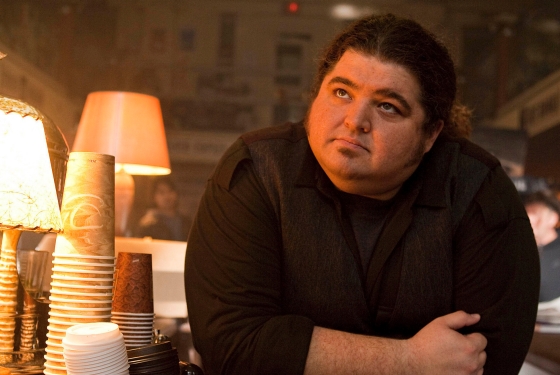
Sarah Jones stars as San Francisco police Detective Rebecca Madsen (Sarah Jones), who finds a fingerprint at a murder scene that belongs to Jack Sylvane (Jeffrey Pierce), an Alcatraz prisoner who died a long time ago. Lost co-star Jorge Garcia plays the buddy she’s teamed up with: Dr. Diego "Doc" Soto, an Alcatraz expert and comic-book aficionado. As she tries to get to the bottom of the mystery, she’s aided by scientist Lucy Banerjee (Parminder Nagra) and by her surrogate uncle Ray (Robert Forster, charming but underused). She's also hindered by a sinister government agent named Emerson Hauser (Sam Neill, doing his Wasp Satan thing), who promises revelations but delivers mostly red herrings and warnings. Sarah’s family has deep roots in Alcatraz — both Ray and her grandfather were guards there. There are hints that the show might meld science fiction and mystery with ghost-story elements; the time-tripping prisoners are trying to avenge past sins or otherwise rebalance the cosmic scales. I’m sure it will take four or five years for us to find out, but only ifAlcatraz can get through this season without driving even its most dogged partisans into a funk, as Fox’s promising but infuriatingly mediocre Terra Novadid last fall.

You can read the rest of Matt's review here at NYMAG.

A critic, journalist and filmmaker, Matt Zoller Seitz is the staff TV columnist for New York Magazine and the founder of Press Play.

Putting pen to paper, or the virtues of analog writing

Writing reviews in pen

null[EDITOR'S NOTE: This is the first installment in "Egg Timer," pieces written in 30 minutes or less.]

Yesterday I got into the office at my new job and realized I had forgotten the power cord to my Apple laptop.  I figured I had three options: (1) take a 30-minute subway ride home to get it; (2) buy another power cord at an Apple store nearby, or (3) walk around my new workplace like a total dork, asking, "Pardon me, do any of you people I don't know yet, and who appear to be working on Windows desktop computers, have an Apple power cord that I can borrow?"

So I decided to go with yet another option: (4) turn off my computer to save power, write the reviews in longhand on a notepad, and turn the computer on long enough to type them and send them to my editor.

I filed two medium-length reviews yesterday, both scrawled on a memo pad in longhand in black pen. Each review took me about two hours to write. I wandered off down a blind alley on the first one and ended up not transcribing one of my paragraphs once I turned on the computer. But I entered the second review almost exactly as I had written it in longhand.

A medium-length review (between 700 and 1500 words) almost always takes me the same amount of time to write, about two hours. It's been that way since I was in my twenties. Of course writing time can vary if the subject is particularly detailed or conceptually difficult, or if I am in an environment not conducive to writing, but for the most part that's a pretty reliable time frame for me.

nullHere's the thing, though: I found that because I was writing with a pen, I spent less time revising I went and instead spent that time thinking about what I wanted to say, because as you all know, if you write continuously for too long, your hand starts to cramp. And I probably spent more time writing, or thinking about what I wanted to write, because I was disconnected from the Internet and could not check Facebook or Twitter or my various email accounts, or my blog, or anything else online.  

When I read the two reviews on the magazine's site, they didn't seem inferior to or stylistically different from my usual. If anything they seemed a bit more relaxed and confident. I credit this to the removal of online distractions and the thinking time that I gained by deciding to compose on paper before turning on the computer to transcribe.

I'm going to try writing my reviews in longhand for a while and see what happens. I haven't written reviews that way in a long time, except for those rare instances where I had a deadline to meet and was trapped on a subway train without a computer and had to get started anyway.

If IndieWire had a longhand option, I would have handwritten this piece. But that's just as well, because my handwriting has so deteriorated from disuse that none of you would have been able to read it.

INTERVIEW: What You Can Get Away With: The Collegial Cutting Room Collaborators of Joe Dante, Part 2

INTERVIEW: What You Can Get Away With: The Collegial Cutting Room Collaborators of Joe Dante, Part 2

null
[EDITOR'S NOTE: A much-shortened version of this article originally appeared in CinemaEditor magazine, Volume 60, Issue 1, First Quarter 2010, under the title, “The Collegial Cutting Room Collaborators of Joe Dante: A Symposium.”]

My conversation with Joe Dante, Tina Hirsch, and Marshall Harvey continues with a discussion of the director’s most famous film—Gremlins—and several later productions with more challenging post-production circumstances.–Peter Tonguette.

Tina Hirsch: Joe was so worried about the gremlins. He just thought the puppets were completely phony and nobody was going to believe them.

Joe Dante: This was a giant Muppet movie. When you make a picture like this, the question always is, “Are people going to buy this?”

nullTH: It comes to the end of shooting and he was supposed to stay away and give me a week to finish cutting all of the material. But he came in the next Monday or Tuesday, soon after wrap, and I said, “Joe, you look awful.” [Laughs.] We hadn’t shot all of the puppet stuff yet. They were going to take a break for a month and figure out what they needed to shoot. He said, “They’re so phony and awful.” I said, “Joe, they’re not. I believe them. I’m the audience! I’ll tell you what: I’m not completely finished, but I have 95% of the picture finished. How about we have a screening?” We go in, we look at the film, and he comes out and says, “Well, it’s not a disaster.”

JD: Our job was to try to take this puppet footage, of which there was an immense amount, and hone it down to the parts that were the most believable. A lot of times, that came down to which reaction shot of the character we used. I’m a firm believer that even a great special effect is going to look lousy if the reaction shot doesn’t convince you. The real trick was to make the audience believe that the characters on screen believe that the puppets are real.

TH: To cap it off, he got hate mail from people about how cruel he was to these gremlins! [Laughs.] It was exactly how I felt. I said, “I buy that they’re real. You know they’re not, but to me they’re real. Look at the dog! The dog believes they’re real!” That was the smartest thing they could have done, to have a dog at the beginning of the movie react to Gizmo.

JD: It was the best dog that I ever worked with. His name was Mushroom. I actually met him years later and he remembered me. This dog was incredibly
expressive and fascinated by the puppets. He was seemed to think they were real. We found that the more we cut to the dog, the more people bought it!
[Laughs.]

Peter Tonguette: I understand that Explorers was a difficult film from a post-production standpoint.

JD: The script wasn’t finished when we started filming and they had a release date in mind. The other problem was that the studio changed hands during the
post-production and the new people said, “This picture is coming out two months too late. We’ve got to have it two months earlier.” So we were basically told to stop work on it at a certain point, just finish it.

Movies get found in the editing room. The movie that you make is not always necessarily the movie that comes out of the editing room. The trick is to perfect
the movie that you have and make it the best version of what you’ve shot, regardless of what the intent may have been. In this case, we were still finding
the movie. The script we shot didn’t have an ending, so we made up a lot of stuff. Here we were, sifting through all this material, trying to focus it, and suddenly it’s, “Okay, all done.” And there it went, out to the public in the rough cut.

nullTH: Had they only given us another two weeks. A scene was written for the end of the picture which would have been with Dick Miller’s character. It would really have summed up the picture. There was no button at the end of the picture. It just kind of dropped off a cliff. It could have been done really cheaply, with one set, so it’s really sad. But the new studio just didn’t care.

JD: The basic conceptual problem with the movie is that it’s the opposite of E.T. (1982). The first half of the movie is Spielbergian and the second half of the movie is the opposite of that. The kids believe that they are going to find the meaning of life and God in space and they find only a reflection of themselves as distorted through pop culture. That didn’t turn out to be that popular! [Laughs.]

PT: Dave Kehr has written appreciatively about that very aspect of Explorers, noting that the film “perfectly mimics the nocturnal, nostalgic tone of Steven Spielberg’s E.T. the Extra-Terrestrial and Close Encounters of the Third Kind until the moment [it] explodes into the unrestrained delirium of a Bob Clampett cartoon.”

JD: I’m a firm believer that a movie can come out a year later or a year earlier and be successful or not depending on what the Zeitgeist is at the moment. But right then, that was not what people wanted to hear! [Laughs.]

PT: Starting with the segments you directed for Amazon Women on the Moon (1987), and then The ‘burbs shortly thereafter, you’ve worked extensively with Marshall Harvey.

nullJD: I had known Marshall since the Roger days and I’d seen a lot of the exploitation pictures he had cut. We just had a rapport. We liked the same movies and we had the same background.

Marshall Harvey: Joe and I have always gotten along together probably because we share a very similar sense of humor.

JD: The 'burbs was a particularly difficult movie because we shot it in sequence and we ad-libbed most of it.

MH: It was shot during the writers’ strike which meant there was no writer on the set. There were problems with the script, particularly in the third act. It was a great premise, which I think gives the movie its longevity. A lot of the funniest lines were ad-libs that the actors came up with. Joe would just let the camera run and let people improvise at the end of takes.

JD: We were trying to hone in on the good the parts and get rid of the bad parts. The rough cut was two-and-a-half hours and completely different than the
released movie. I’d say he really pulled that out and so the further I went on, Marshall was my go-to guy.

MH: He’s always been the best director in the editing room, partially because he started as an editor. He understands editing and he understands film history. If something isn’t working editorially, he understands why.

PT: Does he like to be in the cutting room?

MH: He likes to be there, which is helpful for the editor. Sometimes you want to try something and then you discover you don’t have the right footage to make that kind of cut. I’ve worked with directors who give their notes and go play golf and you realize, “Oh, geez, this idea is not going to work.” Then they come back and go, “What?” Whereas Joe is right there all the time and he can see immediately that it won’t work. “Why don’t we try this instead?”

At the time we were making The ‘burbs, Joe was pooh-poohing it. “This isn’t exactly my magnum opus!” Yet I’m with him at these events and people come up and the first thing out of their mouths is, “Oh, we love The ‘burbs!” There are web sites dedicated to the movie. We can’t quite believe it has such a following and a longevity to it.

nullPT: What were some of the difficulties in making Looney Tunes: Back in Action (2003)?

JD: From about 1997 on, the atmosphere in town about making movies has changed. It has become more corporate, there are more cooks in the kitchen than there have ever been, and the effort to get your idea of what the movie should be through has become like plodding through quicksand.

There were twenty-five writers on Looney Tunes, and that’s too many writers for a movie. It was being changed up until the minute that it was shown. It took a year-and-a-half and it was an extremely depressing experience. It pretty much soured me on the whole studio set-up.

MH: The only reason he took on that project, I think, was to preserve the Looney Tunes heritage. He knew Chuck Jones. If you go to Joe’s house, he has a big framed, signed thing from Chuck Jones. He disliked Space Jam (1996) and thought it was kind of a travesty to those characters.

JD: Chuck had just passed away. I thought, “I owe this to Chuck.” I owe him to not have the characters do hip-hop. They need to be true to themselves. My
mission in the movie, and [animation director] Eric Goldberg’s mission, was to try to make sure that these characters emerged intact.

MH: He sent me the script and I thought, “This is not very good.” But if we could make it like a Bob Hope-Bing Crosby road picture, with Daffy Duck as Bob Hope and Bugs as Bing Crosby, I thought it could be fun. Unfortunately, the studio didn’t quite see it that way and insisted on cutting out all of those kinds of things. The fact that the movie still ends up preserving the Looney Tunes sensibility is kind of a miracle, really.

PT: Coming on the heels of Looney Tunes, it must have been a relief to make your Masters of Horror episodes, Homecoming and The Screwfly Solution.

JD: They were a blessing for all of us. Directors who are used to battling the studio over everything are suddenly given carte blanche to do whatever they
want provided they could do it in ten days and for not much money. There was absolutely no interference on any level on that show. I was very proud and happy about the two episodes I did that I could never have done anywhere else. They were just too weird, dark, and controversial.

MH: Mick Garris, who created the show, is a director himself. The whole idea was that it was a director-oriented television series.

PT: Tell me about your current project, The Hole.

JD: It’s a small picture with a small cast and not a lot of locations. It’s basically a psychological horror film. It’s a little old-fashioned and it’s a movie that’s suitable to take kids to.

nullIt’s a movie that I went in on. I’m sure they were talking to twelve other guys, but for whatever reason, they liked my take. I went back and I said, “I think there’s one thing that would improve this movie. I don’t know if you’ll go for it or not, but I think this would be a good 3-D movie.” After a couple of days thought and some research, they said, “We think you’re right and we’re going to add a couple of bucks to the budget to pay for the 3-D.” That was great for me because I love 3-D.

PT: What are the challenges of editing a 3-D film in this day and age?

MH: It’s a lot easier than you would think. First of all, we don’t cut it in 3-D. It’s really no different for me than doing a regular movie, except you have to keep in mind that, when it is in 3-D, how certain things will be affected. The Hole doesn’t have a lot of gimmicky throwing things at the audience stuff in it. He took more of the Alfred Hitchcock approach to 3-D in how he staged it, giving depth to each shot.

The most difficult thing about it is that, because I wasn’t able to see the dailies in 3-D, a lot of the shots I’ve never seen in 3-D. Some of the visual effects
shots I’ve now seen in 3-D and I’m going, “Wow! That looks a lot different than I thought it would!” [Laughs.] If there’s something in the foreground, you don’t
really pay any attention to it in a normal movie, but when you see it in 3-D, it’s a totally different experience. You’ve locked the picture and now you’re seeing it in 3-D. “That’s really cool! I wish we could have stayed on that shot longer!”

Joe’s great with child actors and all three leads in it are quite good, particularly Nathan Gamble, who played Commissioner Gordon’s son in The Dark Knight
(2008). He plays the younger brother in this and he’s really good. For a guy who doesn’t have kids, Joe really connects to child actors.

nullPT: How does Joe work with young actors?

TH: Well, I think he’s one of them. [Laughs.] It’s very natural for him to be with young actors because he has not lost the six-year-old boy. That person is still inside him. I remember one time going on the set of Explorers and he was with the three guys [Ethan Hawke, River Phoenix, Jason Pressen]. He was telling them to do something and then they did the scene and it didn’t happen. And then he didn’t get it a second time. I thought, “Oh, boy.” But he just said, “Okay, we got it, let’s move on.” He realized, “This is all I’m going to get.” He had a day to make and he had kids he was dealing with. They can only do what they can do. He felt, “This is good enough.” To me, that’s a very sane way to work.

PT: You’ve worked with many of the same editors again and again, notably Marshall, Tina, and Kent Beyda. Do you find that to be beneficial?

JD: I find it beneficial in every category: the composer, the DP, the art director. You do form a cadre of people that you trust and who are good at their jobs and who know you and what your quirks and foibles are. It makes making movies very collegial and a lot more fun.

MH: In my experience, Joe is the most loyal person in the film industry. There aren’t that many people that are so loyal to stick with the same group of people.

PT: Do you think you are a better director for having been an editor?

JD: Unquestionably. I think that anybody that wants to direct, particularly writers, should spend some time in an editing room, whether it’s a film of theirs or someone else’s, or shoot their own picture on video and cut it. There’s a way of thinking that comes with being an editor that is incredibly useful on the set.
People who don’t have that sometimes find themselves getting into trouble. It’s not just a vocabulary thing or a right-to-left thing or script supervisor stuff. It’s a way of thinking about the film and the shots and the way they fit together—what you need and what you don’t need, and what you can get away with if you have to.

Peter Tonguette is the author of Orson Welles Remembered and The Films of James Bridges. He is currently writing a critical study of the films of Peter Bogdanovich for the University Press of Kentucky and editing a collection of interviews with Bogdanovich for the University Press of Mississippi. You can visit Peter's website here.

What You Can Get Away With: The Collegial Cutting Room Collaborators of Joe Dante, Part 1

What You Can Get Away With: The Collegial Cutting Room Collaborators of Joe Dante, Part 1

[EDITOR'S NOTE: A much-shortened version of this article originally appeared in CinemaEditor magazine, Volume 60, Issue 1, First Quarter 2010, under the title, “The Collegial Cutting Room Collaborators of Joe Dante: A Symposium.]

Like so many children of the eighties, I grew up with Joe Dante’s films, and knew even the less heralded ones—like Explorers (1985) or Innerspace (1987)—by heart. When I decided to write about his work, I spent a long time searching for an angle or hook before I asked myself a very simple question: How many directors began their professional careers by editing trailers for Roger Corman?

null

Joe Dante did. If I wanted to tell the story of his films, I had to tell it through the editors he worked with, starting with himself. With Mark Goldblatt, Dante co-edited his first two features—Piranha (1978) and The Howling (1981). He would later work with a succession of devoted editors. Tina Hirsch edited Dante’s biggest successes, like Gremlins (1984) and his acclaimed segment of Twilight Zone: The Movie (1983), while Marshall Harvey has been with him on most of his projects since the late-eighties, including The ‘burbs (1989) and Matinee (1993).

In the summer of 2009, I interviewed Dante, Hirsch, and Harvey, and I started where I felt I had to: with the director in the cutting room.

Joe Dante: I began as a film editor on The Movie Orgy (1968), which was a 16 mm compilation film that was patched together by me and Jon Davison when we were in college. It’s seven hours of stuff. We kept changing it around and a beer company gave us money to take it to college campuses. We didn’t have the rights to anything, but it was an exercise in editing, basically. And it’s pretty much where I learned how to edit, on a 16 mm print with optical track and one splicer.

Peter Tonguette: Did you want to become an editor or did you see this as a way to eventually become a director?

nullJD: I think I wanted to be a director, but I really wasn’t sure what I wanted to do. I knew I wanted to have something to do with the movies. I was a film critic and I had some expertise. When Jon Davison came out here to work for Roger Corman and asked me to come to edit a trailer, I thought, “Well, why not? I’ll see if this is something that I’m good at.” I was having some family issues at the time. My mother was passing away. It was a time of real turmoil, and they often say that’s the time when you change the direction of your life.

So I came out here and did a trailer for Roger for The Student Teachers (1973). George Van Noy cut it and I sort of supervised it and wrote the copy. It was way, way too long. [Laughs.] It was three times as long as a trailer should be. I came back home and the picture came out and made money. Somehow my name was associated with the trailer and when it came time to replace the piecemeal editors that Corman had been hiring with a “department”—consisting of two people—I was asked to come back. I did a couple more trailers and then was joined by Allan Arkush. We became the trailer “department.”

PT: How did this lead to you and Arkush co-directing your first feature, Hollywood Boulevard (1976)?

JD: We were very familiar with the contents of the various New World pictures because we had done the trailers. Of course, we both wanted to direct. The idea came to us that what if we tried to put together a really, really cheap movie. And we’re talking really cheap because this is New World Pictures.

Roger didn’t really want to let us go away from the trailers because he needed continuity. So his deal was, “I’ll let you guys do this movie. But it’s the cheapest movie we’ve ever made, you’ve only got ten days, and you’ve got to do trailers at night.” So we figured out a way to do a very cheap movie with all the action scenes being inserted from other pictures. We never could have afforded to stage any of those. The only concept that we could come up with that made any sense to use all of this disparate footage was a movie company making a bunch of different kinds of movies. So Hollywood Boulevard was born.

It was a very educational experience. I learned that I liked directing. Editing is kind of a solitary job. But then I found on my first day on the set that I really enjoyed the electricity and the camaraderie and the ability to discuss and get ideas.

PT: You and Arkush edited Hollywood Boulevard yourselves, along with Amy Jones.

nullJD: We had cut our own movie and cut our own footage, which I recommend to directors. If you sit down and are forced to confront the mistakes that you made, and try to figure out a way around them, then those are lessons that you are going to carry with you. A lot of people at New World would do the picture and then go away and let the editor cut it and then come back and declare themselves a genius! But, in fact, many, many tricks had been employed to make the footage usable. And so they would make the same mistakes on their next picture. Well, we didn’t do that. We were very scrupulous about making sure that we knew why things didn’t work. It was film school where your movie was actually going to play in drive-ins.

PT: Hollywood Boulevard was made before you edited Ron Howard’s Grand Theft Auto (1977), so did you initially go back to editing?

JD: We went back to trailers. Hollywood Boulevard was not exactly the biggest success in the world! In fact, it only played for two days on 42nd Street and was pulled.

The idea of directing still burned, more than ever now, but we needed a job and Roger had kind of a little family there. This was when the foreign trailers began to come in, the Fellinis and Truffauts. That was a lot of fun because we got to meet them.

Then two projects came down the pike: Rock ‘n’ Roll High School (1979) and Piranha (1978). Allan really, really, really wanted to do Rock ‘n’ Roll High School. I didn’t particularly think Piranha was a great idea because it was a Jaws rip-off too many years later. But Allan got Rock ‘n’ Roll and I got stuck with the fish! 

In the meantime, Ron Howard had asked us both to work on Grand Theft Auto because we had meet him while doing the trailers for Eat My Dust (1976), which he was in. His deal with Roger was that if he starred in Eat My Dust, Roger would let him direct the next picture that he starred in. So I cut it and Allan did second-unit.

It was my first and pretty much only stab at editing somebody else’s picture.

PT: How did you find working with Ron Howard?

JD: Working with Ron was great. He was a really nice guy and he knew his craft. He’d been studying during all of the movies that he’d been in. He’d been confabbing with the directors about how they did things. He worked with a lot of really good people. He took those lessons to heart and he knew exactly what he was doing. The footage cut together beautifully.

The only problem I had was that in those days Roger printed all of the film in black-and-white, even if the film was in color, because it was cheaper. We wouldn’t see the picture in color until it was finished. Well, I don’t drive, so I couldn’t tell the back end of a Chevy from the front end of a Buick. There were all these demolition derby scenes where I couldn’t tell which cars were which! So I had to make educated guesses. Later, Allan Arkush said it was the only car movie he ever saw where there were no shots of anybody shifting. [Laughs.]

PT: On Piranha, you’re credited as co-editor with Mark Goldblatt.

nullJD: One of the reasons that I joined the Editors Guild eventually was that I wanted to edit my own films. But unfortunately that’s kind of frowned upon or at least it was at that time. It’s a lot of power to give the director to edit his own stuff. It’s also a time thing: you don’t want to have to wait for the guy to finish shooting before he starts editing.

When I was shooting Piranha, Mark was cutting. Then I would come back and do what a director would do. I’d look at the edit, except in this case I’d take it over and go into a room and do it myself. Then the later scenes we’d just split up. He would do half of them and I would do the other half. Ultimately, once we had gotten the picture to a certain point, I started to go through it and make immense changes. I was so sure the picture was a disaster that I didn’t go to the wrap party. I thought that every second that I spent editing the movie was important. I lived in the editing room. I have memories of people coming in and I would look up from my stupor and I didn’t know who they were. [Laughs.] “Is it better if the piranhas are eight frames long? Is it better if they’re three frames long? Is it better if they’re sped up? Is it better if they’re slowed down?”

It was the first picture Roger had printed in color. In those days, the film stock was such that if you made a tape splice and pulled the tape off, it would pull off the emulsion, so there would be a big green blotch on the print. You could always tell what I had second-guessed because when you would run the work print there would be these green blotches!

It turned out that the picture worked very well. It made a lot of money and all of a sudden I was not working for Roger anymore. People were asking me to do other films.

PT: Your next film was The Howling (1981), which you again co-edited with Mark Goldblatt. You mentioned earlier that you tried as a director to not make the same mistakes twice. Were you quite as obsessive on The Howling as you were on Piranha?

JD: I don’t think I was quite as obsessive because I didn’t have the bad feeling about it that I did about Piranha. I had always wanted to do a werewolf film. I was not the original director on the film. My friend Mike Finnell, who had worked on the previous two pictures, was one of the producers and when the original director was let go, he called me while I was on another movie called Jaws 3, People 0, which never got made, and said, “I’ve got this werewolf movie and they’re looking for somebody.”

I came in and I re-worked it quite a bit by bringing in first Terry Winkless and then John Sayles. It turned out quite well.

nullPT: You next directed an episode of Twilight Zone: The Movie (1983). Tina Hirsch was the editor and it was the first of three films you made together, followed by Gremlins and Explorers. This was the first time that you weren’t editing one of your own films.

JD: Now I’m working for a studio. New World and Avco Embassy were one thing. Now I’m in the Directors Guild, now I’m working on a major film, and there was no way that I was going to be able to cut it. I had known Tina since we had shared editing rooms at Roger’s. I was doing trailers and she was doing features.

Tina Hirsch: It was the most joyous time [at New World]. We were young and just in love with movies. That’s all we ever talked about. Joe would cut the trailers of the movies that I cut. He said to me one day, “You know what you always do? You always cut when the person leaving the scene is still in frame!” I said, “Oh, I do? I didn’t know that.” Then and now, the truth is I’m aware after the fact, but while I’m working I’m in some kind of strange alpha place. I don’t have a conscious attitude about what I’m doing.

JD: I asked her to do Twilight Zone, she said yes, and we got along great.

TH: He called me when he got the job, but I was in New York on another movie. I was so disappointed because I really wanted to work with him. Then the next week they cancelled the movie. The first thing I did was call him and I said, “They cancelled the movie! I can do it!” Then the next day, the unfortunate Twilight Zone accident happened. We thought the film wasn’t going to happen, but it did.

JD: They left us completely alone because of the fallout of the accident that had happened. The movie, which went ahead anyway, to my surprise, was pretty much done in a vacuum. It was a studio picture and there was studio money and care and craft, but there wasn’t a lot of oversight because nobody really wanted to be responsible for the movie. It had a kind of cloud over it. Here we are going through all of these Warner Bros. cartoon tracks and doing all of this crazy stuff with this fairly straightforward Twilight Zone adaptation that had been done before for television very well. But we were taking it in a completely different direction and nobody said anything. I got the erroneous impression that that’s how studio movies were made!

TH: There was a scene in Twilight Zone that we called “Nowhere.” It’s after Anthony [Jeremy Licht] wishes up all these demons and the teacher [Kathleen Quinlan] whom he’s brought home to his house says, “Wish it away, Anthony. Wish it away.” He thought he was giving her the greatest gift ever of these crazy puppet things. He says, “I wish it away. I wish it all away.” As planned, we were going to dissolve to a totally white stage that was supposed to be nowhere. There was nothing in it at all. The boy who was playing Anthony was seven-years-old. A seven-year-old boy tends to be a little ADD, even in those days. Little boys have a lot of energy and not a lot of focus.

I think Joe printed three takes of a one-er. He choreographed the scene where the teacher and the boy kind of walk around each other. In a way, it’s a little bit like a dance. It was really quite lovely. It was well-imagined and well-designed because they start out apart and in the end they come together. He also shot coverage for safety, but I didn’t even look at the coverage. The scene had to play in one big master.

The third printed master was the best of all of them. However, it started tight on the boy’s face and his eyelids are flapping in the breeze. In various parts of the scenes, he wasn’t looking at her. He’d look at her and then he’d look over at Joe and then he’d look at the camera! After I ran the scene with Joe, I said, “God, it would be so great if we could just put something over it.” He said, “Okay, why don’t you try?” I said, “You mean I’ll just take another take and put it on top?” He said, “Yeah, let’s just look at it.” It takes a lot of courage to do that. I would say most of the people I’ve worked with would say, “That’s a stupid idea. We can’t do that. Let’s just cut it up in pieces.”

Anyway, I took take nine, which was the second best, I stripped the track out of it, and I just put it in the picture head on top of the other one, just arbitrarily. We start running it. You could only hear the one track of the main piece, but you could see that the timing was off just enough to be really interesting. It was completely magical. We came to the end, I put on the break, and I said, “What’d you think?” He said, “That was pretty good!” In walked our optical effects guy. I said, “Shall we have him do a test?” He said, “Yeah.” I literally took it, went back to the head, paper-clipped it together the way we had just looked at it—the one time only—and ordered it. And it lives that way in the film today.

Peter Tonguette is the author of Orson Welles Remembered and The Films of James Bridges. He is currently writing a critical study of the films of Peter Bogdanovich for the University Press of Kentucky and editing a collection of interviews with Bogdanovich for the University Press of Mississippi. You can visit Peter's website here.

SIMON SAYS: See ‘Devil’ if you must, but buy tickets for ‘Darkest’

SIMON SAYS: See ‘Devil’ if you must, but buy tickets for ‘Darkest’

nullAccording to Box Office Mojo, The Devil Inside wasn't just this weekend's surprise box office leader. Having raked in approximately $33.7 million dollars in just three days' time, the maddeningly generic Exorcist rip-off-by-way-of-Paranormal Activity also holds the record for the third-highest grossing domestic release to debut in January. Funny thing about that success: as Box Office Mojo also points out, Devil was most successful on Friday night, raking in about half of its take in just one night. Word of mouth about this pile of doo, directed by the guy that brought us Stay Alive, spread faster than a stink bomb in a middle school bathroom. (Stories about spontaneous booing at the film's hilariously anti-climactic conclusion are personal favorites.) And yet, common sense did not ultimately prevail and a goodly portion of the American movie-going public collectively said, "Fuck it, I'm going to just give my money away."

I mean, look, I get it: the siren call of crappy horror films is intense. I splurged when I watched The Devil Inside and bought a ticket for an RPX ("Regal Premium Experience," Regal Cinemas' answer to AMC's "Imax" auditoriums) screening of the film. I got a weirdly masochistic kick out of paying too much money to get the best possible picture and audio quality for a movie that was shot on handheld digital cameras with a palsied, fast-and-dirty, one-take-and-out aesthetic. But for criminey's sake, people: it's not worth it. The Devil Inside is not shitty in an interesting way, it's shitty in a "I just french-kissed a car battery" kind of way. There's no reason to support it.
 
If you paid to see The Devil Inside this weekend, the joke is on you. You just paid to see a movie you've probably seen several times before, a film whose trailer looked unequivocally bland and juice-free. You punished yourself by watching a film whose camerawork honestly could have been done by a three-toed sloth with a tripod, a drinking problem and a death wish. And you rewarded a major studio and an imaginatively stunted filmmaker with your cashola, telling them that you want more creative bet-hedging (i.e.: more of the same tacky first-person POV horror films that cost nothing to make and takes little to no skill to pull off). You fucked up, America. Hell, I fucked up with you, albeit for entirely different reasons (I just wanted to see what all the hubbub was about, though that reasoning is pretty much a cop-out when we come down to it, huh?). Still: you stink, voces populi, wherever you are. And if I pegged you wrong, and you did pay, see and enjoy The Devil Inside, then, uh, well, it's been rough knowing you.
 

If, however, you must have no-brow horror cinema and refuse to go beyond your local multiplex, might I suggest The Darkest Hour? Director Chris Gorak's ill-advised follow-up to his surprisingly stirring horror thriller Right at Your Door is at least uniquely awful. The Darkest Hour looks like it was cobbled together from parts of two equally superficial but otherwise dissimilar films. One of those films is a dopey but sometimes engaging alien invasion B-movie starring Emile Hirsch (who is currently stealing his schtick from DiCaprio, circa Catch Me if You Can) and a bunch of other young actors that are somehow even less famous than Hirsch. The other film is a clumsy disaster film-cum-metaphor for post-Soviet Russia as a consumerist mausoleum. So when you watch The Darkest Hour, you're paying to watch pretty young things run around a deserted Moscow as humans get disintegrated by invisible energy-absorbing aliens that inadvertently expose how hollow the lives of contemporary Muscovites are under capitalism. It's like they read our minds and created a film just for no one….

null

But seriously, The Darkest Hour is at least a uniquely disastrous fantasy. Apartment-shaped Faraday cages become metaphors for the protective shell Cold War survivors created for themselves after Mama Russia was introduced to designer clothes and McDonald’s stores. And, oh yeah, young pretty things get menaced by energy monsters that reduce every form of organic life they touch (man and dog alike) to ash. By contrast, The Devil Inside is just a one-trick turd. Its cookie-cutter protags get harassed by non-threatening demons that mouth the same curse words and make the same obscene gestures that Linda Blair and William Friedkin did in The Exorcist…except without any of that classic film's conviction or charisma whatsoever. 

So if you want to watch a fun, trashy movie this weekend but you're dead set on seeing The Devil Inside, go to a theater showing both The Darkest Hour and The Devil Inside. Buy a ticket for The Darkest Hour and support a film that has a truly bizarre vision, one that's so strange that even a promising tyro like Gorak wasn't able to pull it off. Start watching The Darkest Hour. And if you don't like it, sneak into The Devil Inside and see what you're not missing. This way you can get what you only think you want and support an ambitious misfire while doing it. You probably won't leave the theater happy. But at least you'll have voted with your wallet for a film that has several original thoughts competing in its head instead of a thrice told tale that was only ever as exciting as its ideas.

Simon Abrams is a New York-based freelance arts critic. His film reviews and features have been featured in the Village VoiceTime Out New YorkSlant MagazineThe L MagazineNew York Press and Time Out Chicago. He currently writes TV criticism for The Onion AV Club and is a contributing writer at the Comics Journal. His writings on film are collected at the blog, The Extended Cut.

I mean, look, I get it: the siren call of crappy horror films is intense. I splurged when I watched The Devil Inside and bought a ticket for an R.P.X. ("Regal Premium Experience," Regal Cinemas' answer to AMC's "IMAX" auditoriums) screening of the film. I got a weirdly masochistic kick out of paying too much money to get the best possible picture and audio quality for a movie that was shot on handheld digital cameras with a palsied, fast-and-dirty, one-take-and-out aesthetic. But for criminy's sake, people, it's not worth it. The Devil Inside is not shitty in an interesting way, it's shitty in a "I just french-kissed a car battery" kind of way. There's no reason to support it.
If you paid to see The Devil Inside this weekend, the joke is on you. You just paid to see a movie you've probably seen several times before, a film whose trailer looked unequivocally bland and juice-free. You punished yourself by watching a film whose camerawork honestly could have been done by a three-toed sloth with a tripod, a drinking problem and a death wish. And you rewarded a major studio and an imaginatively stunted filmmaker with your cashola, telling them that you want more creative bet-hedging (i.e., more of the same tacky first-person P.O.V. horror films that cost nothing to make and take little to no skill to pull off). You fucked up, America. Hell, I fucked up with you, albeit for entirely different reasons. (I just wanted to see what all the hubbub was about, though that reasoning is pretty much a cop-out when we come down to it, huh?) Still, you stink, voces populi, wherever you are. And if I pegged you wrong, and you did pay, see and enjoy The Devil Inside, then, uh, well, it's been rough knowing you.

Reeling and Spinning: Lindsay Lohan is taking her clothes off. . . .again

Reeling and Spinning: Lindsay Lohan is taking her clothes off. . . .again

null

So, Lindsay Lohan is butt-bald-nekkid in next month’s issue of Playboy. Well, whoopty fuckin’ shit!

Is there anyone shocked by this news? After years of the once-promising, red-headed starlet fucking up her life and her career in every way possible, she is now in the pages of the magazine everyone figured she would end up in eventually. To me, the most shocking thing is that this it might actually persuade men to jack off to an issue of Playboy for the first time since the mid-’90s. (That is, if they haven’t already seen the leaked pics on the Web.) 

And really, who hasn’t seen Lohan naked by now? Those who saw Robert Rodriguez’s latest enchilada western Machete were greeted to several Lohan topless scenes. And while the Playboy spread makes her resemble Marilyn Monroe's “Sweetheart of the Month” appearance in the first Playboy issue, Lohan already did a Marilyn-influenced spread in 2008 when she and famed Monroe photographer Bert Stern recreated one of Monroe’s final shoots for New York Magazine. (She really needs to quit with the Marilyn-emulating. We all know how that shit turned out and if you don’t know, My Week with Marilyn is out now. Hell, even Megan Fox is getting rid of her Marilyn tattoo.) And those who saw Robert Rodriguez’s latest enchilada western Machete were greeted to several scenes where Lohan was topless and perky.

nullI actually think posing nude for Playboy is the most respectable, professional thing Lohan has done in years. It’s been so long since I’ve seen her in anything good — whether it’s a movie, a guest-hosting stint on SNL or even a cameo in a music video —that I’ve lost my frame of reference for measuring the relative quality of her acting. I mean, how long has it been since Mean Girls? Seven years? I haven’t seen anything lately that has given me the slightest inkling that this gal has been working on her craft and I’ve seen her in many-a-shitty film. Remember when she was horribly miscast as a twentysomething career gal whose streak of good luck disappears after swapping spit with a pre-Star Trek Chris Pine in the not-even-remotely-funny vehicle Just My Luck? Of course not, because you have respect for yourself. I, on the other hand, am a film critic, therefore, I don’t, so I did. Or how about Lohan's turn as a trauma-stricken college student who may or may not moonlight as a slutty stripper in the just-plain-crazy I Know Who Killed Me? There is only one thing I can say about that movie: SHE HAS A ROBOT ARM!!!!??!!

In all fairness, she did give a couple of performances that weren’t god-awful. She kept a low-key, angsty steelo when she played Meryl Streep’s poetry-writing daughter in Robert Altman’s A Prairie Home Companion. (I guess when your mom is being played by MERYL FUCKIN’ STREEP, the only thing you can do is shut up and watch how a pro does it.) And, as much as it pains me to bring up Emilio Estevez’s embarrassing, ensemble period piece Bobby, her performance as an optimistic bride-to-be getting married to Elijah Wood’s Vietnam-bound groom is noteworthy simply because I actually see her trying.

But that was back in the good ol’ days when she gave a shit. Apparently, all those years hanging with Paris Hilton depleted Lohan of the brain cells needed to be a productive member of society. In the span of seven years, she has lived the sort of fast-paced, fodder-for-tabloids celebrity experience that would even make Frances Farmer say, “What the fuck is wrong with this chick?”

nullLet’s review: Drugs, alcohol, eating disorders, rehab, arrests, jail time, straight relationships, gay relationships, back to straight relationships. She’s like a walking season of Weeds. But, then again, I would go on a tear like that if I had the sort of parents she has. Her mother, Dina, is a bigger publicity hoe than her daughter, while her father, Michael, is such a model definition of a deadbeat dad that he makes my father (whoever he is) look like Fred MacMurray.

The funny thing is that, while she has been pissing her time away, other formerly underaged It Girls have been working their asses off making careers for themselves as working adult actresses. Some have reached A-list status (hey, Natalie and ScarJo). Some get sporadic but still-steady work (like former Aerosmith video co-stars Alicia Silverstone and Liv Tyler). Some have careers in television (Claire Danes in Homeland, Christina Ricci in Pan Am). And some dropped out for mental health reasons, only to bounce back and get the best acclaim of their career after hooking up with Lars von Trier (great to see you back, Kirsten).

If I appear to be a bit too harsh on Ms. Lohan, it’s because I expected so much more from her. When she appeared on the scene, she was like a curvy, grounded breath of fresh air, a girl who looked and acted like, well, a girl. Maybe, that’s what we all wanted her to be: a child actress who would grow up to be another Liz Taylor or Jodie Foster. Sadly, that has not turned out to be the case. She has become everyone’s wayward sister – you know, the one who shows up on your doorstep out of nowhere, mooches off you and fucks up your life. She is Martha Marcy May Marlene – for reals!

Unfortunately, showing her ass all airbrushed and freckle-free in a stroke-book doesn’t indicate that a Robert Downey, Jr.-style career resurrection will be happening for her anytime soon. Some of you may (especially dudes) may be more forgiving of Lohan after seeing her warts-and-all pictorial, but I don’t feel like being an enabler. Quite frankly, I gave up on ol’ girl a long time ago. You can only take a woman breaking your heart so many times before you get fed up and wash your hands of her.

If she wants to be the Lindsay Lohan she’s been, then good riddance. If she wants to be the Lindsay Lohan she could be, then good luck.

Craig D. Lindsey used to have a job, as the film critic and pop-culture columnist for The Raleigh News & Observer. Now, he's back out there hustling, writing about whatever for Nashville Scene, the Greensboro News & Record, Philadelphia Weekly, The Independent Weekly and other publications. He has a Tumblr blog. You can also hit him up on Twitter.

SLIDE SHOW: Martin Scorsese’s greatest movies

SLIDE SHOW: Martin Scorsese’s greatest movies

null

This has been quite a year for 60-something American filmmakers. Terrence Malick, who started directing in 1973, created the year’s most divisive conversation piece with The Tree of Life.  Woody Allen, who started directing in 1966, had his biggest financial success with Midnight in Paris. Steven Spielberg, who directed his first feature-length movie 40 years ago, has two blockbusters coming out this month, The Adventures of Tintin and War Horse. And Martin Scorsese, who made his directorial debut in 1966, has had another success with Hugo, a film history-conscious 3-D art film for kids that finished second to The Muppets at the box office during its opening weekend and was just named film of the year by the National Board of Review. It’s as good a time as any for a Best of Scorsese list — as if I really need an excuse!

What you see here is my own personal list of Scorsese’s 10 (actually 11; I cheated on one slide) greatest films. I’ve tried to cast a wide net here and include both fiction and nonfiction; he works regularly in both modes, and the latter tends to get neglected. This list was in some ways harder to compile than the Woody Allen list from a couple of weeks back, because although Scorsese hasn’t made a film that totally satisfied me in a while, his films are nearly always brilliant in places — sometimes for very long stretches. Even The Aviator, Bringing Out the Dead and Gangs of New York — which I think are sorely hampered by miscasting — are often breathtaking. If you’re wondering where Cape Fear, The King of Comedy, After Hours, The Last Waltz, The Last Temptation of Christ and The Color of Money are, I don’t hate them. I just think these films are ultimately richer.

You can view Matt's slide show here at Salon.

Matt Zoller Seitz is publisher of Press Play and TV critic for Salon.com.

GREY MATTERS: How “Lifeforce” and “Mean Streets” saved my sanity

GREY MATTERS: How “Lifeforce” and “Mean Streets” saved my sanity

null

In 1986 an M.T.A. bus ran the light on 42nd Street and smashed into my face, sending my body hurtling about 15 feet until it crashed into a mailbox and the cement. My nose was crushed to the side of my face and gushing blood, my skull cracked, my knee and leg broken.

Some intense E.M.T.s out of Bringing Out the Dead showed up, cut away my ruined clothes and drove me to New York’s Bellevue Hospital.

A broken brain is like a sieve and memory is water. Right off, I lost all but twenty minutes of what happened to me at the hospital, and then a year of my life here and there in hours, weeks, months and more. I only knew time was lost when, for typical example, I thought today was Sunday, looked at the paper, and saw it was next Friday.

Having no money, I had no therapy. For a while, my food was brought to me by a sex worker/songwriter I knew and her cellist roommate. But otherwise, I can’t recall for certain who tended to me during those first crucial months spent on a mattress in a railroad apartment on 82nd Street in Manhattan. Pain was a constant; the cast on my right leg itched like torture. Finding words to make sentences, stopping the world from spinning sideways – beyond me.  The most terrifying, horrific thing: one day I had a cat…the next I didn't.

And yet, all the time, my brain was busy repairing itself, reclaiming things lost  – a process enabled first by music, then by music and cinema.
null
The recent 20/20 interview with the entirely astonishing Congresswoman Gabrielle Giffords, doing extraordinarily well after being shot in the head less than a year ago by an untreated schizophrenic, was as painful and inspiring as it was familiar. I am not suggesting that my situation was as remotely catastrophic as Congressman Giffords, but the effects of traumatic brain injury do exist on the same continuum of devastation.

I learned that the most terrible thing about brain trauma is the absolute loneliness of being trapped in a broken brain, of being unable to even ask, “I’d like some Motrin.”

After I started coming out of the worst of it, I had – of all things – an almost intolerable need to see a film. And which film did I need to see so much I smashed the cast off my leg with a screwdriver and a hammer?

Tobe Hooper's Lifeforce.
null
Good or bad, for me, it was a reparative film. Between its batty image assault (Naked space vampire!  An Alien Resurrection in London! A mile-long umbrella spaceship!) and Henry Mancini’s source-poaching score, it was like cinematic jumper cables were jacking a galaxy of new connectivity into my ailing old cortex.

On 20/20, you see Congresswoman Giffords constantly trailed by therapists with keyboards and guitars, because it’s now a done deal that music is essential to making an injured brain again the cradle of a person’s identity. Instinct led me to compulsively program on my synthesizer thousands of sounds – think of sounds as words – and so I recorded hundreds of songs.  What is music but sounds stringed together to create sound “sentences?”

The film that best combined sound and image at the time was Blade Runner. I would eventually be compelled to see Blade Runner, either at the St. Marks Theater in the East Village where admission was 99 cents, or at another theater, or on video, 174 times.  Watching Ridley Scott’s masterpiece became less about story and more about images and sound and being safely in the moment, a very crucial thing.
null
When I regained the ability to walk, I met a trans woman named Lore who got me work programming synths, which led to studio work. I moved often, losing things along the way – addresses, photos, the validating artifacts of a life before 42nd Street. And then I lost Lore too. I can’t remember how.

I’ve been watching a lot of Doctor Who lately, where losing track and time happens every week. I miss Lore.

But lately I’m thinking nothing truly goes away. That even if there’s no scrapbook or person to confirm anything, maybe there’s still a way to get it.

Because as it turns out, there is: Netflix.

As an only child from a dysfunctional family, I moved on to a life in the outliers of the arts, where the attrition rate of friends and lovers – to mental illness, drug abuse, suicide, to just getting the fuck outta Dodge – has always been high. And then there was 42nd Street.

Often, survivors wonder if everything, especially good things, were made up. You want evidence and validation that doesn’t come. The happiest day of my life, for example, had always felt like a bedtime story I just made up.

But then Netflix’s half-assed accumulation of film history led me back to Mean Streets, and the floodgates were torn open and a little bit of my secret history is back. It was just a brief scene of Harvey Keitel in a restaurant, but it was the trigger I needed.
null
I see myself on that happiest day at Luna on Mulberry Street, in Little Italy, 1980. I’m sitting at a rickety table as a huge man in butcher’s whites tops off a small glass with bright red table wine as the ambient night music of Little Italy, the sound-blur of souvenir barkers, tourist murmur, and piped-in Bennett, Sinatra and Tormé, floats in through the front window-wall.

Why this moment is so perfect is something I’m afraid I can’t share right now. But it was.

Not long ago, Luna was shuttered. But it doesn’t matter now. Whatever nerve cluster storing that Luna memory that seemed to had been destroyed but wasn’t so destroyed after all, it just needed the magic word – or Scorsese film – to bring it back.

Next – Bette Gordon’s Variety, about a girl new to New York and her own sexuality. What I see in the film: my go-to dive bar and the faces of people I used to drink with, pulled out of the black lagoon of supposedly ruined memories.

Even when you’ve done a good deal of healing, exterior stress can create a blast radius of pathology. So when I lost my best friend and fiancé to illness in 1994 and my life savings to financial miscommunication, my still bone-china-fragile mind responded by essentially saying, “Fuck this shit,” and sort of, well, deleted most of that year from memory.

But as my project was suggesting – and at this point I was realizing I was engaged in some kind of batty project – perhaps everything is stored somewhere in your brain.

And so a few months ago, when, on Netflix, I saw Douglas Keeve’s Unzipped, a delightful look at the incredibly silly/inspired designer Isaac Mizrahi, it was like a guardian angel with supernatural AVID skills was delicately feeding me back images of every 1994 place with a good memory attached while editing out all the bad.

Theremy favorite bizarre SoHo antiques store! And therethe West Village magazine shop that had both the latest Kerrang! and Italian Vogue! And the NoHo coffee shop where I wrote my first article.

After a few films, I came to realize that I was trying to create a sort of virtual "family album" of my life via other people’s films, while also trying to trigger memories of my lost self.

Speaking of family, the early ‘90s were all about seeking refuge from grunge’s anti-style “authenticity” fetishism by embracing the exploding plastic wow of drag ball and voguing culture, as seen in Paris is Burning. To a degree, my fragmented memory had glamorized the clubs; now I see the poverty, dreams, hustling and H.I.V. They were so damned and brave.

On a more otherworldly level, Man on Wire flashed back my Wall Street Sundays, where the streets would be empty, and the Twin Towers so elemental and majestic they created their own weather system.

But the most nurturing film so far has been Rockets Redglare!, directed by the late Luis Fernandez de la Reguera (October 20, 1966 – August 14, 2006). A self-destructive, morbidly obese, East Village extreme comedy progenitor who appeared in films such as After Hours and Mystery Train, who counted among his friends such downtowners as Steve Buscemi, Jean-Michel Basquiat, Willem Dafoe, Julian Schnabel and Jim Jarmusch, Rockets performed at holes like Pyramid Club and Club 57, places where I was hanging out when 42nd Street happened.

There's a scene in the film where Rockets is doing a gig at a dive called King Tut's Wah Wah Hut. I thought I’d made this up – fuck, maybe I’d made the name of the club up. But there it is, and I’m recalling that I’d had the worst panic attack ever, and responded with way too much to drink.

And then Rockets comes on and says this astonishingly disgusting/hilarious shit that’s so bad, you can’t believe you’re hearing it, and I’m having that Luna feeling again, except this time…

…There’s a group of people. Just as I recall. One of them – I know it – is me.

The other night I watched a Doctor Who episode that had me in tears. A traumatic event has caused someone to unnaturally forget people and things they love. In the words of the Doctor:

People fall out of the world sometimes, but they always leave traces. Little things we can't quite account for. Faces in photographs. Luggage. Half-eaten meals. Rings. Nothing is ever forgotten, not completely. And if something can be remembered, it can come back.”

Ian Grey has written, co-written or been a contributor to books on cinema, fine art, fashion, indentity politics, music and tragedy.