OSCARS DEATH RACE: THE MUPPETS

OSCARS DEATH RACE: THE MUPPETS

null

[EDITOR'S NOTE: Fearless Sarah D. Bunting of Tomatonation.com is making it her mission to watch every single film nominated for an Oscar before the Academy Awards Ceremony on February 26, 2012. She is calling this journey her Oscars Death Race. For more on how the Oscars Death Race began, click here. And you can follow Sarah through this quixotic journey here.]

I loved the Muppets as a kid — The Muppet Show is one of the few programs my parents' ambitious first-child rules about TV would allow — and I remember them fondly. But I had misgivings about The Muppets going in, for two reasons. The first is that, while I like Jason Segel, he works better for me as a seasoning and not the main course.

nullThe second reason, which I admit knowing full well that this is the internet equivalent of climbing Wolf Mountain wearing a steak suit, is that I don't like Miss Piggy, at all. I never did. The "hiiiii-YA!", the "moi," the Scarlett-O'Hara-class come-here-go-away nonsense with Kermit: no thanks. If it was always intended as a meta commentary on high-strung actresses or something, well, my bad, but I don't care for it.

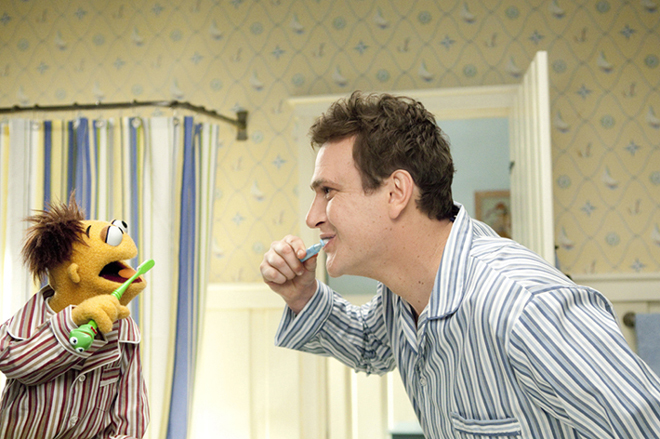
I didn't care for The Muppets either, and Miss Piggy is kind of a bitch in it but it isn't her fault (or Segel's; he fully commits to Gary and his various soppy subplots). It's the storyline about Walter, Gary's Muppet brother and world's biggest Muppets fan, finding his place in the world and believing in himself and whatnot — a perfectly functional concept whose execution here is problematic. Again, Gary (a human) and Walter (a Muppet) grew up together. Gary is apparently around 30, which would put Walter in his late 20s, probably, and yes, it's a kids' movie, but what's up with their still sharing a twin-beds Bert-and-Ernie domicile? If that's the house they grew up in, what became of their parents? This isn't even getting into the arrested-development issues Gary's having: son, you don't keep a girlfriend played by Amy Adams waiting ten years for a ring. She teaches a car-repair class, in a circle skirt and pumps! Also, she's Amy Adams. I know that's the point, but the problem here…is that it's Amy Adams. (She's charming in the film, in spite of the "it's me or the dog" bit she has to play.)

And then you find yourself troubled with all these larger existential questions about Muppet aging — they split up how long ago? Which makes them how old now? Are they…old old? The Eighties-Robot gag is okay (I enjoyed visiting with vintage soda-can fonts), but then you can't stop wondering how we're meant to understand "Muppet years" and whether they can die or they just get unstuffed or what.

And then you down a half-inch of bourbon and wander back to your point, and here it is: the movie treats Walter like he's still a child. That doesn't really line up timing-wise, and Walter is just kind of a wet end in the second place. It's great that he finds his people (well, "people"), and he's a hell of a whistler, but that subplot draaaaags. The main plot, in which the Muppets must reunite to save their theater from an evil land developer (Chris Cooper, who tries heroically, but I hope he fired his agent after he had to rap), is also a foregone conclusion, but between the meta jokes from Waldorf and Statler about how they're announcing plot points; the Scandinavian diacritical marks on the Chef's subtitles; the Chiba-esque credits sequence for kidnapping Jack Black; and sundry cameos, that story is more spritely. The Walter stuff that felt shoehorned in for children/people unfamiliar with the franchise felt damp and simplistic.

The nominated song, "Man or Muppet," is why we're all here. It's not good, and not just because forces Walter to sing that he's "a very manly Muppet." Blech. Still, expect to see Mr. The Frog up at the podium on Oscar night.

Sarah D. Bunting co-founded Television Without Pity.com, and has written for Seventeen, New York Magazine, MSNBC.com, Salon, Yahoo!, and others. She's the chief cook and bottle-washer at TomatoNation.comFor more on how the Oscars Death Race began, click here.

OSCARS DEATH RACE: Anonymous

OSCARS DEATH RACE: Anonymous

null

[EDITOR'S NOTE: Fearless Sarah D. Bunting of Tomatonation.com is making it her mission to watch every single film nominated for an Oscar before the Academy Awards Ceremony on February 26, 2012. She is calling this journey her Oscars Death Race. For more on how the Oscars Death Race began, click here. And you can follow Sarah through this quixotic journey here.]

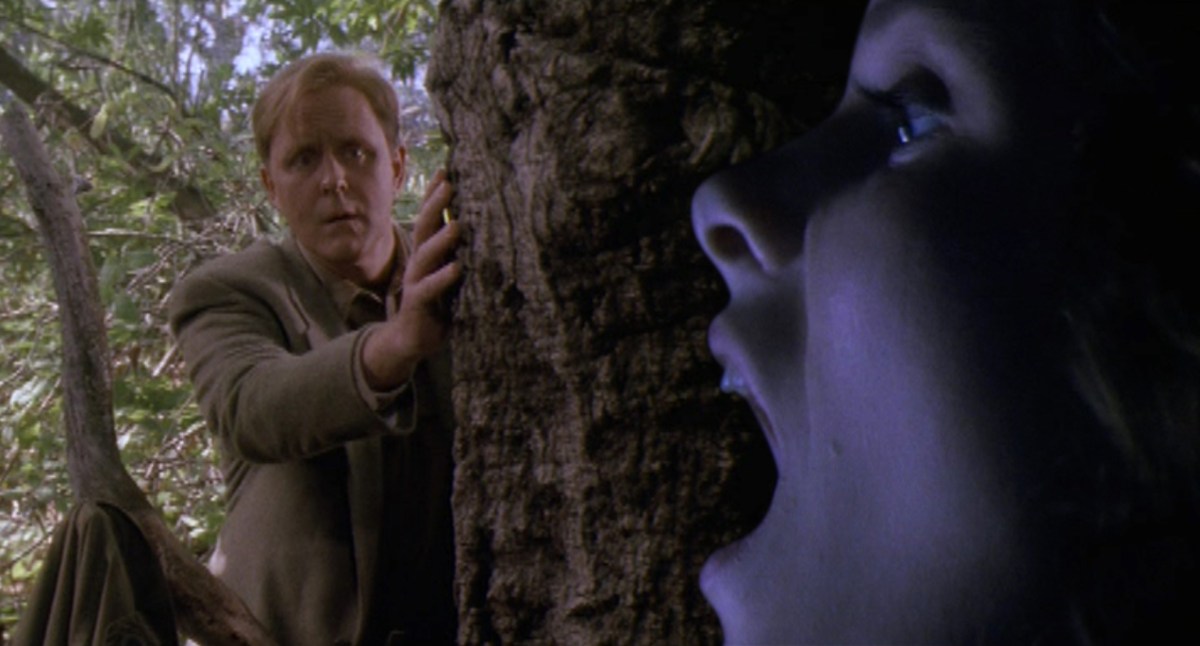
I'd rather have seen a Noises Off-style story about what's going on backstage at the modern-day framing-device production that opens Anonymous — actors rushing to their places; the stage manager lighting torches with one of those little lighters chefs use to fire a crème brulee — than the film I got. Of course, I'd rather have seen a root canal than what I got; I recoiled physically from the trailer all "ohhhh no no no no no," because if a buddy/heist movie is Buntnip, a costume drama concerning Shakespeare and the dirty-haired era in which he worked is…whatever the opposite of that is. Red Byptonite?

nullDoesn't matter. A costume drama/conspiracy pic that attempts to argue for historical William Shakespeare (the enthusiastic Rafe Spalls) as an illiterate creeper, whom the Earl of Oxford (Rhys Ifans, one of the only compelling things in the film) uses as a writing beard via some pimping help from Ben Jonson (Sebastian Armesto, one of the…things in the film), is just not for me — at least, not one that takes itself and its theory this seriously. One scene in particular came to illustrate this problem: the young Earl of Oxford (Jamie Campbell Bower) has just boned Queen Elizabeth (Joely Richardson in the flashbacks). He offends her somehow, so she squalls at him to get out, but undaunted and barely clothed in a dingy damask something-or-other, he starts sonneting at her, and she's so ensorcelled that he's getting a beej by the closing quatrain. And…look, real talk? This is why a lot of dudes start writing poetry to begin with — God knows it ain't the big bucks — and often enough, it works. Fine. Just play it that way and make the joke, instead of positioning the moment, and all the others, as a portentous slo-mo high-five between political stagecraft and the literal version. That's the issue with Anonymous. It's not that the subject isn't my thing, or that the Shakespearean quotations selected aren't imaginative, or that some of the players aren't quite up to their tasks, although those things don't help. It's that Roland Emmerich is known for, and fairly good at, ripping yarns, and he unwisely treats Anonymous like a middle-school educational-theater field trip. And that's exactly how it feels.

…Most of the time. Whenever Xavier Samuel is onscreen, it feels like a time machine back to Jersey in the '80s. "The Earl of Southampton"? Try "the Earl of South Amboy" — I haven't seen a perm that crunchy since Hunka Bunka.

The film isn't awful. Ifans is great, and the movie seems to grab its gears better whenever he's onscreen; the stunt-casting of Richardson as the younger QE and Vanessa Redgrave as the older version actually works, although Richardson is often backed by the script into corners she has to screech her way out of. (The "shocking" plot twist in the third act is probably given to Ifans to play for a reason, and he's fantastic in the scene even though the twist itself is risible.) But it's often dull, and too dour for its own good.

The nomination is for Best Costumes, and while I will give extra credit for Robert Cecil's specialty breastplate that is fitted for his spinal disability, I will take the points back again just as quickly for the Bon Jovi extensions on Samuel.

Sarah D. Bunting co-founded Television Without Pity.com, and has written for Seventeen, New York Magazine, MSNBC.com, Salon, Yahoo!, and others. She's the chief cook and bottle-washer at TomatoNation.comFor more on how the Oscars Death Race began, click here.

OSCARS DEATH RACE: FOOTNOTE

OSCARS DEATH RACE: FOOTNOTE

null

[EDITOR'S NOTE: Fearless Sarah D. Bunting of Tomatonation.com is making it her mission to watch every single film nominated for an Oscar before the Academy Awards Ceremony on February 26, 2012. She is calling this journey her Oscars Death Race. For more on how the Oscars Death Race began, click here. And you can follow Sarah through this quixotic journey here.]

In the press notes I received at the screening of Footnote, writer/director Joseph Cedar comments that his film "qualifies as a tragedy, as most father-son stories do." It's a big statement; what's interesting about Footnote — if not entirely successful — is how Cedar presents that tragedy.

nullDescribing the plot without spoiling its central elements is difficult, but basically, Eliezer Shkolnik (Shlomo Bar Aba) is a professor at the Hebrew University, a Talmudic scholar whose micro-focused research has gone largely unappreciated thanks to bad timing, academic backbiting, and Eliezer's immutably sour personality. His son, Uriel (Lior Ashkenazi), is a professor in the same department; his focus is broader, more civilian-friendly. Naturally, there is competition between father and son, although it isn't spoken of between them…until the precipitating event, it isn't spoken of at all, and even that event and its ensuing complications across the family doesn't force that conversation out in the open. It takes place through articles, footnotes, and the ways father and son read and write them.

Cedar often plays this silent tension for laughs, using list chyrons and cueing melodramatic chords on the score. The sound design amps up some effects and drops out others to parallel the selective understandings of the characters; when Uriel gives a speech accepting an award, the camera stays steady on Eliezer's unkempt eyebrows and bilious stare into the middle distance while the sound of his irritated breathing slowly crescendos. Later, as Eliezer and his strangely impassive wife, Uriel's mother Yehudit (Alisa Rosen), proceed into an auditorium, footsteps and airplane-y white noise dominate.

Cedar's decision not to include a confrontation between Eliezer and Uriel — or a discussion between Eliezer and Yehudit, or much reaction from Yehudit at all — is both maddening and refreshing. The "closure" we may have unconsciously come to expect in chapters of filial pain and disappointment is something most of us have to live without in real life; more to the point, it's true to these characters, emotionally bleak but truthful.

The execution doesn't always work. One scene featuring the university's most decorated minds crammed into a meeting "room" the size of a toaster oven is a deft visual gag, but the dialogue should move faster and include more over-talking (tip of the hat to Ashkenazi for the elegance of his straight-to-camera exposition-dumping here, though). And Yehudit's blankness might be too tough to read. Not knowing how she feels is one thing, but I'm not sure I know that she feels. Not that that couldn't work too, in context, but I needed a little more from that character.

But it does a handful of nifty things — the set design of an academic's teetering-book-pile-hole of an office is dead on, for one — and I feel confident in declaring "cookie recipes in the Babylonian Diaspora" the Oscars Death Race Subtitle of the Week.

Sarah D. Bunting co-founded Television Without Pity.com, and has written for Seventeen, New York Magazine, MSNBC.com, Salon, Yahoo!, and others. She's the chief cook and bottle-washer at TomatoNation.comFor more on how the Oscars Death Race began, click here.

OSCARS DEATH RACE: DRIVE

OSCARS DEATH RACE: DRIVE

null

[EDITOR'S NOTE: Fearless Sarah D. Bunting of Tomatonation.com is making it her mission to watch every single film nominated for an Oscar before the Academy Awards Ceremony on February 26, 2012. She is calling this journey her Oscars Death Race. For more on how the Oscars Death Race began, click here. And you can follow Sarah through this quixotic journey here.]

The IMDb's plot summary of Drive is hilariously understated: "A mysterious Hollywood stuntman, mechanic and getaway driver lands himself in trouble when he helps out his neighbour." Well…yeah. If by "mysterious," you mean "communicates primarily in stares and vicious, bloody attacks and is never given a name," and if by "trouble," you mean "a zero-degrees-Kelvin-cold set-up that will beat a path of shattered skulls to his door." But: yeah.

nullFor all that, and all the horrible crunching and squelching that accompanies the ultra-violence (which the film is basically nominated for in Sound Editing), and the Red Shoe Diaries credits font and the Sonny-Crockett-esque brooding by the dashboard light and various other hat-tips to '80s culture, it's a compelling 100 minutes. If you don't find gazing at Ryan Gosling a worthwhile pursuit for its own sake, your mileage may vary (sorry about that pun), but whenever I started to make a snarky note about B-side Tangerine Dream videos mated with a Chevy commercials, something twisted or capital-M Mythic would happen and yank the movie back onto the right side of lazy collage: Bernie (Albert Brooks) killing a dude in an unnecessarily messy way, then soothing him in a bedside tone as he dies; the lights going out in the elevator and turning a kiss between the driver and Irene (Carey Mulligan) into a dream sequence.

Several sequences stretch out too far without much apparent rationale, and the matching of soundtrack lyrics to onscreen emotional narrative is probably intended as another homage to the '80s, but that's not a film formula in need of honoring. Drive can get a little referential and self-indulgent for what is, in the end, a splattery heist-gone-wrong flick, and it oversold the scorpion/frog thing. But it's a world you don't usually see, in a story that doesn't use the usual toolkit or timing cues, and I liked it for that. It respects an ellipsis.

After the driver, Irene, and her son Benicio (Kaden Leos, exactly cute enough) spend an afternoon driving around, Irene breaks a gaze-tastic silence to say, "That was good." I really liked that line, how it was broad and specific at the same time.

Sarah D. Bunting co-founded Television Without Pity.com, and has written for Seventeen, New York Magazine, MSNBC.com, Salon, Yahoo!, and others. She's the chief cook and bottle-washer at TomatoNation.comFor more on how the Oscars Death Race began, click here.


PETER TONGUETTE: An extremely misunderstood, incredibly moving 9/11 drama

PETER TONGUETTE: An extremely misunderstood, incredibly moving 9/11 drama

null

At what point do you start to wonder if a particular day might be the worst of your life? Maybe you realize it gradually over the course of an especially sour afternoon as things just keep going wrong. That is what happens in Roman Polanski’s Carnage, and when the Kate Winslet character says at the end that it has been the worst day of her life, what she means is that the day and its accumulation of indignities has finally worn her down.

On the other hand, sometimes it only takes a split-second for a fine, normal, nothing day to become “the worst day.” That is what Oskar Schell in Extremely Loud & Incredibly Close calls it: “the worst day.” September 11. The day that his father, Thomas, is killed in the attack on the World Trade Center. We should never, ever forget what Joan Didion says: “Life changes fast. Life changes in the instant.”

nullOskar is a wise child. Why do I think to describe him that way? Well, to start with, the Glass children in the stories of J.D. Salinger appeared on a game show called It’s a Wise Child, and Oskar is very much like them. The critic Walter Kirn described Jonathan Safran Foer’s novel (which I have not read) as “a conscious homage to the Gotham wise-child genre.” So is the movie. In fact, the actor who plays Oskar, Thomas Horn, was cast after the moviemakers saw him on Jeopardy! This irony aside, Horn gives his character the right bossy demeanor— Oskar is used to getting his way. His curiosity is indulged by his father (played by Tom Hanks in a series of short memories), who devises quests for him, such as finding New York’s “sixth borough.”

After his father dies, Oskar comes up with an excuse for one more “reconnaissance mission.” It starts with a key of unknown origin
(discovered by Oskar by accident when he tips over and shatters a blue vase) and it ends… well, we do not know when or where or if it will end. Oskar has a gift for sleuthing, but he does not kid himself into thinking that solving the puzzle behind the key is important in itself. What is important is that as long as he is searching, he is thinking of his father.

nullDuring Oskar’s journey, a great many people (most of them with the surname “Black”) come into his orbit, including a hulking, silent Swede (Max von Sydow) who might be his grandfather and is certainly a kindred spirit. Oskar also sees his glorious city from every angle. As filmed by director Stephen Daldry and cameraman Chris Menges, Extremely Loud & Incredibly Close is one of the great New York movies. It resembles The World of Henry Orient, with precocious young New Yorkers darting around the city unencumbered by adult supervision.

Daldry directs like a master—he is unafraid to go for bold effects, such as the montage sequence illustrating the many things Oskar is “panicky” about since the tragedy. The director is conscious of his predecessors. The freeze frame of Oskar at the end of the picture is meant, I think, to evoke the last shot of The 400 Blows. And when Oskar retreats to underneath his parents’ bed on “the worst day,” we are reminded of the beginning of Fanny and Alexander—another movie about a son losing a father too, too soon.

The movie gets the more pedestrian aspects of childhood right, too. Daldry captures what it is like to crack open your door late at night, let in a ray of light from the hall, and overhear the murmurings of grownups who think you are fast asleep. An only child, Oskar does a lot of eavesdropping on his parents (his mother, Linda, is played by Sandra Bullock), but he has an uncommon comprehension of what he overhears and a gift for remembering it. At one point, more than a year after September 11, he tells his mother something his father
said to him about her: “I really love your mother. She’s such a good girl.” It is unbearably moving that Oskar recalls the precise words his father used. A more average kid—a less wise child—would have misremembered the remark. It would have become something treacly like, “I love mom.”

I wonder if there is anything more meaningful than to tell someone you love that someone they lost loved them.

Throughout the movie, I worried that Sandra Bullock was being forgotten. There was so much about Oskar and Thomas and the cagey Swede, but relatively little about Linda. I found myself asking why Oskar was spending more time with strangers than with her or why he didn’t tell her about the key he found. She might, after all, know something about it.

Linda is, plainly, less of a pal to Oskar than Thomas was, but the simple truth is that Sandra Bullock gives the movie its pulse. After Oskar’s journey ends, amounting to a lot of sound and fury and signifying nothing (as far as he is concerned), his mother is there waiting for him, and the feeling is much as it is at the end of, say, Meet Me in St. Louis, when the family decides to stay there. It is home, sweet home. But it turns out that she has been with Oskar all along. She is no Tiger Mother, but she checked out every place he planned to visit and every person he planned to see. “Did you think I would ever let you out of my sights?” she asks, and we feel ashamed for wondering if she had.

nullIt is a great portrait of motherhood. The movie may seem all gilded surfaces, but the truths it contains are straightforward, and so many of them spring from Bullock’s quiet, easy performance. You want to cry softly when she whispers that what she misses most about her husband is his voice. It is a simple thing to miss, but any bereaved person can relate. I do not think Sandra Bullock has given a more natural or unaffected performance since Peter Bogdanovich’s The Thing Called Love.

I mentioned that I have not read the novel by Jonathan Safran Foer. So, of course, I do not know how close Eric Roth’s adaptation is. Maybe the things I like best about the movie are from the book—or maybe they aren’t. What I know is this: the movies have the power to make stories seem extremely loud and incredibly close in ways that often elude the written word, and that is especially true of so much contemporary fiction. Give me instead the look on Max von Sydow’s face and the sadness in Sandra Bullock’s voice.

Peter Tonguette is the author of Orson Welles Remembered and The Films of James Bridges. He is currently writing a critical study of the films of Peter Bogdanovich for the University Press of Kentucky and editing a collection of interviews with Bogdanovich for the University Press of Mississippi. You can visit Peter's website here.

OSCARS DEATH RACE: KUNG FU PANDA 2

OSCARS DEATH RACE: KUNG FU PANDA 2

null

[EDITOR'S NOTE: Fearless Sarah D. Bunting of Tomatonation.com is making it her mission to watch every single film nominated for an Oscar before the Academy Awards Ceremony on February 26, 2012. She is calling this journey her Oscars Death Race. For more on how the Oscars Death Race began, click here. And you can follow Sarah through this quixotic journey here.]

nullIt feels a little too long, and leans a little too hard on the "what happened to you is not who you are" messaging, but Kung Fu Panda 2 is pretty fun, even for people like me for whom a little Jack Black goes a very long way. The opening origami-style animation sequence is lovely; the fight scenes pop along; and I watched the kung-fu radish in the dream sequence three times. So cute!

KFP2 is a pro effort, and I can't draw a stick figure so it's hard for me to assess the logistical complexities of the category — but if this is some kind of achievement in animation, it's not terribly memorable. I liked it, I laughed a few times, but I don't know that I'd have remembered even the images I mentioned above if I hadn't written them down. "A pleasant enough hour and a half" doesn't seem like Oscar territory. Then again, as I keep reminding myself, Wolfman has one, so what the hell do I know. NEXT!

Sarah D. Bunting co-founded Television Without Pity.com, and has written for Seventeen, New York Magazine, MSNBC.com, Salon, Yahoo!, and others. She's the chief cook and bottle-washer at TomatoNation.comFor more on how the Oscars Death Race began, click here.

OSCARS DEATH RACE: Surveying the race for Best Actor

OSCARS DEATH RACE: Surveying the race for Best Actor

null

[EDITOR'S NOTE: Sarah D. Bunting of Tomatonation.com is watching every single film nominated for an Oscar before the Academy Awards Ceremony on February 26, 2012. She is calling this journey her Oscars Death Race. She has completed the category for Best Actor and now surveys the competition. For more on how the Oscars Death Race began, click here. And you can follow Sarah through this quixotic journey here.]

The Best Actor category is more interesting, to my mind, for who didn't get a nomination than for who did, although I guess the actual nominations are interesting. "Baffling" counts as interesting, right?

Let's get to it.

nullThe nominees

Demián Bichir (A Better Life): The performance looked better than it was thanks to subpar acting by his castmates. A solid outing, no more.

George Clooney (The Descendants): The Cloon did his best under the circumstances, and I acknowledge that the performance proceeds from the script, but I hated the script and the performance is not very good in the second place. It's not Keanu, but it's not very good. The blocking is lazy; a lot of the scenes land like first rehearsals, or he's letting the ugly shirts craft the character beats. From a craft standpoint, I don't get this nom at all. From a "sometimes, the universe wants — nay, needs — to remind the Cloon that he is loved" standpoint, it makes more sense and I can mostly live with it. A win would kind of gross me out, though — and Vegas has him sitting at short odds…

Jean Dujardin (The Artist): …but SAG went for Gallic charisma, and that award is a pretty reliable indicator. Dujardin is very good, and while this isn't my favorite performance nominated, I won't mind if it wins, and it probably will.

Gary Oldman (Tinker Tailor Soldier Spy): Initially, I had a "wait, seriously?" reaction to this nod, but much like the movie itself, the idea grew on me. But he's good here because he's so quiet in the role…and he might be too quiet. Should win for something one of these days; probably not for this.

Brad Pitt (Moneyball): Great, welcoming, confident performance by an actor who has finally grown all the way into his face. Born to play the role; hit all the notes in it. He'll likely have to content himself with a job well done, though.

Who shouldn't be here: Bichir and Clooney don't rate, given the talent that got passed over entirely.

Who should be here, but isn't: Hope you packed a lunch: Woody Harrelson in Rampart, Tom Hardy and/or Joel Edgerton in Warrior, Michael Fassbender in Shame, and Ralph Fiennes in Coriolanus. You could make an argument for Paul Giamatti in Win Win; you could also argue that you've seen that work from him before.

Who should win: Pitt.

Who will win: Dujardin, I'd say, but Clooney isn't a waste of your money.

Sarah D. Bunting co-founded Television Without Pity.com, and has written for Seventeen, New York Magazine, MSNBC.com, Salon, Yahoo!, and others. She's the chief cook and bottle-washer at TomatoNation.comFor more on how the Oscars Death Race began, click here.

IFC: The rise of film critic filmmaker

IFC: The rise of film critic filmmaker

Raising Cain Re-cut from Press Play Video Blog on Vimeo.

[EDITOR'S NOTE: Matt Singer over at the Independent Film Channel has written a fascinating piece discussing the rise of film critic filmmakers, tracing its storied history with filmmaker/critics such as Francois Truffaut through Peter Bogdanavich, who has a terrific blog right here at Indiewire. We have reprinted excerpts of this piece because it mentions Peet Gelderblom's Raising Cain Recut, which debuted right here are Press Play. Don't miss Matt Singer's excellent full article here. Here is the Recut (posted above), Singer's excerpt below, and the video essay which explains the project.

Matt Singer at IFC:

"A similarly audacious project was launched last week on the Indiewire blog Press Play by film critic filmmaker Peet Gelderblom. His “Raising Cain Re-cut” is a “Phantom Edit”-style revision of Brian De Palma’s 1992 film “Raising Cain.” As Gelderblom explains in an essay that accompanies his “Re-cut,” De Palma was never fully satisfied with the structure of his film and, exasperated in the editing room, he radically revised his initial conception of the picture during post-production. Gelderblom decided to take the theatrical version of “Raising Cain” and restore it to something closer to the director’s original vision. At least for now, you can watch the entire “Raising Cain Re-cut” in this embedded video.

To get the full effect of Gelderblom’s work, I rewatched De Palma’s “Raising Cain” over the weekend and then dove immediately into the “Re-Cut” version. In my (non-filmmaker) film critic opinion, he’s done as good a job as seems possible with the material he had to work with. In interviews, De Palma stressed that his reason for making “Cain” was not (SPOILER ALERT) to tell the story of a crazy dude with multiple personalities, but really to delve into a romantic melodrama involving the crazy dude’s wife, who cheats on her husband in a surreal swirl of dreams and nightmares. In the theatrical version, John Lithgow’s Carter is established first — and established as a nutjob — before we ever meet his wife Jenny (Lolita Davidovich). Gelderblom’s biggest adjustment is to start with Jenny, and to keep Carter as a background character through the first twenty minutes of the film. Right after Jenny has succumbed to a series of fantasies (or perhaps true adulterous encounters) Carter surprises her by strangling her, seemingly to death.

There’s one major downside to Gelderblom’s version, namely that this protagonist fake-out makes “Raising Cain” look even more like a “Psycho” knock-off than it already did. But otherwise, his conceit works, and makes a certain amount of sense, too. Davidovich’s character is having a hard time telling the difference between dream and reality and all of a sudden her husband tries to kill her; which, at first, seems like another possible layer of dream. The “Re-cut”‘s biggest problem is that Gelderblom only has the original theatrical cut to play with — and his version could use at least a few more scenes of seeming domestic bliss between Jenny and Carter to really sell the big reveal, as well a a clearer transition between Carter’s attempted murder of Jenny and the flashback to the beginning of his wicked deeds.

All in all, though, it’s a very interesting effort. And while he hasn’t spoken publicly about it, I imagine De Palma would approve, if not with the execution then at least with the conception."

To read the entire article, click here.

OSCARS DEATH RACE: RISE OF THE PLANET OF THE APES

OSCARS DEATH RACE: RISE OF THE PLANET OF THE APES

null

[EDITOR'S NOTE: Fearless Sarah D. Bunting of Tomatonation.com is making it her mission to watch every single film nominated for an Oscar before the Academy Awards Ceremony on February 26, 2012. She is calling this journey her Oscars Death Race. For more on how the Oscars Death Race began, click here. And you can follow Sarah through this quixotic journey here.]


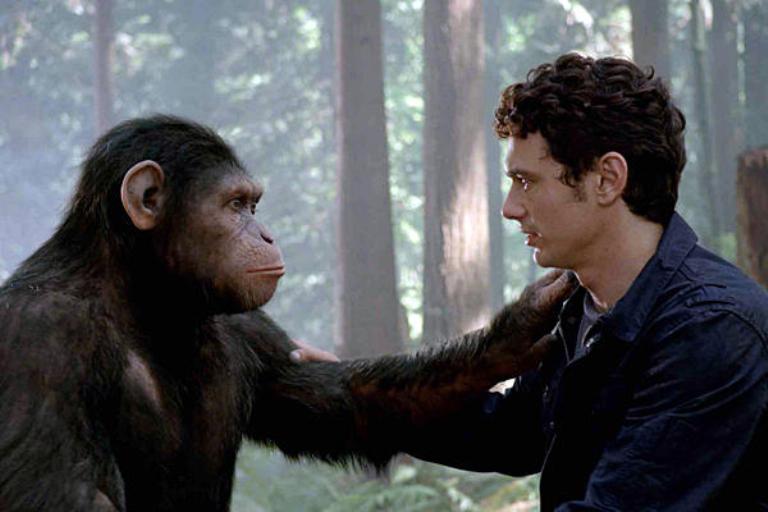
A pensive, moving exegesis on the perils of primate resear– oops, sorry. Thinking of Project Nim. Rise of the Planet of the Apes is a straight-ahead enjoy-the-AC summer movie, and if you can't see it in a theater, you needn't bother. I did not see it in a theater, so I could not derive the enjoyment the foggy climactic shoot-outs and chopper crashes surely provided for in-person filmgoers — and that only left lines like "These people invest in results, not dreams" and James Franco's master class on phoning it in, "101 Troubled Frowns."

nullThe very short form: Franco (the "character" is barely realized, so why name him) is developing a medicine to cure Alzheimer's, from which his father (John Lithgow) (…right?) suffers. Primate research shows it works, but also points up some serious side effects; chimps dosed with ALZ-112 (…right?) get crazy smart, but also crazy mad. That includes Caesar, the chimp Franco kind of accidentally adopts, then raises with the help of his with-it-again dad, and also his girlfriend Frieda Pinto (Slumdog Millionaire) and her glorious eyebrows. She's a primatologist, maybe? Or a vet? Right, my mistake: she's a delivery system for lines about how some things shouldn't be changed.

The movie wastes no time getting straight to plot, which is good; it's an economical 100-ish minutes, which is also good. But that still leaves viewers time to wonder why Franco and Lithgow's neighbor doesn't just move away if he's going to get constantly harassed by chimps, car-wrecked by Lithgow, and bloody-sneezed on by that chunky fella from Reaper — or why, as Extra Hot Great commenter Will asked, "This movie took place over 8 years, and no one ever got a haircut?"

But we come to praise the visual effects, not to bury the script, I guess. Alas, the effects are not that awesome. Something about the way the chimps move is not quite right — there's a quickness of motion that makes them seem too light. One chase scene is a treetop shot of chimps moving through the trees that shows only the leaves rustling, which is pretty cool, but that's not going to get it done against work like Hugo.

Sarah D. Bunting co-founded Television Without Pity.com, and has written for Seventeen, New York Magazine, MSNBC.com, Salon, Yahoo!, and others. She's the chief cook and bottle-washer at TomatoNation.com.

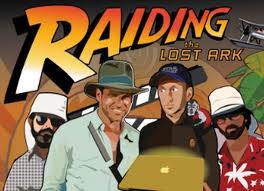
Raiding The Lost Ark: A Filmumentary By Jamie Benning

Raiding The Lost Ark: A Filmumentary By Jamie Benning

Raiding The Lost Ark: A Filmumentary By Jamie Benning from jambe davdar on Vimeo.

[EDITOR'S NOTE: In the tradition of Star Wars Begins, filmmaker Jamie Benning has stitched together the perfect informative tribute to this classic film. Don't miss it.]