

 For many filmgoers, seeing their first horror movie is a rite of passage: mine came at the tender age of six, on our first family visit to the drive-in to see The Satanic Rites of Dracula (1973). Though I imagine I must have been scared, what I remember most from the experience was getting out of the car when we returned home, and looking up at the moon, which now held a newly ominous sense of enchantment. Contrary to the prohibitive logic of our ratings classification system, horror films, like fairy tales and märchen in an earlier era, can and do provide young minds with a visual vocabulary for structuring imaginative experience.
Don Coscarelli’s low-budget auteur classic Phantasm (1979) explores the dynamic relationship between fact and fantasy in its dream-like variation on the coming-of-age narrative. As the somewhat equivocal conclusion of the film suggests, the entire story would seem to be the extended dream, or “phantasm,” of its thirteen-year-old protagonist, Michael (A. Michael Baldwin). The film’s bold melding of science fiction, fantasy, and horror narratives is a testament to the vibrant spirit of unfettered independent film-making, but it is also a vivid portrayal of the ways in which our teenage minds were structured by a rich and eclectic variety of media and stories.
 When Michael visits a blind old fortune-teller and her starry-eyed granddaughter for advice on how to cope with the increasing absence of his beloved older brother, Jody, for example, the old crone subjects him to a fear-test copped directly from Frank Herbert’s Dune. This is the first of several hints that the gothic horror mode in which the film begins will point towards other genres. The intermingling of horror and science fiction (not to mention 1970s interior decorating) is nicely encapsulated in the set of Michael’s bedroom, where we see him covered in an orange and brown afghan, slumbering beneath a wall-size poster of NASA’s famous “Earthrise” image. The camera cuts to another image of Michael’s bed, now in a graveyard, as the earth around him suddenly erupts and he is covered by a host of corpses who seem to draw him beneath the earth. These are the things alienated kids obsess over, and hence it makes sense that these would shape the dream life of the main character.
 But the interweaving of narrative conventions in the film is not merely playful: as the film slowly unveils its science fiction underpinnings, it begins to explore fears and anxieties that haunt the borders between genres and the ways those genres reflect our imaginative perception of the world. In one of the most sensitive readings of the film, John Kenneth Muir describes the nuanced ways in which the film uses horror conventions to structure the story of a teenage boy’s coming to terms with death and loss. Most intriguingly, Muir addresses the film’s concern, not merely with the passing of loved ones, but also with the “death industry” which profits from such loss. This industry is hauntingly embodied by the glowing white edifice of Morningside Funeral Parlor, first shown in a striking wide-angle shot where it stands ominously in the background, framed between Jody (Bill Thornbury) and his band-mate Reggie (Reggie Bannister), as they discuss the recent loss of their friend and third band member, Tommy (Bill Cone). From that point forward, Morningside will cast a long shadow over the lives of the characters, repelling and alluring them in equal measure.
 While loss and mourning are certainly keynotes of this often surprisingly poignant film, the science fiction story which lies at the heart of the mystery that is Morningside Funeral Parlor will direct our attention, and our fears, towards what is perhaps an even more traumatic part of growing up: getting a job. Imagined through the dreaming mind of our protagonist, this fate takes the form of an outlandish conspiracy theory: the Funeral Director, referred to only as the Tall Man (Angus Scrimm), turns out to be an emissary from another world, sent to retrieve reanimated corpses who will serve as slave labor on a distant planetary wasteland.
 What cannot help sounding ridiculous when summarized in a few words takes on a horrifying vividness in the film, largely through the working details of this zombie slave industry. Michael, Jody, and Reggie eventually meet in a glowing white room filled with three-foot canisters complete with ventilation holes revealing the dwarf workers trapped within. These transport cases uniformly line the walls in a grotesque image of efficiency. In the center of the room stands a two-pronged gateway into the destination world, which Michael briefly passes through, to hover over an eerie red desert on which a long line of forced laborers march towards a distant horizon. After being rescued from the portal, Michael describes his vision to his brother and friend, and works through the infernal logic of what’s been going on up at Morningside: “Slaves. They're usin' 'em for slaves. The dwarfs. And they got to crush 'em 'cause of the gravity. And the heat. And this is the door to their planet.” Where once the protagonists feared death at the hands of the ominous Tall Man, they are now faced with an even more horrifying life-in-death that resembles a grotesque dream version of that forced labor politely termed a “career,” looming just over the dwindling horizon of youth.
 In contrast to this envisioned slavery is the characters’ earlier life, which seems to consist largely of tradin’ tasty guitar licks on the front porch, tinkering with Jody’s muscle car, drinking Dos Equis, slinging ice cream, getting laid in the graveyard, spying on an older brother getting laid in the graveyard, and pursuing paranormal mysteries on a mini-bike. The film, like many low-budget horror films of the period, seems to take place in a land where it is always late summer, the streets are strangely deserted, and the parents strangely absent. The disturbing mystery that eventually engrosses our youthful heroes emerges through Michael’s binoculars as he witnesses the Tall Man lifting a casket with his bare hands and loading it into the back of his hearse. In one of the film’s delightfully dumb but idiomatically pitch-perfect conversations, Jody responds: “You’re crazy. I helped carry that sucker myself. It must have weighed over five hundred pounds. Well, I can’t figure this thing out. But I do know one thing: something weird is going on up there.” Later, when Reggie boastfully proposes a plan to “lay that sucker out flat and drive a stake right through his goddamn heart,” Michael replies in the film’s rich period vernacular, “You gotta be shittin’ me man: that mother’s strong.” And indeed he is.
As Michael, Jody and Reggie begin to pursue “that Tall Dude” in earnest, the story assumes a Boy’s Own Story-like charm, while deftly retaining the sense of uncanny menace established so effectively in the film’s opening scenes. Accompanied by a marvelously supple score in which the haunting theme song shifts through ominous, groovy, and somber variations, the unlikely story pursues its digressive path towards an equivocal conclusion that leaves the reader to determine the relative truth-value of the story’s many layers. Ambiguity and circularity of plot come to serve as this wildly inventive film’s most effective means of warding off the deadening sense of closure looming over the horizon. Perhaps Phantasm has become such an enduring cult film, at least in part, because its outlandish narrative strategies offer such a compelling way of re-scripting our own life stories.
Jed Mayer is an Assistant Professor of English at the State University of New York, New Paltz.

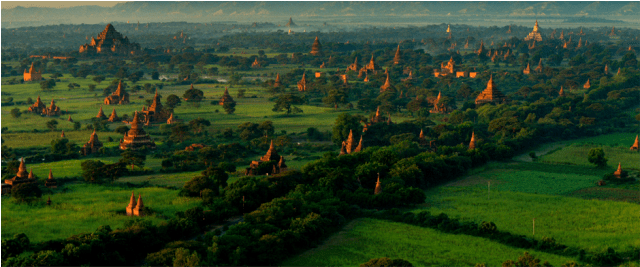
 There are points where the film steers you in a certain direction—for instance, rhyming shots of factory-farm butchery and shots of newly-minted rifle bullets pouring into a bin at an ammo factory (industrialized violence), or the placement of uncannily realistic robots, rubber sex dolls and meat-market strippers in the same montage (dehumanization). But for the most part it's a very loose, confident movie, one that seems to have been made by a much wiser, more relaxed director than the one who created Baraka. Fricke used a birth-to-death structure in Baraka, too, but it was more mathematically precise there. The earlier film was linear, for the most part. It confined its tangents to subchapters that might as well have been captioned: "The same industrial power that brought us modern cities also brought us genocide." "Different cultures observe different rituals, but deep down all rituals are the same." "The rich don't give a damn about the poor." In Samsara, Fricke and his editors work with similar images (though more vivid and crisp because they're shot on 70mm film). But this movie deploys them differently—in a looser, more confident, more open-ended way. You have to get into the spirit of the movie, engage with it, relax, and float downstream.
 The director/cinematographer and his editors juxtapose images of wealth and poverty, nature and civilization, war zones and dead bodies, guns and ammunition, old people and young people, people of different cultures and faiths, and shots of babies, village elder-types, packed commuter trains and oppressive offices and charnel-house factory farms, scudding clouds, plumes of volcanic steam, rivers of lava, image after image in section after section. But rather than string the images along a linear-philosophical clothesline stretched from cradle to grave, Samsara shuffles and reshuffles images like cards in a deck. The movie visits and then returns to images of individuals, crowds of people, animals and vehicles whirling in circles, and dancers posed so that the lead dancer in the foreground seems to have multiple arms, like a Hindu goddess. Every person, every country, every climate, every body of water, every type of terrain is connected: we sense this connectedness from the rhythms of the film, not because individual cuts are telling you, "See? This thing here is kinda like this thing over here."
 There's no missing the disgust Fricke brings to shots of poultry being skinned and gutted, or the shots of shantytown residents digging through dumps while gleaming condominiums and office buildings loom behind them. And yet Samsara is not a didactic movie. It has a showman's sensibility. The probing closeups and geometrically lovely wide shots are presented as little movies in themselves, self-contained spectacles with their own internal logic and personality. Each shot is an object of contemplation, a springboard for emotion and reflection, but at the same time, the sheer handsomeness of the production says, "If you want to just sit back and enjoy this as a travelogue or a borderline-psychedelic sound-and-light show, that's fine, too." Samsara is the work of a guru, not an acolyte. Fricke is a master leading the audience through meditation, giving us suggestions for dreaming. Our mind takes us where it takes us.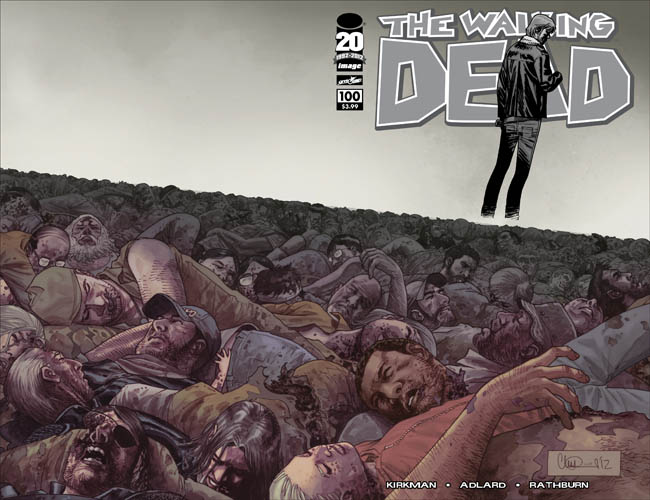

 with this, though, was the tension created by Kirkman’s controlling hand, a struggle for dominance over ownership; a palpable desire to assert his authority over the book was more and more evident. Again, this was stimulating for me as a fan; I was not used to being provoked in this way, in a world traditionally marked by the impermanence of death. In comics, nobody ever dies forever. Well, except in TWD. Just 2 issues before Lori met her end, a supporting character name Tyreese was unexpectedly executed by decapitation in front of his friends. It was shocking, nauseating, and unambiguously FINAL. This man was dead. Ingloriously. Used as a pawn by another to demonstrate power. So: Tyreese, Lori, an infant, and a host of other supporting characters, wiped away from the page. As noted, I was, in retrospect, in shock.
 Except in the world of TWD. In the world of this comic, anyone can die at any moment, but especially if that moment happens to be a hyped landmark anniversary issue. This is so cynical it makes me nauseous. This sadistic display, which the author can disingenuously claim is “natural” to the book, was calculated to occur in front of a large audience. Basically guaranteed to make a mountain of money. I find this unsettling, mercenary, and again, a sadistic display of power. An assertion of ownership and control over the characters and their fates.
  lonely, your body will slowly be taken from you piece by piece, and even your humanity will be stripped away simply by continuing to live. You will eventually do awful things and be numb. And then you will die in an undignified manner, inspiring others to shut down, or just feel pain. Even if you survive longer than others, you will be scarred, disfigured, and mutilated. Just look at twice-shot Andrea, and one-handed Rick. The monocular Carl, who lost his conscience as well as half his vision. Even poor old Dale was reduced to limping around on a toilet plunger after he had his infected leg lopped off. And then he died, too. Pain and humiliation weren’t enough for old Dale.
 it’s obvious what that event will be. Someone dying. There's just no other trick left in the bag. Other comics have pursued a similar strategy, telegraphing the imminent demise of the hero often months in advance, to generate sales. “Superman is going to die in # 75!” “What issue are we on now?” “# 70.” “What happens in between now and then?” “We see the fight that happens first. For five issues. (And their crossovers).” But of course it is just a gimmick. An accepted ruse the fans participate in. It’s a don’t-ask-don’t-tell maneuver just waiting for the inevitable reversal, the return to status quo.




 Can’t Stop the Music (1980)
 Flash Gordon (1980)
 Sgt. Pepper's Lonely Hearts Club Band (1978)
 The Apple (1980)
 Rock n' Roll Nightmare (1987)
 Spice World (1997)
 The Happiness of the Katakuris (2001)
 Across the Universe (2007)
 REPO! The Genetic Opera (2008)
 Tron: Legacy (2010)
 Press Play Video Blog