Errol Morris and the Expansion of the American Documentary

Errol Morris and the Expansion of the American Documentary

null

Errol
Morris’ innovations have been absorbed so thoroughly into the
documentary mainstream that it’s easy to forget how controversial they
once were. Criterion has just released his first three films—1978’s Gates of Heaven, 1981’s Vernon, Florida, and 1988’s The Thin Blue Line—on Blu-Ray and DVD, with a spare set of bonus features, mostly
consisting of present-day interviews with Morris. Although Roger Ebert
championed Gates of Heaven, calling it one of his all-time
favorite films and claiming to have seen it more than 30 times, other
spectators accused Morris of condescending to his subjects, the
operators of pet cemeteries. The Thin Blue Line was damned for
incorporating fictional reenactments into its detailing of the framing
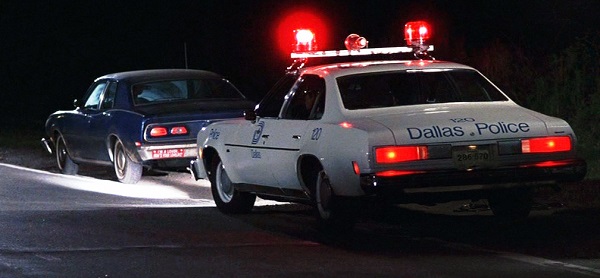
of Randall Dale Adams, an innocent man sentenced to death row in ‘70s
Dallas. Despite its critics, it turned out to be highly influential. The
true crime dramas on the ID channel couldn’t exist without it; on a
more elevated plane, neither could Andrew Jarecki’s HBO mini-series The Jinx, and it’s no surprise that The Act of Killing director
Joshua Oppenheimer pops up to give an interview on Criterion’s disc.
Together, these three films expanded our notion of what documentaries
could do. 
Gates of Heaven looks surprisingly staid and calm now, compared to the projectile vomiting and unhinged rants of Frederick Wiseman’s Hospital and Welfare.
At least half of the film consists of carefully posed interviews. Rather
than pretending to capture reality on the fly, Morris set his subjects
in deliberately arranged settings. They’re usually at the center of the
frame. The light source is sometimes visible. A telling prop or two—a 
particularly ornate lamp, a framed photo of a dog, an abstract painting—can be seen in the background. Without calling attention to
themselves, Morris’ images are attractively lit and framed. 
Gates of Heaven
is divided into two halves. The first 40 minutes chronicle Floyd
McClure’s rough attempts to get a pet cemetery going, while the final
part depicts a working—and, seemingly, flourishing—cemetery called
Bubbling Water. The opening half portrays a world that doesn’t feel like
the ‘70s. The women, in particular, seem to be stuck in a ‘50s Douglas
Sirk wonderland, making no attempt to live up to the fashions of the
time. That changes later on. One cemetery owner speculates that the Pill
made pets more popular by allowing women to enter the workforce instead
of cranking out babies but leaving their need for nurturing and
companionship intact But the real difference in the film’s two sections
is that between storytelling and character study. At first, Morris seems
fascinated by the ins and outs of a failed pet cemetery. In the second
half of Gates of Heaven, he becomes more interested in the people
attracted to such a business, including an amateur rock guitarist who
plays him home-recorded tapes of his music and a former insurance
salesman who got fed up with that racket but still talks like he’s in
it. 
Throughout,
the sentimentality of Morris’ subjects threatens to become
overwhelming. I don’t think the director sneers at them, but he keeps a
polite distance. Yet 37 years after the film was made, their lack of
media savvy seems refreshing. These days, many of the middle-aged and
elderly women who appear before Morris’ camera would probably consult
fashion magazines, before appearing in a documentary. The subjects of Gates of Heaven care more about their late pets than looking cool; Morris isn’t mocking them by revealing this . 
Vernon, Florida
takes Morris to Les Blank country (although without Blank’s
multiculturalism – all but one of its subjects is a white man.) It
originated as a documentary about a town nicknamed “Nub City,” famous in
the insurance industry for the number of self-mutilations leading to
fraudulent claims there. However, Morris’ attempts to make a film about
that practice got him beaten up, and he decided to abandon that idea and
concentrate on the more peaceful folks of Vernon, Florida.
Unfortunately, this film feels even more distant than Gates of Heaven.
The twin hobbies of Vernon residents seem to be hunting and
Christianity – not surprisingly for a small town in the South – but one
senses that Morris appreciates them at a remove. At one point, a man
asks him if he’s ever fired a gun and then instantly senses that he
hasn’t. Stylistically, Vernon, Florida relies  more on montage than Gates of Heaven,
although it also uses long takes of its subjects talking. This time
around, they’re almost always filmed outdoors, in situations that seem
less controlled than those of Gates of Heaven. Still, Morris’ appreciation of small-town eccentricity paved the way for narrative films like Blue Velvet and Raising Arizona. 
In the seven years between Vernon, Florida and The Thin Blue Line, Morris worked as a private detective. That job experience paid off. However, he also took a large stylistic leap with The Thin Blue Line.
As Charles Musser’s liner notes point out, Randall Dale Adams, unjustly
convicted of murder, is color-coded white; the real killer, David
Harris, is bathed in orange light and interviewed in front of orange
bricks, matching the tone of his jail-issued clothes. 
The
film is famous for introducing reenactments to the documentary. It’s
notable how sparingly Morris uses them. For the most part, the only
reenactment is the murder scene, constantly repeated as the story is
retold by another participant or witness. The scene itself is shot in a
fragmented style. Morris’ direction is hyper-real. Throughout, the film
never spoon-feeds the spectator. No interview subject is ever identified
on-screen by name; while it’s easy to figure out who Adams and Harris
are, the minor figures in the case are cited only in the closing
credits. The true crime dramas that it influenced do their best to
imitate narrative fiction, offering relatively seamless dramatizations.
The film still uses interviews to make most of its points. Morris also
returns to a handful of motifs: someone stubbing out a cigarette in a
full ashtray, a close-up of a clock on a wall. 

According to John Pierson’s book Spike, Mike, Slackers and Dykes, no less a director than Spike Lee cited The Thin Blue Line
as the only concrete example of a film that caused social change. Here,
Morris proves himself to be a careful, patient storyteller. He was
never a lawyer, but he thinks like one. He lays out the facts of Adams’
case and allows Harris to figuratively hang himself. He also presents
Adams as a likable character—Adams comes off as a film noir hero, in
fact. If Morris flirts with elements of fiction here, he does so with
great care. The Thin Blue Line spoke truth to power loudly enough
to get a man released from jail. It’s too bad that Morris’ subsequent
encounters with Robert McNamara and Donald Rumsfeld are far meeker
engagements. Taking on the criminal justice system, Morris proved more
than up to the task; faced with the questionable judgments of
politicians, Morris let them drone on without challenging them too
often.

Steven Erickson is a writer and
filmmaker based in New York. He has published in newspapers and websites
across America, including
The Village Voice, Gay City News, The Atlantic, Salon, indieWIRE, The Nashville Scene, Studio Daily and many others. His most recent film is the 2009 short Squawk.

ARIELLE BERNSTEIN: How ‘The Unbreakable Kimmy Schmidt’ Skewers Empowerment Culture

ARIELLE BERNSTEIN: How ‘The Unbreakable Kimmy Schmidt’ Skewers Empowerment Culture

nullBack in the early 2000s, a friend and I worked together on
creating a musical medley based on all our favorite songs. We featured artists from
Ani Difranco to Radiohead. Our favorite silly addition was a song by Ja Rule
and Ashanti called “Mesmerize” which was utterly and fantastically terrible. In
my favorite line of this atrocious song Ashanti sings about how, for a woman,
love is always pain, to which Ja Rule sweetly and patronizingly replies, “It’s
a man’s world. But I understand.” 

Barring the fact that these lyrics seem like a complete non
sequitur, the assertion that female pain is a kind of status quo smacked deeply
of condescension. The fact that this catchy and absurd song got airplay
multiple times a day, as if we all could seemingly care less about what a dumb message
this was sending us, made it feel as though it were actually benign.

I laughed when I first heard the lyrics. I grew up in a home
where a woman’s identity was measured by suffering. In the world of my mother’s
telenovelas, women were constantly
beating their breasts and crying and cursing the heavens. To be a woman was to
endure various pains—the pain of childbirth, the pain of philandering boyfriends
and husbands, often the pain of domestic abuse. Young beautiful women
experienced pain at being harassed, and older, less beautiful women faced
instead the pain of invisibility.

I think for a long time I felt that if I could be as “American”
as possible I could be free from this old-fashioned and debilitating portrait
of what it meant to be female. After all, in America I received lots of
messages of “girl power.” But these messages never seemed to reach the women of
my generation, myself often included, and, ten years later, many of my young
American female students are consumed with the same fears and kinds of sadness
that I tried to shut my eyes to when I was young. They worry about how they
look, and if they are likeable enough. They worry about if they are too girly,
or not girly enough. They worry about whether they’ll be objectified or
ignored. Room after room of young women who feel no more empowered than I did
at their age. Room after room of young women who laugh off a sexist song
because it just hurts too much to actually confront what it means.

The Unbreakable Kimmy
Schmidt
is about a woman who was kidnapped by an insane preacher when she
was 14 years old, and held underground in a bunker for 15 years. When she
emerges she’s ebullient. Her personality is infectious. Her desire to rebuild
her life and not be seen as a victim is palpable. In the opening credits, we
get this nifty autotuned theme song with the catchy lyrics, “White dudes hold
the record for creepy crimes. But females are strong as hell.”

This idea of female strength and solidarity pervades the
entire series, as Kimmy offers words of wisdom to her boss, Jacqueline, who is
struggling to come to terms with her life after her divorce. “I survived,”
Kimmy opens up to her, “because that’s what women do. We eat a bag of dirt,
pass it in the kiddie pool and move on.” In one episode, Kimmy attempts to give
a pep talk to a bunch of women awaiting plastic surgery. In another, Kimmy
helps rescue a bunch of women from an exercise-based cult.

One of the most subversive things about The Unbreakable Kimmy Schmidt is the way the show satirizes the way
that survivors are often victimized by a culture that cares more about juicy
details than actual healing. The show also demonstrates how the “women are
strong” narrative that emerges from this culture might not be as feminist as
one might hope. On the one hand, the narrative of female strength frees women
from the stereotype of femininity as weak and submissive. On the other, it
presents female strength as deriving entirely from the ability to endure
patriarchal injustice after patriarchal injustice over and over again. In this
way, The Unbreakable Kimmy Schmidt also
skewers “empowerment culture,” from the girl power ethos of the 90s to today’s #yesallwomen
activism. Women in empowerment culture band together out of necessity, not
necessarily because they have a lot in common as individuals, or truly want to
be friends, or comrades in arms. The four “mole women” could not be more
different from each other in interests, attitudes in life, cultural background,
or intellectual ability. Similarly, Kimmy and Jacqueline bond over their
identity as women and survivors, but could not be more different in about every
other way imaginable.

Over the last several years, funny women like Tina Fey, Amy
Poehler and Amy Schumer have been heralded as ushering in a new wave of
feminist comedy. I feel lucky to be living in a time period where women’s
rights provide a topic of popular conversation, but I can’t help but also sometimes
feel frustrated by the popular response to shows like these, where we’ll laugh
at how terrible sexism is but feel powerless to actually change the current
culture. While humor is an effective way to get people to think more critically
about sexism, I also worry that many people are completely content to laugh and
then go along with the status quo.

And sometimes I do feel like a “humorless feminist” when it
comes to certain topics. I don’t think domestic violence or rape or eating
disorders are funny. When people talk about women’s strength as coming from
surviving these types of experiences, the only thing I can think of is that
dumb Ja Rule lyric from over a decade ago. It’s still a man’s world. I don’t
want to be told I’m strong anymore. What I want is for the culture to actually change.

In one of my favorite moments in the series, Kimmy’s close
friend Titus offers to be in charge of music for her birthday party (all of
Kimmy’s musical knowledge is based on 90s hits from when she was barely out of
middle school). After playing a bunch of house music, Kimmy asks for some music
with lyrics and gets the charming little ditty, “I beat that bitch with a bat,”
of which there is both a club version, and slower acoustic version. It’s
shocking and funny and ridiculous, except that we’ve all been to a party like
that, where we’ve heard similar kinds of lyrics. We laughed at it until we
didn’t, and then the words just faded quietly into the sound of everything
else.

Arielle Bernstein is
a writer living in Washington, DC. She teaches writing at American
University and also freelances. Her work has been published in
The
Millions, The Rumpus, St. Petersburg Review and The Ilanot Review. She
has been listed four times as a finalist in
Glimmer Train short story
contests
. She is currently writing her first book.

Live Forever and Prosper: Leonard Nimoy, RIP

Live Forever and Prosper: Leonard Nimoy, RIP

null

Leonard Nimoy was many things. He was
an actor, poet, director, photographer, philosopher, and singer. To most he was
Spock, the half-Vulcan, half-human chief science officer of the USS Enterprise
in the 23rd Century on several different iterations of Star Trek.
Nimoy was even part of a plastic model kit from the 1970s, pointing his
phaser at this three-headed snake-thing that never appeared in any episode of
classic “Trek” that I can remember. The box for this model kit declares that
Mr. Spock is “Star Trek’s most popular character,” and this is true.

 
Nimoy wrestled with being made into
the kind of icon that begets action figures in his 1977 book I Am Not Spock,
before throwing in the towel with his 1995 follow-up, I Am Spock. And Spock
endured. He died in Star Trek II: The Wrath of Khan (1982), only to come back
to life in Star Trek III: the Search for Spock (1984). I still get choked up
when during Spock’s funeral in the earlier movie, even though I know—through
repeated viewings–that he really implanted his katra, or life essence, in Bones
before semi-sacrificing himself and assuring his resurrection. “Remember,”
Spock says, performing a stealth mind-meld on Bones. “The needs of the many
outweigh the needs of the few,” he tells Kirk as he is (kind of) dying. The
tears just well up in my eyes at this point.
 
Nimoy appeared as Spock in one of the
better story arcs in Star Trek: the Next Generation. He also played old Spock
alongside of Zachary Quinto’s young Spock in 2009’s Star Trek
reboot. Not even clueless Hollywood execs and J.J. Abrams’ destruction of
Vulcan itself could keep Nimoy from being one with Spock. He reprised the role
in Star Trek: Into Darkness” (2013) in what would be his last appearance as
the character, and by character, I mean himself.
 
When Nimoy, the man, the human being,
produced a book of nude photographs of large women called “The Full Body
Project” in 2007, it reminded us that he was actually pretty damned cool
without having to be half-Vulcan after all. But then again, in "Shekhina,”
the 2002 photographic series that started to get the actor more serious
attention as a photographer, he used black and white stills of nude women of
all body types as a rumination on the feminine manifestation of God in Jewish
mystical tradition. Nimoy fashioned the familiar V-shaped hand gesture that
became synonymous with Spock from the Hebrew character shin, the first letter
of Shekhina’s name. Nimoy the photographer was still Spock, or at least
half-Spock.
 
To me personally, Nimoy was a
barnstorming stage performer, working the “Star Trek” convention circuit until
a few years before his death last week at the age of 83. I first saw Nimoy
live in person at the San Mateo County Fairgrounds sometime in the early 1990s.
He worked the stage alongside William Shatner as Starfleet’s Odd Couple, arguing
back and forth with occasional truces to impart some reminiscence of the
original series on the rapt trekkers in attendance. Nimoy was pro “Next
Generation” all the way, while Shatner knocked what was then the current
"Trek," citing that it lacked the zest or machismo of the
original—or mostly, that it lacked Shatner. This red meat for trekkies
produced boos from one side of the room and cheers from the other, kind of like
a pro-wrestling show.
 
The last time I saw Nimoy was at Star
Trek Las Vegas in 2010. He once again took the stage with Shatner for some
playful back-and-forth, only this time they were joined by Patrick Stewart.
The whole scene may have been contrived by the convention’s organizers, but
this was a big moment. The positive energy of seeing those three icons on stage
in that bland, hotel ballroom was undeniable. It gave me chills, and a sense of
something bigger than myself that going to church or catechism never gave me. Star Trek was secular; Star Trek was rational (except for maybe in “Spock’s
Brain” or some of the other third season episodes)—but it was also religious.
 
Nimoy attended his last Star Trek
convention in Chicago in October 2011, nearly a year after I last saw him in
Vegas, but there was always a hope that he’d stroll onto those makeshift stages
again at some convention somewhere, preferably in San Francisco,
the home of Starfleet, where Spock once gave that Vulcan neck pinch to a
belligerent punk rocker on the Muni in “Star Trek IV”—the one with the whales.
We’ve had the benefit of most of the original actors making themselves available at
conventions for so long now that it’s hard to believe that they’ll not just live long
and prosper, but live forever and prosper.
 
For Nimoy that isn’t so, but I like to
think he mind-melded a little piece of Spock’s katra into all of us.
 
Bob Calhoun is the
author of “Shattering Conventions: Commerce, Cosplay and Conflict on the Expo
Floor
” (Obscuria Press, 2013). His work has appeared in RogerEbert.com, Salon, Gawker
and the San Francisco Chronicle. You can follow him on Twitter @bob_calhoun.
 

Indiana Jones and the Misunderstood Character Arc

Indiana Jones and the Misunderstood Character Arc

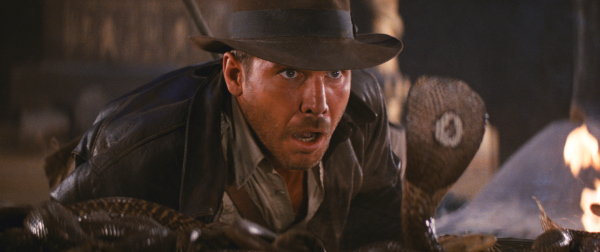
nullBack in October 2013, an episode of The Big Bang Theory ruined Raiders
of the Lost Ark
for many of its fans. In the episode, the geeky Sheldon
shows the movie (one of his “all-time favorites”) to his new girlfriend, Amy.
The moment the credits start to roll, he turns excitedly to ask her what she
thought of the film (as well as his taste). Her reaction is not what he had hoped
for. “It was good,” she shrugs, clearly underwhelmed. “It was very
entertaining. Except for the glaring story problem.” Incredulous, Sheldon insists
that Amy explain; she replies: “Indiana Jones plays no role in the outcome of
the story. If he weren’t in the film, it would turn out exactly the same. […] The
Nazis would have still found the ark, taken it to the island, opened it up, and
all died. Just like they did.” Sheldon’s mouth drops, followed by the mouths of
geeks worldwide. Amy’s criticism was picked up and passed around the Web, as writers
at various fan sites chimed in to voice their opinions on how the episode had gutted
Indiana Jones. At What Culture, Simon Gallagher explained “How
the Big Bang Theory Ruined Indiana Jones For Everyone
,” while at Cinemablend, Kristy Puchko asked, “Has
Big Bang Theory Ruined Indiana Jones Forever?
” (Such hyperbole is
typical of geek culture.) Suddenly, a previously undetected story problem was
eating away at the fabric of geekdom itself. But the problem, despite all the
hullaballoo, is that there is no problem, and there never was.


Amy’s argument, essentially, is that Indy isn’t a good protagonist
because he doesn’t advance the film’s plot. At the climax of the movie, he ends
up tied to a post, and doesn’t do anything to beat the Nazis. According to this
argument, he’s not a true hero because he fails to save the day by, say, punching
someone, or rigging an explosion. Instead, God steps in and wipes out Indy’s
foes, a modern-day version of deus ex
machina
.

But this argument fundamentally misunderstands the central
conflict in Raiders of the Lost Ark,
and what the film is ultimately about. To be sure, the Nazis are Indy’s
antagonists, and he struggles with them throughout the film. His motives stand
in clear contrast to theirs, and one of his goals is to stop them from
unearthing the lost Ark of the Covenant for their own nefarious ends. (Hitler’s
army, with the Ark at its forefront, would be unstoppable.) But Indiana Jones’s
true struggle isn’t ultimately with the Nazis, but with something else.

Let’s consider who Indiana Jones is. He’s a man of science,
an archaeologist who travels the world digging up priceless artifacts, then
putting them in museums—which is where, he repeatedly and gruffly insists, those
artifacts belong. In other words, Indy is devoted to uncovering the past,
bringing its remains to light, and adding them to the stockpile of human
knowledge. This is why he’s incensed by mercenary archaeologists like his rival
René Belloq, who work for private collectors; it’s also why he opposes the
Nazis, who would use the Ark as a weapon, and a tool of oppression. Belloq and
the Nazis might do archaeology, but their goal isn’t the enrichment of all humankind.
For Indy, securing an artifact for a museum is to secure it for everybody, to
put it on display where anyone can see it, and learn from it. (Of course, this ignores
the colonialist, imperialist aspects of archaeology, especially archaeology of
the 1930s, but let’s save that critique for another day.)

It’s with this goal in mind—the enrichment of public
knowledge via science—that Indy enters into a race against the Nazis. Can he
find the Ark before they do? But his primary struggle remains a conflict with himself. His arc, if you will (pun
intended), comes to a crisis when his devotion to science is tested, and he’s
confronted with the limits of secular, experiential knowledge.

Early in the film, Indy makes it clear that he doesn’t
believe in the legends surrounding the Ark. When explaining what the artifact is
to some visiting FBI agents, he calls it “the chest the Hebrews used to carry
around the Ten Commandments …  the actual
Ten Commandments, the original stone tablets that Moses brought down out of
Mount Horeb and smashed—if you believe in that sort of thing.” A little later, while
studying a picture of the Ark, the agents ask, “What’s that supposed to be
coming out of there?” Indy replies, “Lightning … fire … the power of God, or
something.” He agrees to locate the Ark before the Nazis do, but his
motivation is, as usual, to secure a great new piece for Marshall College’s museum.
As soon as the FBI agents leave, he confirms with his colleague Marcus Brody that the school’s museum
will get the Ark.

Brody chastises his friend, however, for taking the matter
too lightly: “For nearly three thousand years man has been searching for the
lost ark. It’s not something to be taken lightly. No one knows its secrets.
It’s like nothing you’ve ever gone after before.” Indy’s reaction couldn’t be
more flippant. Laughing, he says, “Oh, Marcus! What are you trying to do, scare
me? You sound like my mother. We’ve known each other for a long time. I don’t
believe in magic, a lot of superstitious hocus pocus. I’m going after a find of
incredible historical significance; you’re talking about the boogie man.
Besides, you know what a cautious fellow I am.” On that note, Indy tosses his
revolver into his suitcase. It’s a brilliant character moment in more ways than
one. Obviously Indy is a tough guy who can take care of himself in a scrap. But
he also believes that any threat he meets will be mortal—not divine.

The Ark, to Indy, is an artifact like any other. It’s rarer,
perhaps, and more celebrated, but it’s something made by man, and mystified by
human stories. His nonchalant manner regarding the artifact’s divine power
stands in exact contrast to his friend Sallah, who truly respects the Ark’s supernatural
power. Sallah echoes Marcus Brody’s warning to Indy, claiming, “It is not
something man was meant to disturb. Death has always surrounded it. It is not
of this earth.”

Lest any of this reading seem like embellishment, the
question of Indiana’s faith was central for Harrison Ford, who scribbled notes
in the margins of his script, wondering whether Indy was “a believer.” Recall
also Belloq’s line to Indy, when our hero is standing above him with a grenade
launcher, threatening to blow up the Ark. Belloq calls his rival’s bluff,
saying, “All your life has been spent in pursuit of archaeological relics.
Inside the Ark are treasures beyond your wildest aspirations. You want to see
it opened as well as I.”

Indy’s lack of faith is directly challenged at the climax of
the film, when the Nazis secure the Ark. He and Marion Ravencroft watch as the
villains prepare to open the chest—going so far as to document the moment on
film—and their hubris proves instructive. Whereas the Nazis believe
themselves to be God, or even superior to God, Indy realizes that he must
choose a different course of action. Famously, when the Ark is finally opened,
he shouts to Marion that she should close her eyes. In other words, at the very
moment when they are finally able to look upon the artifact they’ve been
chasing, Indy chooses to look away—to refuse to observe. He has come to agree
with Sallah that the Ark is a thing divine, and embodies knowledge that humans
are not supposed to have.

To misunderstand this is to misunderstand Indiana’s
character, and the whole point of the story. Ultimately, Raiders of the Lost Ark is a film about the limits of science, about its hero reaching a boundary where one kind
of knowledge (empiricism) breaks down, only to be replaced by a different kind
of knowledge (religion, faith). Unlike the Nazis, unlike Belloq, Indy humbles
himself, and makes what the film considers the right decision: to close his
eyes before God.

If there is a “glaring story problem” with the Indiana Jones
films, it’s that this basic conflict gets repeated in all of the movies. Temple of Doom, Last Crusade, and Kingdom of
the Crystal Skull
all effectively reset Indiana to square one, despite the
lessons he’s learned elsewhere. In each film, Indy starts out a man of science,
incredulous in the face of some greater power, only to relearn humility. Indeed,
the ending of Last Crusade depicts
him once again learning this lesson. Even worse, Temple of Doom takes place chronologically before Raiders, which means that Indy already
had some experience with the divine before setting out after the Ark—albeit the
divine of a different faith. (A separate article could be written on the
challenges that Temple poses to the monotheism
of Judaism.) To gripe about any of that would be a complaint worthy of a true geek,
rather than the weak tea with which the pretend nerds on Big Bang Theory flummox one another.

But of course, Raiders
got made first, and told the story best. Its crystal-skull-clear dramatization of
Indy’s crisis of faith—and his triumph via humility—is an essential part of why
it’s the greatest Indiana Jones film.

A.D Jameson is the author
of three books:
  Amazing Adult Fantasy (Mutable Sound, 2011), Giant Slugs (Lawrence and Gibson, 2011), and 99 Things to Do When You Have the Time (Compendium Inc., 2013). Other
writing of his has appeared
at
Big
Other
and HTMLGIANT, as well as in dozens of literary journals. Since August 2011 he’s been a PhD student at the University of Illinois at
Chicago. He is currently writing a book on geek cinema. Follow him on Twitter at
@adjameson.

METAMERICANA: James Franco’s ‘Let Me Get What I Want’ Proves Once and For All That the Kid’s All Right

METAMERICANA: James Franco’s ‘Let Me Get What I Want’ Proves That the Kid’s All Right

Later
this year, Hollywood superstar James Franco will come out with a new film whose
animating concept is so confusing it takes an entire article to explain and
contextualize it. 

Here’s
what happened: a few years ago, Franco listened to some songs by The Smiths to
help him write poems that he later compiled into a poetry collection entitled Directing Herbert White. He then turned
those Smiths-influenced poems back into Smiths- and poetry-influenced songs. He
then gave those songs to high school students in Palo Alto and asked them to
translate the songs into a third creative genre—cinematic screenplay—and based
on the resulting screenplays, he and his band Daddy (yes, he has a band) wrote an
album’s worth of new Smiths-, poetry-, and screenplay-inspired songs. The
student screenplays have now been produced, and, with the aid of songs by
Daddy, comprise a film called Let Me Get
What I Want
.

You can watch the first music video to emerge from this project here.

The
upshot here is that Franco has engineered a compositional process that mirrors the
way culture moves in the Internet Age: from one genre to another, with each
successive genre translating (and also mistranslating) the same source material
in its own way. The best part is that not only is Franco letting us see the
results at each stage in the process, but his “final” product—a film and its accompanying
soundtrack—offers us both listenable music and watchable film, making it not
only a suitably complex concept-driven artwork but also a likely entertaining
one. If avant-garde literary artists and filmmakers are pissed at Franco, as
they usually and currently are, they have a right to be—but only because Franco
has a (to them) unimaginable budget, not because the ideas Franco is working
with are subpar. They’re not subpar; frankly, they’re pretty great. It’s not a
popular thing to say, but it’s not a difficult position to defend. If the late
novelist David Foster Wallace once criticized the American postmodernism of the
1980s and 1990s as “hellaciously un-fun,” and in doing so prophesied the
imminent demise of postmodernism (and its poster-child irony) as a generative
cultural paradigm, young artists like Franco have taken the hint and begun
producing avant-garde art that’s at once cerebral and a visceral delight.

In
lauding Franco as I do here, don’t misunderstand me: plenty of writers and
filmmakers are coming up with ideas just as good as Franco’s, they’re just not
coming up with as many of them all at once, and in so many different genres,
and all while living a life in the public eye that’s equal parts “hounded
celebrity” and “pariah for every disappointed artiste-cum-barista from Seattle
to D.C.” Those who hate Franco’s art, and the (to them) obscure motivations
that drive its production in such copious volume, are the sort of artists who have
always hated those who step outside anticipated roles. These artists often find
ways to double down on the status quo without seeming to be doing so—they
maintain their bohemian street cred even as they strangle in its crib any
audacious innovations in art. In the end, though, Franco’s critics are
profoundly misunderstanding what they’re critiquing. They believe themselves
superior to Franco as artists if they can (variously) write a better screenplay
than Franco, write a better poem than Franco, and so on—when in fact Franco’s
creative persona has nothing to do with quality per se, and everything to do with the new byword in the arts:
interdisciplinarity.

Franco
masterfully
coordinates multiple genres, discrete disciplines, and disparate
resources in a way the
rest of us can’t, not only because we’re poorer but because, generally,
we’re
not as smart or creative as Franco is within his own context—that
context being
a life of limitless resources, staggering visibility, and a restlessness
that
many celebrities deal with through moral sloth or gestural
charity work. While it’s true that much of Franco’s smarts and
creativity are
attributable to him being wealthy and famous enough to know and
collaborate with some very smart and talented people, even here we must
say
that the ability to aggregate talent is both rare generally and
vanishingly
rare among the Hollywood elite—even as it’s perhaps the most critical
skill an
artist can possess in our present age of collaboration and
intertextuality. Postmodern dialectics have given way to metamodern
dialogue, and Franco knows it.

In
other words, given his local and cultural contexts, Franco is, conceptually
speaking, hitting the ball out of the ballpark nine times out of ten. His
projects, both Let Me Get What I Want
and its immediate predecessors,
are conceptually astute even when (sometimes particularly when) they fail as
individual artworks. Is Directing Herbert
White
a particularly good book of poetry? No. Is it any good at all? Not
really, at least if we judge it using conventional standards of craft, form,
and imagination. But the concept behind the book, that being to have a famous
person unabashedly write earnest poems about what a celebrity’s life is
like—which, judging from American culture, is all anyone wants to know about
celebrities anyway—is ingenious in its way. We didn’t get that kind of fan
service from Jewel, or Billy Corgan, or Leonard Nimoy, or any of the other
Hollywood darlings who’ve decided to try their hand at poetry. Franco writes
poems entirely responsive to who he is to us as well as who he is to himself,
and in making that difficult and perhaps unintentionally selfless decision he’s
exhibited a sensitivity to context which, surprisingly, even today’s most
multi-generic artists seem to lack. Indeed, American poetry—by way of
example—has repeatedly made national headlines over the past couple years for
its brazen commitment to giving exactly no one in America what they want, for doing
almost nothing to write verse that reflects the culture in which it’s being
written, and meanwhile—on top of that—for arguing loudly about how it’s
preposterous to expect it to do otherwise. Franco has made a different
decision, and in the context of his cross-generic career it’s clear that that
decision was motivated by the actor’s artistic vision rather than financial
gain. Franco doesn’t need the cash, after all.

It’s
time
for the Franco hate to stop. Viewed at the level of a career rather
than
on the level of individual artworks, Franco is Hollywood’s most
interesting,
daring, and multi-faceted artist. Hating on him is not only easy to do
but also
easy to justify as coming from a protective instinct—that is, the idea
that the
arts must be protected from the intrusion of dilettantes like Franco. In
fact,
the anti-Franco madness is as retrograde, conservative, and reactionary
as any
inclination we find in the arts today. It says that not only should we
all stay
within our generic and subcultural boxes, but that delivering
anticipated
results is always preferable to displaying uncommon (even if only
intermittently winning) daring. In fact, the reverse is true, a premise
for
which Franco is the poster-child. In light of the age we live in, and
the
explorations of genre and how artists live and interconnect that should
be
happening right now across all genres, the truth is that James Franco is
as intelligent and creative as any of his peers, and perhaps much more
so.

Seth Abramson is the author of five poetry collections, including two, Metamericana and DATA,
forthcoming in 2015 and 2016. Currently a doctoral candidate at
University of Wisconsin-Madison, he is also Series Co-Editor for
Best American Experimental Writing, whose next edition will be published by Wesleyan University Press in 2015.

ARIELLE BERNSTEIN: ‘Transparent’ and the Drive for More Progressive Media

ARIELLE BERNSTEIN: ‘Transparent’ and the Drive for More Progressive Media

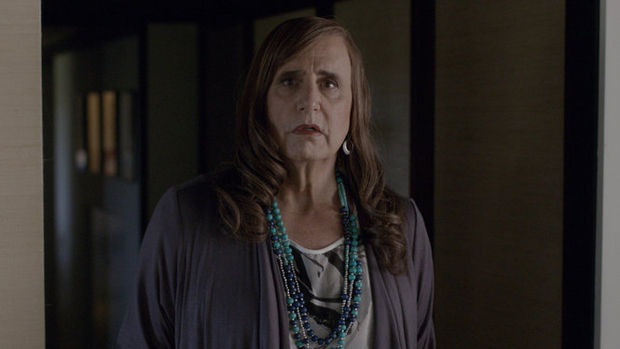
nullIn the first season of Transparent,
Maura (Jeffrey Tambor), the central protagonist of the series, is in the process of coming out
as transgender to her adult children. In an effort to claim an identity she has
long tried to hide from public view, Maura packs a few things and moves from
her comfortable, beautiful house to a small LGBT friendly apartment complex
called the Shangri-La. In one episode, Maura comes home to find a huge party
going on next door. After trying to politely request that they turn their music
down several times, Maura is exasperated. Using her shoe to bang on the wall
separating their apartments, she calls them “motherfuckers” and “faggots.”

What to make of Maura’s use of this homophobic slur, as a
testament of exhaustion and frustration? This scene occurs shortly after Maura
is insulted and humiliated by a woman who yells at her, calls her a pervert,
and demands that she leave the ladies room.

Maura’s use of the term “faggot” in this scene is deeply
affecting—it’s thoughtless, a knee-jerk response to dealing with a situation
beyond her control. The term is not used a way to reclaim its power; she’s
furious and she wants to hit her neighbors where it hurts. The fact that
someone for whom LGBT rights are deeply personal errs in how she uses language
at a moment of exhaustion and pain is not meant to portray Maura as a
hypocrite, but as someone who is human. In a culture where racism, sexism, and
homophobia are rampant, it’s easy to fuck up.

One of the things I love most about Transparent is the tenderness with which Jill Soloway treats her
incredibly flawed characters. Often, the ease with which characters say cruel,
dismissive, or disrespectful things to one another is downright shocking. Each
of Maura’s children is portrayed as self-absorbed, and the manner in which
Sarah, Josh, and Ali come to terms with their father’s transition is deeply
flawed. All three children make jokes about how “weird” the situation is. Josh
tries to learn about the trans community from a porn site and Ali attempts to
learn about what it means to be transgendered from pursuing sex with a trans
man she meets at a gender studies class.

In his now famous article for New York Magazine, “Not a Very PC Thing to
Say
,” Jonathan Chait argues that the emphasis on being politically correct is
hindering free thought and expression. A lot of very intelligent articles have
been written discussing the ways that Chait ignores how PC language functions
as a way to protect the most marginalized members of our society. But I also
think it’s important to consider how PC language also doesn’t always achieve
its immediate goals. People can parrot any number of PC terms while still
having perfectly lamentable ideas; genuinely sensitive thinkers may, as
Benedict Cumberbatch recently did when he used the term “colored” to refer to
black actors, make deeply regrettable mistakes.  Language can be deliberately wielded as a
weapon. It can also be unintentionally hurtful. The fact that celebrities,
writers and actors are pressured to think critically about their word choice in
today’s world doesn’t mean that we are being censored. It demonstrates that we
as a society are moving in the direction of empathy. 

Nonetheless, while today’s Internet landscape is obsessed
with words, our insistence on shaming others online as the primary means to
correct mistakes doesn’t necessarily encourage sensitive thinking. The age of
Twitter is an age of slogans, of a politics predicated on being “with us” or
“against us.” You don’t have to know very much about a cause or social issue to
use a hashtag. Real change won’t come from socially ostracizing allies who make
mistakes. It comes from cultivating empathy, from showing people just why
certain terms are dehumanizing.

Online progressive spaces spend a lot of time dissecting the
many problems in the media representation of marginalized groups. Recently, The
Representation Project released a video entitled “Demand Better Media in 2015”
which shows an assorted medley of media wins for women, as well as a variety of
examples of places where media failed women. The clip ends with a cry for us to
demand better media, as well as a list of helpful links that we can click on to
support media that “got it right,” or complain about the media that “got it
wrong.”

Indeed, women make up a tiny percentage of artists, writers
and producers. We need to hear more diverse stories, to tap into women’s
potential, as Emma Watson recently called for in one of her “He for She”
speeches.

But some tenets within this call for justice do seem
problematic. Who is the arbiter of what types of violence on screen and in
games are harmful or not harmful? The notion that video games cause violence
has been disproven in countless studies at this juncture, and many of the
scenes of violence that The Representation Project pins down as bad for gender
relations, like Grand Theft Auto, could certainly be viewed as satire
intended to get us thinking about the media we are consuming. Others also seem
a bit unfairly cherry-picked. Sons of
Anarchy
, which was picked apart for reinforcing harmful ideas about
masculinity, has featured one of my favorite characters, Gemma, a complex
female protagonist, who turns what it means to be an older woman going through
menopause on its head. And, of course, there are constant debates about whether
or not Game of Thrones is “good” or
“bad” for women. The series has presented varied depictions of female power,
while also depicting what would have been very real concerns for female
characters in this particularly violent fantasy world—the threat of sexual
assault.

I don’t think we can achieve parity by getting rid of media
that doesn’t neatly fit into a neat, progressive checklist, especially since
art may present racist, sexist and homophobic language in order to deconstruct
it. It’s important for us to make a distinction between language that condones
hate, and art that uses this kind of language deliberately in order to
interrogate the status quo. 

It’s also important for us to remember that learning to be
conscious of our choices is a process that takes time, energy, and, often,
involves making mistakes. In Jon Ronson’s aricle, “How One Stupid Tweet Blew Up
Justine Sacco’s Life,” Ronson describes how today’s shame culture has both
positive and negative ramifications. Our ability to expose and denounce racist
and sexist beliefs helps to hold people accountable for saying terrible,
dangerous things. But it has also contributed to a culture where shaming is
considered perfectly acceptable. In his article, “The Anti-Vaccine Movement
Should Be Ridiculed, Because Shame Works
,” Matt Novak claims that shaming can
be a quite effective means to promote social change, as long as we shame
movements, rather than humiliate individual people. This distinction seems to
me to be an important one. In today’s world individuals who are caught saying
terribly offensive things are often publically crucified and while humiliation
can certainly frighten some individuals into using more appropriate language,
it doesn’t dissolve hate. One only has to look at the endless barrage of
harassment, including rape and death threats, that many online feminist writers
receive, in order to see hate speech online is thriving.

Transparent
triumphs in part because it highlights how gaining empathy is in itself a
process. Maura is gentle, dignified and strong, but earlier episodes show her
making complicated decisions and various mistakes. Maura’s children are
portrayed as selfish, but also genuinely caring. Ali objectifies the men she is
dating and uses them for sex, but she also deeply cares about her stepfather
Ed. Sarah is completely self-involved and impulsive, but she is also the
sibling most genuinely empathetic with her father’s transition, rallying her siblings
to be supportive as well. Josh is temperamental and a womanizer, but you can
also see glimpses of how he wants to be a better man.

Soloway has faced scrutiny for making certain choices, like
hiring Jeffrey Tambor, rather than a trans woman, to play Maura. Soloway has also
been criticized for sharing a photo on social media, which combined images of the
Kardashian family and an advertisement for Transparent,
in reference to speculations about Bruce Jenner’s gender identity. Her
apologies fell on deaf ears to some, while others view her acknowledging her
mistakes as genuine. This type of real-life dialogue mimics the content of the
show itself, which emphasizes that individuals have the potential to change,
evolve, grow, and learn. Transparent
shows us a world where people are often not getting empathy right, but also
shows us a world where we have the power to learn from our mistakes and become
better, more empathetic people.

Transparent
succeeds because it goes beyond today’s hashtag activism to show us a nuanced
portrait of one trans woman’s experience of coming out, and one family’s
experience adapting to that change. The show’s depiction of today’s world is
fraught with contradictions: Maura has the freedom to be herself in a way she
never could have in the past. She explains to her daughter, “People led secret
lives. And people led very lonely lives. And then, of course, the Internet was
invented.” But, of course, the world has changed a lot, and also very little,
as Maura faces everything from awkward stares to outright discrimination. Her
children love her, but are also confused and are often incredibly insensitive.

Transparent shows
how the cultivation of empathy is in itself a process, a societal one, and also
an individual one. Unlike a show like Mad
Men
, where stylized scenes often give in to nostalgia, while still
criticizing the world of the 60s, Transparent
pushes back against any sense of wistfulness. In the opening montage,
images from the past dissolve into scenes from the present.

When discussing their father’s new gender identity, Josh
wonders, “What does this mean? That everything Dad has said or done before this
moment is a sham? Like he was just acting the whole time?”

“It just means we all have to start over,” Ali replies.

In my favorite scene of the series, Maura lights Shabbat
candles for the first time, a Jewish tradition reserved for the mother of the
house. I love this scene because it highlights the wonderful juxtapositions
that characterize the entire series—the desire for tradition, stability and
wisdom leads each character back to a faith that is literally thousands of
years old, but each character is also constantly reconciling this drive with
the recognition that these traditions need to evolve in order for them, and for
us, to truly thrive.

Arielle Bernstein
is
a writer living in Washington, DC. She teaches writing at American
University and also freelances. Her work has been published in
The
Millions, The Rumpus, St. Petersburg Review and The Ilanot Review. She
has been listed four times as a finalist in
Glimmer Train short story
contests
. She is currently writing her first book.

KICKING TELEVISION: The ‘House, M.D.’ That Love Built

KICKING TELEVISION: The ‘House, M.D.’ That Love Built

nullI’m not very good at love. Now, in
the St. Valentine’s season, I’m lucky enough to be in love. She’s very patient.
She tolerates my idiosyncrasies and flaws. We’d like to get a dog. My folks dig
her. I’m not quite sure how many times I’ve been in love before. At least once.
Most likely two-and-a-half times. And once in high school, but that doesn’t
count. I suffer from acute loneliness, which often leads to binge television
watching. At least once every two years I revisit my favorite series: Lost, Friday Night Lights, West
Wing
. They stand in as replacements for love, for companionship. Lately, in
the throes of a new relationship, I have found less of a need to binge on
TV. But a few weeks ago, as I quickly flipped past Gilmore Girls as a Saturday night viewing option on NetFlix, I
stopped briefly on House, M.D. At one
time, it had been in my binge rotation. As an argument for the virtues of Rory
and Lorelai filled my periphery, I wondered how House fit into the mix. In the absence of love, Lost, Friday Night Lights, and West
Wing
all told some sort of love story. Jack and Kate. Small town America
and football. Aaron Sorkin and whimsical banter. But House seemed on the outside, counter to the affections of my
loneliness. And then it occurred to me, in an epiphanic moment of distant
wonder, that House is the greatest
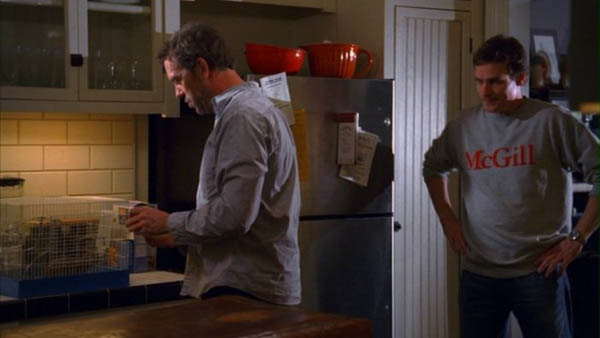
love story television has ever told. The love between Drs. Gregory House and
James Wilson, that is.

I’m not talking about the kind of
love you find in House fan fiction.
And I’m not talking about the kind of love that existed between Cameron
(Jennifer Morrison) and House (Hugh Laurie), a love born of daddy issues and a show’s attempt to create sexual tension. And I’m not talking about the Cuddy
(Lisa Edelstein) and House love, which always seemed contrived and formulaic. What existed between Laurie’s House and Robert Sean Leonard’s Wilson defied
the traditions of television which ran deeper and were more transcendent than Sam and Diane,
Ross and Rachel, Pepé Le Pew and Penelope Pussycat.  

Not unlike the love I have now, I
almost missed out on House. Just as
my partner and I briefly parted ways for superficial and ancillary reasons this
past December, I dismissed House as
typical serialized fare. It was ER with fewer characters. Hugh Laurie was
over-the-top. The guy from Dead Poet’s
Society
(Leonard) seemed under-used. The Australian was too pretty. And I
never liked Edelstein as an actress, particularly her underwhelming performance
as an escort on West Wing in all four
of my viewings of it. But like love, I gave House
a second chance, and I became enamoured by it. Maybe even obsessed. Dare say I
loved House, and all its
idiosyncrasies and flaws.

What drew me most to House was Laurie’s performance, and it
is indeed brilliant. Playing a drug-addicted and gifted diagnostician proved to
be a character for the ages.
His
Holmesian problem solving at first seemed too much in the tradition of Columbo, but Laurie made it feel
genuine, as the solution to the diagnosis fulfilled his character’s need more
so than that of the arc and narrative of the episode, counter to the traditions
of the genre and tropes of the procedural drama.  And Leonard’s Wilson was the Watson
to Laurie’s Holmes. But more than anything else on the show, I was drawn to the
extreme friendship between House and his oncologist conscience. It was the kind
of love between friends that simply isn’t shown on TV or in film, and certainly
not between men. According to the TV and film auteurs of today, all male friendships are
some form of bromance, or homoerotic exercise, or dudebro vehicle. Judd Apatow,
or Lethal Weapon, or Judd Apatow. On House,
we were treated to a love between men that I remember from home, from youth,
that I’ve missed in the transience of my adulthood, a kind of love that is
beyond sex and marriage and poetry and children and Christmas dinner and
minivans and mortgage rates and the new Keurig and Viagra and debt and
infidelity and data plans. This was a love story that aspired to more than what
the medium had ever attempted to offer before.

Every great love story revels in
the mythology of its origins. House and Wilson met as Romeo and Juliet did: at
a medical convention in New Orleans. Wilson started a bar fight in a bar after
Billy Joel’s "Leave A Tender Moment Alone" was played repeatedly by
another patron. Having witnessed the event, House posted Wilson’s bail and an undeniably real love was born.

In early seasons, Wilson enabled
House’s addictions and extremes. He writes, or allows House to forge,
prescriptions for Vicodin. He supports, or excuses, House’s alcoholic
tendencies, his affection for prostitutes, his acerbic wit. He indulges or
celebrates the oddity of House’s genius. Enabling is a form of love, as long as
it does not endanger anyone. Wilson always controlled his affections. He
managed House. He was his conscience, his sponsor, his moral center. And though
at times it bordered on burden, the friendship certainly wasn’t one-sided.

This love can best be seen in an
episode from Season 3, "Son of Coma Guy." House awakens a man (the
brilliant John Laroquette) from a coma, and he and Wilson take him to Atlantic
City for a last hurrah before the ultimate sleep. House has to euthanize the
man in order to preserve his organs and save his son. While Wilson’s morality
would never allow him to lead such an act, he supports House’s morality in providing an
alibi and advice on methodology. Love is unconditional in this way, and love on
television would rarely aspire to this form, a love so true it is literally
criminal. Joey would never have helped Dawson bury Pacey’s body.

This altruistic love continued
throughout the series. Wilson would manage House’s mania, take him to rehab,
comfort those bruised by his violent pathology. House provided the buttoned-up
Wilson with his freedom, his shy eccentricities, his inner manchild. From
adolescent pranks to monster trucks to binge drinking, House allowed Wilson to
be free to the confinements of his responsibilities. House saved Wilson from bad
relationships, from a life of stasis, and a lack of companionship. He paid a
child actor to pretend to be Wilson’s illegitimate son to provide the tangible
realization that kids are a hassle. Chandler would never do that for Joey.
Hell, he slept with Kathy.

In House’s final season, the roles between House and Wilson are
reversed when the oncologist is diagnosed with cancer. Suddenly, it is Wilson
who is embattled and prone to questionable decisions, who is faced with his
mortality the way House’s addictions continually forced him to. After failed
treatments (both traditional and experimental), Wilson is resigned to death,
something that House has never been able to consider as an option for his
patients. At this moment, House realizes he may lose his one true partner, his
one true love.
 

"You don’t have to just accept
this."

"Yes I do have to accept this. I
have five months to live. And you’re making me go this through this alone. I’m
pissed because I’m dying and it’s not fair and I need I need a friend. I need
to know that you’re there. I need you to tell me that my life was worthwhile
and I need you to tell me that you love me."

"No, I’m not going to tell you that
unless you fight."

If there has been a more true and
honest declaration of love on television, I have not seen it. Wilson’s affirmation
is a thesis statement of their relationship, and the essence of true love
itself. House’s inability to do exactly as his friend needs is in and of itself
an act of selflessness and love.

In the series final episode, House
has faked his death to escape jail so that they may spend the rest of Wilson’s
life together. The entire series had been built on the premise that House
needed the puzzle of diagnosis, the Holmesian existence, in order to live. It
was more to him than the Vicodin, or the pain, the Vicodin, or Cuddy,
or family. But in this final act, a final act of absolute love argues that the
series was not about House at all, but rather the long tale of a complicated
platony, and in more universal terms the human need for companionship above all
else.

And fittingly, astride their
motorcycles, leathered up in a wink of homoerotic wit, the two men drive off
into the sunset, to their final moments together, an epic nod to the iconic
fades into sunset.

Love is at its worst on television
and on Valentine’s Day. In these instances it is a caricature of itself. The
difference is that on TV the love portrayed is unattainable. On Valentine’s
it’s unrealistic. An overly sugared candy heart. A sitcom of emotion. Love on
television tends to be superficial, shallow, and simple. It is stained by the
inevitability of reconciliation, the false promise of happiness, and The Bachelor. What Wilson and House
shared eclipsed our hollow idea of love.

Mike Spry is a writer, editor, and columnist who has written for The
Toronto Star, Maisonneuve, and The Smoking Jacket, among
others, and contributes to MTV’s
 PLAY
with AJ
. He is the author of the poetry collection JACK (Snare
Books, 2008) and
Bourbon & Eventide (Invisible Publishing, 2014), the short story collection Distillery Songs (Insomniac Press,
2011), and the co-author of
Cheap Throat: The Diary of a Locked-Out
Hockey Player
(Found Press,
2013).
Follow him on Twitter @mdspry.

METAMERICANA: On Crispin Glover’s Epic Performance Art

METAMERICANA: On Crispin Glover’s Epic Performance Art

nullBetween
1987 and 1995, actor, musician, and author Crispin Glover gave America
one of the longest-running and most inscrutable performance art projects
of the postwar era, and did so on one of the largest stages available
to any performer in the States: late-night television. Even now, twenty
years on, the exact nature and purpose of Glover’s project is
unclear–as it’s been deliberately left unclear by its creator–even
though anyone with access to the Internet and YouTube can trace each
stage of the project’s development. What we find, when those individual
and temporally far-flung stages are combined, is an exemplary piece of
“metamericana” that may well have been decades ahead of its time.

*

Crispin
Glover has always been an idiosyncratic and even downright strange man,
and he still is today. In 1987, however, Glover’s quirks were far less
well-known, as besides a forgettable Friday the 13th appearance and a single high-profile role–as the George McFly (both the younger and older versions) in Back to the Future–he’d only been featured in a single movie (River’s Edge) that more than a handful of American moviegoers had seen. And in fact Glover was left off the second and subsequent Back to the Future movies for a reason: he had ideas of being a genuine artist, an ambition of which the director of the Back to the Future
films, Robert Zemeckis, has never been accused. (Zemeckis, among a
number of high-profile, high-grossing thrillers, also produced the Paris
Hilton vehicle House of Wax.)

Though
only 23 in 1987, Glover had already published a novel and performed in
several low-budget art house flicks. He’d also begun writing some
bizarre music that would later feature prominently in his performance
art, which for the purposes of this article I’ll refer to as The Crispin
Glover Project.

*

The Project began in 1987, with Glover’s publication of a novel called Rat Catching. Possibly the first metamodern novel–it was written a decade before David Foster Wallace’s Infinite JestRat Catching was a pre-Internet remix the likes of which America had not yet seen (at least in its popular culture). What Glover did in Rat Catching
was take a public domain text–a 1896 manual for how to catch and kill
rats–and alternately blacked or whited out large sections of it to
create his own storyline. Sentences were also rearranged at will, and
captions to the many pictures included in the original manual were
altered; finally, Glover’s name was sloppily affixed to the title page
over the name of the original author.

Rat Catching
is an astounding and disturbing book, one that simultaneously
deconstructs an existing text and constructs from it a new and only
partially related one. It juxtaposes deconstruction and construction in a
single “reconstructive” literary act. Importantly, the novel was
eminently readable, even if the purpose behind its deconstruction of a
rat-catching manual–or even the purpose of the novel Glover replaced
that manual with–was unclear. Rat Catching was therefore not so
much a degradation of language conducted with a political point in
mind–as is typically in the case with work we identify as
“postmodern”–but a re-purposing of language made with no obvious
critique in mind, or at least no evident critique, but only the desire
to create something new and unforgettable.

At the same time that Rat Catching was being published, Glover was finishing up work on Rubin and Ed,
a low-budget film that (unbeknownst to Glover at the time) wouldn’t be
released for several more years. It was in this context that Glover made
his first appearance on the David Letterman show, an appearance still
regarded as one of the strangest five minutes in television history.

*

On
July 28, 1987, Glover, sporting glasses, unusually long hair, and
platform shoes, conducted a five-minute interview with Letterman–if it
could be called that–before Letterman walked off the set in both
disgust and (he would later indicate) a fear for his personal safety.
Here’s a clip of Glover’s first appearance on Late Show with David Letterman:

Note
that Glover answers most questions while looking into an unknowable
middle distance, seems either scared or anxious (it’s not clear which),
and begins his descent into outright lunacy only after a woman in the
audience–many now believe her to have been a plant–begins heckling
him. “Nice shoes!” the woman shouts, and everything quickly deteriorates
into madness.

In
the early stages of his "breakdown," Glover seems to be raising the
question of how the media covers celebrities (he takes out a wrinkled
newspaper clipping to opine about it, and certainly appears to be
dressed as someone other than the celebrity he was and is) but at no
point does any real commentary or critique materialize. What Glover
does, instead, is nearly fall off the stage and then execute a possibly
impressive and certainly violent-looking karate kick.

After
a commercial break, Glover is nowhere to be seen; Letterman implies he
was kicked off the set. Letterman’s bandleader, Paul Schaffer,
speculates–in a moment of (for him) unusual candor and insight–that
the whole event was a “conceptual piece.” Letterman isn’t so sure, and
seems genuinely put off by Glover.

Nevertheless, he agrees to have him back on the show a second time.

*

Glover’s
second visit to Letterman’s program was as strange as the first, but in
an entirely different way: Glover is meek, harmless, and giggling, in
fact giggles so frequently that–coincidentally–he never has to answer
any of the host’s questions about his first appearance on the program.

The
short version of what’s happening: Glover, again without Letterman’s
knowledge–let alone permission–is controlling the interview. He does
so in a way that’s so confusing to the audience that they start booing
Letterman, not Glover, when the former makes repeated fun of the
latter’s demeanor, twice threatens to assault his guest, and repeatedly
implies that he’s about to throw Glover off the show again.

As
you can see in the video above, when Letterman asks Glover to explain
his first appearance, Glover refuses to say whether the clothes he wore
during the appearance were his “real” clothes or merely props. He
giggles uncontrollably and asks Letterman, “Well, what did you get [from
it]?” when the host asks him to explain his previous visit. And yet, as
odd as Glover’s words seem, everything he says to Letterman could
readily serve as a description of one brand of metamodern art: that
being metamodern art inspired by the writings of university professor
Mas’ud Zavarzadeh, who coined the term “metamodernism” in 1975:

Says Glover:

(1) “It’s self-explanatory…kind of…”

(2) “There it was, or there it is…”

(3) “I feel like I shouldn’t say anything [about it]…”

(4) “I wanted it to be this interesting kind of thing that would happen that people would find interesting…”

(5) “The point…was [to create] interest…”

(6) “It was going to go to a different point…it wasn’t going to escalate, it was going to go down into a newer [sic] state…”

Letterman,
literally leaning forward in his chair to get an answer to his
questions, never gets any answer at all. “What was the point?” he asks
Glover repeatedly. But Glover, who in fact was not then (and is not now)
an obsessive giggler, and who’s widely perceived as an intellectual and
creative genius by his peers and many fans, offers no answer because
the answer is already right in front of Letterman and the audience:
Glover has used language and bodily performance to get and keep the
attention of an audience, but has done so without any evident purpose in
mind. He shows Letterman, that is, that attention is the currency of
contemporary America–a maxim that would be infinitely enhanced in
veracity and utility after the popularization of the Internet–and that
the primary value of the most successful attention-seeking art is not
that it critiques language or culture through Modernist constructions or
postmodernist deconstructions, but that it removes viewers from their
own lived realities.

When
Glover asks Letterman, “Did you find it interesting, in one way?”,
Letterman shakes his head “no.” Yet that answer is belied by the fact
that the host invited back his troublesome guest just days after his
first appearance–and would invite him back repeatedly afterwards.
Glover is so interesting to Letterman that his interest manifests as an
intense aversion he associates with disinterest.

We
see the same phenomenon at play on the Internet today: we follow and
discuss with an eerie obsession those we claim to dislike and even be
viscerally put off by; we give additional attention to people we
consider superfluous by way of writing at length about how they deserve
no attention; we follow types of art we detest with an even greater
intensity of attention than those we claim to be enamored by; we even
write critiques of that art in which we simultaneously claim that it has
no effect on its audience and note that everybody just can’t stop
talking about it. Again and again we see art that seems higher-brow and
more intricate and laud its qualities and even, specifically, its
memorability–but see no self-contradiction in our analysis when it
later fails to excite much ongoing attention at all. It’s almost as
though we know very what type of art finds clever ways to gain and hold
attention in the Internet Age, but need to half-heartedly construct
narratives in which we assure ourselves that it’s otherwise.

In
other words, when we encounter metamodern art or personalities we often
unwittingly consume the very paradoxes they and their art perform.

*

Every
episode of Letterman’s program, for decades, has been either funny or
not, either instructive or not, either “real” or “staged,” either “good
TV” or “bad TV”–except
for those nights Crispin Glover has appeared on the program, and the
few times that others interested in Glover’s creative vision have aped
his methods in the same venue.

The Crispin Glover Project was designed to overleap poles of thought and affect like “real” or “staged” in order to
create a space in which all poles are simultaneously present and
absent. Glover’s performances on Letterman are both funny and not, and
therefore end up being neither; they feel like bad television but have
the staying power all good television has; they’re ambivalent on the
question of whether they’re “real” or “staged,” and for this reason are
impossible to forget. After all, we tend to remember those experiences
that most wrench us from the known and comforting–often calling these
experiences “sublime”–and the Crispin Glover Project was intended to
show that concept-driven art can create these experiences better than
any other method.

*

Glover
believes, as do a certain strain of metamodernists, that in the
Internet Age the most important civic quality we can all develop is an undirected attentiveness--a
paradoxical state in which we’re ready to believe things and act on
beliefs that are normally outside our experience of the world. If we can
learn to be most attentive in those moments we’re most out of our
comfort zones, we can begin acting in the world in a way that isn’t
bound by the same conventional thought that hasn’t worked out for many
of us in the past. We might therefore call Glover’s apolitical art
“preparatorily political.”

When
Glover ends his second appearance on Letterman by showing the host a
series of art objects that make no sense whatsoever, both Letterman and
the audience are rapt: not because what they’re looking at is garbage,
but because they don’t even know what they’re looking at–and Glover’s
explanations of each object are just plausible-seeming nonsense. If
postmodern deconstruction asks us to so minutely dissect meaning and
performance that there’s literally no end to the levels of precision and
distinction we can produce, Glover’s metamodern art asks us to do
precisely the opposite: accept that there are things we cannot know or
understand, but see also that this "not-knowing" can, paradoxically, be a
powerful preparation for future action.

In
Glover’s third appearance on Letterman’s program, much like during his
second one, he giggles and stutters demonstrably less the moment he’s
asked about his current art projects instead of the The Crispin Glover
Project. In fact, not only does Glover dress “normally” for his 1990
interview with Letterman–continuing his trend of dressing progressively
more conventionally with each appearance–but in fact only stutters or
giggles whenever Letterman asks him about a topic he wishes to avoid.
When speaking of other projects, Glover acts as any other guest might,
and speaks with great clarity and focus. But one thing he doesn’t
do is answer any of Letterman’s questions about the Project; instead,
he deliberately runs out the clock on his segment by telling a story
that superficially might, but also might not, have anything to do with
his first appearance on the program. And once again, Letterman gets
booed on his own show for his abrupt treatment of his guest.

The
above video is worth watching not only for Glover’s continuation of his
performance art project, but also because it marks the debut of “Clowny
Clown Clown,” a Glover song–with accompanying video–that is neither
"understandably bad" to the point it can be made fun of, nor good enough
to admire. Instead, like the rest of the Project, it’s basically
inscrutable. It deconstructs linear narrative into incoherence, but does
so with such a naive commitment to creation and self-expression that it
seems every bit as Modern as it is postmodern. The crowd loves it, and
boos Letterman when he calls Glover “Eraserhead” at the close of the
interview.

Here’s the full music video for “Clowny Clown Clown”:

Listen
to the song without watching the video and you’ll see that, in fact,
it’s just a rather silly but conventional (and in fact linear)
narrative. The lyrics even make mention of “Mr. Farr,” the character
Glover may have “played” during his first Letterman interview. “Thinking
back about those days with the clown,” sings Glover toward the end of
the song, “I get teary-eyed–and snide. I think, deep down, ‘I hated
that clown. But not as much as Mr. Farr.’” The meaning here isn’t hard
to interpret at all, despite the video’s attempts to make it seem
opaque. (A reasonable read would be that Glover is speaking of the three
roles he plays: the “I” is Glover, the “clown” is
Glover-as-performance-artist, and “Mr. Farr” stands in for one of the
many Hollywood acting jobs Glover has taken on. Glover hates not being
able to be himself in public, but he’d rather act the clown–someone
simultaneously midway and "beyond" his actual and acting selves–than
merely be remembered for the characters he’s played on screen.)

*

The coda to the Project is Glover’s last performance art-related appearance on Letterman,
in 1992. Again Glover refuses to justify or explain his first
appearance on the program, or even to tell the host whether he was
wearing a wig on that (by now) infamous night. “Why can’t you just
answer this?” asks an agitated Letterman. “I mean, if it’s a wig, it’s
fine, but if it’s not a wig, it’s fine. Either way.” In fact,
Letterman’s need to know the answer suggests that he can accept either
of two opposite possibilities–a sign of maturation on Letterman’s
part–but that he still can’t accept not knowing whether either of these
possibilities is the “real” answer to his question. “Sure, it is fine,” says Glover, refusing to say more.

The
most telling statement by Glover in the video above is this one: “I
like to leave it…mysterious. Well, here’s the facts: I’m wearing a wig
in the movie [Rubin and Ed], and I look exactly the same in the
movie as I did when I was on the show.” Though Letterman acts as though
his interrogation has yielded fruit, in fact this is yet another
non-answer: Glover merely restates the facts as everyone agrees them to
be, refusing to either deconstruct or synthesize them on anyone else’s
behalf.

*

In
all of this, we have to remember the behavioral oddities of the role
that made Glover famous, and for which he’s still best known today:

If
you’ve watched the video above, you’ve probably noticed the key to The
Crispin Glover Project, which is that, by and large, the entirety of the
Project comprises Glover performing an amplified version of George
McFly in public. For years.

Here, below, is Glover as he actually
is, explaining to two radio hosts what acting as George McFly–and
being remembered almost exclusively for that role–taught him about
propaganda:

Per Glover, Zemeckis was able to convince viewers of Back to the Future II
of a lie–that Glover was in the film, when in fact he was not–simply
by giving them what they expected to see. In response, Glover found a
way to use the very same character Zemeckis was manipulating to give
viewers of David Letterman’s television show something they couldn’t
possibly expect. One might even say that Glover offered America the
opposite–in both form and effect–of propaganda. (He also, in an
interesting historical note, sued Zemeckis for misuse of his image–and
won.)

Now
here’s Joaquin Phoenix stealing Glover’s idea nearly twenty years later
and (in a show of real gall) doing so on the very same television
program:

And
here’s the most talked about celebrity in America right now, Shia
LaBeouf, wearing exaggeratedly ragged clothing and stealing from Joaquin
Phoenix stealing from Crispin Glover:

It’s
no coincidence that LaBeouf’s seeming point is the same one we might
glean from Glover’s project: that new media destroys, if we permit it
to, both the reality-artifice spectrum and many other polar spectra
besides. Which frees us to free ourselves from these limiting spectra as
well.

Over
the next twenty years, we’ll hear a lot about art that is
simultaneously sincere and ironic and neither, naive and knowing and
neither, optimistic and cynical and neither. While two of the theorists
presently associated with metamodernism, Tim Vermeulen and Robin van den
Akker, originally described such art as “oscillating” between
conditions traditionally associated with Modernism and
postmodernism–for instance, sincerity and irony, respectively–their
view has changed in recent months. Now, they, and other metamodernists,
are more likely to note that metamodern art permits us to inhabit a
“both/and” space rather than merely the “either/or” spaces deeded us by
the “dialectics” of postmodernism.

“Both/and” means transcending
the poles that have been thought to dominate our lives ever since Plato
devised the term "metaxis" to describe this condition of moving
perpetually between opposites. By comparison, “either/or” means that
everything is a zero-sum game and can never be otherwise. On online
discussion boards, for instance, "either/or" dialectics prompt us to
believe that others can only agree with us or oppose us, to understand
us in our entire selves or be deliberately and permanently foreign to
us; there’s no room for partnerships in which not all perspectives are
shared, let alone partnerships in which participants’ goals but not
their values are in common.
If the ultimate ambition of metamodern art, and metamericana generally,
is to help us discover what the “and” in “both/and” could possibly
mean, we must credit Glover with being one of the pioneers in that
historically important search.

Seth Abramson is the author of five poetry collections, including two, Metamericana and DATA,
forthcoming in 2015 and 2016. Currently a doctoral candidate at
University of Wisconsin-Madison, he is also Series Co-Editor for
Best American Experimental Writing, whose next edition will be published by Wesleyan University Press in 2015.

On A MOST VIOLENT YEAR: When Homes Start to Look Like Their Owners

On A MOST VIOLENT YEAR: When Homes Start to Look Like Their Owners

nullThe places where we live shape us, and we shape the places

where we live to suit our temperaments. This truth is driven home repeatedly by
J.C. Chandor’s newest film, A Most
Violent Year
, which has been compared repeatedly to The Godfather but just as easily could be compared to On the Waterfront, Winter’s Bone, or The Truman
Show
as a study of the way inhabitants of an environment deal with and
modify their environment. Chandor has foregrounded setting to such an extent
that the two powerful performances at the film’s heart—Oscar Isaac’s as the manager of an oil trucking company, learning how to defend himself against the aggression of his semi-criminal colleagues, and Jessica Chastain’s as his
wife, who already knows and is desperate to teach him—seem to grow naturally
out of the milieu in which we receive them. However, these figures also shape
the settings in which they thrive.

The first sight we have of Abel shows him running, nimbly,
though a modest suburban New Jersey neighborhood. The setting is appropriate
for a character like his: contained, inwardly manicured, almost frustratingly
righteous and plodding when it comes to the moral shorthand those around him
employ for survival’s sake. There is something bleak about these streets,
comfortable as they might seem; there’s a notable lack of other people in
Abel’s surroundings, a visible emptiness, that suits the story, and suits also
the story he is writing with his actions here. After he makes the first payment
on his business, huddled in a cold-seeming trailer, his partner, played with
memorable paleness by Albert Brooks, encourages Abel to take a look around his
future headquarters, and so he does: down by the river, facing Manhattan from
the Jersey side, perhaps picturesque in one sense but at this moment, in the
middle of winter, standing behind oil tanks, it seems less like a view of
dreamland than a reminder of what obstructions lie ahead. The buildings are all
the same color, they’re all huge, and they’re all a long way off. When we see
Abel’s house for the first time, its sleekness is impressive but its coldness
is telling. The impression it makes is not that Abel is cold—for he isn’t. As
confidently portrayed here by Isaac, he’s a warm person, almost warm to a
fault, naïve in his trust of ethics, good faith, honesty, and the people in his employ. The house suggests,
though, the high-flown way he believes a man of his stature should live: high ceilings, pristine
surfaces, vast spaces, off-white walls, the perfect kitchen, the perfect
library. But it’s a borrowed idea of perfection. When we meet one of his
associates, played here with semi-beefy malevolence by Alessandro Nivola, it
appears that they share this same notion of coldness, the appearance of
perfection, as an aesthetic. The colleague has a racquetball court built into
his house, pinging opulence at us with the force of the ball itself. When the
two share a drink and discuss a loan which could push Abel into career
adulthood, they sit in a space-age interior, resembling something out of an
advertisement rather than a place where anyone might live. This is fitting,
though, because the people Chandor is filming here place little stock in homes,
in domesticity; for them life is work, and work is life. Work, further, is all about the rewards you reap, and the rewards you reap are, in essence, your life.

Chandor is smart about this dichotomy, though. When we see
the home of one of Abel’s employees, a vulnerable man who, after being beaten
up by the thugs whose aggression against Abel’s drivers propels the story, shoots his aggressors and then flees, the apartment’s modesty and hominess, with its inexpensive furniture, its drawn shades, and its
lived-in quality stand in stark contrast to the other interiors we’ve seen. It’s
clear hat the employee isn’t suffering under the same preconceived notions Abel
suffers under—but when he meets a sad fate, we wonder if such illusions might
have helped him. In an interview, Oscar Isaac
recounted how Chandor had stressed the importance of the suits Abel wears in
the film, and how their presence might dictate the character’s behavior, and in
fact his entire world view. This is a profound truth, when all is said and
done: outer trappings can shape the person to which they are attached, in
greater or lesser degrees. It’s the direction that shaping takes that makes all
the difference.

Max Winter is the Editor of Press Play.

KICKING TELEVISION: Why David Costabile, Mary Louise Parker, Gary Cole, Michael Keaton, Ellen Page, Joan Allen, Adam Driver, and Beyonce Need Vehicles!

KICKING TELEVISION: Why David Costabile, Mary Louise Parker, Michael Keaton, Ellen Page, Joan Allen, & Beyonce Need Vehicles!

nullIn my look
back at 2014
, I bemoaned the wasting of good talent on bad TV. Fewer
things are more frustrating in film and television than a performer withering
under the bright lights of a production unbecoming of their abilities. As I
binge-watched TV over the festive season while adding 20 pounds raiding my parents’
fridge, I became more and more aware of how prevalent this neglect is. And then I was reminded
of it when J.K. Simmons won a Golden Globe on Sunday. Simmons is a character
actor with few peers. And yet, when he finds himself on TV, it’s in doomed-from-the-start series like Growing Up Fisher or
Family Tools. Alternately, pilot
season is filled with actors and actresses undeserving of their own programs who are regurgitated each year. What exec’s nephew thought we needed a Kyle
Bornheimer-led comedy? 

There is no shortage of acting talent wandering aimlessly
from lot to lot in Hollywood. True
Detective
brought Matthew McConaughey and Woody Harrelson back into the
public discourse, reminding us that they’re actors first and celebrities
second. In season two, the same revitalization will be attempted with Colin
Farell, Vince Vaughn, and Taylor Kitsch. But True Detective can’t provide every underused actor a path to
salvation.

What the industry seems to lack is the ability recognize
talent and find suitable vehicles for them to succeed in a series. What follows
is a list that could go on longer than an explanation for Anger Management, but recognizes a few actors and actresses who I
think could really excel in a series, especially in the new world of streaming
television where shows like Transparent
and House of Cards are not just made,
but celebrated.

David
Costabile

null

Costabile has had recurring or small roles in several of
the most interesting and innovative TV shows in recent memory, and more often
than not, he’s the best thing on screen. His CV includes Damages, Breaking Bad, The Wire, and Flight of the Conchords. Even in the soapy guilty pleasure of Suits, he stole scene after scene
stepping beyond the work of his co-stars. Costabile is a standout amongst his
peers, and would be excellent in a leading role in a show of the pedigree of
those he has guested on. Costabile is the least known on this list, and was one
of many character actors who I considered including, such as David Morse,
Margot Martindale, James Remar, and their peers. Here, Costabile stands for all
of them. A quietly accomplished screen presence who could no doubt define a
series if given the opportunity.

Mary
Louise Parker

null

I never liked Weeds.
The first few seasons were somewhat palatable, but the narrative got more and
more ridiculous and suffered from child casting gone awry with puberty so bad
that Robert Iler could feel better about himself. But Parker was always an
engaging presence, even in the later seasons when even she seemed embarrassed
to be enduring the silliness of the plots and wasted guest stars like Albert
Brooks and Richard Dreyfuss. Parker’s best role to date was the recurring Amy
Gardner on The West Wing. While Aaron
Sorkin is often maligned for writing poorly realized female characters,
Parker’s Gardner was a sublime revelation, and I often hoped she’d be added to
the full-time cast. Gardner’s mix of quirky intelligence and aloof indifference
to the chaotic world around her would’ve been an interesting spin-off, and a
series with Parker at its center that respected the quality of her performative
acumen. 

null

Gary
Cole

Gary Cole has been in everything. Seriously. He had a
cameo in my buddy Phil’s Bar Mitzvah video. The popular parlour game Six
Degrees of Kevin Bacon should be renamed for Cole. My introduction to Cole was
in the short-lived NBC series Midnight
Caller
, and I’ve been a fan of his in everything he has done since. An alum
of the Steppenwolf Theatre Company, Cole has been the best part of 36 episodes
of The Family Guy, stole laughs from
Will Ferrell in Talladega Nights, is
part of pop culture lore from his role in Office
Space
, and was nearly elected President – in The West Wing. And the dude has great hair. Like, George Clooney great.
How he has never been part of the main cast of a (successful) live action
series is beyond me, but then again Jon Cryer has won two Emmys, so what do I
know?

Michael
Keaton

Fresh off his Golden Globe win for Birdman, and now a frontrunner for an Oscar, Keaton has revived his
career after fading from the spotlight in the past decade. The real Batman will
likely have his choice of film scripts to choose from, but to me his place is
on the small screen. After a lauded performance as a former superhero actor who
turns to the stage in an effort to find his place in the canon of contemporary
film, Keaton could learn from Riggan Thomson and turn to a more interesting
medium in the twilight of his career. And what possible better film role will
ever come his way? Keaton was a giant in the 80s and 90s, stepping seamlessly
between comedy (Mr. Mom, Multiplicity) and drama (Batman, Clean and Sober) unlike almost any actor of that era. He would’ve
made an interesting choice for new seasons of True Detective, and a series of that ilk built around Keaton would
be a welcome addition to the TV landscape.

Ellen
Page

null

Where’d you go, Ellen Page? Her Oscar-nominated turn in
Juno was eight years ago, and since then, Page has been seen only sporadically on
screen, and often lost in the grandiose of the franchise (X-Men) or the scope of the premise (Inception). Page’s coming out in a speech at the Human Rights
Campaign’s "Time to Thrive" conference reminded us of her remarkable
presence despite the absence of the false Hollywood sheen. As
a Canadian, I recall Page from her start in TV on Pit Pony and ReGenesis,
and would love to see her return to her roots in a series befitting her
marvelous talent. The problem is, Hollywood has no idea what to do with a 5’2”
Canuck lesbian who’s best known for an indie romcom role as a pregnant teen.
Ideally, they’d like to pair her with Michael Cera in Juno 2: Twins! but she deserves so much more.

Joan
Allen

null

Hollywood’s inability to cast women over 38 as anything
other than mothers and quirky older sisters is not just a plague on the
industry, but an indictment of its lack of imagination. There is perhaps not a
more captivating yet underappreciated screen presence than the three-time Oscar
nominated, Tony Award-winning Steppenwolf alum. If she had a penis, she’d be
George Clooney. One of my favorite films of the past two decades is The Contender, in which Allen’s
performance outdoes brilliant turns by Gary Oldman, Jeff Bridges, and Sam
Elliott. She’s the only life in the antiseptic aesthetic of the Bourne films.
In fact, I’d love to see her CIA Deputy Director Pamela Landy in a series of
her own. Who do you call at Netflix to get that done?

Adam
Driver

null

Girls is
awful. I mean, it’s beyond awful. I’d rather spend the rest of my life in Chuck
Lorre’s screening room than endure another episode of HBO’s series about
privileged white girls in Brooklyn trying to monetize their MFAs is exhausting
self-indulgent tripe. But Driver, is excellent. And wasted. He’s similarly
excellent and wasted in the disappointing This
is Where I Leave You
, and the only reason to suffer the Daniel
Radcliffe/Zoe Kazan romcom The F Word.
With a prominent role in the upcoming Star
Wars
sequel The Force Gets Up Early,
Driver is likely meant for more big screen turns, but is better suited for the
character driven serial quality of TV. He has the manner of a character actor
and the charm and presence of a matinee idol, traits that beg for a series. But
not NCIS: Greenpoint.

Beyoncé
Knowles

This isn’t a list of performers who need a break, it’s a
list of those who need a vehicle to fit their talents and engage viewers in the
genre of TV. Perhaps I’m still smitten by my WATCHABLES
podcast episode one Beyoncé learning from Arielle Bernstein
, but
the star among stars Ms. Knowles is a presence unlike any we’ve seen in a
generation. And she has held her own in films such as Obsessed, Cadillac Records,
Dreamgirls, and even Austin Powers 3: More Britishy and Silly.
Does she need a TV show? No. Would it immediately be a hit not matter the
quality? Yes. But talent intrigues me, and just as I wondered
aloud recently about non-TV auteurs could revitalize the sitcom
, I
would love to see what Bey could do on the small screen. And I’m not talking
about Z & Bey @ Home. I’m talking
about real TV. Like, Yoncé in twelve episodes directed by David Fincher written
by Gillian Flynn. But, you know, funny too. Hell, there’s already a trailer:

Mike Spry is a writer, editor, and columnist who has written for The
Toronto Star, Maisonneuve, and The Smoking Jacket, among
others, and contributes to MTV’s
 PLAY
with AJ
. He is the author of the poetry collection JACK (Snare
Books, 2008) and
Bourbon & Eventide (Invisible Publishing, 2014), the short story collection Distillery Songs (Insomniac Press,
2011), and the co-author of
Cheap Throat: The Diary of a Locked-Out
Hockey Player
(Found Press,
2013).
Follow him on Twitter @mdspry.