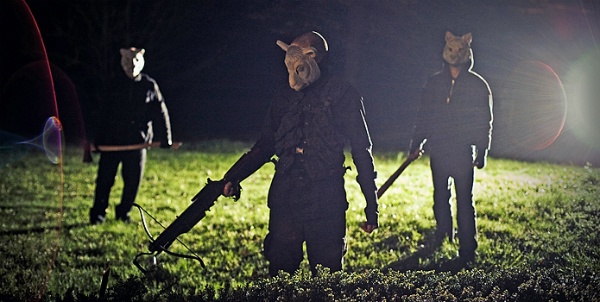
A NEW COLUMN BY ARIELLE BERNSTEIN: The Princess, The Queen and The Warrior: Part 1: Teeth and Swagger.

A NEW COLUMN BY ARIELLE BERNSTEIN: The Princess, The Queen and The Warrior

PRESS PLAY HAS A NEW COLUMN.

Having been thrilled and impressed by Arielle Bernstein’s previous essays for this publication, on topics ranging from the cinematography of Breaking Bad to Melissa McCarthy to Lana Del Rey, we are excited to announce that she will be beginning an eponymous column here at Press Play, in which she will continue to surprise and awaken readers with insightful, poetically well-composed analyses of cultural and artistic issues. Please welcome–and read–our newest columnist!

nullIn
Pitchfork’s review of Janelle Monáe’s latest album, Jayson Greene describes Monáe
as an auteur. He argues that “her music
has always been about the exhilaration coming from the sensation of total
control.” When I saw Monáe perform live
recently, I was struck by the same sense of her intensity: Monáe is a tiny
wide-eyed powerhouse, strong and savvy. While artists like Nicki Minaj and
Taylor Swift enjoy playing the princess, Monáe emerged on the music scene
completely suited up, and her first single off her new album, The Electric Lady, is regal, rather than
docile. “QUEEN” is female power all grown up.

The image of the princess remains a symbol of idealized American
female identity. From the oft-lambasted pink toy aisle of the department store,
to princess-themed weddings and sweet 16 parties, much of female coming-of-age
is still centered around the narrative of a young maiden finding her prince.
Certainly the princess myth has been modernized in new stories. Today,
princesses are often smart, capable and strong. Sometimes the princess wants a
career. Sometimes she rejects marriage. Sometimes she is the one who rescues
her prince. Despite these outward changes, the princess figure persists because
it resonates with everything our culture expects, loves and hates about
girlhood. What defines a princess is not her docile nature, but the fact that
her very position is one of subordination. She may have a voice, but she is a
child, under the rule of her parents. She is in a state of perpetual
adolescence. Warrior princesses like Brave’s Merida, or
Mulan, appeal to us because they are adolescents on the verge of realizing
their power.  Princess Jasmine may claim she is not a prize to be won all
she wants, just as Ariel can flex her fins at the notion of discovering a world
of her own: In reality, both are still under the lock and key of a father who
wants to protect them.

Queens, in contrast, are sinister figures in our culture, much
more threatening than the cute female warrior types that our culture has grown
accustomed to. We are used to Buffy and Hit-Girl, badass warriors who are often
accompanied by a male guardian to ease their transition to adulthood. Likewise,
we laud the lone wolf mother narrative: Ellen Ripley and Beatrix Kiddo are seen
as strong and powerful, while still staunchly feminine, as their primary
objective is about protecting their young.

Queens, in contrast,
protect nothing but their personal influence. The queen in fairy tales is
fierce and autocratic, heartless and self absorbed. She is a threat to the
princess and is also often presented as a threat to the kingdom. She is feared
rather than beloved. While Snow
White has been given various reboots that render her less passive, the evil
queen remains an arch nemesis. Similarly, Cinderella’s various iterations are
more outspoken, while her stepmother remains a brute, uncaring force. In
Disney’s Tangled, we are given a
fiery Rapunzel with another controlling, domineering and repulsive version of
mom. In other words, for every Ripley that we praise for being assertive and
adventurous, there remains a queen alien that the princess must destroy.

This hero narrative is substantially different from the male
hero’s journey. Young Luke Skywalker has many father figures that guide him on
his journey. The male rise to power is perceived as multifaceted. The male hero
is allowed the agency to choose to become a good, benevolent leader, or a
selfish one. The female hero is only allowed tempered bits of power—she gets to
flex her little muscles a bit before finding love, but we don’t get to see her
exert her influence on the throne.

In today’s culture, power is often synonymous with dominance. We
may gently chide Don’s cheating ways, but we are poised to identify and
sympathize with his desire for power even more so than redemption.
 Masculine displays of power and dominance are seen as a force, which is
as creative as it is destructive. We rally behind Don Draper, Walter White, and
Jax from Sons of Anarchy. Even when they do terrible things, we are fascinated by their
decisions and by their gumption. Women, unless they are leaving an abuser or
protecting their children, are simply not given the latitude to commit these sorts
of actions without consequence. Indeed, women who rupture male narratives of
power are seen as threatening. Characters like Breaking Bad’s Skyler White and Mad
Men
’s Betty Draper are seen as far less sympathetic than their spouses.

This column will be centered on the question of female agency,
which I see as being fundamentally tied to positive images of women in power,
rather than princesses on the cusp of coming-of-age. Most visions of queens in
our culture today buy into male ideas and ideals of power: The dominatrix is a
popular figure in music videos for this very reason. We see Britney whip a
pretty young collared thing in her video for “Work Bitch,” just as we see Queen
Bee Beyonce tell us to bow down. But is the power displayed in these videos
substantive or reductive? In this column I’ll consider a range of media—movies,
TV shows, music videos, video games—in order to consider how power is
constructed in regards to gender, and whether power is a collaborative force,
or if it is always necessarily combative, a world of swagger and bared teeth.

Arielle Bernstein is
a writer living in Washington, DC. She teaches writing at American
University and also freelances. Her work has been published in
The
Millions, The Rumpus, St. Petersburg Review and The Ilanot Review. She
has been listed three times as a finalist in
Glimmer Train short story
contests
. She is currently writing her first book. She is Associate
Book Reviews Editor at
The Nervous Breakdown.

12 YEARS A SLAVE: Glory Without Redemption

12 YEARS A SLAVE: Glory Without Redemption

null


12 Years a Slave has arrived in
theatres already barnacled with expectations. In its festival appearances, it
met with critical acclaim, and Oscar odds-makers had already slated it for various
awards. Viewers buy their tickets, sit down in their seats, wait for the lights
to dim, and expect great things. But viewers also have other, deeper
expectations. The dominant cinematic story of slavery has been the story of
white redemption and white heroism against an unfortunate institution
perpetuated only by the most sadistic of bad white men. Even today, it is
exceedingly rare to find a story about slavery that doesn’t emphasize how
good-hearted white people can be and how inherently just, good, and equal
America is. In American movies, black suffering redeems white characters and
affirms white nobility. 

12 Years
a Slave

tells a different story, but because the familiar narrative has conditioned us
to view “slave movies” as a genre, we — especially white viewers — may find our
expectations unsettled. This unsettling is one of the great virtues of the
film.

This is a movie about slavery in the United
States from 1841 to 1853. We watch such a movie anticipating not entertainment
but enrichment, enlightenment even, though only after emotional hardship. We
expect to see terrible deeds committed by white men with Southern accents and
whips, we expect to see downtrodden, suffering black people. We expect
feelings. This affective and narrative pattern dates back at least to Uncle
Tom’s Cabin
, published a year before Solomon Northup, the movie’s
protagonist, was returned to freedom. The pattern was reiterated through
various slave narratives, where it usually served the specific and necessary
purposes of abolitionist propaganda: to educate white people, to help them see
and feel the horror of slavery, to teach them that slaves and escaped slaves
have emotions and thoughts, that such people can and should be empathized with,
that laws should be changed and slavery ended.

Solomon Northup contributed to this literature
with his own memoir, Twelve Years a Slave, one which was especially
detailed and forthright because, unlike many other ex-slaves (relatively few of
whom were able to escape from the deep south, as he did), Northup’s status as a
free man was well-established in court, so he had little to fear from his
former owners.

The average contemporary American viewer — and
particularly, like me, a white viewer — likely has a head full of ideas and
images of slavery not so much from primary sources, but elsewhere: various
novels, educational documentaries, television movies. Even Northup’s story,
which waned in popularity after the Civil War, was adapted for PBS’s American
Playhouse
in 1984 by director Gordon Parks as Solomon Northup’s Odyssey,
a staid, conventional, lugubrious adaptation. (Parks might have made a great
movie from the material, having directed not just Shaft but also an occasionally powerful biopic of Leadbelly. He was
not, though, able to break out of the standard formula for TV movies about
historical characters, and the performances often seem forced and amateur.)

Despite the images in our heads, though, there
have been few feature films that have sought to depict the everyday realities
and brutalities of slave life in any extended way, and most have been, at best,
problematic. The most viscerally affecting slavery films have both in some
manner been based in a tradition of gothicism and spectacle: Mandingo
(1975) and Django Unchained (2012). These films dig deep into the
sordidness and violence of the milieu, highlighting the sadistic psychopathy
bred by the system and, in the case of Mandingo especially, the flows of
psychosexual power. More than representations of any actual history, both are
in dialogue with the history of slavery’s representation on screen, and they
draw their effect not only from what they show but how they evoke, parody,
critique, and enact the cinematic past.

Too often, Hollywood has been unable to escape
the patterns established with The Birth of a Nation (the first movie to
be shown in the White House) and Gone with the Wind, those two great
gravitational forces that warped the depiction of race and slavery in cinema
for decades. “For many years,” Robin Wood wrote in Sexual Politics
and Narrative Cinema
, “Gone with the Wind, with its
overwhelming prestige and popularity (reinforced and perpetuated by its various
revivals), had offered general audiences a sentimental travesty of white/black
relations and the ‘realities’ of slavery in the Deep South: the proposition
that some Southern families were kind to ‘their’ blacks (the truth of which one
doesn’t have to doubt) not only distracted attention from the many that weren’t
but obliterated the fundamental humiliation, the fact of slavery itself.”

"Roots"

Wood points to a key fault with many of even the
most liberal and best-intentioned films depicting slavery: they distract
attention from fundamental evils by focusing on the sympathies and
sensitivities of white audiences. This tradition of appeasing white audiences
was central to the success, for instance, of the phenomenally popular 1984 TV
mini-series Roots. In that case, the producers were careful to highlight
white actors in promotional materials and to not only deliberately increase the
presence of white characters in the story, but also to provide more positive
and sympathetic white characters than Alex Haley’s book had. The head writer of
the TV series, William Blinn, said, “It was … unwise, we thought, to do
four hours of television without showing a white person with whom we could
identify.” Roots also deliberately emphasized the inherent goodness
of the United States and the exoticism of Africa in a way that Haley had not. Africa
became, in the words of scholars Lauren R. Tucker and Hemant Shah, more like
“an exhibition at the Smithsonian Institute than the living, breathing,
thriving community Haley describes.”

The precedent of these patterns and proclivities may
condition many viewers’ expectations for what is acceptable and appropriate in
a movie that depicts slavery. Our idea of what a “slave movie” is or
should be gets coupled with our idea of what a “great movie” should
be, and that’s further coupled with our expectations for what makes a movie
Oscar-worthy. These assumptions shape the lenses we wear when we sit down to
watch 12 Years a Slave.

Steve McQueen is aware of these assumptions, and
part of the power of his film derives from his careful acknowledgment and then
undermining of those assumptions. The wonder of 12 Years a Slave is that
it is, indeed, fully a movie about slavery, a great movie, and an Oscar-worthy
movie.

It is a movie about slavery in a way that almost
all movies concerned with slavery have not been. It pays attention to details
of slave life with rare patience and precision, vividly conveying not only the
horrors and humiliations of that life, but the basic details of the labor
itself: what it is to pick cotton, what it is to cut sugar cane. Further,
because this is a film for an adult audience, a film not seeking to be shown as
an after-school special, it does not flinch from the violence inherent in the
slave system. As he did in his first film, Hunger, McQueen allows the
camera to linger on bodies in pain. This is not violence as spectacle — the
actual representation of blood and gore is no worse than the average episode of
Criminal Minds or Bones. But the violence feels more graphic than
anything in a splatter movie, never mind network TV, because McQueen is willing
to let pain linger.

Further, our identification is consistently with
the victims, which keeps the pain meaningful. In the book Twelve Years a
Slave
, Northup speaks of the power of the slave system to make callousness
contagious, and especially of the power that witnessing daily atrocities has to
numb even the best souls and turn otherwise peaceful people into brutes.
“The influence” he writes, “of the iniquitous system necessarily
fosters an unfeeling and cruel spirit, even in the bosoms of those who, among
their equals, are regarded as humane and generous.” We similarly worry
about the effects of representations of violence on audiences — could watching
even the most honorably and realistically-presented acts of violence have the
effect of inuring us to its horror? Could a well-intentioned film about
slavery, one that tries to represent its viciousness without blinking, instead
dull viewers’ concern?

It’s a problem that 12 Years a Slave
confronts through the time it spends on particular people and images, and thus the
manner in which it asks us to think and feel our way through the narrative.

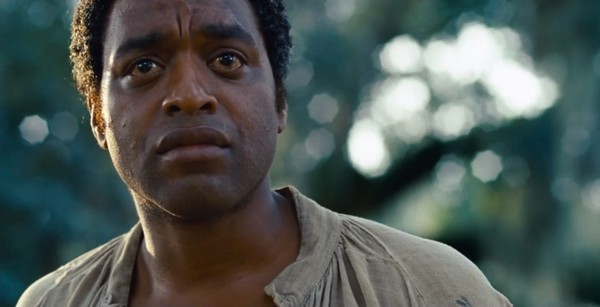
In an early scene, Solomon (Chiwetel Ejiofor), a
man born into freedom in the north, has just woken to discover he has been
kidnapped and bound in chains. He denies that he is a slave to his jailer, who
takes a paddle and beats him. We see the board smash into Solomon’s back again
and again, but from a side angle, not one that shows us the damage being done.
We see some bits of blood here and there. We hear Solomon’s screams, see the
agony on his face, the torture through his muscles. We see the paddle splinter
and break. The scene goes on longer than most directors and editors would let
it, but it needs to: to cut too soon would be to allow it to be less painful,
more entertaining, more a spectacle. We may think: “Okay, I get it, he’s
being beaten. Okay, can’t we move on? Isn’t there a story to get to?”
Finally, it stops, and we are relieved. 

But McQueen is not done with this. We might relax
as the next scene begins, as we are ready for our emotions to be given some
moment of respite, but this is, in fact, masterful misdirection. As Solomon
talks with a slaver, the man tells Solomon to take off his ruined shirt. We see
Solomon from the front. The shirt is, indeed, torn and soiled. Reluctantly, he
removes it. Finally, we see the shirt’s back: fabric soaked with blood. The
audience I was with gasped at this moment. We had let our guard down. We knew,
of course, what the paddle would have done to his back. We knew,
intellectually, the pain inflicted. Here, though, we felt it in a deeper way
than if we had simply seen Solomon’s back as he is beaten, or immediately
after.

12 Years a Slave is distinct because,
again and again, McQueen chooses to make his film more about experience than
information. Many incidents from Northup’s narrative are either barely glanced
at or skipped altogether. The challenge for any adaptation of this story is to
fit the experience of twelve years into two hours.

And this is where 12 Years a Slave reveals
its greatness. First, there is the triumph of its structure (how much of which
is the responsibility of screenwriter John Ridley, I don’t know, as I haven’t
seen the script). The film begins with Solomon having been a slave for at least
a few years, learning to cut sugar cane and trying desperately to figure some
way to write a letter to someone, anyone who might be able to help him. This
information is mostly established visually. At night, as Solomon is approached
by one of the female slaves (we don’t yet know anything about her) for sex, the
experience is unfulfilling for both, and then the film moves us back into the
past as he remembers a much more satisfying moment with his wife when he was
free.

Why start here? Why not just tell the story in
order?

null

There are many possible answers to these
questions, but I tend to think that opening segment forecasts the film’s
primary patterns. The story is similar enough to other tales of American
slavery that we don’t need any training in understanding it, but the style and
conventions of the film are not as familiar, and we do need to get accustomed
to those.

Consider, for instance, how the opening segment
helps us understand a potentially perplexing shot at the end of the movie.
Solomon has finally managed to get someone to take a letter from him to the
post office, but he does not know whether he can trust the person. Solomon looks
out at the landscape. The camera stays on his face for an extraordinary amount
of time. From the very beginning of the film, Solomon has been trying to get
word out to his family or anyone else who might be able to help him. In this film,
the relationship between shots can be associational rather than strictly linear
or expository, especially concerning Solomon’s attempts to communicate to the
free world. His desire, his yearning for freedom, shifts the representation of
time. Like Solomon, we, too, are bewildered: what is happening, what is going
on in the world beyond? Time freezes. We stare.

The next shots show us that the gazebo Solomon
had begun working on at the time he wrote his letter is now completed. Time
speeds forward.

Similarly, a refusal to cut a shot at the point
anyone conditioned by mainstream films would expect provides one of the most
powerful moments in the movie — indeed, it is among the most remarkable scenes
of any film I know. After Solomon attacks one of the white men who has been
tormenting him, John Tibeats (Paul Dano), Tibeats returns with a friend and
tries to lynch the impertinent slave. He is halted by the general overseer of
the plantation, Chapin (J.D. Evermore), but Chapin does not then cut Solomon
down. Instead, he says they’ll have to wait for the plantation owner, William
Ford (Benedict Cumberbatch), to return that night. And so Solomon remains, his
hands tied behind his back, his toes barely touching the ground, his throat
roped to a tree branch. The shot goes on and on. Solomon gasps and straining to
keep himself from strangling to death. Once, a slave sneaks to him with a small
cup of water.

The extraordinary, excruciating length of the
scene forces us to confront the physical reality of slavery to an extent
unparalleled by any other film. The audience becomes a body of witnesses. Here,
no soaring John Williams-style music plays our heartstrings, no character later
offers moral exposition. A man swings from a rope and tries to stay alive. We
watch. It is all the film allows us to do.

Yet, if the film’s power and importance come from
its careful construction of the audience as witness, what sort of witnesses are
we, and of what use is our witnessing?

These questions are hardly unique to 12 Years
a Slave
— they apply to some extent, at least, to any film with serious
intentions of recreating and representing historical atrocities. Toward an
answer, all I can offer is a hypothesis: what matters is not the recreation,
but the quality of witness, and the quality of humanity, it requires of us.

There is already a tremendous amount of Oscar
buzz around 12 Years a Slave, which more than one critic has dubbed
“the Schindler’s List of slavery movies”. In the sense of
carefully recreating a particular life from one of the great horrors of
history, and generating strong emotions in audiences, this is true. But the
Oscar talk gives a false impression of what McQueen’s film is up to.

Even in his most serious and self-consciously
“artistic” films, Steven Spielberg is a Hollywood director to the
core, a genius of audience manipulation. McQueen is no more Spielberg than Spielberg
is Michael Haneke. The kind of historical dramas and social justice dramas that
win Oscars flatter their more privileged and powerful audiences, allowing —
even encouraging — such audiences to feel good about themselves. The same choices
that propelled Roots to extraordinary popularity are the sorts of
choices approved and awarded by the Oscarati. They are also the choices that
Steve McQueen and his collaborators carefully and determinedly renounce.

And yet I would not be at all surprised to see 12
Years a Slave
sweep the Oscars–mostly because McQueen brilliantly chose to
apply his particular aesthetic to material that is deeply appealing to Oscar
voters. Northup’s original book, edited and perhaps ghostwritten for him by the
white lawyer and writer David Wilson, had to be aimed at a primarily white
audience, for, like any other slave narrative popularized through abolitionist
circles, it had a particular propagandistic purpose. An advertisement
for the book in the
abolitionist William Lloyd Garrison’s newspaper The Liberator included
numerous quotations from reviews that testified to the book’s ability to
confirm the horror of slavery for an audience that previously might have
dismissed Uncle Tom’s Cabin and other novels as fictional exaggerations.
One reviewer, for the Cayuga Chief, highlighted the qualities of the
book which McQueen’s film emulates: “It is well told, and bears internal
evidence of being a clear statement of facts. There is no attempt at display,
but the events are so graphically portrayed, that the interest in the perusal
is deep and unabated to the last. The sunshine of kind treatment sheds a few
bright beams athwart the dark canvass of twelve years of bondage: but, in the
main, the darker cruelty and wickedness of oppression is still more revolting
by the contrast.”

There we have, too, the key to why characters
like William Ford and Bass (the man who ultimately delivered the letter that
would begin the process toward Northup’s freedom, here played by Brad Pitt) are
important to the story. They are not there to appease white sensibilities, but
rather are placed in the film in proportion to their presence in Northup’s
actual life, and they highlight the oppressiveness and irredeemability of any
system where people are considered property.

Further, audiences have very little chance to sympathize
with good white characters, because they simply have too little screen time.
This is as it should be. Our sympathies and identification should be with the
slaves.

If the work of traditional, white-audience slave
movies is to encourage us to look for good white people to identify with, and
to make us witnesses to narratives in which there are good white people in even
the most hellish circumstances, then 12 Years a Slave works to undo
that. 12 Years a Slave deprives us of the familiar pathways to
identification with white saviors, and instead requires us to identify with the
people we should have been identifying with in the first place.

Matthew Cheney’s work has been published by English Journal, One Story, Web Conjunctions, Strange Horizons, Failbetter.com, Ideomancer, Pindeldyboz, Rain Taxi, Locus, The Internet Review of Science Fiction and SF Site, among other places, and he is the former series editor for Best American Fantasy. He is currently a student in the Ph.D. in Literature program at the University of New Hampshire.


Why DEEP THROAT Should Be Placed in the National Film Registry

Why DEEP THROAT Should Be Placed in the National Film Registry

null

It’s almost that time again. Every December, the National Film Preservation Board, with the sheltering authority of the Library Of Congress hovering benevolently over its shoulder, announces the twenty-five “culturally, historically,
or
aesthetically
significant”
movies
that
will
join
the
honor
roll
of
American
cinema
enshrined
in
the
National
Film
Registry.
To
the
Board’s credit, the list is startlingly egalitarian and unfussy, honoring not only obvious contenders like Gone With The Wind (1939) and Citizen Kane (1941) but also representatives from every corner of American movie-making: independents like El Mariachi
(1992) and
Night
Of
The
Living
Dead
(1968), masterpieces
both
sung
(The
Godfather
(1974), and
unsung
(Daughters
Of
The
Dust
(1991), Killer
Of
Sheep
(1977)), technological
watermarks
as
far-ranging as The Jazz Singer (1928) to 
A
Computer
Animated
Hand
(1972), and
unique
visions
like
Koyaanisqatsi (1983) and The Matrix (1999).

But, despite the Board’s inclusion
of up to fifty nominations suggested by the American public into its deliberations each year, and a curatorial eclecticism that honors diversity as far-ranging as Dog Star Man Part IV (1964), Nicholas Brothers Family Home Movies (1930s-40s), and Lets All Go To The Lobby (1957) ( you know, with the dancing popcorn and hot dogs — “to get ourselves a treat!”), one essential American movie keeps getting unfairly overlooked. It’s a movie no less essential to the trajectory of American film than Dickson Experimental Sound Film (c. 1894). In fact, it’s another early sound film, if one considers all meanings of the verb to sound: to test the depth of a hidden space. It’s Deep Throat (1972).

Gerard Damiano’s semi-surreal porno-comedic fantasy about an anatomically irregular woman (Linda Lovelace) and her search for unorthodox clitoral stimulation isn’t more cinematically interesting than other features from the so-called “golden age” of porn. (Behind The Green Door [also 1972] is the most
visually inventive of the bunch, with an aesthetic borrowed from video art of
the era—Nam June Paik, with cum shots.) Deep Throat, by contrast, is
poorly directed, scripted, shot, and “acted,” and almost as dull as Warhol’s experimental movie/endurance exercise Empire (1964), with about the same level of phallic obsession. (Empire is enshrined in the Registry. Perhaps tellingly, Warhol’s Blow Job [1964] is not.)

But all aesthetic shortcomings aside, Deep Throat certainly qualifies as a culturally significant movie. Much has already been written about how its ensuing multiple legal battles carved out First Amendment rights for all cinema to splay whatever sort of grotesque delight it saw fit across the screen, to say nothing for the
way its “four quadrant” success set in motion the current mainstreaming of pornography in American culture. In her memoir Post-Porn Modernist, porn star turned performance artist Annie Sprinkle remembers working as a popcorn girl at an Arizona theater during the height of “porno chic”, amazed at the cross-section of American humanity lining up to see Linda Lovelace “untangle her tingle”, as promised by the poster’s tagline: “[The audience was] young and elderly, couples, singles, groups, college students and teachers, blue- and white- collar workers, all types of people. I sold tons of popcorn.” (Let’s all go to the lobby, to get ourselves a treat.)

Deep Throat‘s historical importance is also undeniable because of its connection to the Watergate scandal. Disgruntled FBI agent Mark Felt was willing to confirm details for journalist Bob Woodward about the Nixon-backed burglary of Democratic National Committee offices, but only in secret.  Woodward’s mysterious source, who would only meet with the journalist in Beltway parking garages at 2 am, was given the nickname “Deep Throat” as a smirking play on the journalistic phrase “deep background,” meaning a never-quoted source who will secretly confirm confidential information obtained elsewhere. The investigation brought Nixon down, but not before revealing all sorts of unsavory tidbits about the commander in chief to the American public. (For example, Nixon’s preferred term for double-crossing was “ratfucking”—an activity Lovelace never got around to, despite the dog-on-woman action displayed in the stag loop Dog Fucker [1971] she made before Deep Throat.)

What hasn’t been acknowledged is how, despite its failures of craftsmanship, Deep Throat is not an artistically devoid movie. Its success is in the realm of theory and criticism, in providing the mathematical proof to Godard’s theorem that “film is truth 24 times a second”. While it’s laughable to think that Deep Throat invented pornography, or even the pornographic film, the fusion bomb it created by merging the tropes of Hollywood film (and all its attendant unspoken eroticism) with the animal reality of intercourse was a Manhattan Project moment. Imagine what that first vaginal penetration, twelve
interminable minutes into a previously quite dull movie, must have looked like in 1972, as big on screen as
the thrown animal bone that becomes the space station in 2001:
A Space Odyssey (1968), or the parting of the waves in The Ten Commandments (1956). And the sacred waters keep rising: semen, snot, vaginal secretions, spit, and, holiest of American elixirs, Coca-Cola, in the scene in which it is poured into a glass dildo inserted into Lovelace’s vagina.

And there are tears, too. Later in life, Lovelace maintained that she was violently coerced into a pornographic career by her abusive husband Chuck Traynor. There are bruises visible on Lovelace’s thighs, and, while her acting is uniformly quite cardboard, the frightened tears she summons instantly in the scene where her doctor informs her she has no clitoris are startlingly real. The National Film Registry has seen fit to include important documentation of many atrocities, including Hindenberg Disaster Newsreel Footage (1937) and the Zapruder Kennedy film (1963). Lovelace’s disavowal of her “performance” as a documented rape can’t be ignored, but it shouldn’t disqualify Deep Throat.

Then what’s left? Is the Board’s sheer unwillingness to address Deep Throat‘s ultra-sexed subject matter what keeps it from having its lovingly restored negative swaddled in a temperature-controlled vault in the Library of Congress for all perpetuity? Maybe. But to acknowledge Deep Throat as a benchmark of American cinema would mean acknowledging the bigger genie we can’t put back into the bottle. Deep Throat and “Deep Throat” put an end to the idea that anything is private. Sex tapes, Wikileaks, an intern’s navy blue dress spattered with presidential semen, yawn. It’s hard to believe there was a point in time when Americans could be shocked to the point of national paralysis over a piddly dirty trick burglary and the slobbery reality of a blow job. Those crowds lining up in 1972 couldn’t conceive of the day Deep Throat could be enshrined in the Library of Congress as a testament to our naivetë and innocence. We take in the whole truth now, up to the tonsils, without a thought.

Violet LeVoit is a video producer and editor, film critic, and
media educator whose film writing has appeared in many publications in
the US and UK. She is the author of the short story collection
I Am Genghis Cum (Fungasm Press). She lives in Philadelphia.

Self-Projected Artifice: The 49th Chicago International Film Festival

Self-Projected Artifice: The 49th Chicago International Film Festival

It was almost like a movie. Amat Escalante’s harrowing and
unapologetically bleak film Heli—which
looks at the crooked law enforcement and low-totem pole players of Mexico’s
drug cartel scene—came to a an ambiguous closing shot before dipping to white
for the end credits. The auditorium house lights came on at the press screening
I was at. No one moved from his or her seat. Utter silence. Then suddenly, a
critic in the row in front of me let out a groan. A very loud one. He wanted to
be heard. After 104 minutes of wince-inducing violence and despair, Heli offered no logical retribution for
its audience. The groaning critic was expressing one of two things: that he’d
witnessed a carefully nuanced, searing cross-section of a very real dilemma
south of the border—or that he’d just seen another arthouse trash film filled
with hot air. As other critics began leaving the auditorium, they started
chuckling at the thought of the groan. The groan seemed to carry an echo too,
as if it was a shared movie review, a unanimous proclamation that the Chicago
International Film Festival had once again managed to bring some of the more
polarizing films of world cinema to the Second City for the 49th consecutive
year. This year’s lineup was particularly dark in nature, from crude historical
narratives (James Gray’s The Immigrant,
Steve McQueen’s 12 Years A Slave) to
timely, devastating documentaries (the border crossing Purgatorio, the brotherly survival tale in Kenya’s Tough Bond). For all of its variety,
this year’s Chicago film fest found itself hovering over the theme of the
self-projected artifice, which was explored in three grossly differentiating
films.

You see, unlike most marquee U.S. film festivals such as
Sundance or SXSW, the Chicago International Film Festival has done a consistent
job of flying just below the radar of mainstream but several cuts above other
notable film festivals. Sure, there are “movie stars” who make appearances at
opening night and certain gala events, but the main crux of the Chicago Film
Fest is focused on its usually impressive program of world cinema. The fest’s
red carpet schmoozing takes a backseat to the discovery of new artistic voices
from international films that would be hard to find stateside.

Consider the above-mentioned Mexican film, Heli. For most of its running time, the
camera is deliberate in its movements. Slow pans reveal awful imagery: a boot
pressed against a man’s face, a man being forced to roll face down over human
vomit, and the devastating reunion of a woman with her husband after he was
savagely beaten. These images are all the more powerful because the characters
in the narrative are desperately trying to fool themselves into thinking they’re
bound to escape or even create a new life. In the violent landscape ruled by
the drug cartel, these poor Mexican peasants are disillusioned at best. In an
early scene, the protagonist’s wife visits a local psychic in hopes of hearing
the possibility of a new venture or at least to give validity to her current
situation. Later, during the film’s gruesome torture scene, a group of
adolescents in the background gleefully plays their American video games on
consoles. At one point, a young boy whips out his cell phone to film a victim
being tortured with fire and thinks out loud about the idea of uploading the
footage to YouTube. It’s that self-projected artifice—that daily routine to
dilute the horrors of one’s reality—which is what’s really striking about Heli. Lots of drug films have shocking
violence, but few observe the nameless people at the peripheries of the
screen’s frame and examine their ways of coping with their environment.

Sometimes this artifice is therapeutic. Part of the
festival’s documentary program, Rithy Panh’s The Missing Picture shows us one filmmaker’s in the 70s transcendent
retelling of his unfathomable childhood experience as a prisoner of the Khmer
Rouge in Cambodia by way of hand-made art; rather than relying solely on
historical archival footage, Panh used small whittled-down clay figures as
stand-ins for a majority of the film’s recreations. The title of the doc
resonates exponentially as the simple toy-like sets suddenly become vessels for
ghostly imagery. We can only imagine how the scenes played out in real life and
thus are forced to project our own anxieties and shock onto the stoic faces of
the tiny clay models on the screen. The effect is heartbreaking and, more
importantly, is never played for gimmickry. 

Finally, taking a hard right turn from subject matters of
drug cartels and Cambodian genocide, we land at the Cannes Palme d’Or winner,
France’s Blue Is The Warmest Color,
directed by Abdellatif Kechiche—which was one of Chicago’s festival highlights
to be sure. Centered on a remarkable lead performance by Adèle Exarchopoulos, Blue chronicles several years in the
relationship of a lesbian couple. Exarchopoulos, the youngest of the pair, has
to carefully micromanage each of her self-projected artifices. At her high
school, she “dates” a male classmate in order to ward off any suspicion or
prejudice toward her actual sexuality from her peers. At home, she deceives her
parents by insisting that her partner Emma (played by Léa Seydoux) is just a
tutor. Emma even assists with the mirage and fabricates a boyfriend during a
dinner conversation. These self-projected artifices are juxtaposed with Emma’s
own vocation. She’s a painter, using Adèle as her model for many of her works.
So, on display in the walls of Emma’s art galleries, is her true love—but for a
good portion of the film’s running time, their relationship is taboo for most
of their public appearances. When Adèle and Emma are older and living together
during the second half of the film, their struggles and strife link to the restraint
from those earlier scenes. The film floored me: Exarchopoulos is the
front-runner for the Best Actress Oscar.

With these three varied film selections—Heli, The Missing Picture,
Blue Is The Warmest Color—the theme
of the self-projected artifice rose to new challenging heights. Maybe by
looking through the eyes of our fellow foreign artists, we are able to peel
back some of our own layers of artifice (at least in what we produce in
American cinema) and see some fundamental similarities in our ways of handling
those scenarios, fiction or non-fiction. And as the 49th Chicago
International Film Festival drew to a close, I thought back to the groan from
that early press screening. If it did signify a sentiment towards a festival
that vehemently sought out challenging and polarizing titles from world cinema,
then I hope to hear the same groan next year.

Nelson Carvajal is an independent digital filmmaker, writer and content
creator based out of Chicago, Illinois. His digital short films usually
contain appropriated content and have screened at such venues as the
London Underground Film Festival. Carvajal runs a blog called FREE CINEMA NOW
which boasts the tagline: “Liberating Independent Film And Video From A
Prehistoric Value System.” You can follow Nelson on Twitter
here.

“Mwahahahaha”: The (Vincent) Price of Condescending Viewership

“Mwahahahaha”: The (Vincent) Price of Condescending Viewership

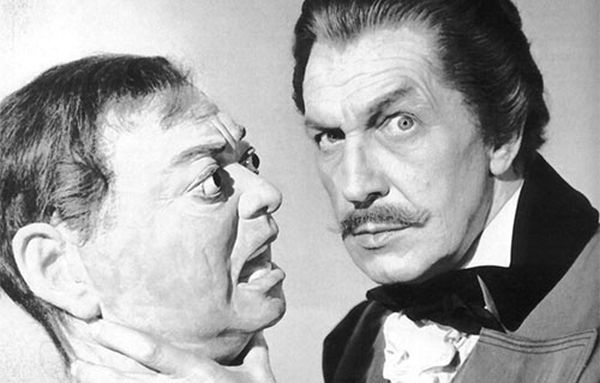
nullVincent
Price was a singular cult movie star, synonymous with a grandiloquent yet
bygone form of cinematic Gothicism that offered moviegoers inexpensive thrills.
Whether for good or ill, Price, a versatile actor, is shackled to the horror
genre, so much so that as of the writing of this article, Price is October’s “Star
of the Month” for the Turner Classic Movies cable channel and the Shout Factory
imprint label Scream Factory is releasing a DVD set of horror movies starring
Price called The Vincent Price Collection,
right before Halloween.

Yet
for many, Price is also synonymous with hammy, unbelievable, and histrionic screen
acting– never mind that his style was rooted in acting conventions from a
previous era. Whether good-natured or not, there are those who the idea of “Vincent
Price” as a goldmine of campiness and comedic opportunity. For instance:
comedians Dana Gould and James Adomian as well as actor Bill Hader have been
known to impersonate Price, and his persona has often been reduced to that of a
debonair, sinister,  yet silly
dandy. Heck, even I impersonate Price
every now and then to get laughs.

****** 

null

Let
me introduce something which may relate tangentially to Price’s reputation: the
concept of Condescending Viewership .In certain scenarios, people watch a
movie, TV show or play with incredulity, ultimately acting as if they’re above
it. Such an attitude depends on the equation of willful suspension of disbelief
with mindless gullibility. For instance: Tommy Wiseau and his film The Room are  recipients of C.V. and Mystery Science Theater 3000, the TV show in which abject movies
are riffed upon by a man and his robot pals,
is built on and epitomizes the practice of C.V.

Of
course, there is something indeterminable about C.V. It is a matter of subjectivity,
after all. Plus, it’s probably better to allow it when it arises than to attempt
to control the minds of fellow viewers, much like a diabolical Price character.
And the question of what works deserve condescension is arguable. One person’s
trash can be another’s sustenance. Nevertheless, many conscientious viewers
have probably encountered C.V.–or engaged in it themselves.

To
go a step further, it is safe to assume that many aficionados of classic, older
movies have occasionally encountered C.V.  It is human nature to look at something from
the past and pretend the present is more evolved and sophisticated in a
unilateral way after all. To give an example: I remember being a teenager and
watching North By Northwest with my
family and one of my older sister’s friends. During the final shot of the film–a
sexually implicit visual gag of a train entering a tunnel right after Cary
Grant gets in bed with Eva Marie Saint on that same train–my sister’s friend
exclaimed, “What? They didn’t think about sex back then!”

null

******

When
it comes to any standard Vincent Price performance– particularly those he gave
in many horror movies– it might as well be a big, opportune target for C.V. Admittedly,
I find it hard to watch 1959’s The
Tingler
, William Castle’s gimmick-loaded and nonsensical horror flick, and
not want to comment upon or lampoon aspects of Price’s performance (especially
the scene in which his character has an LSD induced freak-out).

Yet,
to haughtily spoof any Price performance in a horror movie would be shortsighted;
it would suggest that Price was not savvy enough to understand what he was
doing. Consider these biographical details: Price was a graduate of Yale, an
authoritative collector of art, a French cooking enthusiast, and a man of
letters. It isn’t beyond reason to assume that he was aware of his performance
as an actor, even when it seemed preposterous.

In
fact, Price told biographer Lucy Chase Williams that he had his tongue “in both
cheeks” and “was furious when I read a book called the hundred worst pictures
ever made, to see that several of mine weren’t in it!” And in a book about his
work and life, Price was quoted as saying, “I don’t mind making these funny
horror films at all… The minute that I take myself seriously, I’ve got to laugh
because it’s so ridiculous. It’s what gets me through an awful lot of films,
this sense of the ridiculous.” In the same book, he also stated, “I’m an old
ham… I love acting, even in nonsense films. For me, acting is an expression of
joy.”

In
an affectionate tribute made for Turner Classic Movies, John Waters stated as
much: “When Vincent Price was a ham, he was in on the joke. He celebrated the
ridiculousness of horror and he could completely hold his own.” And as Mark
Clark wrote in Smirk, Sneer and Scream:
Great Acting in Horror Cinema
, “While Price’s performances failed as
touching works of naturalistic brilliance, they usually succeeded as thrilling
romps of stylish theatricality… almost any Price performance is worth watching.…”

******* 

Herein
lie some dangers of C.V.: when self-contained and self-perpetuated, it can be
unfair, particularly to the personal sensibilities of creative talent. When
applied to older movies, it can create a monolithic and reductive historical
understanding.

C.V.
can limit the potential for a fuller enjoyment and appreciation of a film– or
a TV show or play for that matter–in that it may ignore the sheer commitment
of the actors or filmmakers that might be on display. Sure, some films may be
bad or contemptible, but there can be an inspirational pleasure in watching
anything in which people just went for it.

And
I can’t think of a Vincent Price performance in which he didn’t seem committed
to the work. An old-school professional, Price was always invested as a
performer, even in silly things like the two Dr. Goldfoot movies or his
recurring role as Egghead on the 1960s Batman
TV series. Just consider his voiceover “rap” in the Michael Jackson hit
“Thriller”—it is the most convincing part of a well-crafted yet impersonal and
calculated song.

Price’s
screen persona may be an acquired taste. Because he benefited from the steady
work that typecasting brought, he may not have always needed to stretch as an
actor or improve his reputation. He seemed to enjoy working and probably
cackled all the way to the bank. Nevertheless, he gave a number of notable
performances—particularly in Laura, The Baron of Arizona, House of Wax, most of the Roger-Corman-directed
Poe films, Witchfinder General and Edward Scissorhands—and he is a treasure
of a screen presence.

So,
when it comes to indulging in the widespread practice of Condescending
Viewership, one should be careful to pick their proverbial poison. And Price
will just about always have the last laugh, from beyond the grave: “Mwahahahaha.”

Holding
degrees in Film and Digital Media studies and Moving Image Archive
Studies, Lincoln Flynn lives in Los Angeles and writes about film on a sporadic
basis at
http://invisibleworkfilmwritings.tumblr.com. His Twitter handle is @Lincoln_Flynn.

Viva Los Hijos de la Noche: The 1931 Spanish Version of DRACULA

Viva Los Hijos de la Noche: The 1931 Spanish Version of DRACULA

null

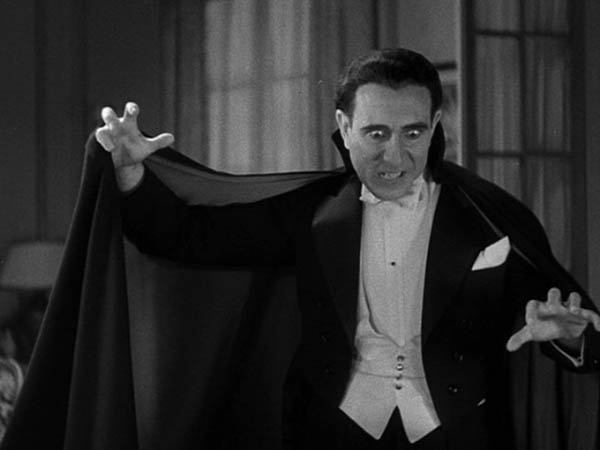
Everybody knows the iconic 1931 Dracula. Even
if they’ve never seen the film, most people can call up images of Bela Lugosi
waxing poetic about wolves on a ruined abbey staircase, or a coffin slowly
opening as a very white hand emerges. But does the phrase “hijos de la noche”
resonate in the same way? Certainly not, yet in 1930, while Tod Browning spent
his days filming Dracula with Bela Lugosi, another director, George
Melford spent his nights filming the same script, on the same set, with the
same costumes–with Spanish-speaking actors. In the early days of sound, this
was a fairly common practice; studios often produced foreign-language versions
of their films that way. Dubbing had not yet come into vogue as a practice, and
under the studio system it was simply a matter of substituting a cast who spoke
Spanish, or German, or French, and shooting on a set after the English-speaking
actors and crew were gone for the day.

The practice only lasted a few years, as it became cheaper and easier to dub or
subtitle films for a foreign audience. Most of those foreign-language versions
have faded and been forgotten, lost like so much early film. Most did little to
distinguish themselves from the English-language films. But the Spanish version of Dracula is a little different.  Not only superior to the English-language
version, it’s necessary viewing for anyone who’s watched the Lugosi film and
come away bummed. I know the English version has its champions, but I think
that has much to do with Lugosi and little with the film’s direction. It’s
creaky, static, with little camera 
movement—almost a silent film in many parts, and the actors are often
given little to do but stand and speak. The pacing is dreadfully slow and
inorganic.  Whereas the Spanish language
version  takes a script that should have
been shocking but ended up rather staid—stiff and stuffy—in the English version,
and it tops that version by leaps and bounds. Oddly, it’s a half hour longer
than the English version, but the improved pacing, the superior acting, and
better artistic direction make it much more fun to watch.

The cast and crew of the Spanish version were competitive,
and they would watch the dailies from the English-language version to figure
out how they could improve them, with better camera angles, lighting, pacing,
and acting. And it shows: in the Spanish version, the special effects are
better, the shots are more interesting, and the camera movement is much more
fluid–more modern. Watch the way the camera swims up toward Carlos Vilarilla in
the abbey, captures the wild menace of the place, and compare that to the slow,
stately pace of the camera movement toward Lugosi in the same scene. Of course,
part of this is due to Tod Browning’s and penchant for long, static shots. Browning
made some remarkable films, particularly those with Lon Chaney Sr. But here hee
was clearly still learning how to transition from silent films to talkies, a
transition that his short list of sound films and subsequent retirement from
film probably attests to.  

null

The acting, with the exception of Lugosi and Edward Van
Sloan, is also improved in the Spanish version. I love Dwight Frye, but Pablo
Rubio is a more naturalistic, interestingly mad Renfield. Frye either
plays it creepy and subservient, or fearful and guilt-ridden—two notes for the
duration of the film, while Rubio’s performance is much more subtle,
changeable—human. Barry Norton gets the thankless straight man role, but runs
circles round the notoriously stone-stiff David Manners. Lupita Tovar, only
seventeen at the time, is a beautiful, lively lead–so much more fun to watch
than the lovely but lifeless Helen Chandler.
As Lupita Tovar has said of
the film
, “We Latins have a very different way of expressing ourselves, more
emotional. And I think the Americans were just kind of subdued.”

Perhaps most
importantly of all: this film puts the sex back in Dracula. Plenty of heaving
bosoms are on display, and the sensuality is more overt than implied,
particularly in Tovar’s hungry, delightfully predatory performance as Mina/Eva.
This is Mina as she should be: seduced by Dracula, perhaps a little tormented,
but not-so-secretly enjoying the respite from stuffy society, from her safe,
boring fiancee and her overprotective father. This is the wilder Dracula
Lugosi should have starred in.

Amber Sparks’ short stories have been widely published in journals and anthologies, including New York Tyrant, Unsaid, Gargoyle, Barrelhouse, and The Collagist. Her chapbook, A Long Dark Sleep: Stories for the Next World was included in the chapbook collection Shut Up/Look Pretty from Tiny Hardcore Press, and her first full-length story collection, May We Shed These Human Bodies, was published in 2012 by Curbside Splendor. You can find her at ambernoellesparks.com or follow her on Twitter @ambernoelle.

Joseph Gordon-Levitt Dons the Jerk Gear for DON JON

Joseph Gordon-Levitt Dons the Jerk Gear for DON JON

null

Recently, Buzzfeed published a widely read listicle entitled, “40 Things Every Self-Respecting Man Over 30 Should Own”. Reaction online was mixed. Some men and women considered the list—which included head-scratchers like duct tape, a wine key, a chef’s knife, a flask, playing cards, sunglasses, heavy liquor, a bar set, and a French press—a reasonable tally of objects prerequisite to being a man. Others, largely men, considered the list patronizing at best and destructive at worst. One commenter wrote, “I had twenty out of forty [of these items], and was more proud of the twenty I didn’t have than the twenty I did.” The Buzzfeed list was light on objects indicating any interest in civil society: computers, newspapers, and magazines were deemed inessential. It also lacked objects encouraging men to be interested in their own emotional development. Tools for self-reflection were mysteriously absent, unless you count “a book collection” which, the list’s author noted, didn’t need to have been read, or a record player which, as the list’s author noted, was primarily useful for playing records that make their owner look good. One suspects that a thirty-something male who owns all or nearly all of the items on the Buzzfeed list is more likely smug than admirable—or adult. Enter Jon Martello, the character played by Joseph Gordon-Levitt in the porn-addiction dramedy Don Jon. Martello is just the sort of man for whom the Buzzfeed list functions as an essential guidebook, and if Don Jon is successful in its satire of contemporary living, it is primarily in reminding us—as if any reminder were needed—just how invasive and insidious gender typecasting is in America.

Martello is called
“Don Jon” by his friends because he has a long, unbroken streak of
post-clubbing sexual conquests. As with everything in Martello’s life, sex is a
mathematical function; a night out ends with intercourse just as surely as
Mondays are abs, Tuesdays are back, Wednesdays are legs, Thursdays are chest,
and Fridays are shoulders. Don Jon is the sort of borderline sociopath who,
with pathological self-consciousness, aims at and hits all the markers on the Buzzfeed shopping
list: a decent car (#38), black dress shoes (#2), cologne (#7), proper bedding
(#9), a grooming kit (#14), an ironing board (#22), multiple sheet sets (#35),
and so on.

Needless to say, a number
of these items could indeed be considered useful to both men and women of any
age past twenty-one. The problem is with counting them obsessively, as Buzzfeed
and Martello do, as though the only way to get through life is to regularly
award oneself gold stars for meeting the presumed requirements of adulthood.
Despite these daily self-assessments, Martello is forced to endure his boorish
father’s persistent insistence that he’s not yet a man. This likely explains
the fact that the first half of Don Jon is one of the most depressing
movie-going experiences you’ll ever encounter. Never has a young man’s life
seemed so grasping yet emptily routine. Martello surrounds himself with the
trappings of adulthood, but receives none of its satisfactions in return. Would
picking up a newspaper help? Writing in a journal? Reading a favorite literary
classic? Who knows.

Certainly, Martello doesn’t
own any such items, and even if he did it’s not clear that he’d know what to do
with them. In fact, he has so little imagination that he can’t masturbate
without a visual aid; so little patience behind the wheel of a car that he’s a
road-rage homicide waiting to happen; so little self-knowledge that he reacts
with instinctive anger when his closest friend engages him in conversation of a
personal nature; so little soul he can’t look women in the eye when he speaks
to them; so little emotional support that he never speaks to his parents
without arguing with them (and never speaks to his largely mute sister at all);
and so little self-possession that he falls madly in love with a woman
(Scarlett Johansson) simply because she’s a “dime” (a
“ten”) physically.

On the bright side, he does
seem to own a French press (#31).

null

Of course, being an adult
isn’t a matter of either/or; it’s possible to both own a French press and also
have a rich inner life. The problem, as Don Jon sees it, is that men and
women alike have so routinized their lives and their identities that these days,
lists like the one on Buzzfeed really do, for many, resemble exhaustive
how-to manuals for adulthood. Perhaps this is why the first half of Don Jon
seems at once harrowingly true-to-life but also dizzyingly pornographic in its
broad brushstrokes and general moral shabbiness. Viewers have no idea why
Martello and his two friends (he appears to have no others) continue to spend
time together, as they do nothing but club and criticize one another; Jon even
gets visibly upset when one of the two deigns to knock on his apartment door
unannounced. Viewers likewise have no sense of Jon’s professional life, as his
unsatisfying bartending job is only alluded to twice and seen on-screen (in a
two-second jump-cut) just once. Jon’s family and church life are little more
than a pastiche of uncomfortable Italian and Catholic stereotypes. His
relationship with the seductive, romantic comedy-loving Barbara Sugarman (Johansson)
is miles wide and inches deep, so much so that it’s difficult to say whether
either of the two says an honest word to the other during the film’s
ninety-minute run-time.

This, then, is what romantic
comedies and pornography alike promise their consumers: a world in which
expectations are obvious and always met, deviations from the norm are both
predictable and harmless, and bean-counting one’s own successes is the only way
to escape one’s suppressed misery. A list of essential man-objects from Buzzfeed
serves much the same function, as it sets easily-attainable expectations for
men while avoiding even the implication that idiosyncrasies are
permissible. Years of being an adult male have taught me that the only
essential objects in a man’s life are those that help him authentically
distinguish himself from his demographic. Equating masculinity with conformity
calls to mind Barbara’s final rebuke of Jon (“I thought you were
different!”)—
which is notable primarily because
no viewer of Don Jon could ever have made that mistake in judgment.

Two moments in Don Jon
are particularly revelatory of the movie’s implicit critique of contemporary
masculinity. In the first, Jon patronizingly tells a friend that “if you
do things right,” you end up with a great girl, having the best sex of
your life. It’s a fraught moment because Jon—an under-employed porn addict with
an anger management problem who also (horrors!) loves vacuuming and dusting—has
no more sense of how a man “does things right” than does Buzzfeed.
His sense of a man’s moral obligation begins and ends with confession-eligible
sins, destructive but obligatory family dinners, misogynistic male bonding
exercises, and favoring weightlifting to cardio.

He even misuses the items
on the Buzzfeed list. He drives his souped-up car like an ass, he uses
his dressing and grooming and apartment-cleaning skills to no purpose other
than casual sex with women whose names he doesn’t know, and he deploys his
ostentatious masculinity (one imagines him owning #27, a Leatherman) to
intimidate classmates at night school, belittle his peers, and perpetuate an
emotionally abusive relationship with his father.

In a second great moment of
gender critique, Jon interrogates a priest who’s given him the same penance for
two sins: affectionate premarital sex with a woman he respects, and emotionally
empty premarital sex with multiple women he doesn’t. Having been assigned ten
Hail Marys for each, he asks, “How did you arrive at that number?”
It’s a poignant question, one that could be directed to Justin Abarca, author
of the Buzzfeed list.

How did “40
Things Every Self-Respecting Man Over 30 Should Own” end up including a
flask and not a magazine subscription? Or “good socks” (#32) and not a
pet you have to care for? Or “brown dress shoes” (#3)  and not some area of interest you might have actually
read up on, rather than merely (as Abarca condones) appearing to have done so?
Why forty items, rather than twenty or sixty? Why only items you can buy, and not
abstractions you can access for free? What magical fairy-dust alights on a
man’s shoulder at thirty, making him need undershirts (#24) afterwards, but not
before that age? And who is our hypothetical “self-respecting man”
doing this all for, anyway? Himself? A woman who thinks “jumper
cables” (#23) are more essential to a self-respecting thirty-something
than, say, integrity, courage, articulateness, and generosity?

null

Reasonable people can
disagree as to whether rom-com cliches are as destructive to a woman’s sense of
self and her romantic expectations as pornography is to the same things in
men’s lives. Reasonable people can disagree as to whether hair gel (absent from
Abarca’s list) is a worthy addition to a man’s grooming kit, or—as Martello’s
eventual savior, middle-aged pothead Esther (Julianne Moore), says—entirely
superfluous. But what seems beyond contention or debate is the noxious first
principle proposed by Buzzfeed: that self-respect arises from
a short roster of material goods, rather than strength of character, a sense of
humor, and self-possession. As well to say that a woman may be judged (to
borrow from one Martello voice-over) by whether her breasts are fake, her butt
perfect, her willingness to give oral sex and receive a facial unambiguous, and
her facility with ten or more sexual positions incontrovertible. 

The second half of Don
Jon
is remarkable—and surprisingly affecting—because in it we see Martello
indulging what are, to him, eccentricities: playing basketball, drinking
coffee, listening to and making eye contact with women when they speak, styling
his hair without product, treating his friends decently, subduing his perpetually
creepy and aggressive body language, and judging a woman by the way she makes
him feel, not by the boxes she ticks on some teenager-ready jerk-off checklist.
Maybe all those who lauded a thirty-something’s version of that checklist—”40
Things Every Self-Respecting Man Over 30 Should Own”—should steal a page
from Martello’s revised playbook and close their eyes, imagine a man or woman
whose presentation and lifestyle hasn’t been pre-approved by American media,
and see whether they can still find physical and emotional delight in the
unsupervised oddities of a real-life man.

Seth Abramson is the author of three collections of poetry, most recently Thievery (University of Akron Press, 2013). He has published work in numerous magazines and anthologies, including Best New Poets, American Poetry Review, Boston Review, New American Writing, Colorado Review, Denver Quarterly, and The Southern Review.
A graduate of Dartmouth College, Harvard Law School, and the Iowa
Writers’ Workshop, he was a public defender from 2001 to 2007 and is
presently a doctoral candidate in English Literature at University of
Wisconsin-Madison. He runs a contemporary poetry review series for
The Huffington Post and has covered graduate creative writing programs for Poets & Writers magazine since 2008.

On Hollywood’s False Nobility, and the Growing Power of Hype

On Hollywood’s False Nobility, and the Growing Power of Hype

null

Hollywood has always thrilled at its power to pluck a Lana Turner from the
soda fountain at Schwab’s, but it takes onanistic pleasure in the dark side of
its hype machine, too: how believing too much in Tinseltown’s promises can transform
nobodys into somebodies—Monroe, Harlow, Dean, and, even worse, poor
anonymous never-weres like Peg Entwhistle, the frustrated actress who
suicidally leaped off the H of the Hollywoodland sign in 1932. (Rather than die
instantly, she bled to death from a broken pelvis. This town doesn’t cut anyone
a break.)

Most movies about Hollywood’s illusion factory lie somewhere between
self-flagellatingly critical and winkingly celebratory:The Player, Sunset
Blvd.. Get Shorty, Barton Fink, Boogie Nights, Ed Wood, The Stunt Man, Singin’
In The Rain, Tropic Thunder, Bowfinger, LA Confidential.
There are some
notable exceptions, such as Adaptation (reality can’t be shoehorned into
art, and certainly not into movies) or Sullivan’s Travels (legitimate pleasure
in movies is a noble pursuit), but most others hold true to playwright Wilson
Mizner’s adage that life in Hollywood is “a trip through a sewer in a
glass-bottomed boat.”

Despite its ambiguity about the Hollywood hype machine, the Academy’s
sentiments about the hard work of making art is completely unambiguous. Ray,
Shine, Precious, Atonement, Hustle And Flow
—it celebrates films affirming
the redemptive power of creative craft, and how devoting oneself to its
difficult demands is a way into a better life. (Part of the 2010 Oscar Best
Picture race was between films declaring that devoting oneself to a difficult
craft will save you (The King’s Speech) vs. devoting oneself to a
difficult craft will destroy you (Black Swan). The King’s Speech
won.)

In 2012, both Silver Linings Playbook and Argo
were up for Best Picture, and any smart bettor would have fingered Silver
Linings Playbook
as the shoo-in because of its “art saves all”
theme—how a recently released mental patient (Bradley Cooper) and a grieving
temptress (Jennifer Lawrence) heal themselves through ballroom dancing. Argo‘s got no art, just a bunch of hype conjured up by a CIA agent (Ben Affleck) and a pair of weary Hollywood
old-timers (John Goodman and Alan Arkin) looking to spring some hostages with a
story about a non-existent movie. “Art saves” vs. “Hype
saves” is no contest—but, strangely, the Academy didn’t see it that way.

Wink-wink movies about the illusory nature of Hollywood are nothing new. When
Gene Kelly crows at the end of Singin’ In The Rain “Stop that girl! That girl running up the aisle! That’s the
girl whose voice you heard!” it’s a moment of triumph: the illusion
factory drops its veil to celebrate the creators at the core. However, when you
drop Argo‘s veil and there’s nothing there. We’re
not even going to pretend anymore, the Academy announced. Sixty years after Singin’, Argo‘s
Best Picture win legitimized the triumph of hype over art. It announced a new
era of Hollywood sociopathy, where not even style replaces substance: lies
replace style replace substance, and you’re expected to nod and smile all the
way to the box office as your hand closes on a fistful of air.

But come on, you say, lives were saved. Doesn’t that justify a certain kind
of noble falsehood, like in 1997’s Best Foreign Language Oscar winner Life
Is Beautiful
, where a father’s perverse recasting of a concentration camp
as game show enables his son to escape with hope unscathed? Or Schindler’s
List
, where a German businessman conceives of a semi-truthful scheme to
save Jews in his employ? Or The Counterfeiters, where a group of
concentration camp inmates survive by making fake money? Or Jakob the Liar,
where a Jewish man keeps hope alive in the ghetto by making fabulous stories
about the messages he hears on a secret radio—and then succors the audience
with an alternate, sunnier ending?

The common denominator of all those movies is that they are Holocaust
survival stories. When Argo shamelessly borrows
that “noble falsehood” genre blueprint, it brings the same invisible
weight to a story completely unconnected to the Holocaust. It makes clear
exactly what we’re supposed to think about the movie’s Middle Eastern villains,
while deftly sidestepping any accusations of making a movie about Nazis in
keffiyeh.

But if the villains in Argo are really Nazis,
then what does that make our heroes? Argos borrowing
of the “noble Holocaust deception” genre requires the appointment of
Hollywood as a sovereign Jewish nation, a connection that’s irresponsible at
best and slanderous at worst. And in addition, the surrogate Jews escape at the
end because of cunning, justifiable lies, and the illusion-casting power of
Hollywood in their back pocket—an unflattering toolkit that harkens back to
anti-Semitic canards about how Jews do business and who really runs Hollywood.

Argo is dishonest and shameful for the way it
privileges hype over art. But its willingness to cloak itself in the horror of
the Holocaust for sheer narrative convenience, as well as to milk racist
reactions on both sides of the conflict between the Jewish and Muslim worlds
for emotional resonance, proves it’s the most morally bankrupt movie to ever
win Best Picture. It’s more than dishonest. It’s dangerous, and awarding it
Best Picture showed a lack of concern about the parallels Hollywood is drawing
when we’re at war with the Middle East. Worse, it remains to be seen if
upcoming releases like Edge of Tomorrow, Elysium, or the reboot
of Robocop—all pure entertainment, none legitimized as lauding true
historical events like Argo—are going to play faster and looser with those
parallels in their own metaphorical war landscapes. And considering the
vociferous response to Argo in Iran (the movie is banned, and a feature The
General Staff
 is being planned as a
rebuttal), those won’t go ignored, either. The only response to the poisonous era
Argo’s Best Picture win has possibly ushered into American moviemaking is its
own oft-repeated refrain: “Argo fuck yourself.”

Violet LeVoit is a video producer and editor, film critic, and
media educator whose film writing has appeared in many publications in
the US and UK. She is the author of the short story collection
I Am Genghis Cum (Fungasm Press). She lives in Philadelphia.

Why AMC’s HELL ON WHEELS Is a Hot Mess

Why AMC’s HELL ON WHEELS Is a Hot Mess

null

Television
connoisseurs have long considered American Movie Classics (AMC) the Pixar of
the small screen: Everything the nearly twenty year-old network touches turns
to gold. But much like Pixar, AMC has recently revealed itself to be only an
imperfect vehicle for screenwriting genius. For Pixar, the first evidence of
decline was the trifling Cars (2006), though the company’s four
subsequent masterpieces (Ratatouille, WALL-E, Up, and Toy
Story 3
) were nearly enough for fans of big-screen animation to forgive
Pixar its latest and most underwhelming efforts: Cars 2 (2011), Brave
(2012), and Monsters University (2013). AMC hasn’t yet experienced quite
the downturn Pixar has, though it’s worth noting, despite the current
popularity of The Walking Dead, that no one would ever confuse either
its writing or its plotting for that of network standouts Mad Men and Breaking
Bad
. And that’s why when Hell on Wheels came along in 2011, it
suddenly began to seem like the middling scripts and occasional hammy acting of
AMC’s zombie-apocalypse thriller were something less than coincidental. Hell
on Wheels
, whose third season premiered just two weeks ago, is widely and
justifiably regarded as the worst offering on AMC to date. The reason? Bad
acting, bad scripts, a bad concept, and a long line of small- and big-screen
Westerns that have done everything Hell on Wheels aims to do, but
exponentially better.

Hell on Wheels centers around Cullen Bohannon
(Anson Mount), a former Confederate officer who’s predictably mysterious and
charismatic, though he also has—of course—the heart of a gentleman. Bohannon
leaves his Mississippi home to work on the railroad, an inauspicious life
decision that shortly takes him to Hell on Wheels, the tent city that follows
the leading edge of the Union Pacific railroad. The landowning Southerner
Bohannon released all his slaves prior to the onset of the Civil War; this is
hammered home repeatedly in the show’s early episodes, lest viewers begin
questioning the likability of a man whose sole occupation at present is
murdering former Union soldiers he has a grudge against. Of course, even
Bohannon’s half-secret homicidal agenda is entirely in keeping with the ground
rules for a television anti-hero: he’s trying to track down the men who
assaulted and killed his wife. However, the fact that he doesn’t know his wife
was murdered when he begins his rampage (incredibly and inexplicably, he
believes her to have committed suicide after being raped) undercuts his steely
determination somewhat.

It’s
not entirely clear what there is about Cullen Bohannon to draw admiration or
even interest. Like thousands of others of his era, he’s a reasonably
good-looking former soldier who occasionally led men in battle capably, who in
the postwar era soon discovered that the homeland he’d once fought for no
longer existed. If it weren’t for the focus of AMC’s cameras, one would expect
such a man to live and die anonymously doing hard labor somewhere in the
American West, or drinking himself to a stupor in Dixie. Given even the
dull-witted viewer’s near-certainty that Bohannon will find and ultimately
execute his wife’s murderers—coincidentally, he’s only got one man left to kill
by the third episode of the series—it’s not at all clear where the character’s
story should go, and there’s no particularly compelling reason for a viewer to
stick around and find out. Anson Mount may be an attractive and suitably
understated leading man, but even a likely suspect for the role can do little
with such thin gruel.

null

The
show’s supporting cast is equally uninspiring. Tom Noonan plays Reverend Cole,
the obligatory fish-out-of-water evangelist tasked with converting sinners
obviously beyond his reach; as in his appearances elsewhere (ranging from the
great Manhunter to the criminally
underrated films What Happened Was
and Synecdoche, New York), Noonan plays “creepy” exceedingly
well but “ethereal” and “wise” with a glaring ineptitude.
You’d hardly let the man babysit your children, let alone shepherd you to
eternity. Colm Meaney plays a vaguely Irish heavy the way he always has: By
raising his voice and indulging in a series of facial tics that would make
Elmer Fudd blush. Common—a rapper, not an actor—does his level best as recently
freed slave Elam Ferguson, but his every utterance is so charged with
bitterness and dormant rage that it’s a wonder anyone in 1865 would hire him in
the first place, let alone make him de facto spokesman for Union Pacific’s
overworked and underpaid black linemen. Dominique McElligott, clearly slated to
be Bohannon’s love interest from the moment she appears on screen—her bookish
land surveyor husband is predictably written out of the script almost
immediately—is a talented enough actress, but the presence of a British lady in
the midst of Cheyenne territory in 1865 is so contrived as to offend even the
most credulous of viewers. The less said about the show’s heavily-accented
comic relief the better: Ben Esler and Phil Burke do yeoman’s work bringing
outrageous Irish stereotypes back into vogue, as two entrepreneurs whose
unlikely business plan involves a “magic lantern” and blurry slides of Irish
vistas. As AMC has a long history of airing the best ensemble shows on American
television, it’s not exactly clear what’s happened here. Of the ten to fifteen
regulars on Hell on Wheels, it seems all but two or three were chosen by
a ear-plugged and blindfolded talent scout who’d never seen any of their
previous work nor watched even a single specimen of the Western genre.

One
exception to the above is Christopher Heyerdahl, who plays Thor Gundersen, a
ex-Union quartermaster from Norway whose experiences as a POW in Andersonville
prepared him well for his new life as a Union Pacific enforcer. Appropriately
spectral and menacing, Heyerdahl’s performance is undercut by the fact that he
hasn’t actually been given much to do except illegally skim from the company
and shadow Bohannon as he moves about the camp. It’s bad enough that Gundersen,
known in Hell on Wheels as “The Swede,” suspects Bohannon of killing
a company hack on little evidence, as it undercuts viewers’ confidence in his
(strongly implied) intelligence. Far worse are his repeated and coyly cryptic
intimations, to anyone who’ll listen, that “there’s something strange”
about Bohannon. In fact, what supposedly makes the show’s leading man unusual is
the same hackneyed revenge plotline we’ve seen in everything from Django
Unchained
to Gladiator.

null

What’s
most surprising about Hell on Wheels is how poorly written it is.
Meaney’s Thomas Durant is so hamfistedly villainous that he actually slanders
the just-murdered husband of Lily Bell (McElligott) and tries to
ingratiate himself with her romantically during the same horribly contrived
dinner-date. The racial animus between Elam Ferguson and several white Union
Pacific men, much like the cross-racial sexual attraction between Ferguson and
Eva (Robin McLeavy), a former white slave turned prostitute, is so awkwardly
handled and woodenly written it makes the scriptwriters of Glory seem
screenwriting prodigies by comparison. Even Bohannon, who’s been given some of
the show’s better lines, turns in such a desultory performance as a railroad
foreman and selfless do-gooder that he receives from even credulous viewers
only slim credit for either role. One suspects the show’s writers simply had
too much confidence in their creations to realize they’d given them nothing
actually interesting to do or say–a circumstance made all the more surprising
by the fact that watching any previous Western would have offered
sufficient guidance on what mustn’t be done yet again. Instead, there’s hardly
any Western trope that Hell on Wheels fails to not only exploit but
wallow in: a hero of few words; a helpless lady; hapless immigrant sidekicks; a
cunning and humorless adversary; a greedy and unscrupulous businessman; a
“converted savage” (Eddie Spears as Joe Moon, a baptized Cheyenne
whose soul-searching is tiresome and trite); a preacher out of his depth; a
dark secret that leads to many deaths; and so on. Deadwood this is not;
that show, the best small-screen Western this side of Lonesome Dove,
gave us fully-realized characters whose eccentricities and complex moral codes
were entirely novel, and whose alternately dastardly and heroic deeds were, in
consequence, entirely astonishing.

Yet
the real culprit behind the lackluster presentation of Hell on Wheels
is the show’s central conceit: A mobile city of tents that follows the Union
Pacific railroad as it makes its way slowly West. The show makes virtually no
use whatsoever of the transient and ephemeral nature of Hell on Wheels, as not
only does the cast remain fairly static, there are also no major plotlines
associated with having to strike camp and move the entire town every few days.
Nor can the show do much with its 1865 setting, as the fallout from the Civil
War was—at that early point in the Reconstruction process—more or less
predictable, presaged as it was by similarly sudden cessations of military
hostilities in other nations throughout the eighteenth and seventeenth
centuries. 1865 is simply too early for America to have done much
soul-searching with respect to its recent near-dissolution, and consequently
the former soldiers of Hell on Wheels are left asking one another easy
questions like “Who did you fight for?”, “Did you own
slaves?”, and (worst of all) “Did you have sex with any?”
Meanwhile, Durant’s ambition to squeeze as much money as he can out of Union
Pacific’s manifest destiny-driven enterprise is little different from that of
any other war profiteer or shifty-eyed businessman. That the expansion of the
nation’s railroads to California represented for war-torn America a chance to
self-realize its grand ambitions has been so thoroughly investigated in all
forms of media that Hell on Wheels would need to go to extraordinary
lengths to add to that narrative, and it doesn’t.

AMC
has, by now, earned enough trust from its viewership, including this author,
that one finds oneself searching for some complicated explanation for the noxious
badness of Hell on Wheels–rather than simply accepting that AMC
greenlighted a project it should not have. Did the network, one wonders, worry
that it hadn’t yet ventured into Westerns, and was it thus predisposed to pull
the trigger on Joe and Tony Gayton’s flimsy script? Was it hoping to stand on
the coattails of the nation’s abiding interest in Southern culture, as
epitomized by present ratings king Duck Dynasty? Did it see, in the
moderate success of A&E’s Longmire, a possible opening for yet another
cowboy hero? Were the lush settings promised by a Western like Hell on
Wheels
simply too much for a cash-flush operation like AMC to resist? Were
AMC executives seduced by writer Tony Gayton’s pedigree, a pedigree that
includes a film-school diploma from USC and an apprenticeship to John Milius, who
was, among other things, the creator of HBO’s excellent but equally
expensive Rome? Certainly, the network must have seen something in
the Gaytons, Tony particularly, yet it’s not at all clear what: Tony’s previous
television work was limited to a single made-for-TV movie in 2006, and he’s
been credited on only five feature films, none of which were notable (the only
exception being 2010’s Faster, which starred Dwayne “The Rock”
Johnson yet grossed only $35 million worldwide).


Critics have been predictably unkind to Hell on Wheels. The
Huffington Post
called
it “tedious,” TV Guide
“heavy-handed,”
USA Today
“as
subtle as a sledgehammer,”
The San Francisco Chronicle
“cartoonish,” The Philadelphia
Daily News
“meandering,”
and Variety
“diluted
and herky-jerky.”
Slate, The New York Times, and The Los
Angeles Times
said much the same. Two glowing reviews from The
Washington Post
and The Boston Globe notwithstanding, even the
positive write-ups in Newsday, The Chicago Sun-Times, The
New York Post
, The Miami Herald, and The Wall Street Journal
seemed to conclude that the show was solid if unspectacular, a significant
come-down for a network accustomed to scooping up Emmys by the handful. 

The
final nail in the coffin for Hell on Wheels is that scourge of all
television programs that begin slowly: Most viewers simply won’t have the
patience to find out if the show’s writers ultimately find their footing. And
given that the aggregate reviews for the second and third seasons of Hell on
Wheels
are not so different from those for the first–Metacritic lists
Season 2 as a middling 60, and (with only four reviews thus far) Season 3 as a
possibly promising 74–it’s not certain that Hell on Wheels can offer
viewers much payoff, even with the long runway it’s been given. If you
absolutely love Westerns; if you’re an AMC completist; if you’re willing to
laugh out loud at dialogue you know isn’t intended to be funny; if you find
either Anson Mount or Dominique McElligott eye-catching enough to warrant
squandering much of your down-time, by all means see if you can muster the
energy to make it to Season 3 of Hell on Wheels. The rest of us will
just have to be satisfied with the final episodes of Mad Men and Breaking
Bad
, and remembering fondly the network’s other triumphs: an episode here
and there of The Walking Dead; the first season of The Killing;
and much if not all of the single-season run of Rubicon. As
cable-network track records go, that’s still a pretty good one.

Seth Abramson is the author of three collections of poetry, most recently Thievery (University of Akron Press, 2013). He has published work in numerous magazines and anthologies, including Best New Poets, American Poetry Review, Boston Review, New American Writing, Colorado Review, Denver Quarterly, and The Southern Review.
A graduate of Dartmouth College, Harvard Law School, and the Iowa
Writers’ Workshop, he was a public defender from 2001 to 2007 and is
presently a doctoral candidate in English Literature at University of
Wisconsin-Madison. He runs a contemporary poetry review series for
The Huffington Post and has covered graduate creative writing programs for Poets & Writers magazine since 2008.

Kill the Rich: YOU’RE NEXT and the Discreet Charms of the One Percent

Kill the Rich: YOU’RE NEXT and the Discreet Charms of the One Percent

nullFor a culture obsessed with maintaining control—over our
minds, our bodies, our borders, and our relationships—horror films serve as a
necessary reminder of the futility of such endeavors. Horror is all about disruption, deprivation,
penetration, dislocation and all manner of mess, chaos and spillage.  And a horror film is most frightening when it
breaks through the fragile borders that protect what is most precious to
us.  Adam Wingard’s disturbing new film
makes the most of such fears by taking up the popular thriller scenario of the
home invasion.  And while You’re Next is genuinely frightening,
ranking right up there with other recent films that excel in this mode, such as
The Strangers and Them, it also offers a sharply satirical
take on a distinctively American sense of privilege and entitlement.  Embedding his fairly traditional sequential
homicide plot in a dysfunctional family drama, Wingard gives us a taste of what
Last House on the Left might have
looked like if it were directed by Luis Bunuel instead of Wes Craven, and in
the process re-politicizes a genre too often exploited for mindless thrills.

The film concerns itself with the reunion of a very wealthy family
celebrating the parents’ anniversary.  But the darker underpinnings are
set by its alarming introduction. The wealth of the Davison family is in inverse proportion to its
sense of community and compassion, as we see when mom and
dad pass a neighbor’s home not far from their own country estate. Noticing a car in the driveway, they remark
that no one has occupied it in quite a while, and Paul (Rob Moran) remarks,
“It’ll be kind of nice having neighbors – we’re so isolated out here.” Struck
by the peculiar novelty of actually living near someone else, wife Aubrey
(Barbara Crampton) eyes him uncertainly and replies, “Um, maybe.”

This sense of narcissistic detachment permeates the family,
and as their reunion gets underway a palpable chill settles on their enormous
country estate that has little to do with the weather. Beyond the usual sibling rivalry, family
relations are strained by a father who seems bored even by his children’s
achievements, while at the same time straining after an illusion of family
warmth and camaraderie. As the house
fills with guests, Aubrey seems increasingly out to lunch, a classic portrayal of a trophy
wife who has ceded her status as an individual. The significant others of the younger family
members are regarded as somewhat annoying curiosities by the other Davisons, as
if they were stray pets who haven’t been entirely housebroken. Significantly, the daughter’s partner is an
underground documentary filmmaker played by one of independent horror’s leading
figures, Ti West. The family is deeply
perplexed by the question of what would motivate anyone to direct low-budget
films, and the oldest brother encourages him instead to direct advertisements,
which he deems the twenty-first century’s premier art form.

Suffice it to say that by the time the masked invaders begin to pile up bodies,
no tears will be shed (at least by the audience). Wingard demonstrates his mastery of the genre
by knocking his annoying characters off in a disturbing, and often amusing,
variety of ways. Many of the murder
scenes verge on elaborate slapstick routines, at times suggestive of Rube
Goldberg stunts designed for the Marquis de Sade. Critics have praised the film’s deft
management of the fine line between horror and humor, and while it’s true that
this series of killings is a genuinely funny and frightening tour de force, the
film’s real appeal is in the pointed nature of its satire.

Early in the film, as Crispian Davison (A.J Bowen) and his
girlfriend Erin (Sharni Vinson) are driving up to the reunion, she asks him how
his family became so wealthy. When he
answers that his father used to work for a Halliburton-like firm of defense
contractors, he jokingly asks, “Are you sure you’re okay having dinner with
fascists?” Military concessions aren’t
the only thing the Davison paterfamilias has been contracting out: as the
siblings discuss the slow progress of their family estate’s restoration, they
note that dad bought the place as a kind of retirement project, but has lazily hired
other people to work on it rather than restore it himself. As the film progresses, certain members of
the family are shown to have a surprising connection with their killers, and
the film comes to serve as an extended meditation on the connections that exist
between members of an economic and social community, and the impossibility of
compartmentalizing them. The Davisons
would like to believe that they have achieved a pristine sense of isolation from the society they profit from, but their financial ties bind them to a
population on whom they would prefer to turn their backs.

At the other end of the social spectrum is the family
background of Crispian’s girlfriend, Erin. As the dwindling family members hunker down in their embattled home, she
reveals a surprising efficiency at defense tactics, which she confesses having
learned during a peculiar childhood raised in a militia compound in the
Australian outback. Her father was a
survivalist who believed the world’s problems of overpopulation, food and water
shortages would result in global anarchy, and devoted his life to ensuring his
and his family’s continuation. Yet while
Erin’s and Crispian’s families may come from different sides of the class
divide, their social values are surprisingly similar, and reflect some of the
dominant tendencies in American culture. Gun-toting survivalists in their militia compounds and retired
millionaires sequestered behind their capital gains share a common vision of
freedom and independence at any cost, and Wingard’s film effectively shows what
happens when this twisted version of the American dream goes horribly wrong.

While Erin is certainly the film’s most dynamic character
and the closest thing the film has to a heroine, she differs from the
familiar “last girl” figure of traditional horror films.  Unlike the resourceful Jamie Lee Curtis in Halloween or Texas Chainsaw Massacre survivor Sally Hardesty, Erin goes beyond
merely getting out of the nightmare in which she finds herself: she becomes an
essential part of that nightmare, engaging in brutal overkills that constitute some
of the film’s most uncomfortable viewing. 
In one especially complicated encounter she hesitates before the kill,
before dismissively asking, “Why the fuck not?” as she finishes the bloody
deed. Survivalist Erin is no worse than
the selfish Davisons and their ruthless assailants, but it would be quite a
stretch to suggest that she offers an alternative moral center to the violent
maelstrom in which she finds herself.

In its by turns disturbing and hilarious portrayal of a
privileged family’s reunion gone horribly wrong, You’re Next gives us what is perhaps this year’s most trenchant commentary
on an America increasingly riddled by narcissism and greed.  That it chooses to center its satire on a
family gathering points up its difference from the summer’s other major horror
offerings, The Conjuring and Insidious 2, both directed by James Wan. Where Wan gives us a disappointingly
traditional vision of the home as locus of love and solidarity, Wingard reminds
us that houses are designed as much to keep others out as to shelter those
within. Wingard’s film takes its title
from the bloody words scrawled on the walls of the Davison’s home by its
invaders, and these words might be taken as a dark reminder of our common
lot. You might think you’ve landed
yourself a comfortable position and a secure future, but as horror films remind
us, it may be only a matter of time until you’re next.

Jed Mayer is an Associate Professor of English at the State University of New York, New Paltz.